

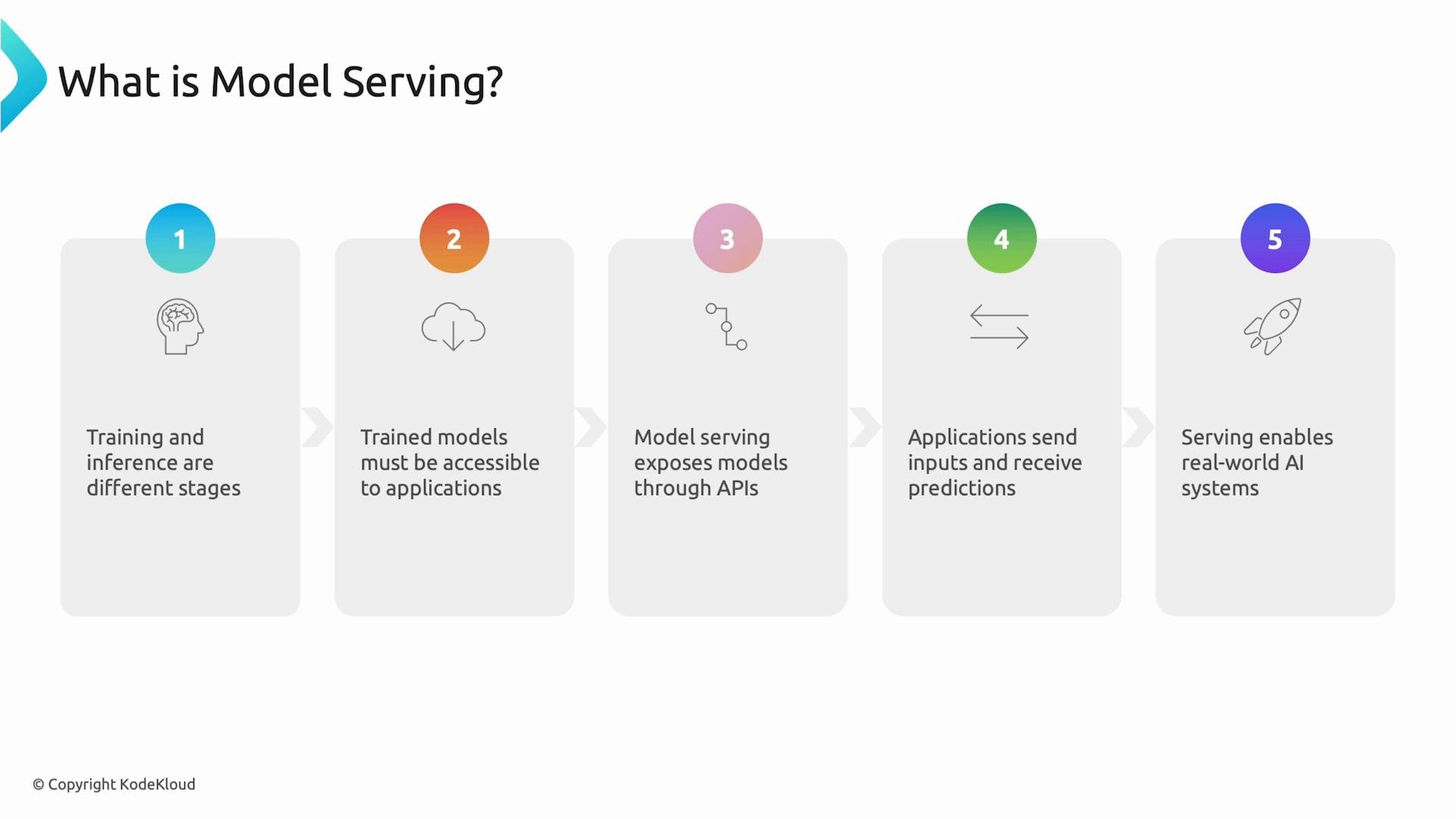
- Training — models learn patterns from labeled data.
- Inference — trained models generate predictions for new inputs.
Model serving bridges the gap between research artifacts (trained models) and production applications. It standardizes how models receive inputs, return predictions, and integrate with monitoring, logging, and scaling systems.
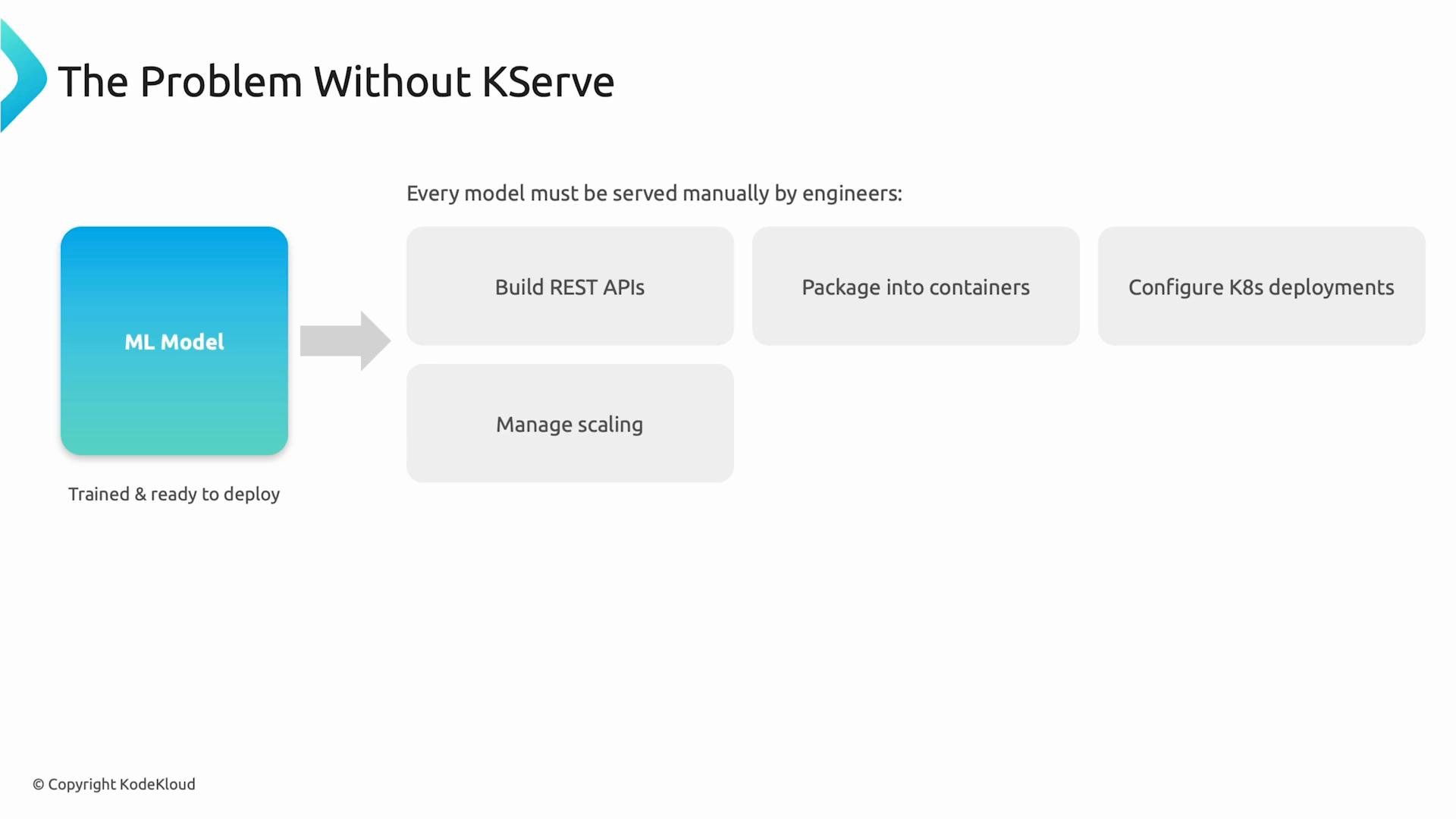
- Build REST/gRPC APIs around model code
- Package model + runtime into containers
- Configure Kubernetes deployments and Services
- Implement autoscaling, readiness/liveness checks, and lifecycle hooks
- Add logging, metrics, tracing, and model-specific handling
- Orchestrate rollouts, canaries, and traffic splitting
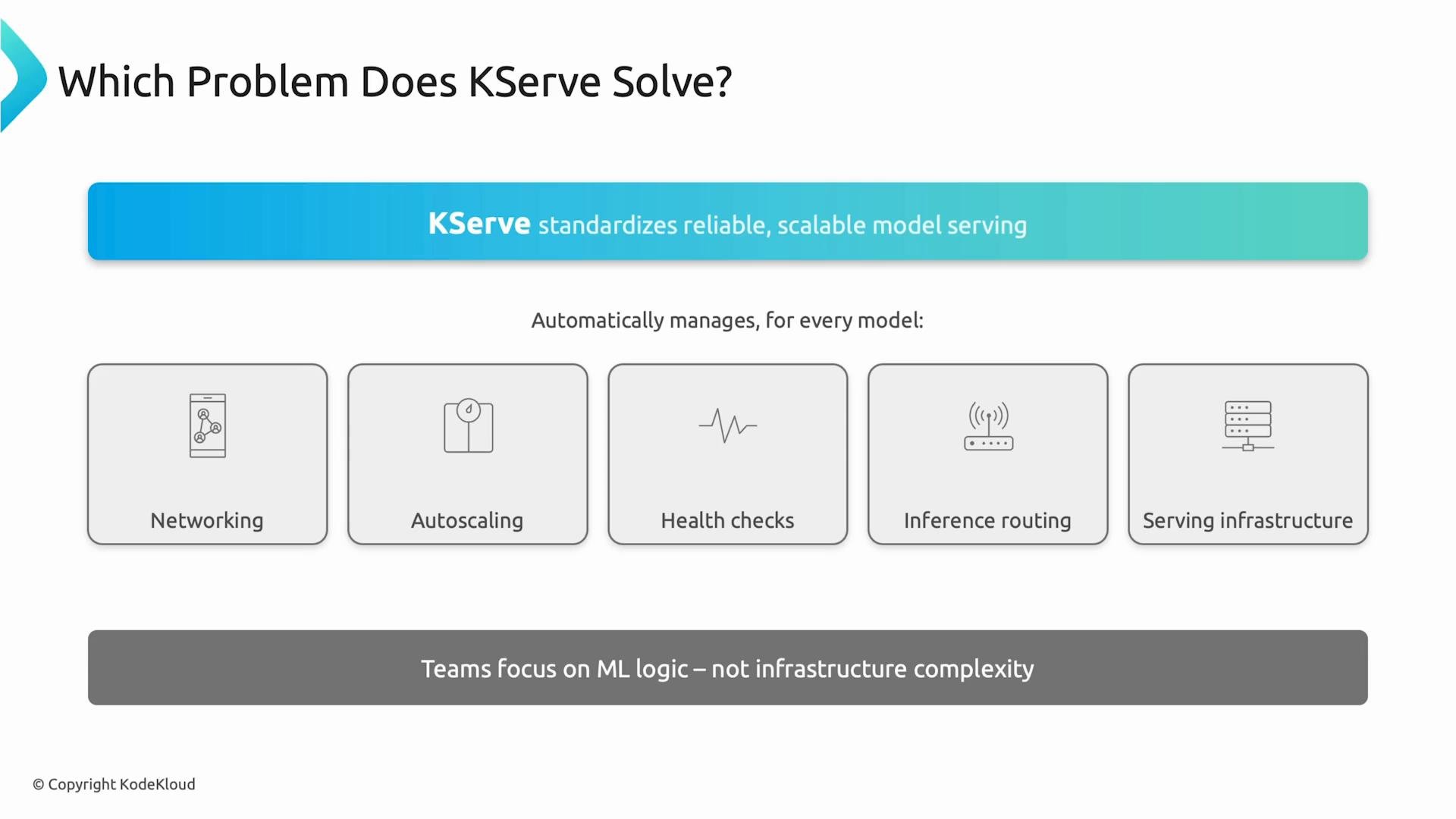
Rolling your own model serving stack increases operational burden and leads to inconsistent deployments as the number of models grows. Production serving needs automation for scaling, observability, and lifecycle management.
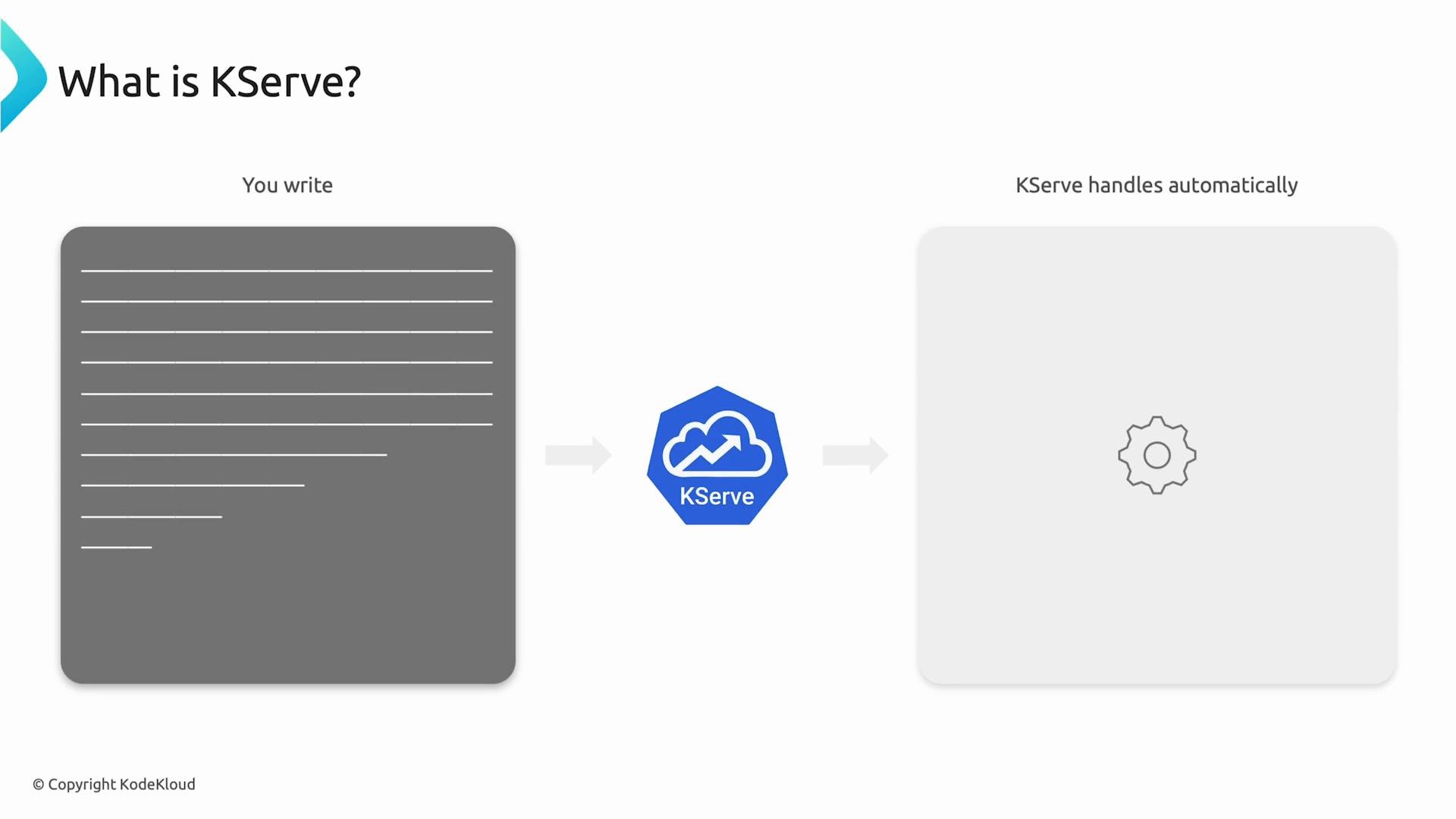
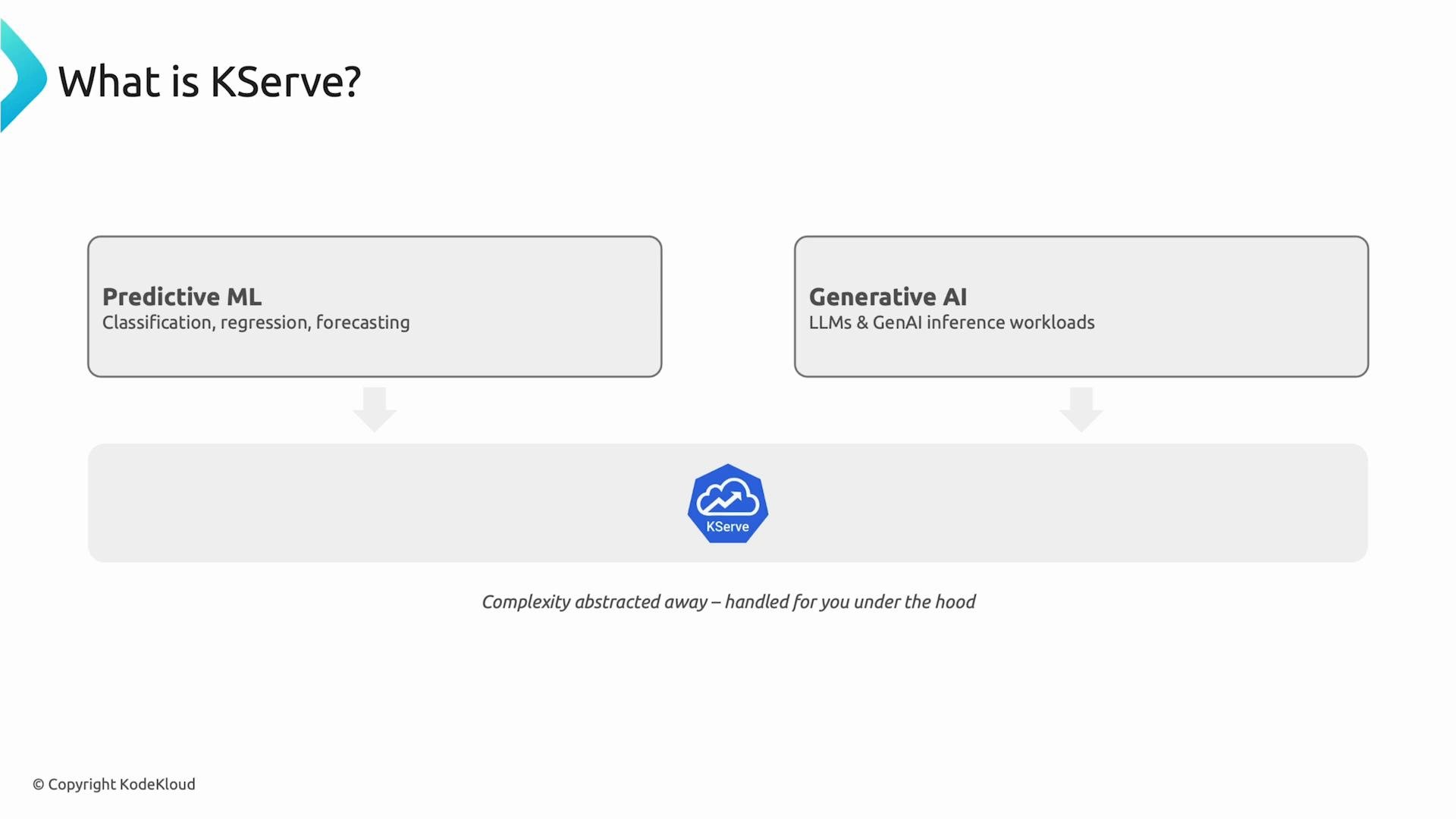
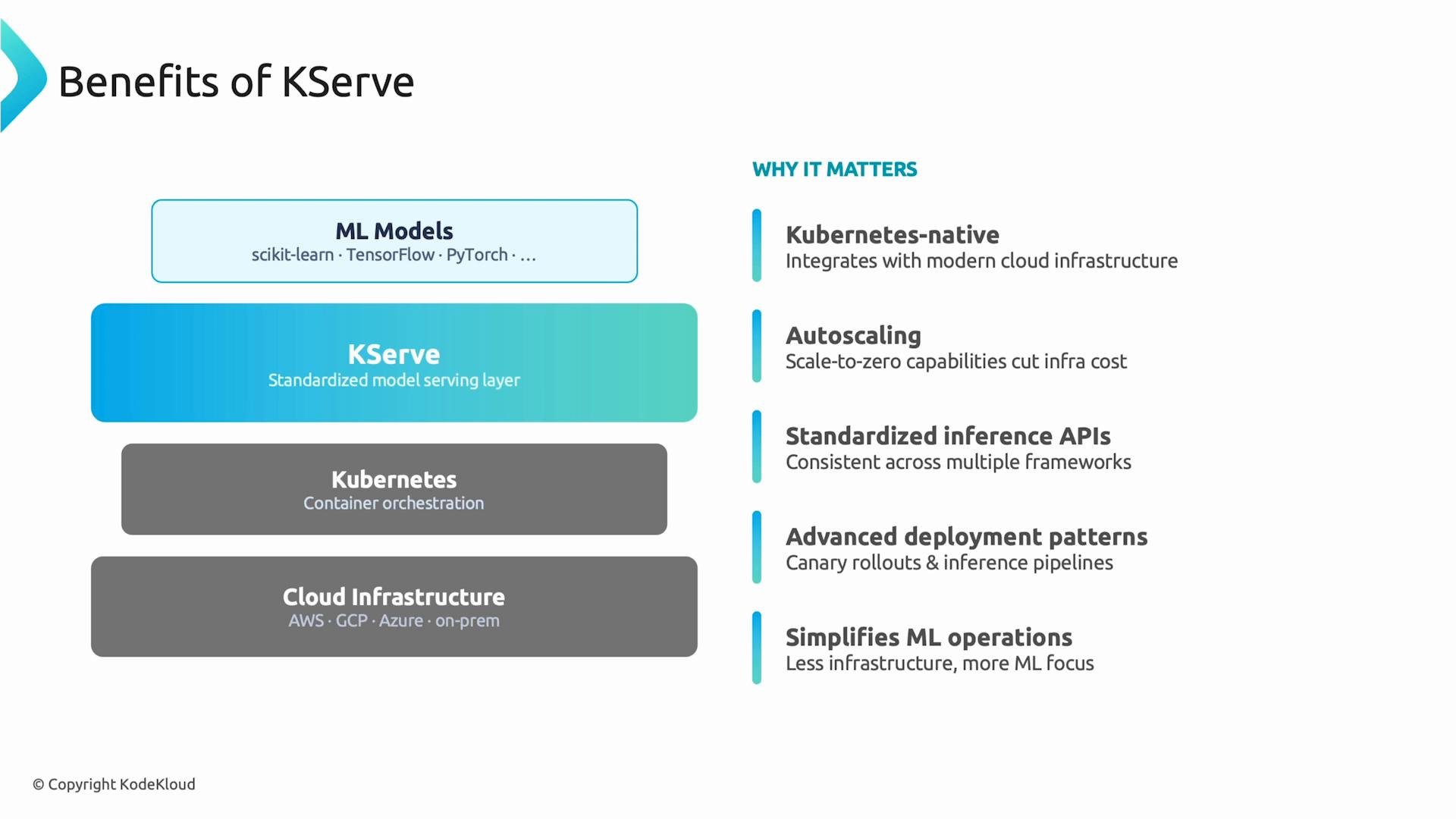
- Kubernetes-native integration with cloud and on-prem control planes
- Autoscaling including scale-to-zero to reduce costs when models are idle
- Standardized inference APIs across frameworks and runtimes
- Canary rollouts, traffic splitting, and multi-model routing for safe deployments
- Health checks, lifecycle management, and observability integrations (metrics, logs, tracing)
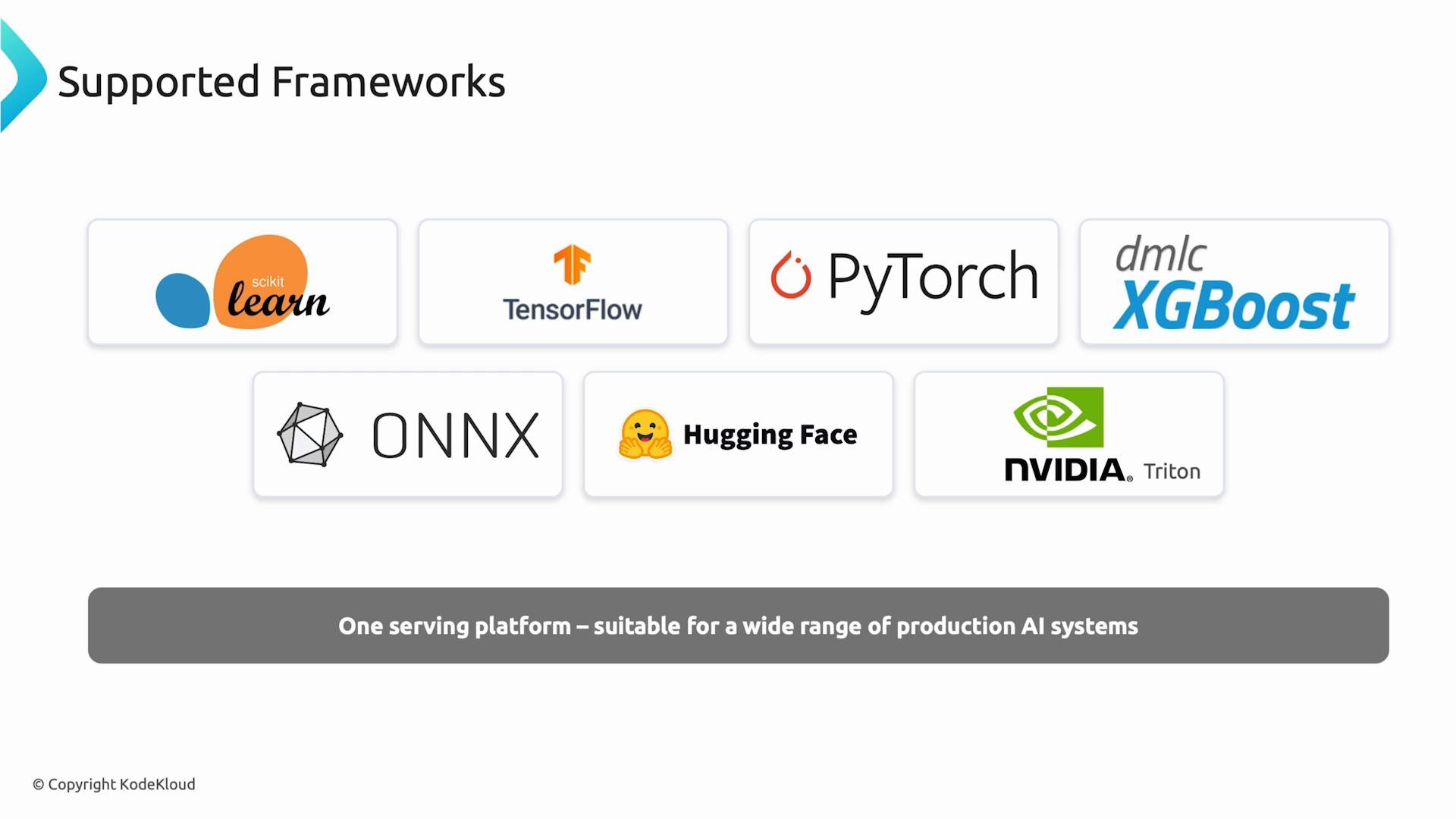
- scikit-learn — classic tabular models
- TensorFlow — TF SavedModel serving
- PyTorch — TorchScript or custom runners
- XGBoost — tree-based models
- ONNX — portable model format for cross-framework inference
- Hugging Face — transformer models and tokenizers
- NVIDIA Triton — for high-performance GPU inference
- You need reproducible, declarative model deployments on Kubernetes.
- You want autoscaling, scale-to-zero, and traffic control without custom code.
- Your team needs standardized inference APIs across multiple ML frameworks.
- You require integration with observability, CI/CD, and platform tooling.
- KServe fundamentals and docs
- Kubernetes Concepts — official docs
- scikit-learn — https://scikit-learn.org
- TensorFlow — https://www.tensorflow.org
- PyTorch — https://pytorch.org
- XGBoost — https://xgboost.ai
- ONNX — https://onnx.ai
- Hugging Face — https://huggingface.co
- NVIDIA Triton — https://github.com/triton-inference-server/server