Endpoint
An endpoint in Cilium represents a network identity for which Cilium enforces network policy. In Kubernetes, each Pod receives its own IP address, so you can practically treat a Pod as a Cilium endpoint. Cilium generalizes this by stating “every IP address is an endpoint” to support non‑Kubernetes deployments. Cilium assigns each endpoint a unique numeric ID that the agent uses internally to manage that endpoint (for example, Pod1 → Endpoint ID 100, Pod2 → Endpoint ID 200).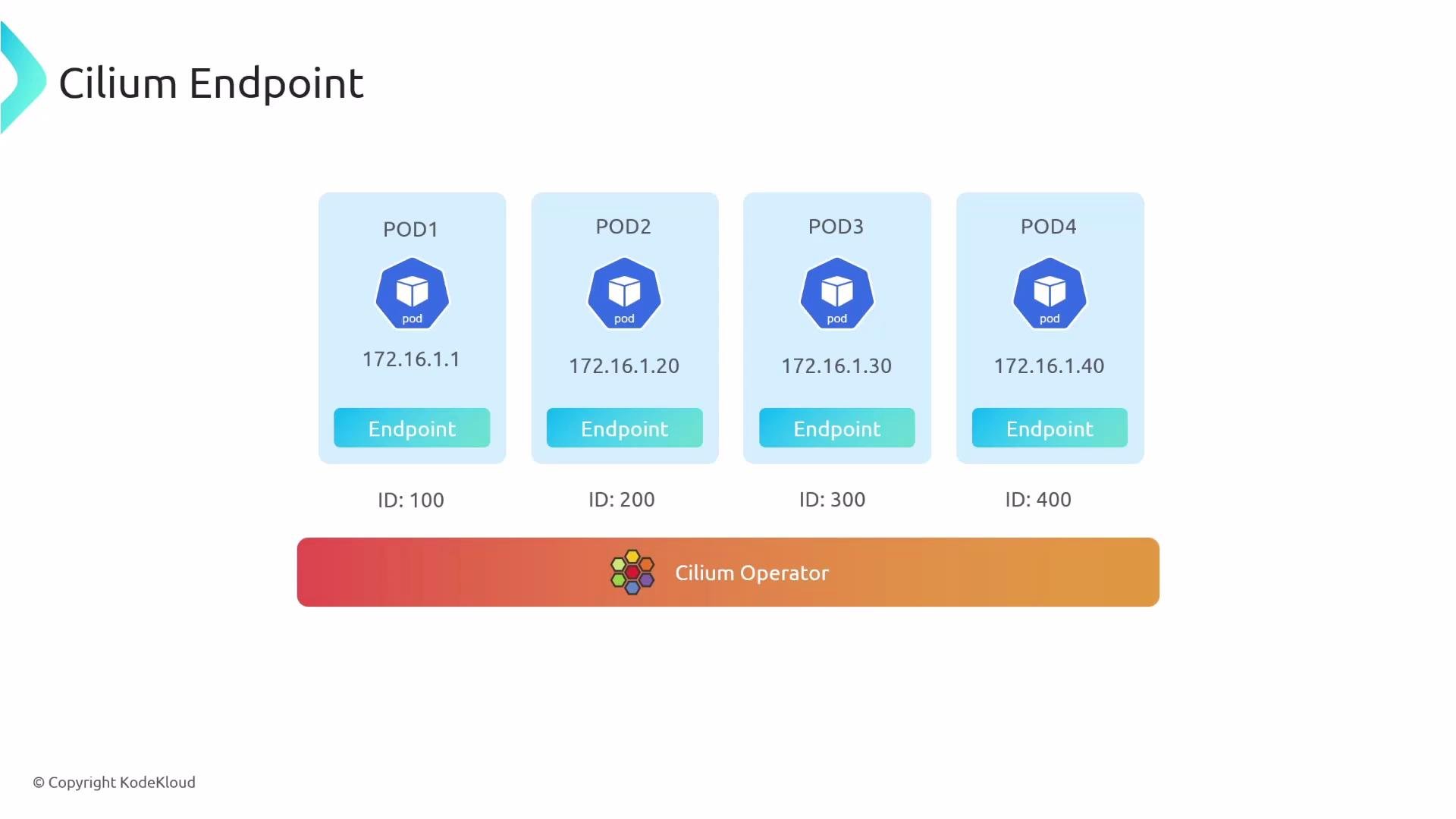
cilium endpoint list:
Remember: in Kubernetes, a Pod’s IP ≈ Cilium endpoint for practical policy and observability tasks. Use
cilium endpoint list to map Pod IPs to Cilium endpoint IDs.IP-based policy limitations
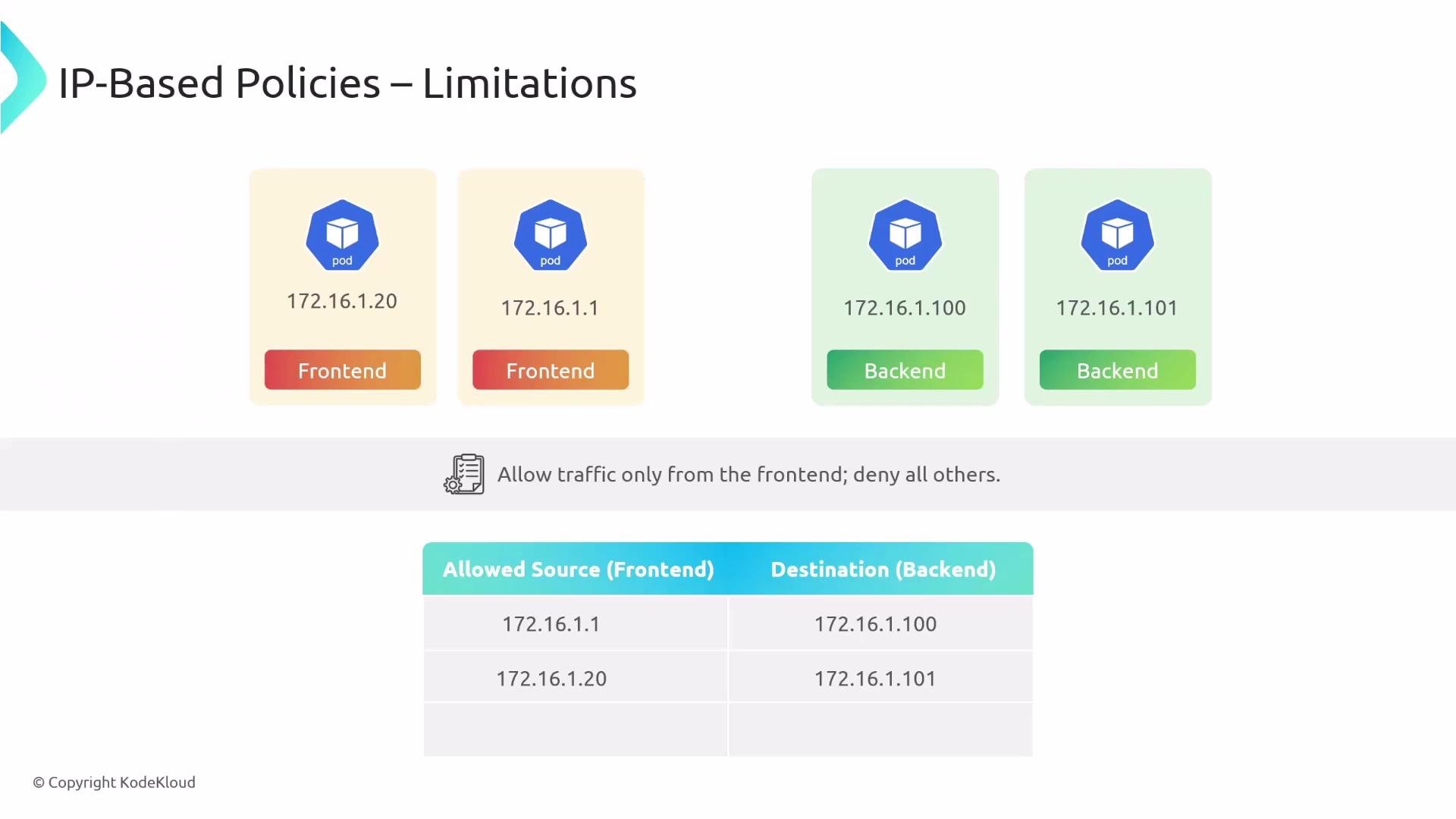
Traditional network policies are often IP-based: they allow or deny traffic by matching source/destination IPs. This approach presents operational challenges in dynamic environments (Kubernetes autoscaling, rolling updates, etc.):- Adding or removing Pods requires updating IP allowlists.
- Rule changes must be propagated to all nodes, which is costly at scale.
- Convergence delays can temporarily block legitimate traffic or allow unintended access.
Cilium identities
Cilium addresses IP volatility by decoupling policy from IP addresses: it assigns stable numeric identities to sets of endpoints that share the same semantic labels (for example, role=frontend). Policies are written against these identities rather than raw IPs, so they remain valid when pods scale or move.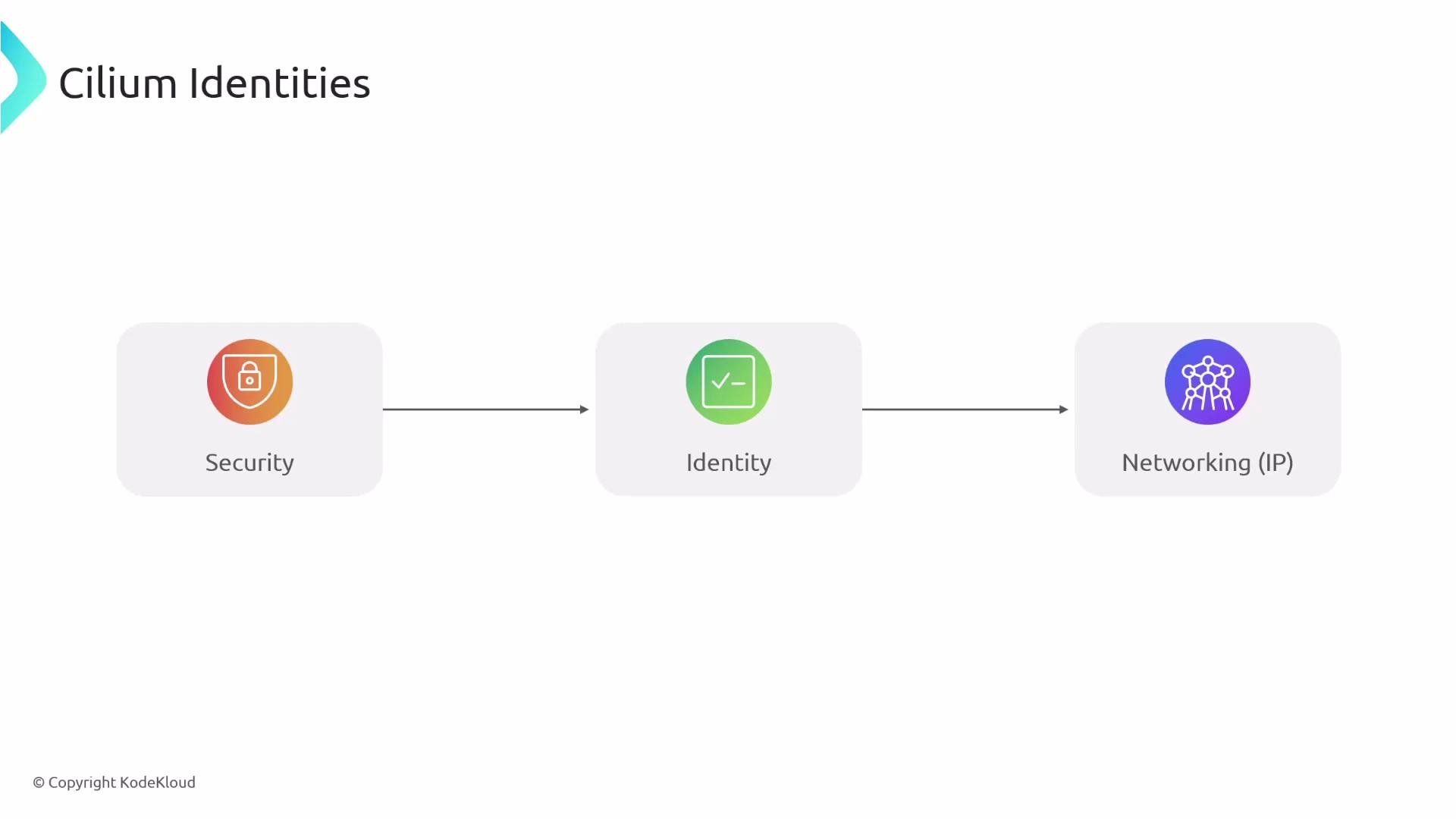
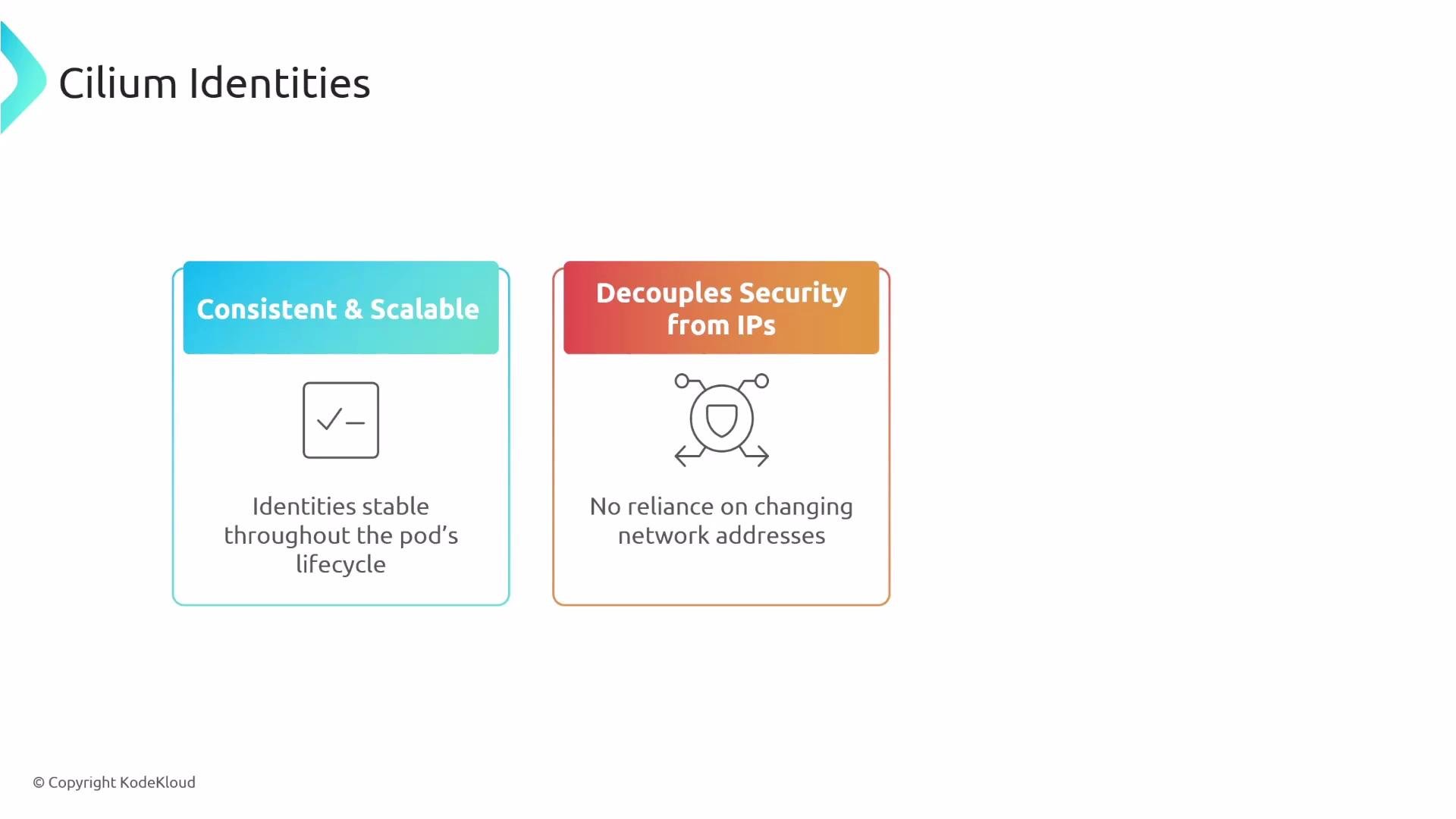
- Identities remain stable across Pod lifecycle events.
- Security policies are decoupled from changing network addresses, simplifying enforcement and scaling.
- In Kubernetes, identities are derived from Pod labels (and other label sources).
- All Pods that share the same set of labels are mapped to the same numeric identity.
- Policies reference identities like role=frontend or role=backend, not IP addresses.
Verifying identities
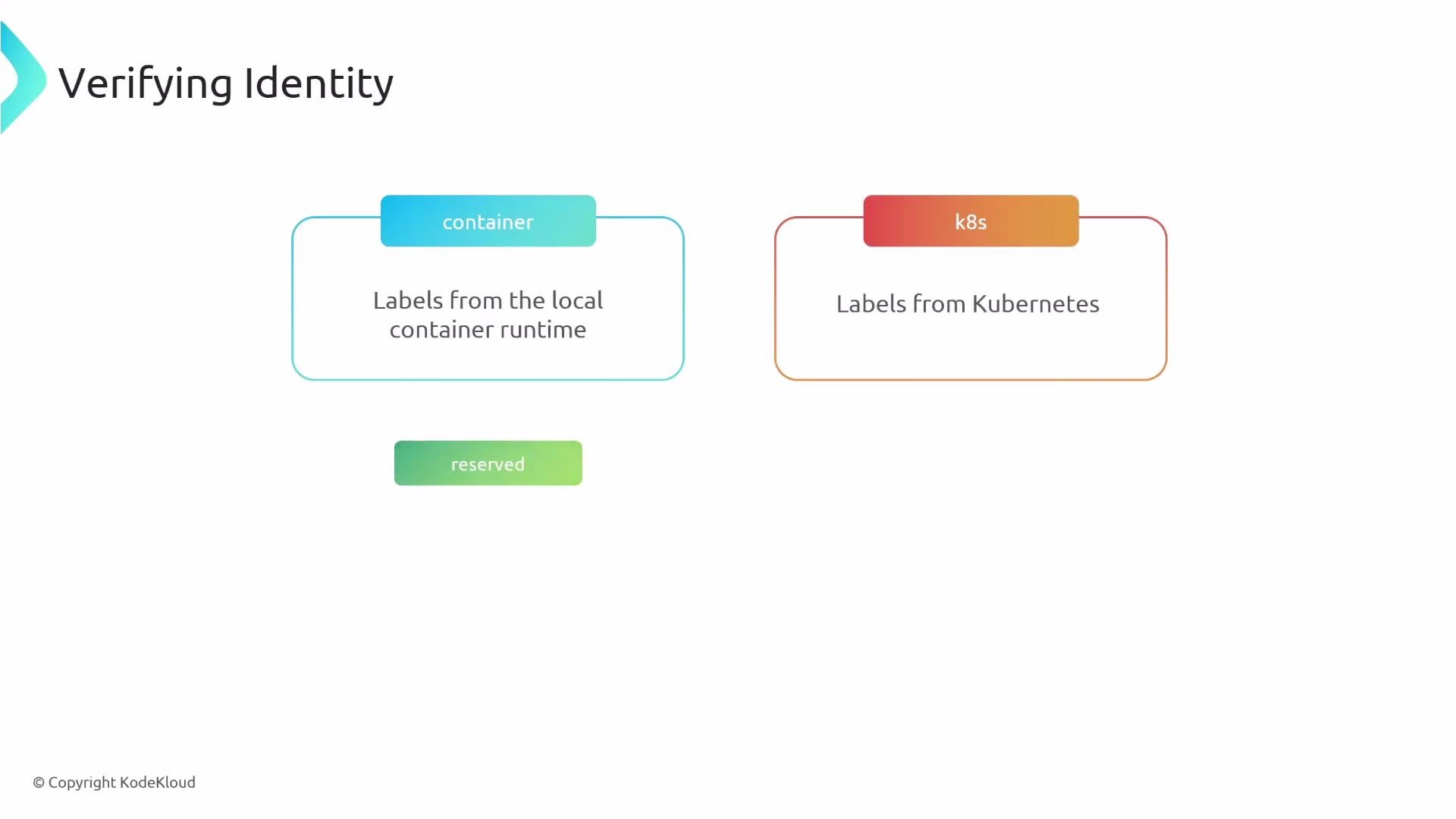
To list identities known by a Cilium agent:k8s: prefix indicates Kubernetes‑origin labels).
You can correlate endpoints to identities using cilium endpoint list: