

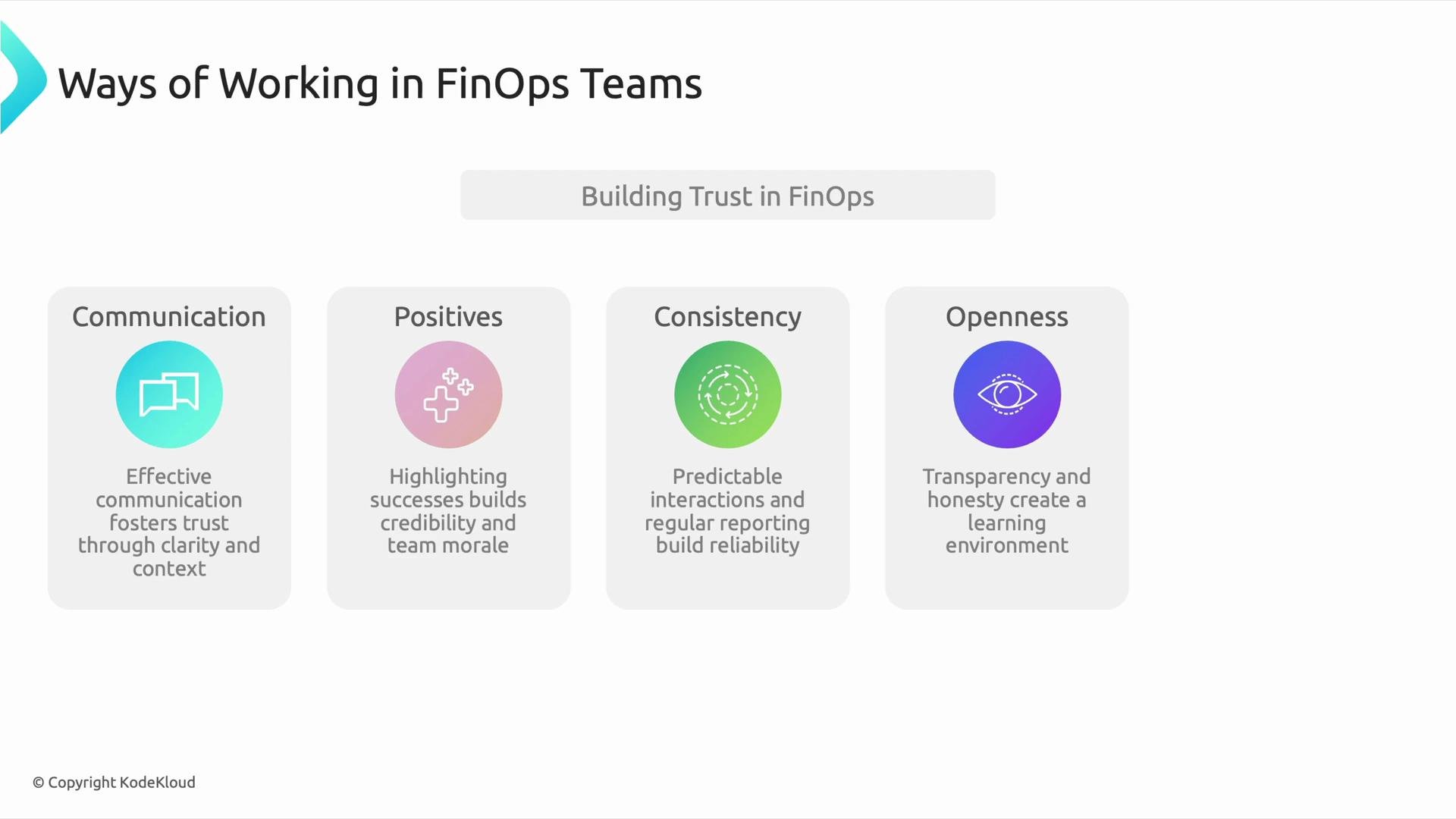
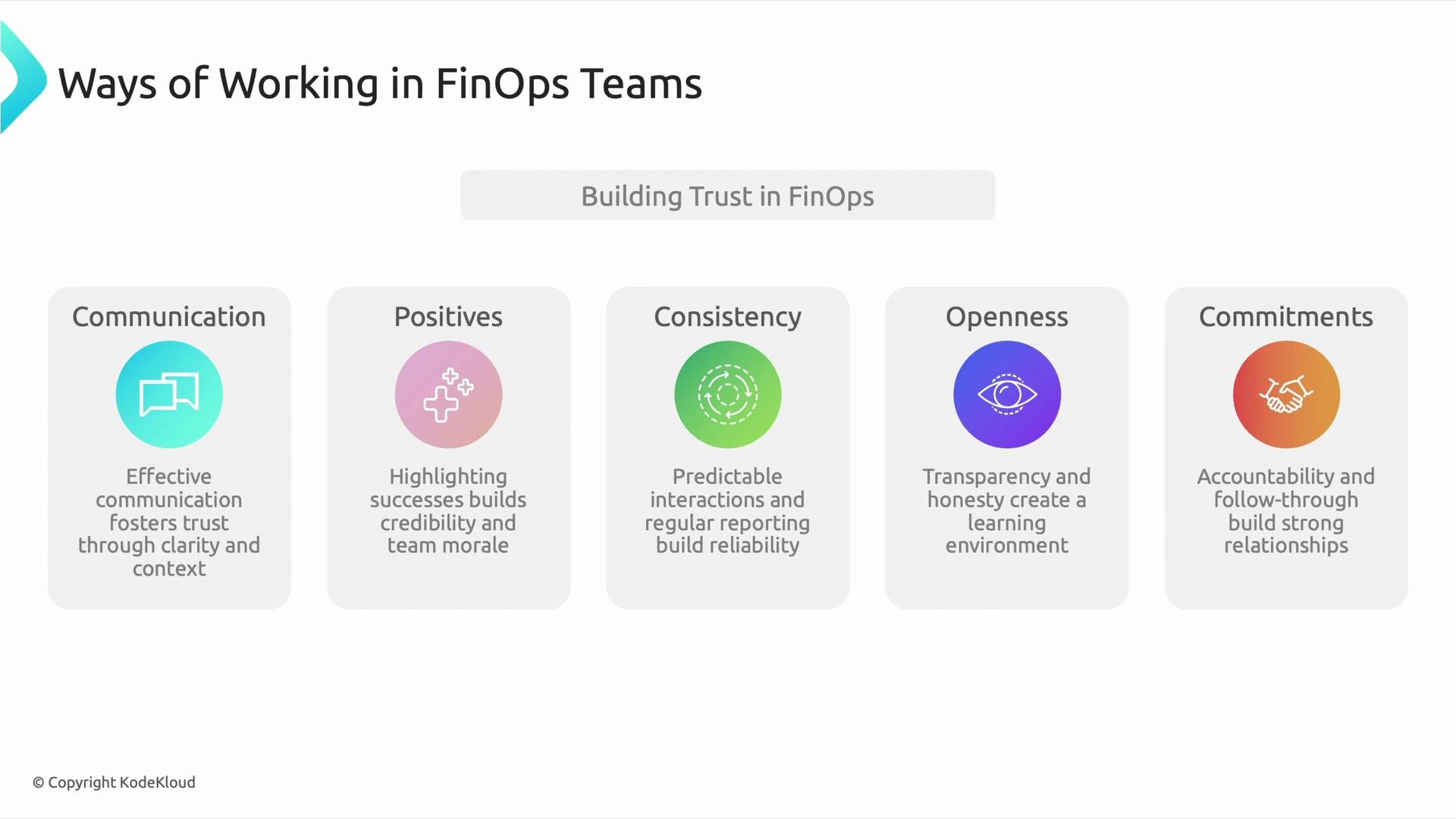
- Communication: Explain what happened, why it matters, and how you’ll work together. For example, instead of only saying “you overspent,” a FinOps lead might say: “Here’s what happened last sprint, here’s the business impact, and here’s how we can fix it together.” Tone and clarity matter.
- Positives: Highlight wins as well as problems. Celebrate cost-saving actions—like reducing unused reserved instances—in dashboards or monthly reports.
- Consistency: Create predictable rhythms and cadences. If cost insights arrive every Friday morning, teams will learn to expect and rely on them.
- Openness: Be transparent about unknowns. It’s better to say, “We don’t yet know why the spike happened, but we’ll investigate and help resolve it,” than to guess or hide information.
- Commitments: Follow through on promises. Delivering small, reliable actions over time builds credibility.
Trust is an operational feature of FinOps — it’s built through predictable communication, visible wins, transparency, and reliable follow-through.
Working patterns of high-performing FinOps teams
With trust established, mature FinOps teams implement tactical behaviors that make cost management predictable and actionable. The following patterns are common across organizations that consistently reduce cloud waste and align spending to business outcomes.-
Financial accountability
- Each team understands which portion of the cloud bill they influence and owns cost outcomes.
- Example: A product team owning several microservices receives a monthly cost breakdown by service. If one service spikes 40%, the team investigates, applies fixes, and reports results. Cost awareness is embedded into their workflow.
-
Real-time insights
- Monthly reports aren’t sufficient. Near-real-time dashboards and alerts enable fast reaction to issues.
- Example: A live-event streaming team receives a cost alert minutes after launching a campaign; the dashboard reveals a misconfigured auto-scaling policy. Quick remediation prevents excess spend. Speed to insight is a core FinOps capability.
-
Proactive optimization
- Teams proactively look for idle resources, long-term trends, and optimizations such as right-sizing or reserved capacity purchases rather than waiting to be told.
- Regular optimization reviews become part of sprint or ops rituals.
-
Predictive planning and scaling
- Engineering and finance collaborate ahead of known demand spikes to align capacity, scaling strategies, and budgets.
- Example: An e-commerce platform models Black Friday traffic weeks in advance. FinOps helps select scaling approaches and capacity commitments that minimize cost while ensuring performance.
Bringing it together
To recap: trust is the foundation of effective FinOps. When teams consistently apply patterns like financial accountability, real-time insights, proactive optimization, and collaborative planning, cost management becomes an operational capability instead of a reporting task. These practices help organizations make faster, data-driven decisions about cloud spend and align engineering behavior with business priorities. What’s next- In the next lesson we’ll examine team structure: centralized vs. distributed FinOps models, core personas, and allied roles. You’ll learn who typically performs which FinOps responsibilities and how cross-functional collaboration is organized.