

Allied personas are cross-functional teams that embed cost-awareness into day-to-day operations. They provide asset visibility, financial controls, sustainability metrics, operational checks, and security cost-tracking so FinOps and core cost-management teams can make informed decisions.
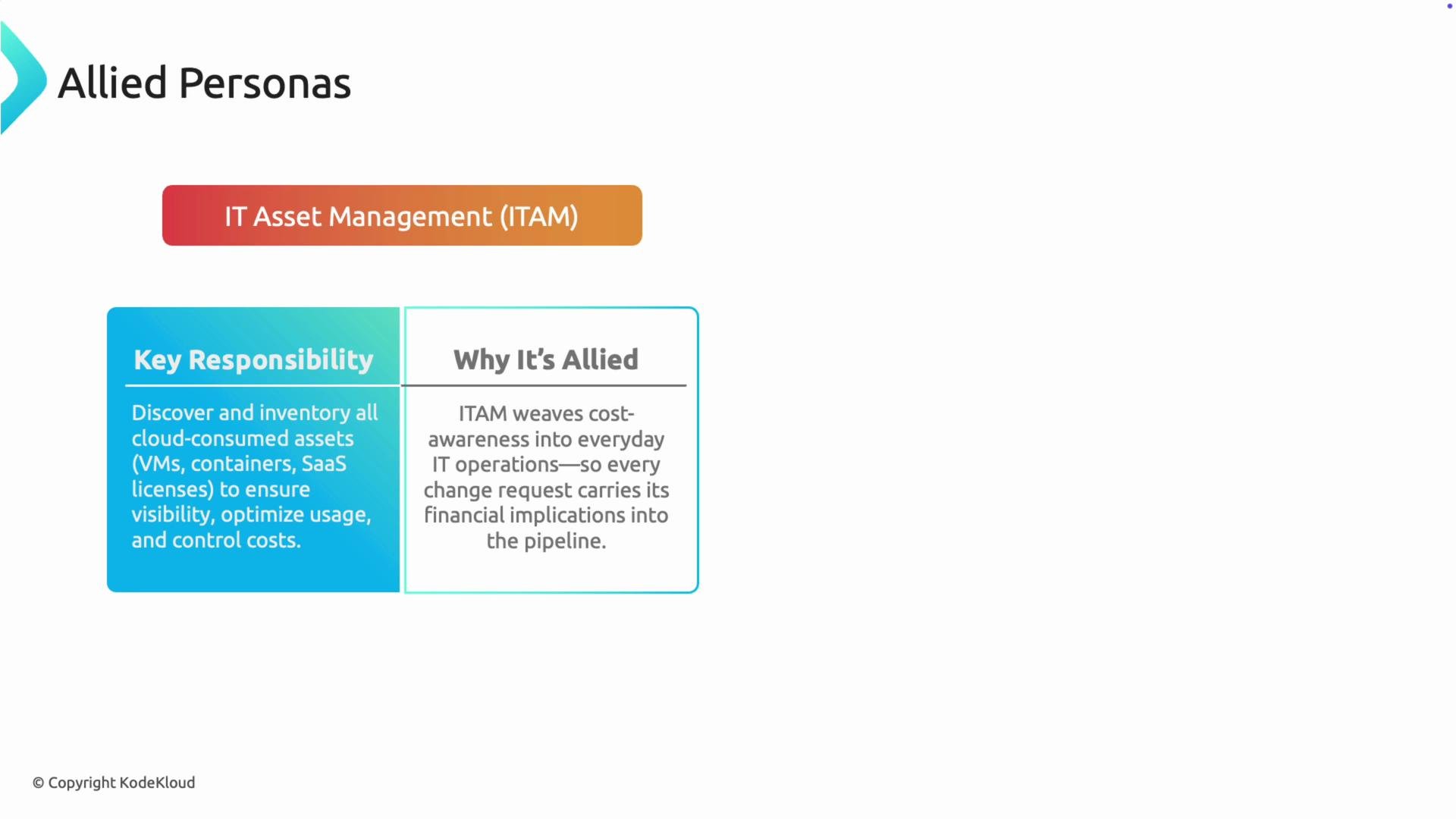
IT Asset Management (ITAM)
ITAM is the inventory backbone. Their primary responsibility is discovering and inventorying all cloud-consumed assets.- What they do: track virtual machines used for simulations, containers for onboard software, SaaS licenses for dev tools, and other digital assets.
- Why it matters: ITAM gives a single source of truth for what exists, when it was created, and where potential inefficiencies (idle VMs, orphaned storage, duplicate licenses) are hiding.
- How they support cost-management: by surfacing actionable inventory data that FinOps and engineering teams use to reduce waste and align resources with budget goals.
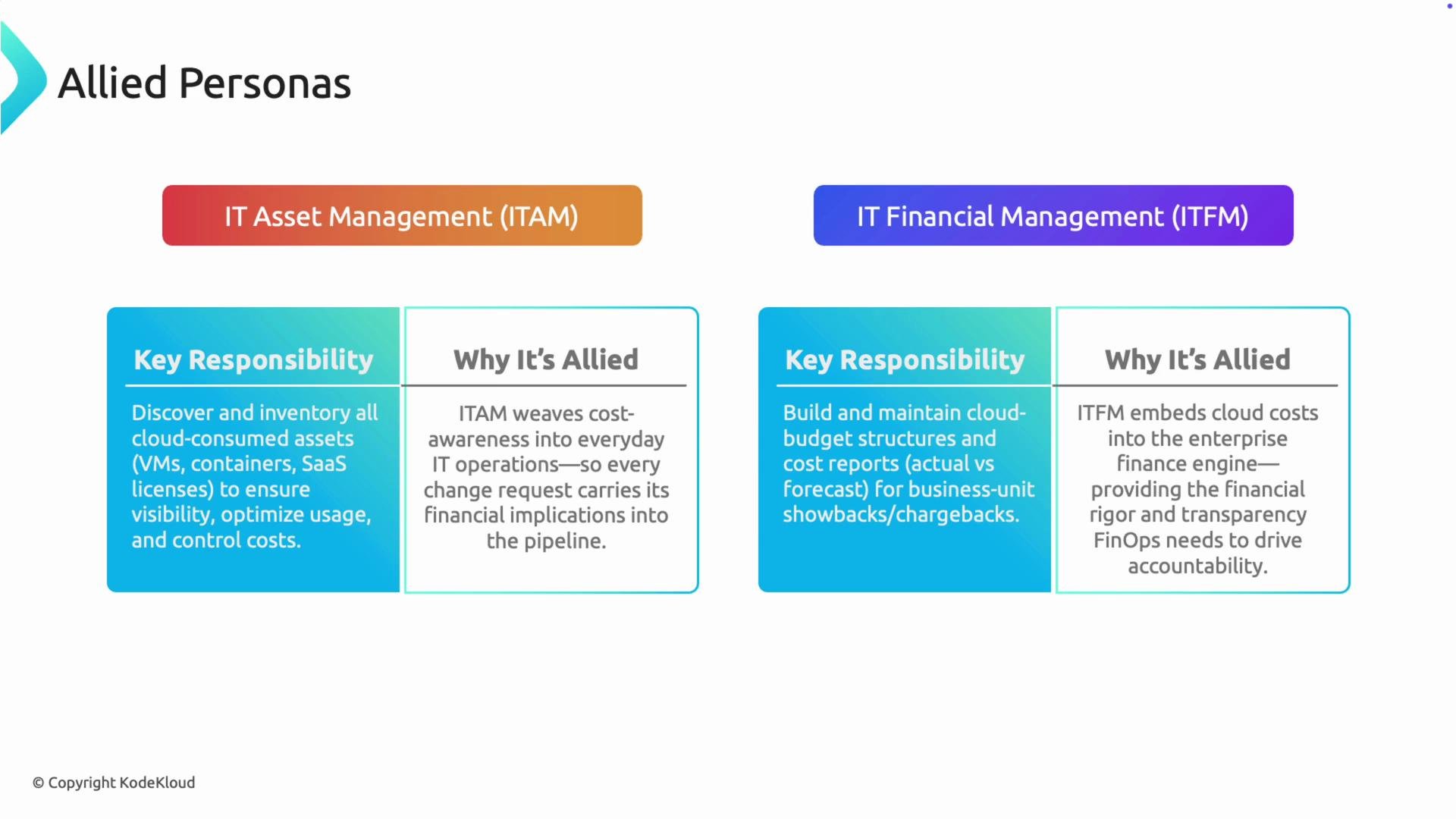
IT Financial Management (ITFM)
ITFM takes the financial lens on top of asset data.- What they do: analyze invoices, track departmental cloud spend, negotiate rates, and map costs to organizational units and projects.
- Why it matters: ITFM translates asset and usage data into firm financial controls and forecasts, spotting expensive regions, inefficient instance selections, and contract opportunities.
- How they support cost-management: they ensure cloud spend maps to business value, and they enforce budgetary guardrails that guide technical decisions.
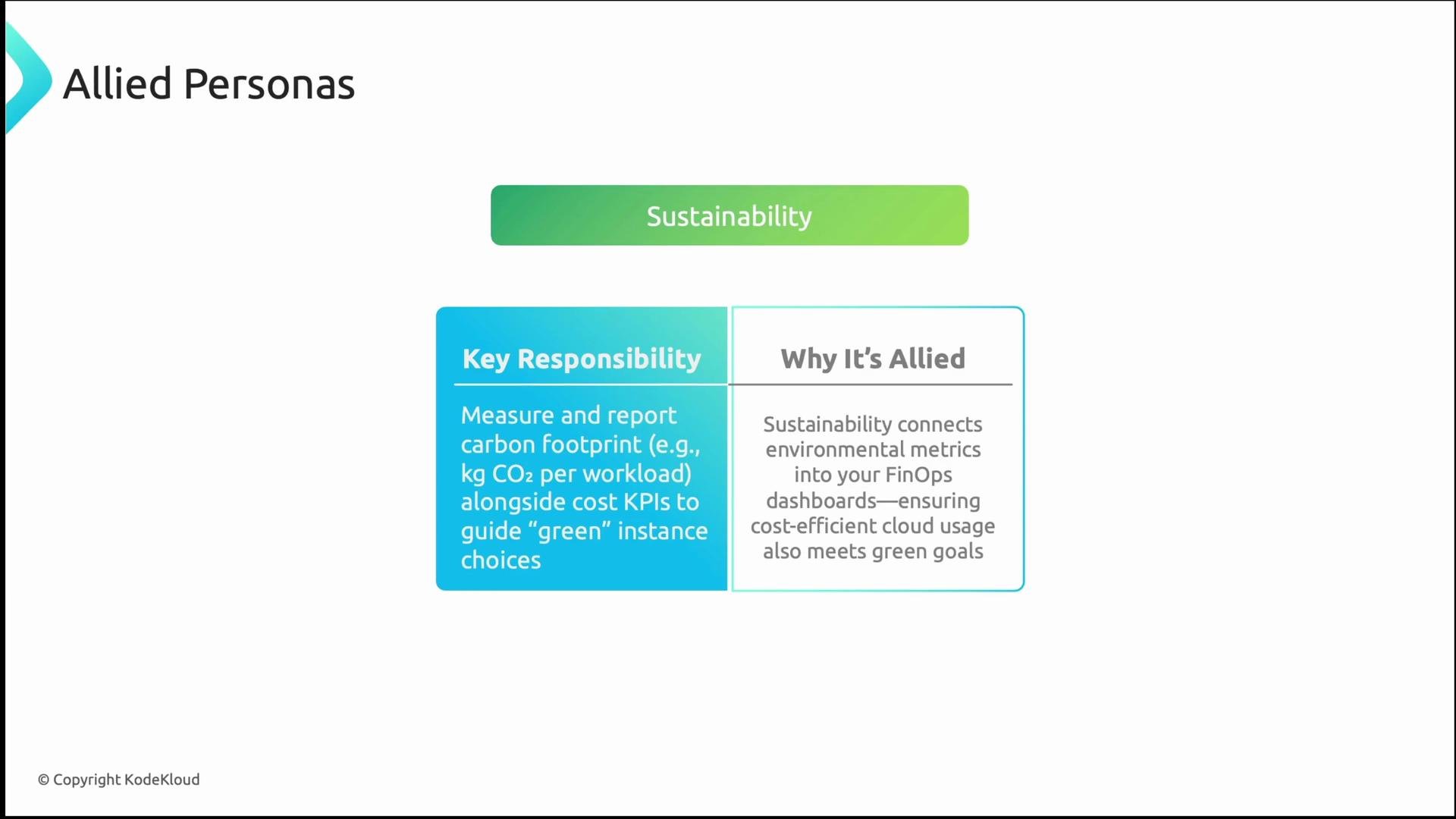
Sustainability / Environmental Team
As model training and simulation grow, so does our energy footprint. The sustainability team measures and reports environmental impact alongside cost KPIs.- What they do: quantify carbon emissions (e.g., kg CO2 per workload), recommend greener instance types, and suggest scheduling strategies to use lower-carbon energy periods.
- Why it matters: aligning environmental metrics with cost metrics helps balance financial efficiency and corporate sustainability goals.
- How they support cost-management: they drive decisions that can reduce energy consumption and often reduce cost (for example, by recommending more efficient instance families or optimized scheduling).
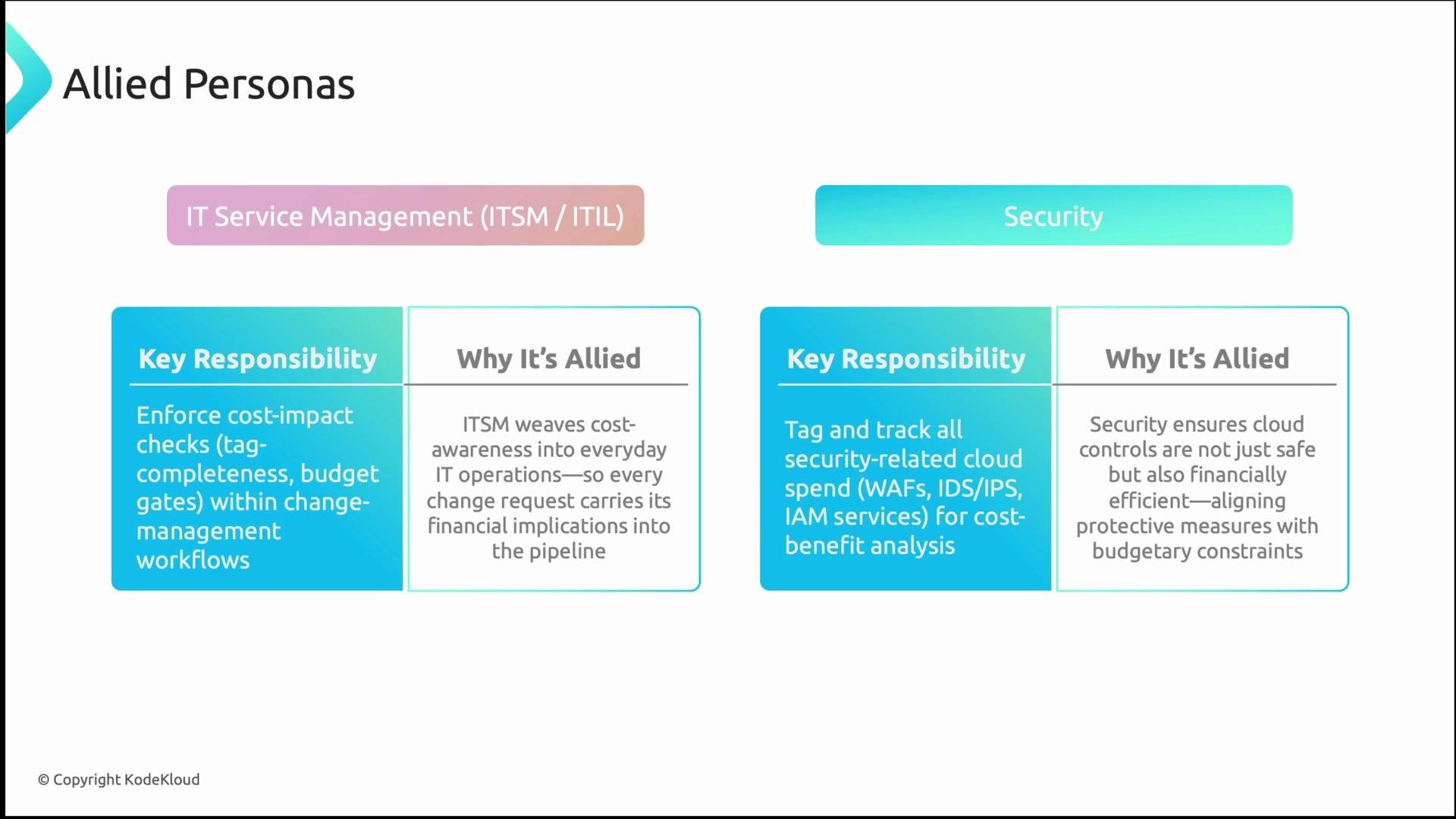
IT Service Management (ITSM / ITIL)
ITSM embeds process and change control into deployments.- What they do: perform cost-impact checks during change requests, ensure deployment approvals include financial considerations, and manage capacity for on-prem or hybrid systems that affect cloud usage.
- Why it matters: ITSM prevents surprise costs by gating changes with operational and financial context.
- How they support cost-management: by making cost-awareness part of standard change and incident workflows, ensuring decisions are reviewed for both technical and budget impact.
Security
Security is non-negotiable in autonomous systems, and it has measurable cloud costs.- What they do: tag and track security-related cloud spends (WAFs, IDS/IPS, IAM, logging and detection pipelines), and evaluate cost vs. protection level.
- Why it matters: security teams balance risk mitigation with cost-efficiency, ensuring protection measures are effective without excessive spend.
- How they support cost-management: by aligning security controls to budget priorities and identifying opportunities to achieve protection more efficiently.
Security spending must be tracked and optimized — cutting costs at the expense of protection can introduce unacceptable risk, especially in safety-critical systems like autonomous vehicles.
Quick Reference Table
How these personas work together
- ITAM provides the inventory.
- ITFM overlays financial context and budgets.
- Sustainability adds environmental KPIs to the dashboards.
- ITSM enforces process checks that include cost considerations.
- Security ensures protective measures are optimized for cost and effectiveness.