

Company overview
TechNova Solutions is a mid-size software firm delivering SaaS products built on AWS. Their objectives are to remain scalable, agile, cost-optimized, and operationally resilient—seeking the best cost-to-service fit across workloads.
- AWS Lambda
- Amazon RDS
- Amazon S3
- Amazon ECS

Business objectives
- Scalable infrastructure that supports growth
- Agile deployments and faster time-to-market
- Cost-optimized cloud spend
- Operational resilience and security
Challenges
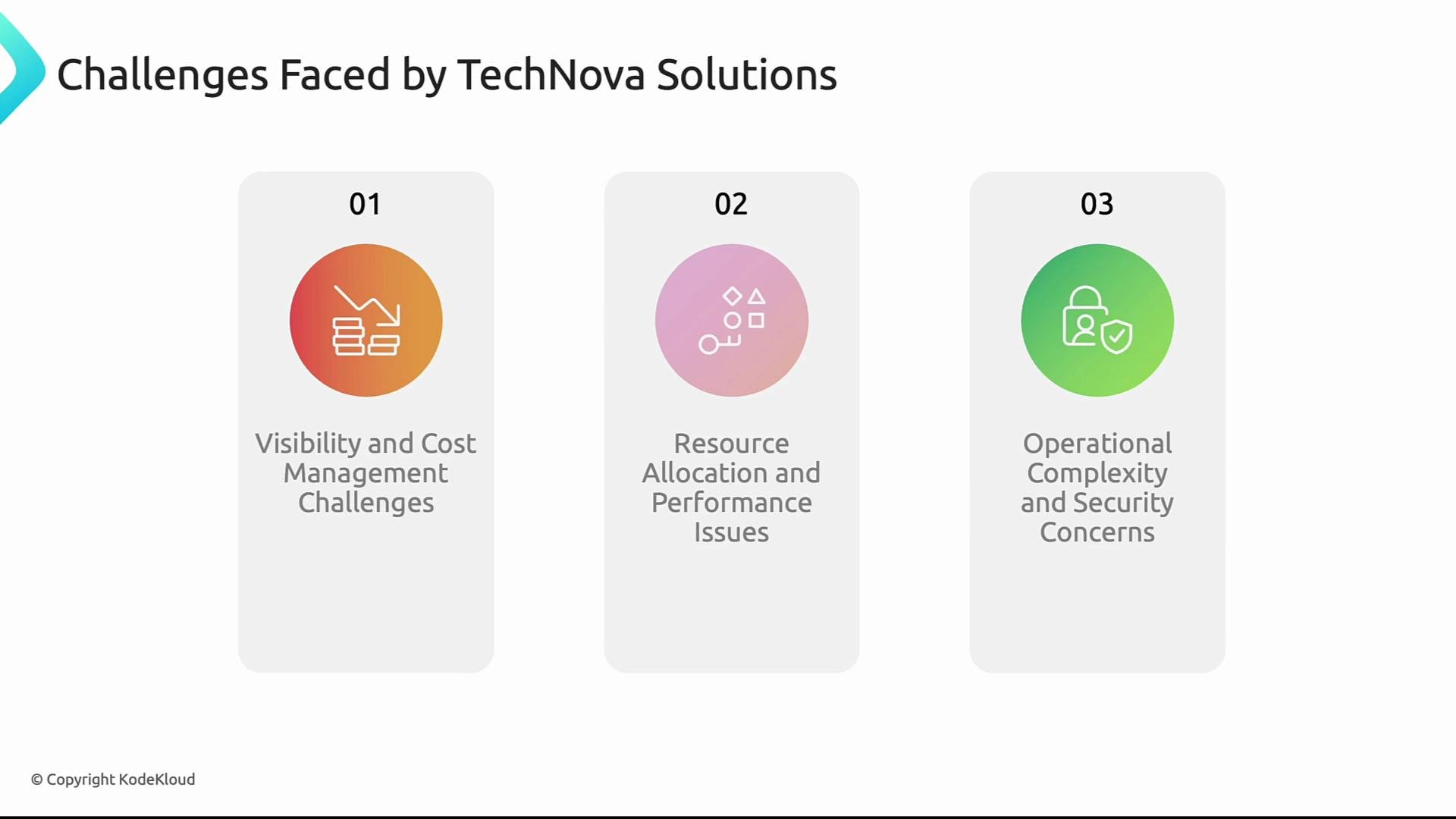
TechNova faces three core problems that FinOps must solve:- Visibility & cost allocation: No clear mapping of spend to teams, products, or environments.
- Resource allocation & performance: Resources are created freely; many run at low utilization (e.g., 10%) with no corrective action.
- Operational complexity & security: Over-permissive access and sparse tracking increase governance risks.
The FinOps approach (Inform → Optimize → Operate)
Use the following phased approach to move from discovery to sustained cost governance.Inform phase — Build awareness and alignment
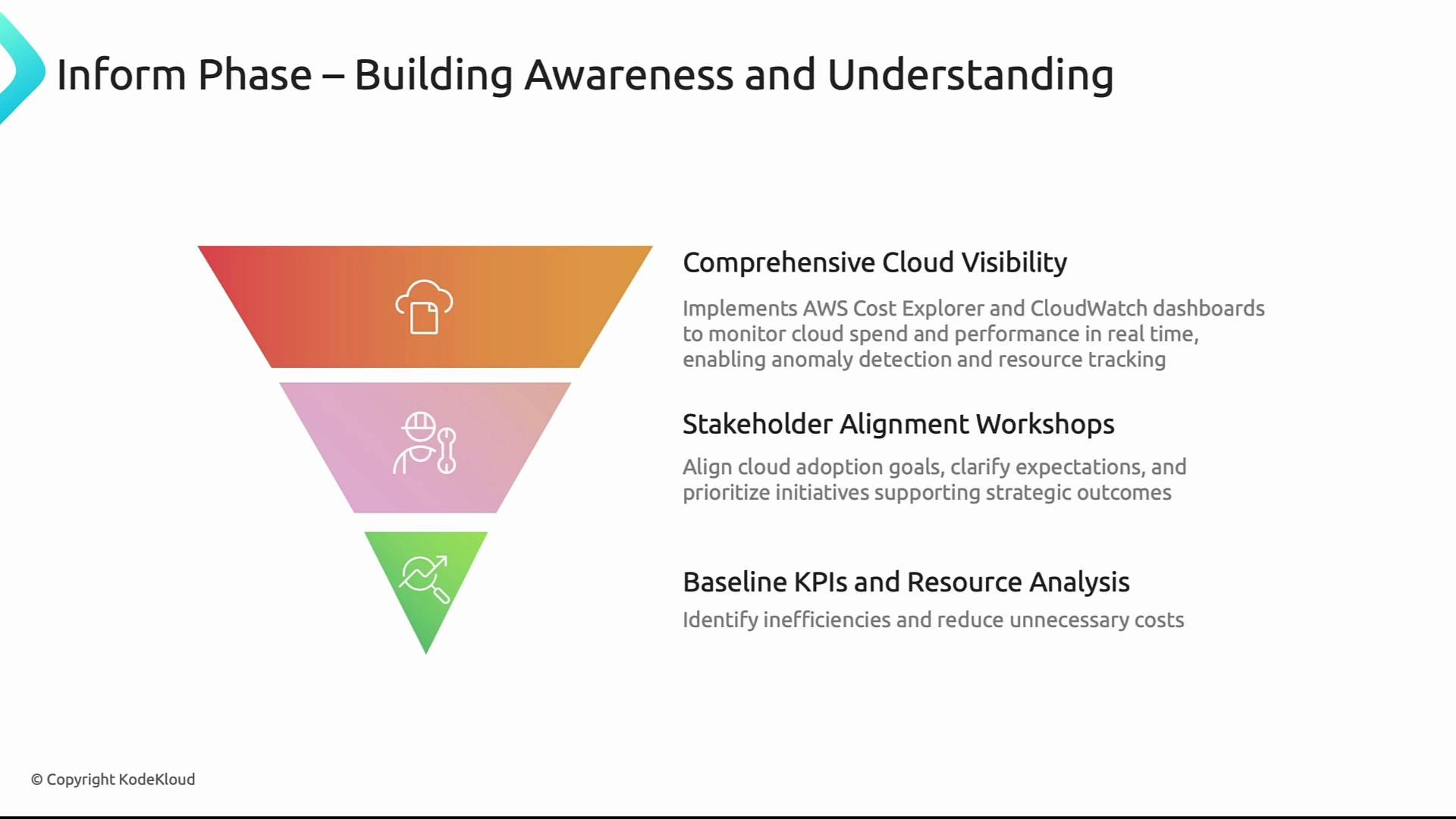
Primary goal: make cost and usage visible, and align stakeholders on KPIs and ownership. Key activities:- Implement visibility dashboards (AWS Cost Explorer, AWS Billing Console, or third-party tools) to track trends and anomalies.
- Run stakeholder alignment workshops that include CTO, finance, and engineering to agree on KPIs and ownership.
- Define a tagging strategy and remediation policy (target example: tag 90% of resources; review and remediate untagged resources regularly).
Optimize phase — Reduce waste and lower run costs
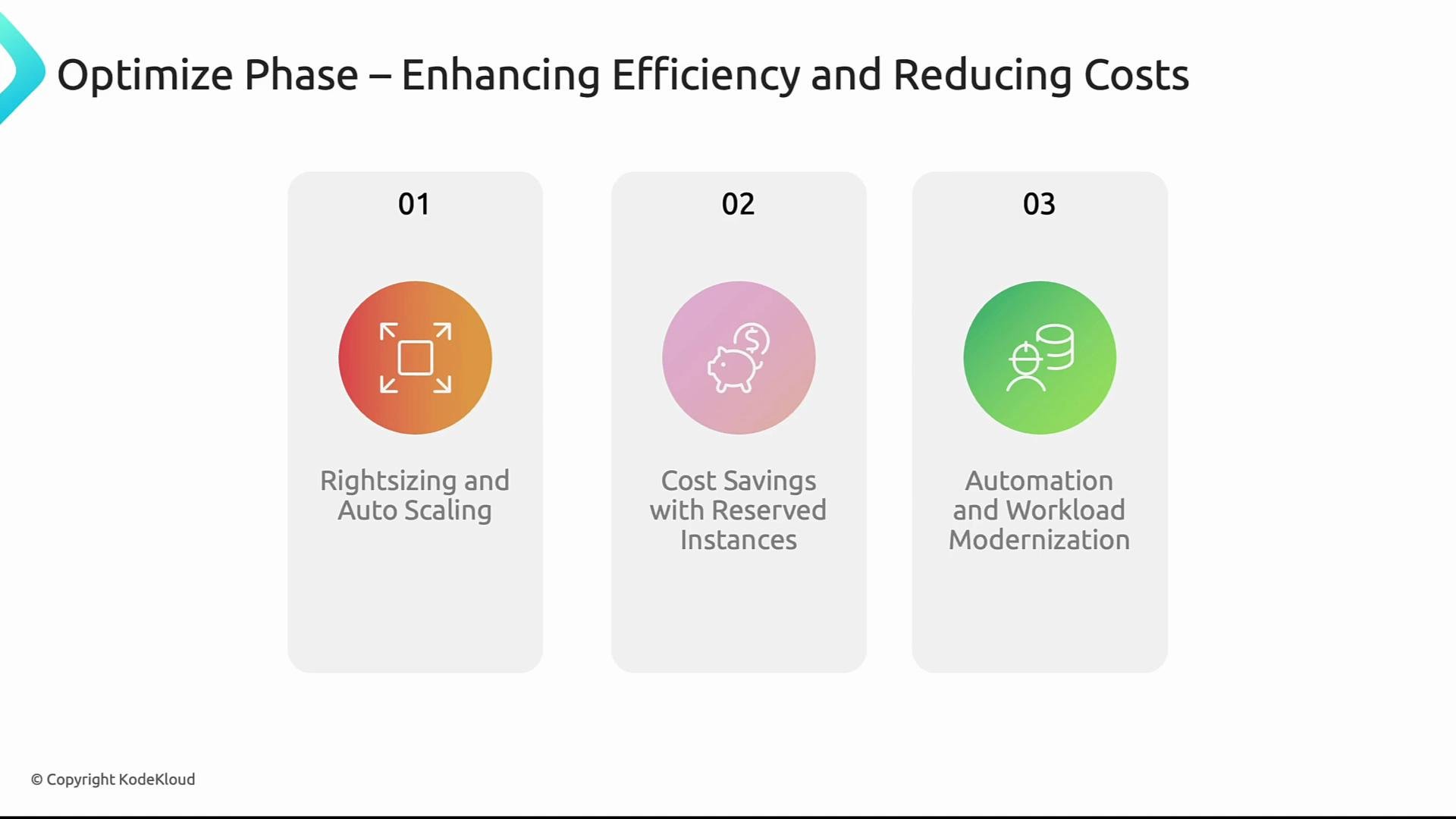
With visibility and KPIs in place, apply targeted optimization techniques:- Rightsizing & Auto Scaling: Match instance sizes to historical utilization and use Auto Scaling to handle variability.
- Reserved capacity / Savings Plans: Buy predictable capacity for steady-state workloads (Reserved Instances, Savings Plans).
- Automation & modernization: Use managed services and automation to reduce operational overhead (e.g., migrate long-running EC2 workloads to managed databases or serverless platforms).
Operate phase — Sustain and evolve improvements
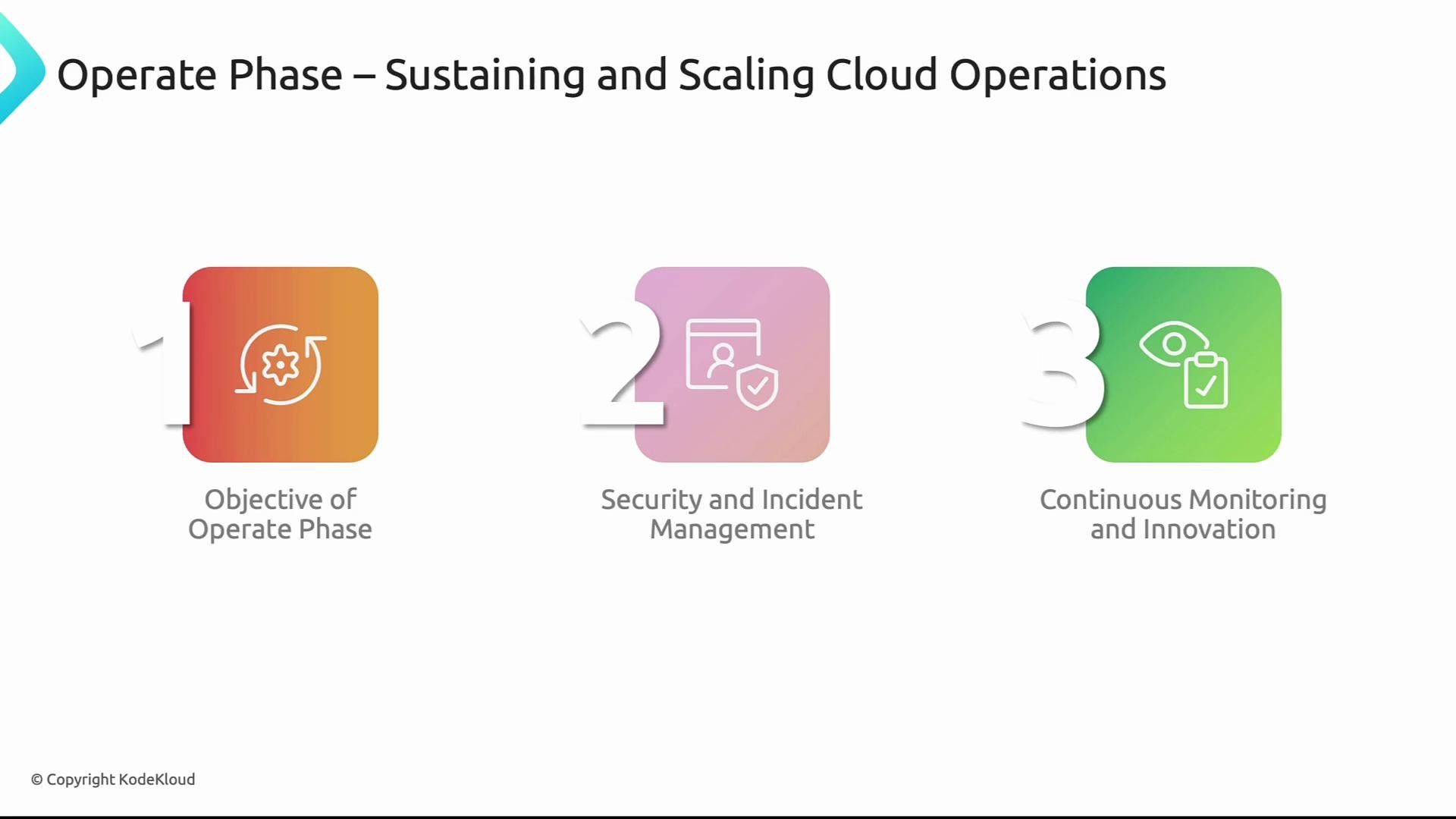
The Operate phase embeds processes and ownership so optimizations stick:- Define roles & process flows: Who audits, who remediates, who approves budget/infra changes. Schedule quarterly audits and daily monitoring for anomalies.
- Security & incident response: Triage cost spikes (for example, expected cost 1000 → observed 1600 implies a 600 delta); investigate whether a feature rollout, misconfiguration, or attack caused it and document findings.
- Continuous monitoring & innovation: Evaluate new managed services and features; run POCs and adopt those that demonstrably reduce cost or improve resilience.
Continuously measure cost and performance against the KPIs established in the Inform phase. Optimization must be recurring—embedded into daily operations and quarterly reviews—not a one-off project.
Automation or modernization without clear ownership and governance will not sustain savings. Always pair automation with accountability, tagging, and audit practices.
Example: migrating databases (EC2 → Amazon RDS)
A common modernization pattern: migrate a self-managed database on EC2 to Amazon RDS for PostgreSQL. Benefits:- Managed backups, patching, and automated failover
- Easier scaling and reduced operational overhead
- Lower long-term operational cost in many cases
- Run a POC to measure operational overhead, recovery point objective (RPO), and total cost of ownership.
- Validate performance and compatibility.
- Migrate incrementally and monitor cost/performance post-cutover.
Final adoption outcomes
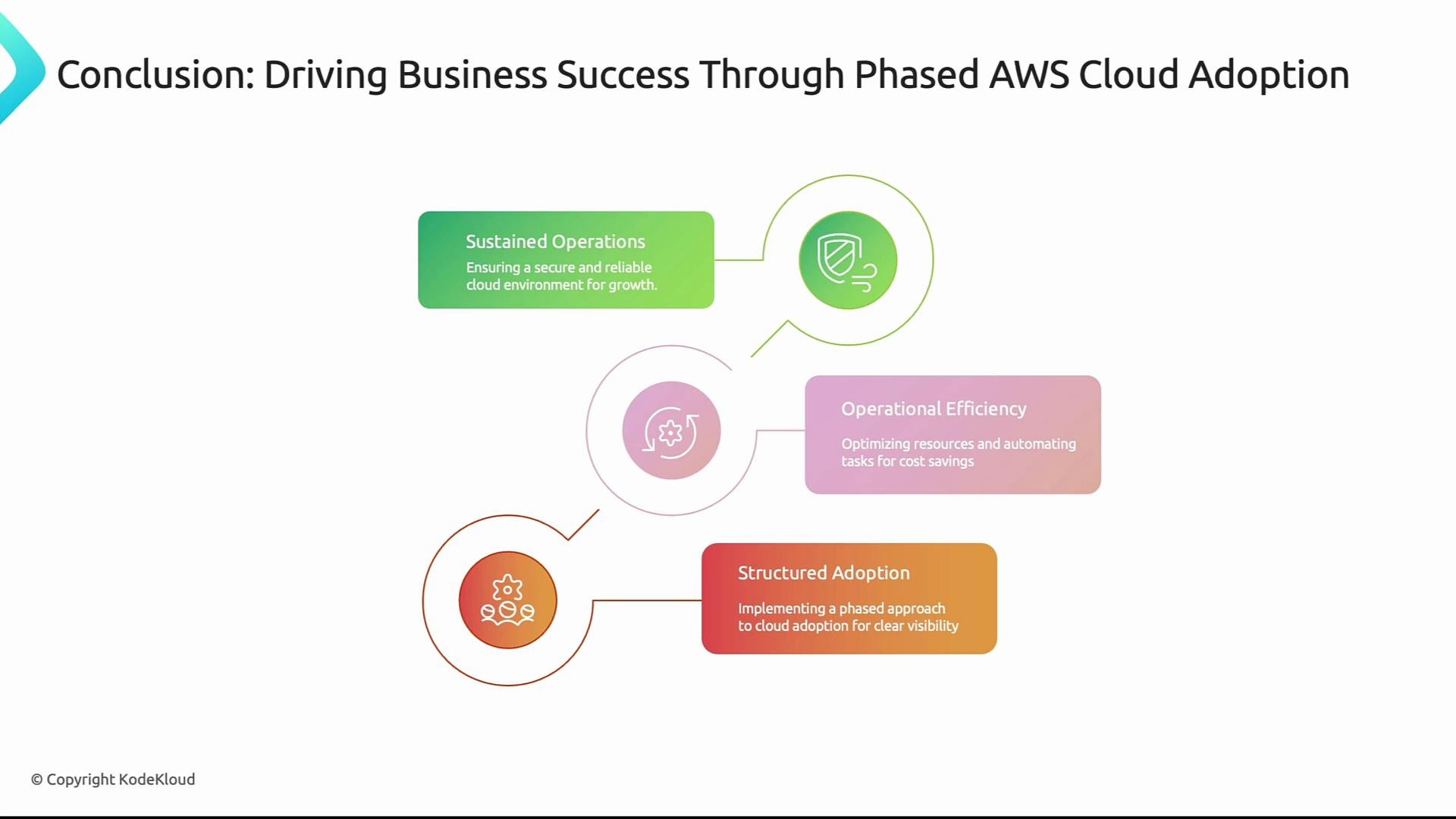
Applying the three phases produces this progression for TechNova:- Structured adoption: standardized tagging, clear ownership, and meaningful dashboards.
- Operational efficiency: rightsizing, capacity commitments (Reserved Instances / Savings Plans), and targeted modernization reduce recurring costs.
- Sustained operations: governance, monitoring, and a FinOps culture ensure continuous improvement.
Next steps & resources
Apply this pattern to your organization:- Start with Inform: build dashboards, agree KPIs, and enforce tagging.
- Move to Optimize: run rightsizing, scaling, and capacity commitment experiments.
- Institutionalize Operate: define roles, schedule audits, and embed FinOps into daily work.
- AWS Cost Explorer
- AWS Auto Scaling
- EC2 Reserved Instances and Savings Plans
- Amazon RDS for PostgreSQL