

Current issues (pain points)
Identify measurable problems and tie them to business impact. Below are the primary issues, their business impact, and the representative metrics used in this example.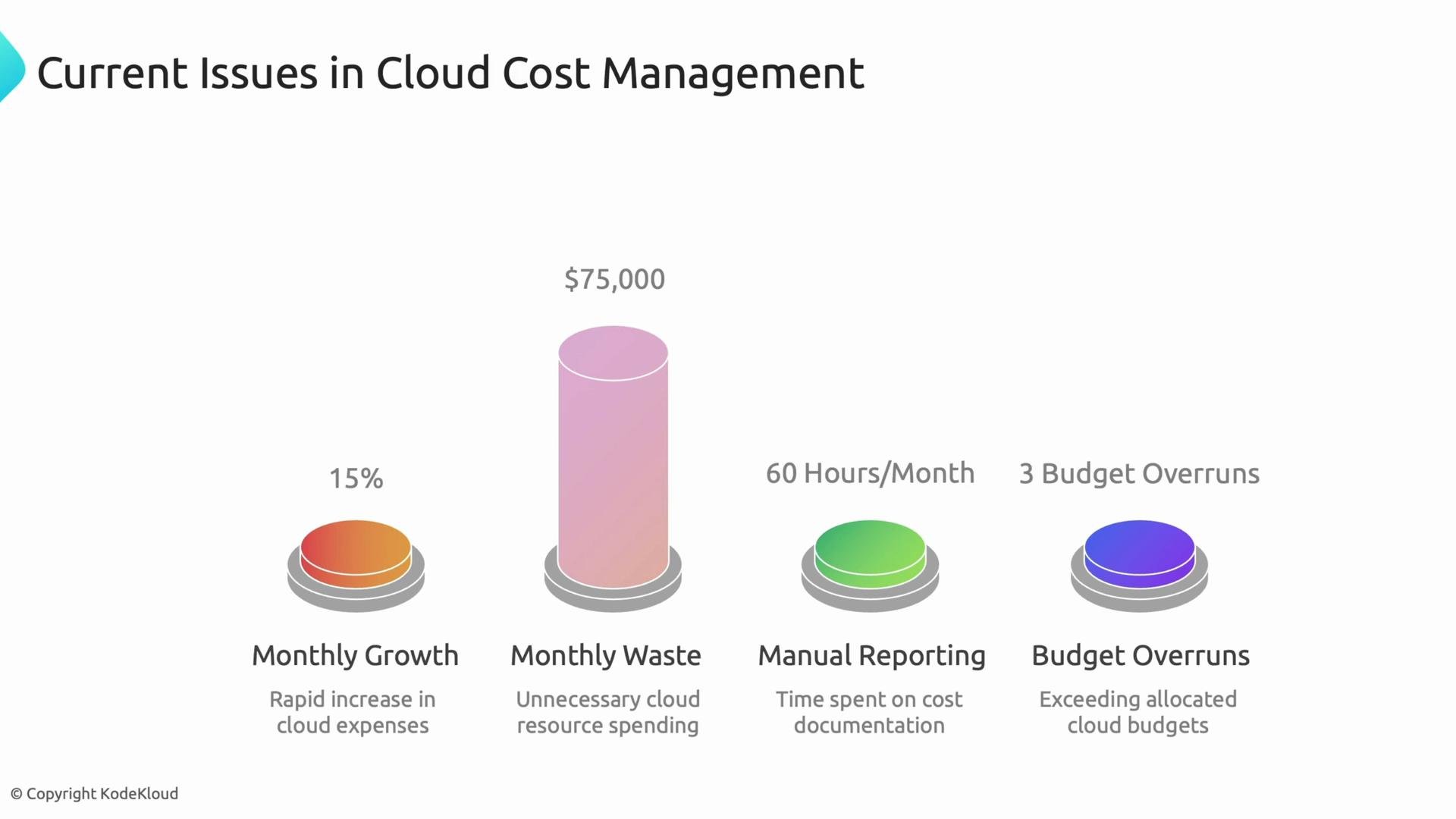
Solution: investment (annual)
Propose a focused set of investments to address the pain points. Below are the estimated annual costs used in this example.
Compare this investment to the projected benefits when making the case.
Benefits (annual)
Estimate the quantifiable outcomes from the investment. These should be defensible and tied to the pain points above.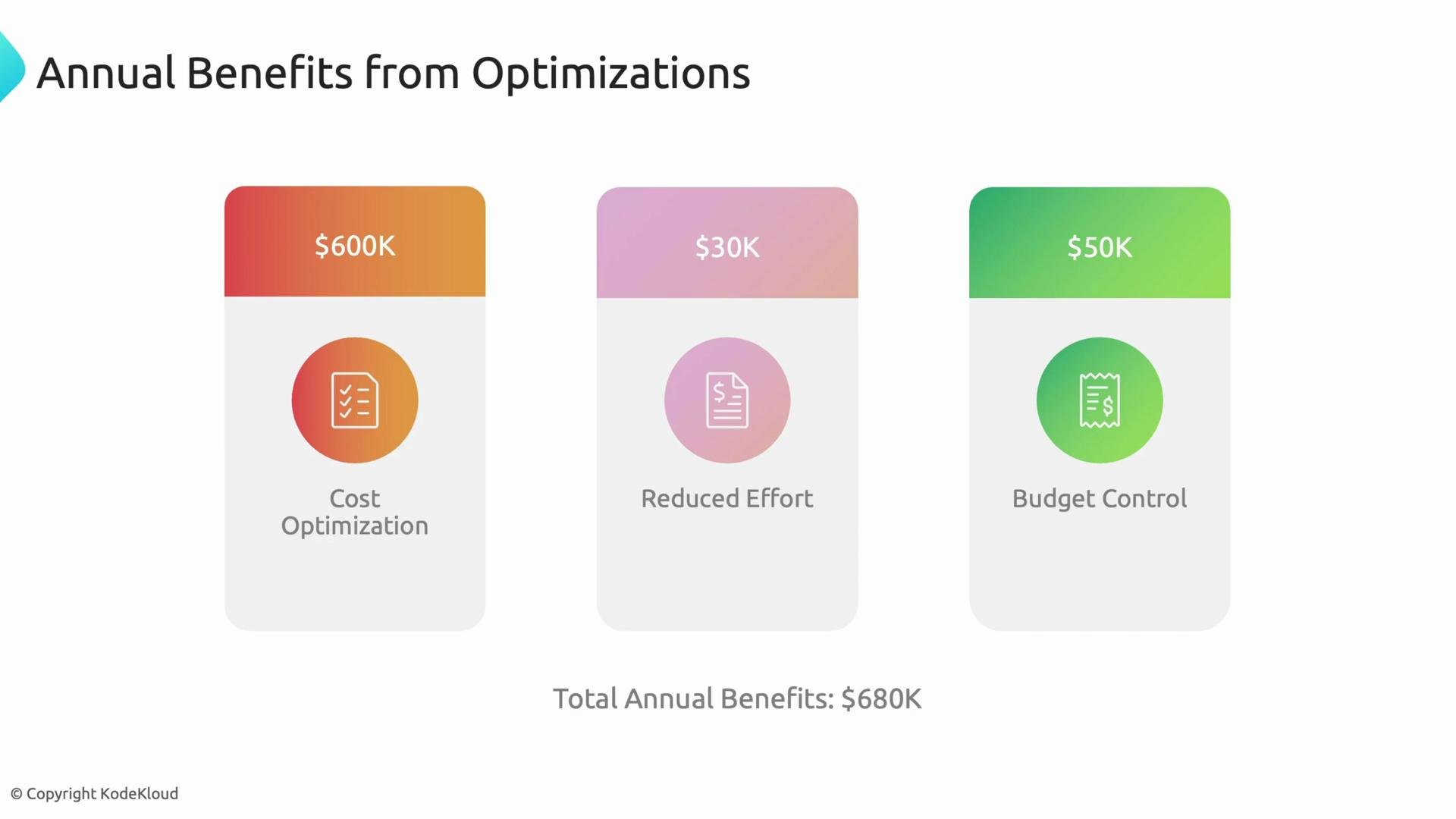
Financial metrics (simple, defendable)
Present two easy-to-understand financial metrics so leadership can quickly see the value.
These figures show a strong return and a short payback window, which are compelling points for stakeholder approval.
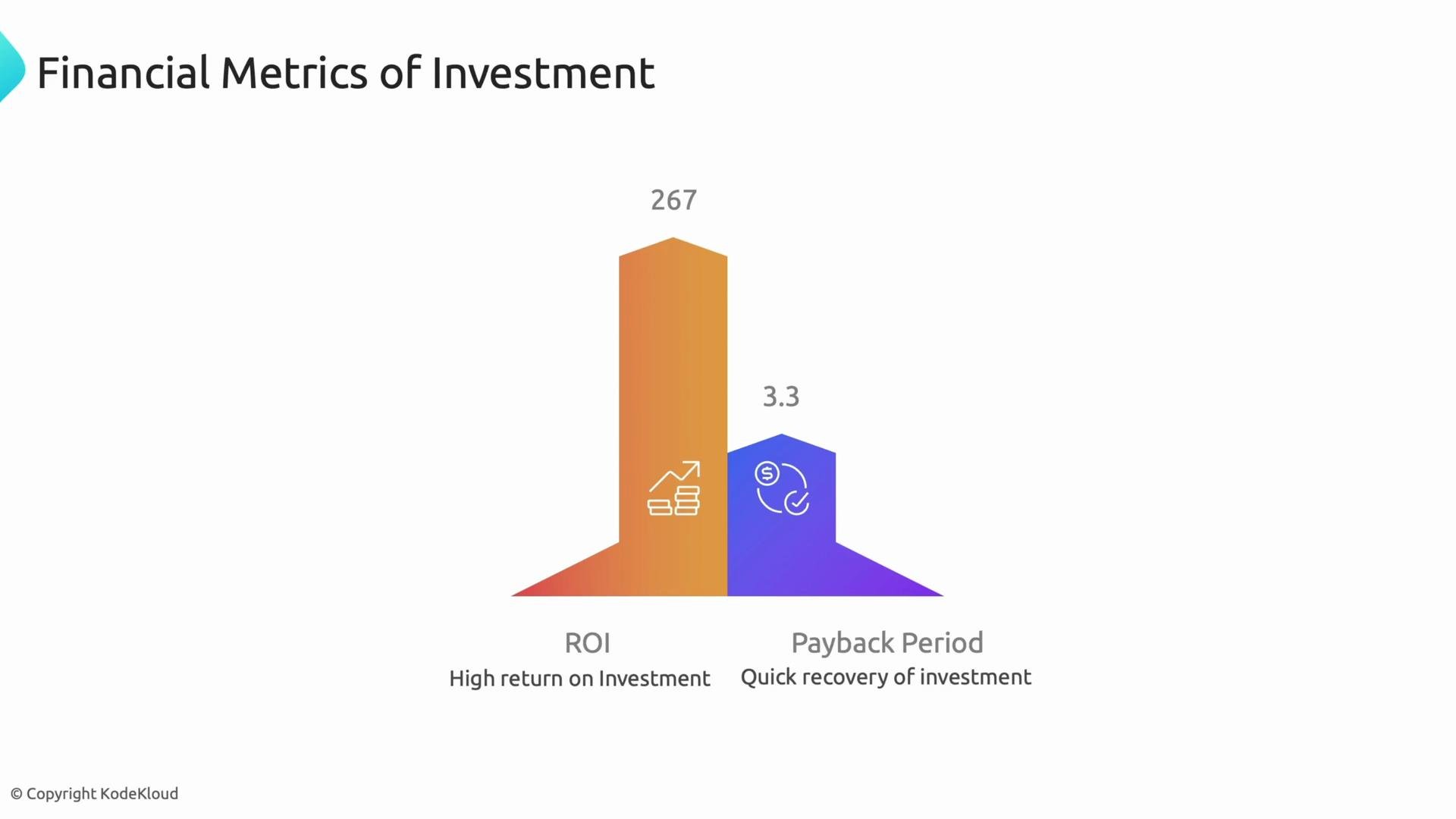
These numbers are illustrative. Use your organization’s actual spend, waste estimates, and staffing costs when building your business case. Directionally accurate estimates are better than waiting for perfect precision—start small and iterate.
Summary and next steps
- Translate concrete pain points (growth rates, wasted spend, manual effort, forecasting misses) into measurable costs.
- Propose targeted investments (platform, training, personnel) and estimate annual costs.
- Quantify benefits and present clear financial metrics—
ROIand payback period—to make the case to leadership. - Use this template to adapt estimates to your organization and iterate as you collect better data.
- FinOps Foundation
- Cloud cost optimization best practices (AWS)
- Cloud cost management overview (Google Cloud)