

In this lesson we will zoom in on the core FinOps personas — the people who routinely make decisions that affect cloud cost, efficiency, and value.
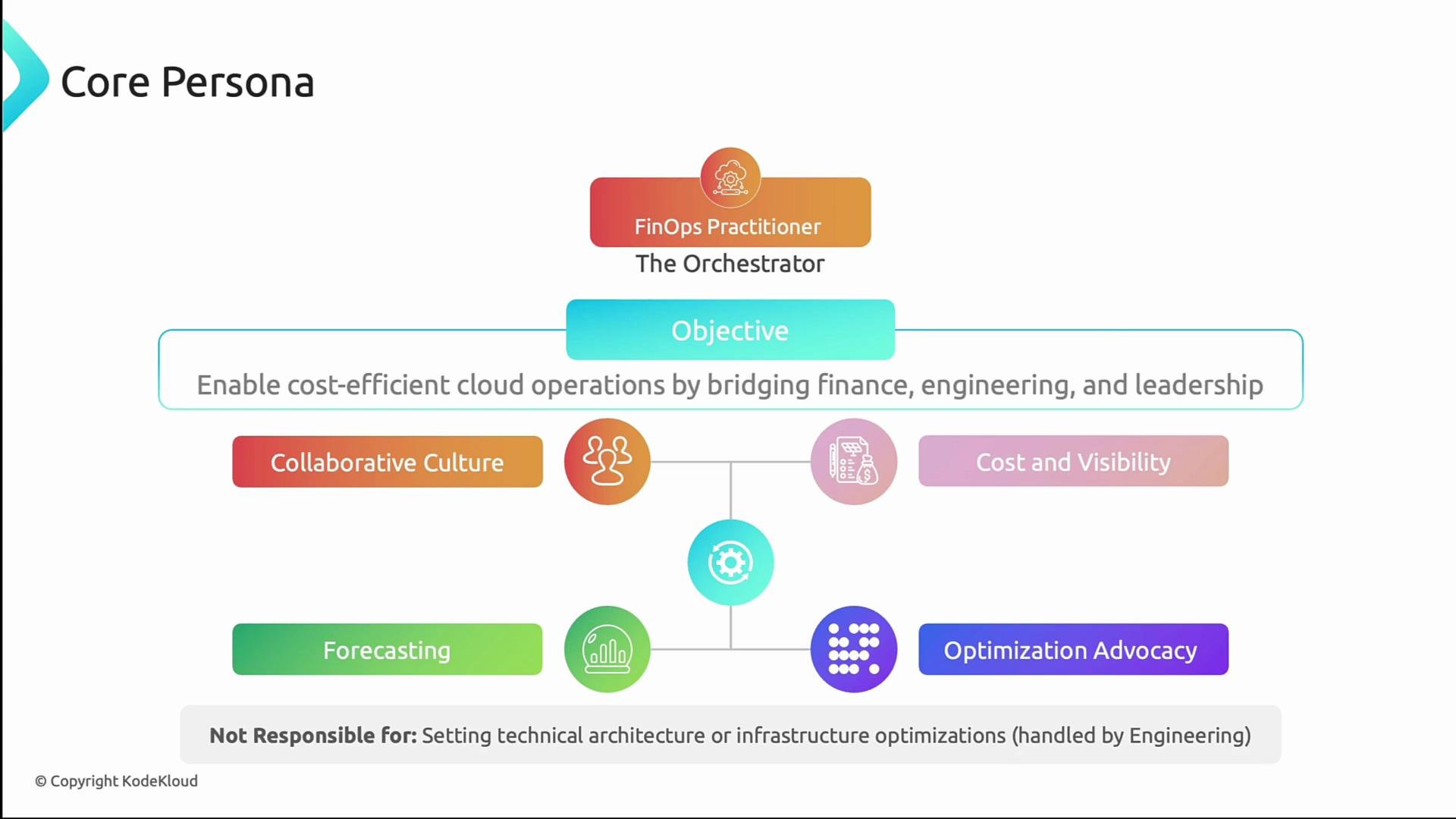
FinOps Practitioner — The Orchestrator
The FinOps practitioner acts as the orchestrator, bringing finance, engineering, product, procurement, and leadership into alignment. Their primary objective is to ensure cloud operations are cost-effective by enabling the right conversations between the right people at the right time. Key areas of focus:- Collaborative culture: build trust and shared accountability across teams.
- Cost and visibility: ensure cloud spend is visible, understandable, and has no unpleasant surprises.
- Optimization advocacy: promote waste reduction, cost-efficient patterns, and incentives for optimization.
- Forecasting: provide usage and cost forecasts for planning rather than reactive firefighting.
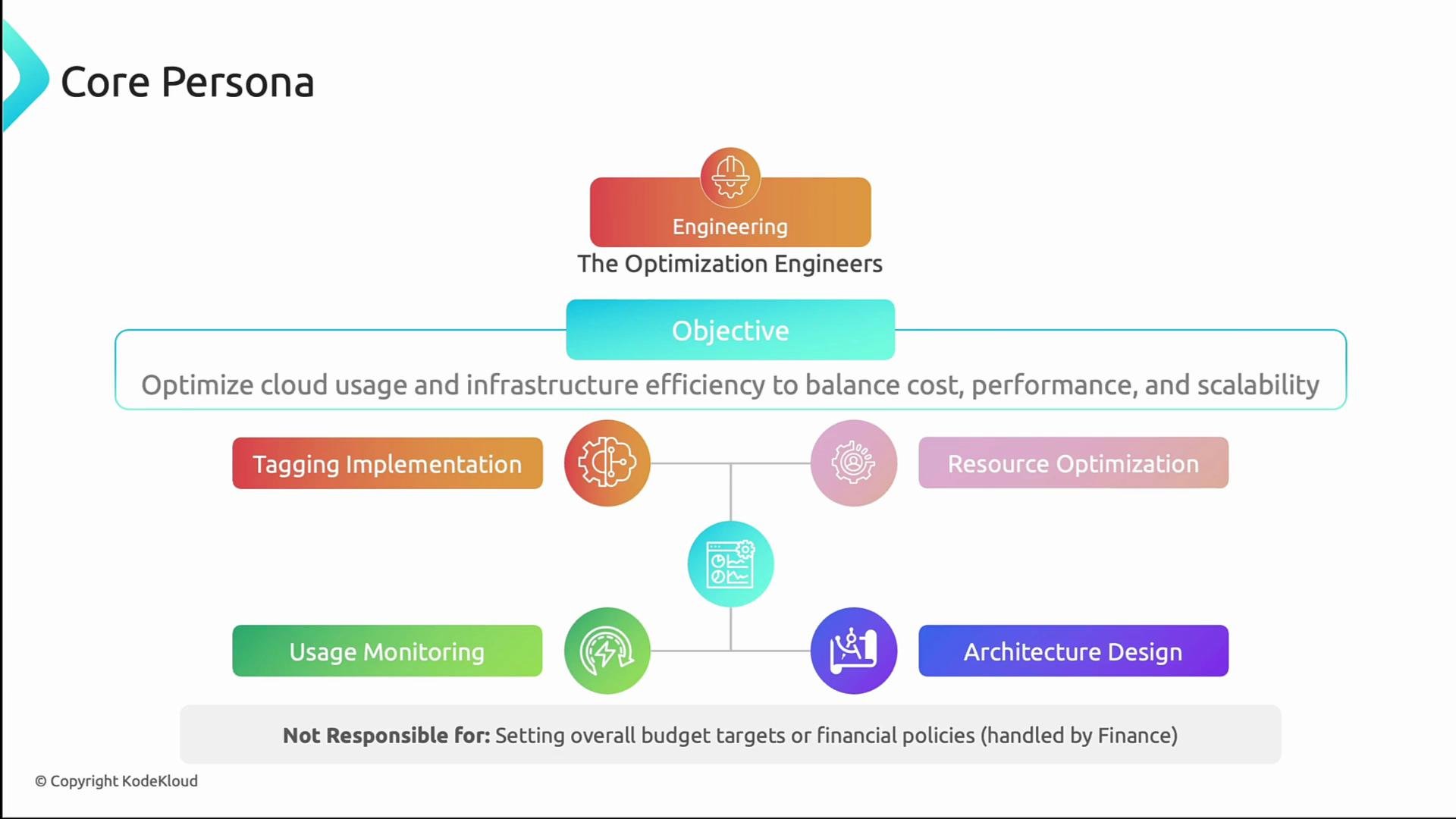
Optimization Engineers — Engineering
If the FinOps practitioner is the conductor, the optimization engineers are the skilled musicians who make the music happen. Their goal is to use cloud resources in the most efficient way possible while balancing cost, performance, reliability, and scalability. Key areas of focus:- Tagging implementation: apply consistent resource tagging so costs can be attributed accurately.
- Resource optimization: right-size instances, remove idle resources, and optimize configurations.
- Architecture design: design cost-aware, scalable architectures from the outset.
- Usage and monitoring: instrument systems to monitor costs, utilization, and efficiency metrics.
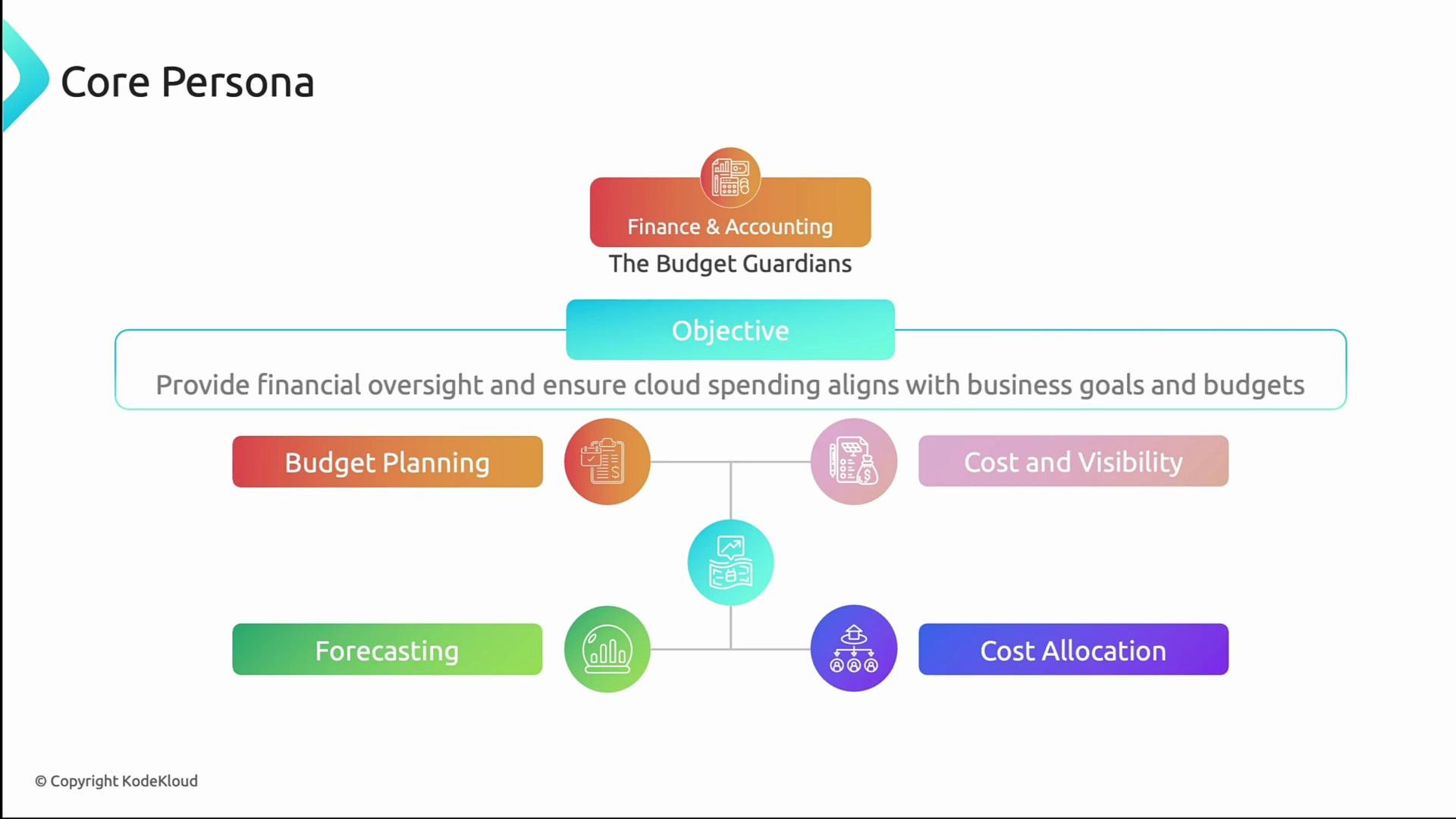
Finance & Accounting — The Budget Guardians
Finance and accounting act as the budget guardians, providing financial oversight and ensuring that cloud spending aligns with the organization’s financial plans. Key areas of focus:- Budget planning: set spending limits and allocate IT investment across teams and initiatives.
- Cost and visibility: compare actual spend to budget and detect deviations early.
- Cost allocation: assign costs to the correct teams, products, or projects for accountability.
- Forecasting: project future cloud spend to inform business planning and decision-making.
Product Team — The Value Innovator
The product team ensures cloud investments deliver measurable product and business value. Their objective is to prioritize work that earns the best return on cloud spend and supports product strategy. Key areas of focus:- Cross-team alignment: ensure priorities are consistent across product, engineering, and business stakeholders.
- Value assessment: measure the return on cloud investments and validate feature impact.
- Prioritization: allocate resources to initiatives that deliver the most value.
- Outcome tracking: monitor metrics to confirm whether objectives are met.
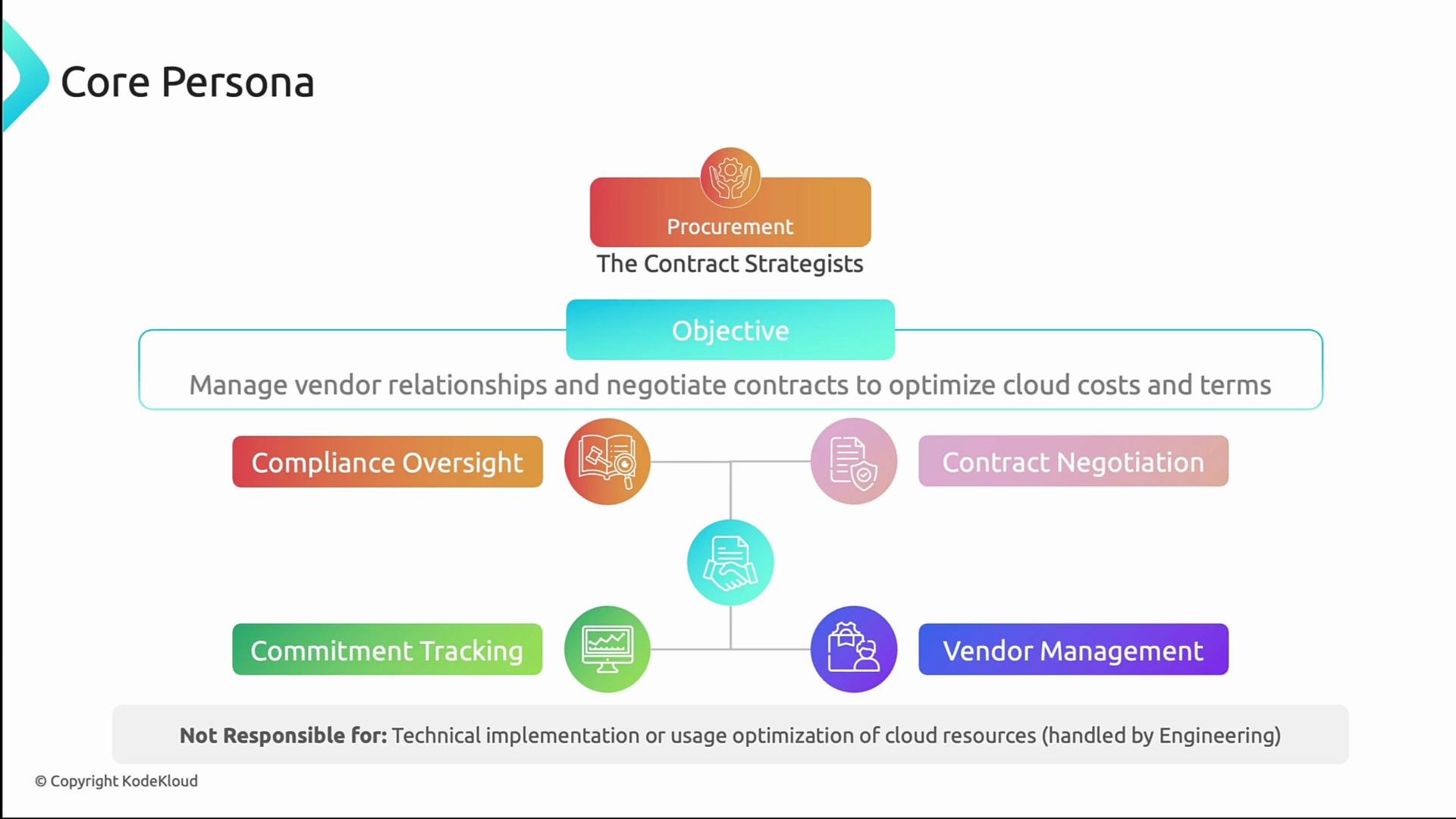
Procurement — The Contract Strategist
Procurement negotiates vendor contracts and secures terms that minimize cost and risk. Their role is critical for securing discounts, favorable terms, and ensuring compliance. Key areas of focus:- Compliance oversight: ensure contracts meet legal, regulatory, and security requirements.
- Contract negotiation: obtain pricing, discounts, and flexible terms that align with usage patterns.
- Vendor management: maintain productive vendor relationships and escalation paths.
- Commitment tracking: monitor committed usage or spend to avoid under- or over-utilization penalties.
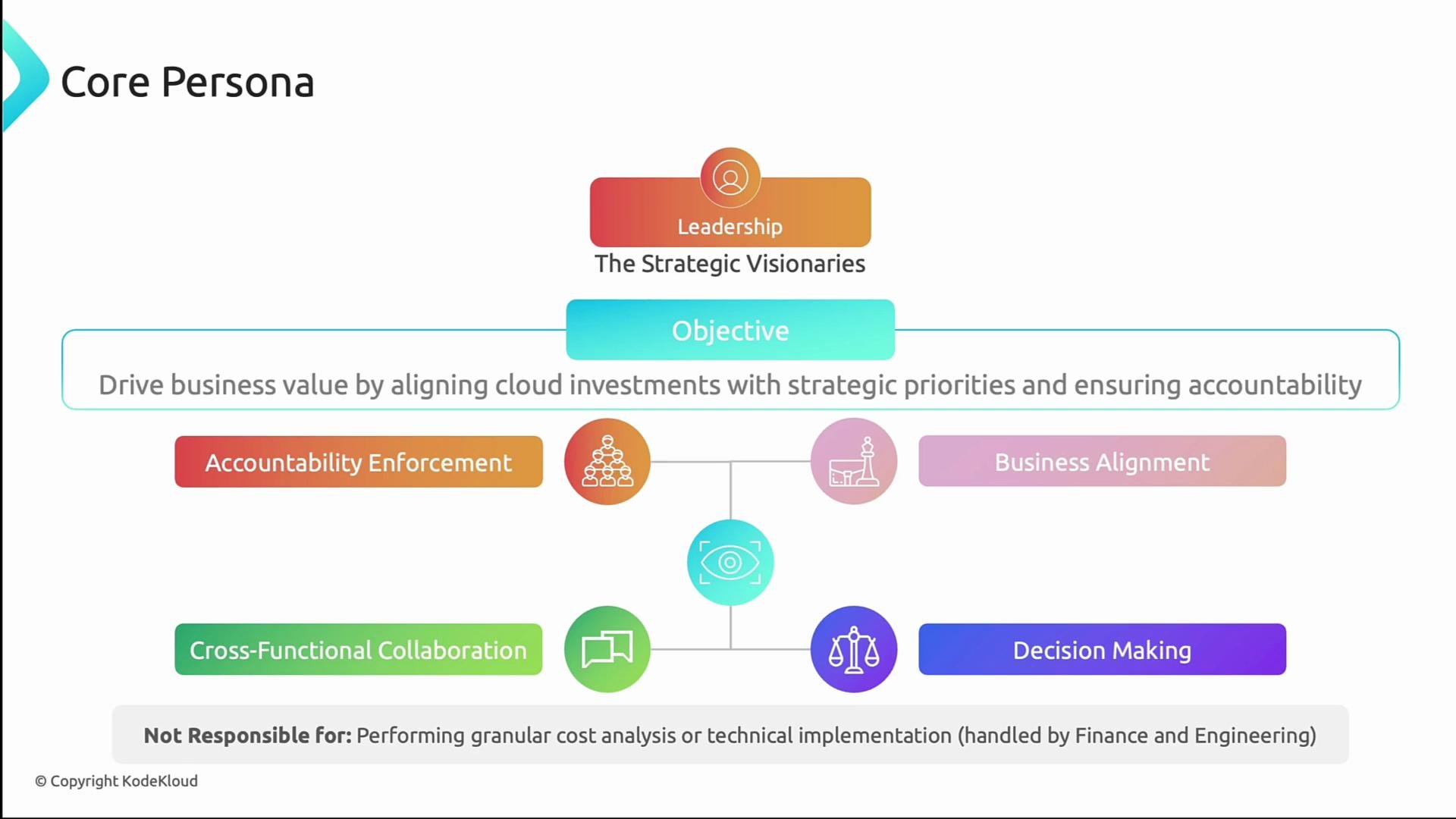
Leadership — The Strategic Visionaries
Leadership provides the strategic direction and enforces accountability. Their objective is to ensure cloud spend supports the company’s strategic priorities. Key areas of focus:- Accountability enforcement: hold teams responsible for delivering agreed outcomes on time and on budget.
- Business alignment: ensure investments map to high-level business goals.
- Decision-making: approve major investments and set funding priorities.
- Cross-functional collaboration: facilitate coordination across finance, engineering, product, and procurement.
Recap
The six core personas are:- The Orchestrator (FinOps Practitioner)
- Optimization Engineers (Engineering)
- The Budget Guardians (Finance & Accounting)
- The Value Innovators (Product)
- The Contract Strategists (Procurement)
- The Strategic Visionaries (Leadership)