

Dynamic pricing models
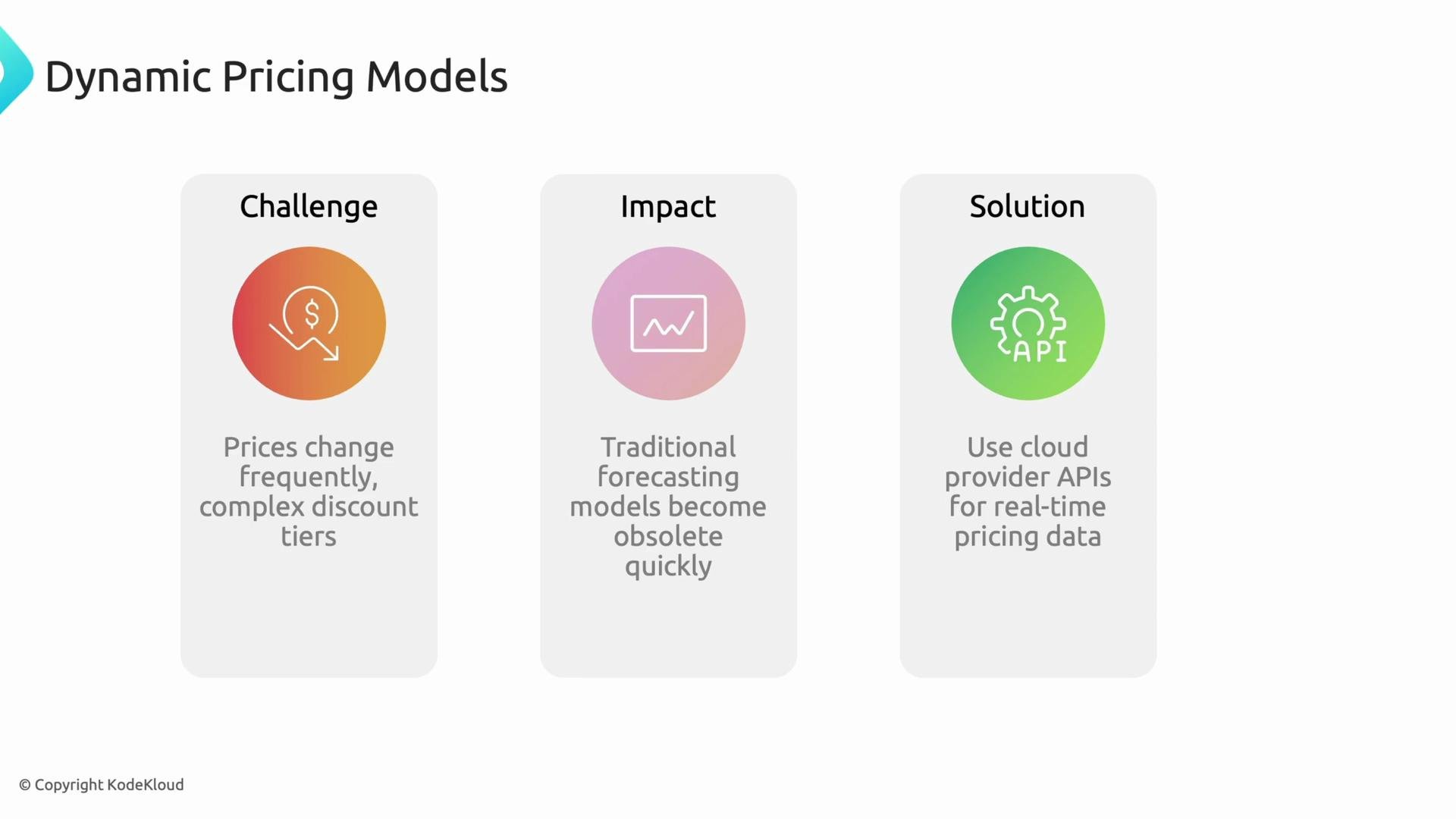
Challenge- Cloud providers change pricing frequently: new discounts, pricing tiers, and rate updates (sometimes with little notice).
- Static forecasting techniques—historical averages and fixed multipliers—lose accuracy quickly because pricing is a moving target.
- Integrate provider pricing APIs into your forecasting pipeline to ingest up-to-date unit prices. Treat pricing updates as a first-class input and surface them in forecast variance reports so teams can see whether cost changes came from usage or price shifts.
Elastic resource consumption
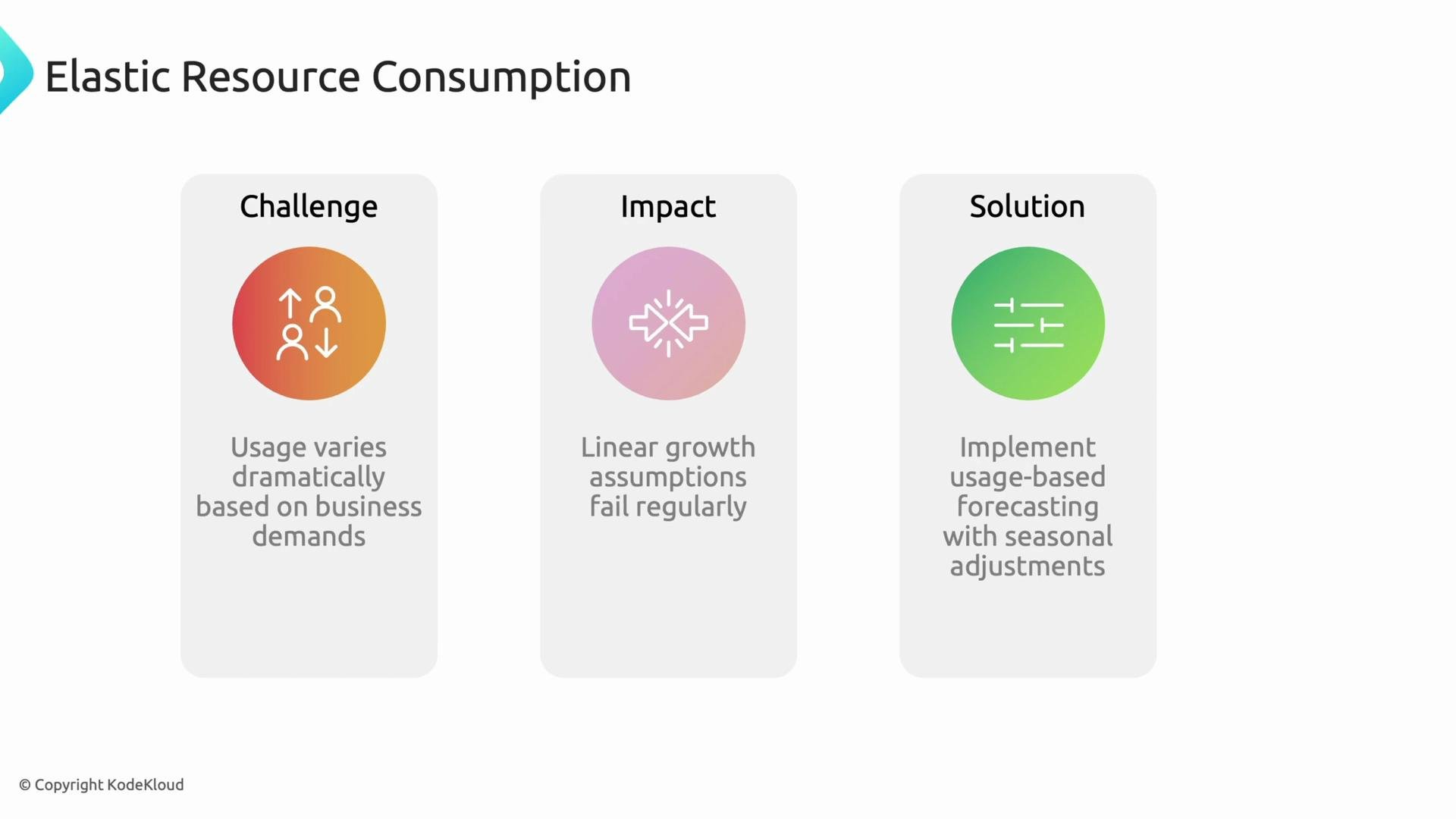
Challenge- Cloud consumption is elastic and driven by business activity. Usage spikes for launches, promotions, or seasonal demand and then reverts.
- Linear-growth assumptions produce large forecast errors. Consumption follows spikes, dips, and seasonality rather than steady ramps.
- Move to usage-driven forecasting that includes:
- Seasonal adjustments and calendar-aware models.
- Anomaly detection to identify one-offs vs. true trend shifts.
- Short-term signals (marketing calendars, release schedules) as model inputs so the forecast aligns with business initiatives.
Rapid service evolution
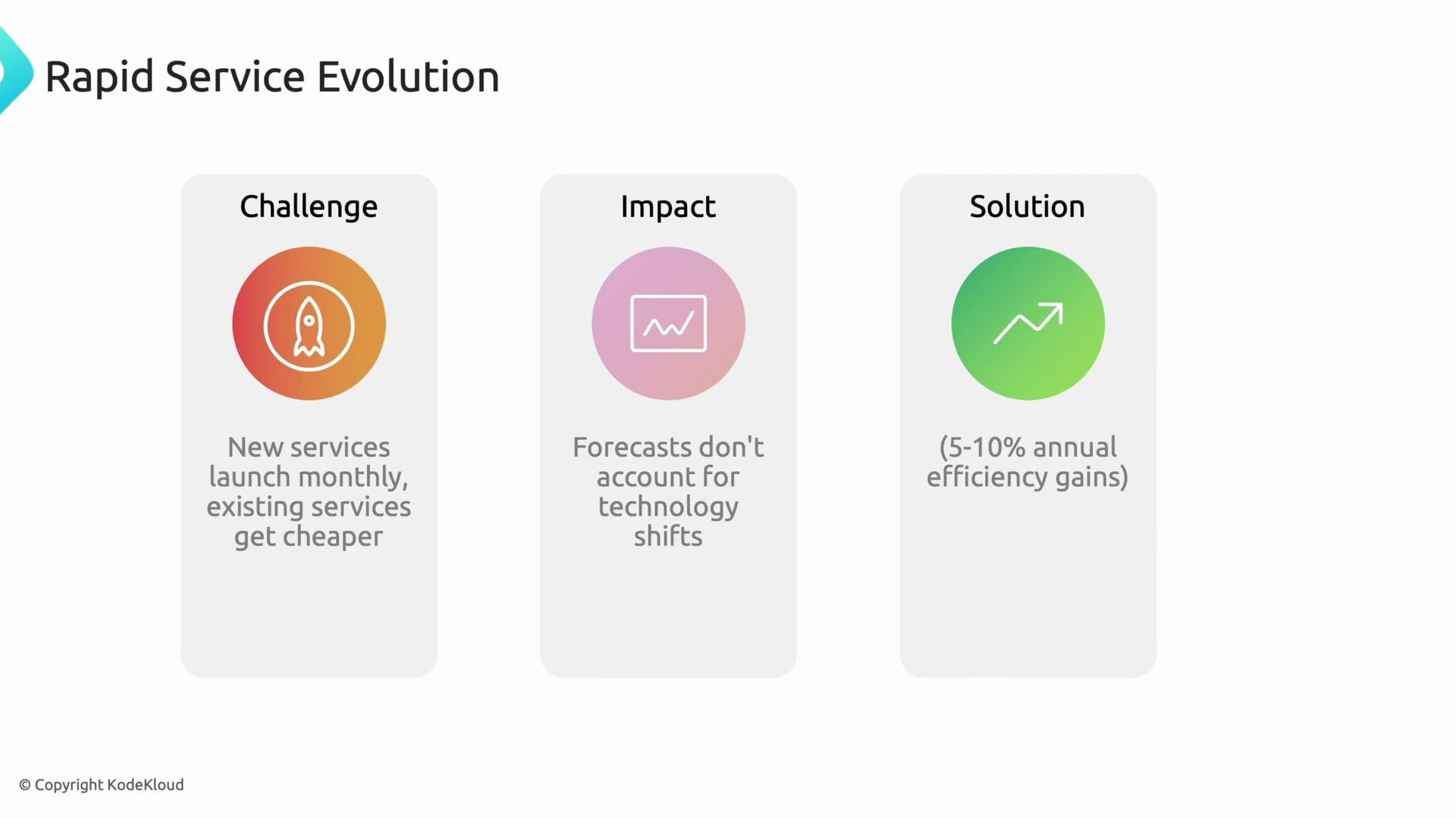
Challenge- Cloud providers release new services and more efficient instance types often. These can displace older offerings and change cost profiles.
- Forecasts that ignore technology shifts miss savings opportunities or migration costs, producing biased projections.
- Include expected efficiency gains in forecasts (a reasonable heuristic: 5–10% per year) and perform periodic architecture reviews to evaluate migration paths to newer, cheaper services. Treat architectural change as an explicit forecast variable.
Quick reference: Challenges, impacts, and solutions
Forecasting best practices
Adopt agile forecasting: update frequently, test scenarios, and tie forecasts to measurable business drivers so finance and engineering share the same signal.
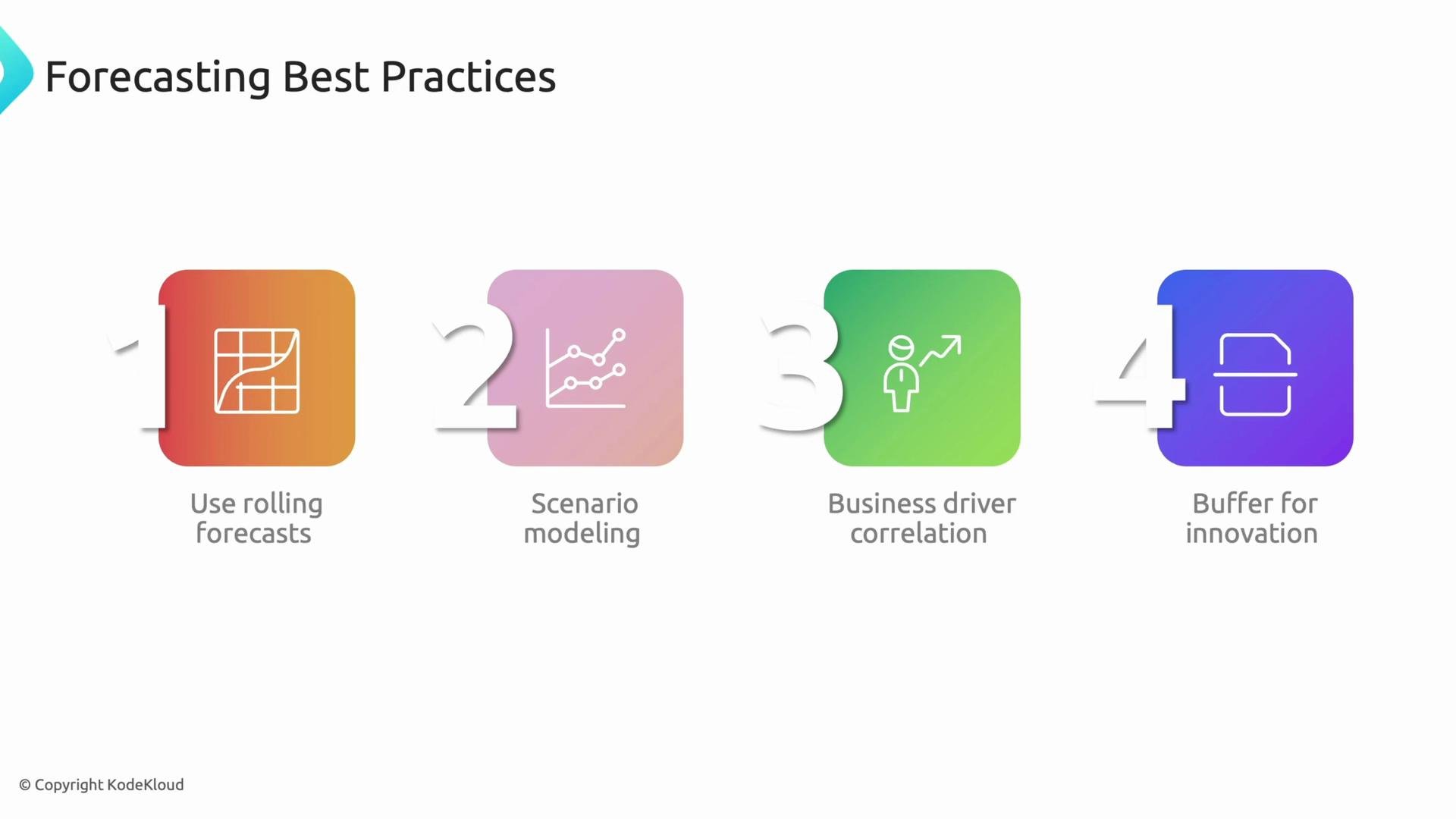
- Rolling forecasts: Refresh forecasts weekly or monthly so they reflect current usage and pricing.
- Scenario-based modeling: Run what-if scenarios (e.g., traffic doubling, product launch, marketing blitz) to estimate spend ranges and prepare contingencies.
- Link to business drivers: Correlate forecasts to user growth, campaign schedules, release plans, and SLA requirements so inputs are explainable and actionable.
- Buffer for innovation: Reserve budget for experimentation and unexpected growth—clouds are flexible, and budgets should allow for that.
Summary and next steps
Cloud forecasting is difficult because three moving pieces interact: pricing, consumption patterns, and product evolution. The practical response is:- Automate pricing ingestion from providers,
- Model usage with seasonal and scenario-aware approaches, and
- Include reasonable efficiency gains in near-term projections and validate them with engineering.
Commitments (e.g., RIs, Savings Plans) reduce unit costs but add forecast and execution risk. Model commitments explicitly, track utilization, and maintain a governance process for purchasing and unwinding commitments.
- Start by ingesting pricing and usage into a single analytics layer.
- Build rolling forecasts tied to business calendars and signals.
- Run scenarios and report ranges (best/most/least likely) to stakeholders.
- Use forecasts to inform commitment decisions and optimization efforts.
Links and references
- FinOps Foundation
- Cloud Pricing APIs — AWS, GCP, Azure (example: provider pricing endpoints)
- Seasonality and Anomaly Detection Techniques