

- A clear definition of FinOps and its collaborative nature
- The four-step FinOps collaboration cycle
- The foundational pillars that enable FinOps success
- A practical breakdown of core and allied personas and their responsibilities
What is FinOps?
FinOps (Cloud Financial Operations) is the practice of bringing engineering, finance, and operations together to manage cloud spend with business context. Instead of operating in silos, teams align around shared goals: visibility into spend, clear accountability, and continuous optimization to maximize business value from cloud investments. Key collaborative behaviors:- Teams act as bridges: cross-functional participants connect workflows and information.
- Shared responsibility: engineering contributes technical context; finance provides budgeting and forecasting; operations ensures reliability and efficiency.
- Continuous feedback: optimization is iterative — track impact and refine decisions over time.
The FinOps Collaboration Cycle
The FinOps collaboration cycle is a repeatable process teams use to manage cloud spend effectively:- Connect stakeholders: Identify engineers, product managers, finance, operations, and leaders. Define roles and communication channels.
- Share understanding: Provide transparent, timely financial and operational data via dashboards and reports (spend by team, project, environment, and resource).
- Make informed decisions: Convert insights into actions such as rightsizing, instance family selection, scaling policy changes, storage tiering, or committing to discounts.
- Optimize and iterate: Implement changes, measure results, and feed learnings back into the next cycle.
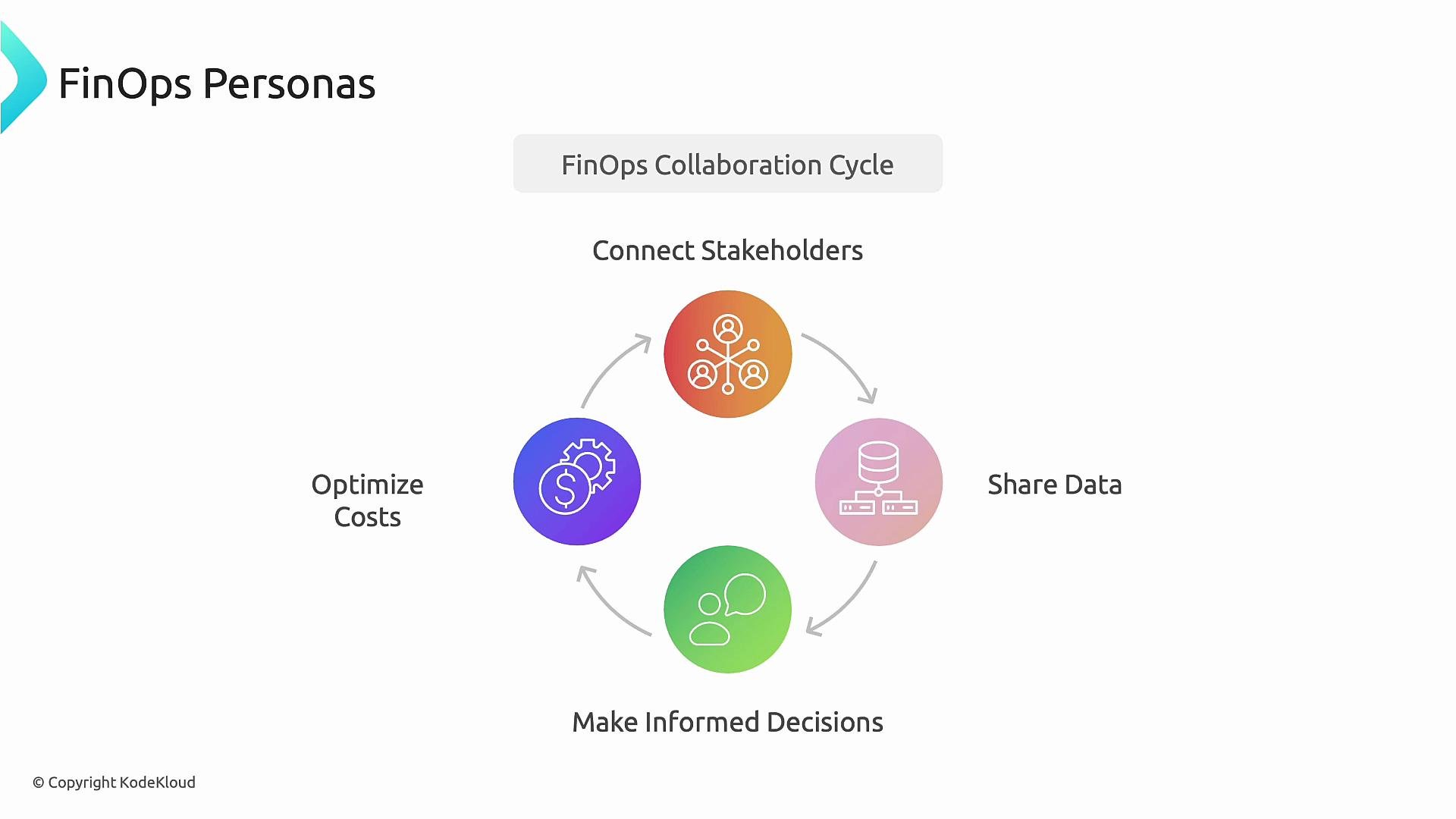
FinOps is iterative: prefer small, measurable changes and track outcomes so every optimization balances cost with performance and business impact.
Pillars that Enable FinOps
FinOps depends on several supporting pillars that make collaboration productive and sustainable:- Skill diversity: Blend technical, financial, and operational expertise — engineers, cloud architects, finance analysts, and product managers each add value.
- Collaborative culture: Foster shared accountability, open trade-off discussions, and decision-making without blame.
- Data-driven decisions: Use reliable telemetry and cost data — resource-level usage metrics, allocation tags, chargeback/showback reports, and forecasts — to guide actions.
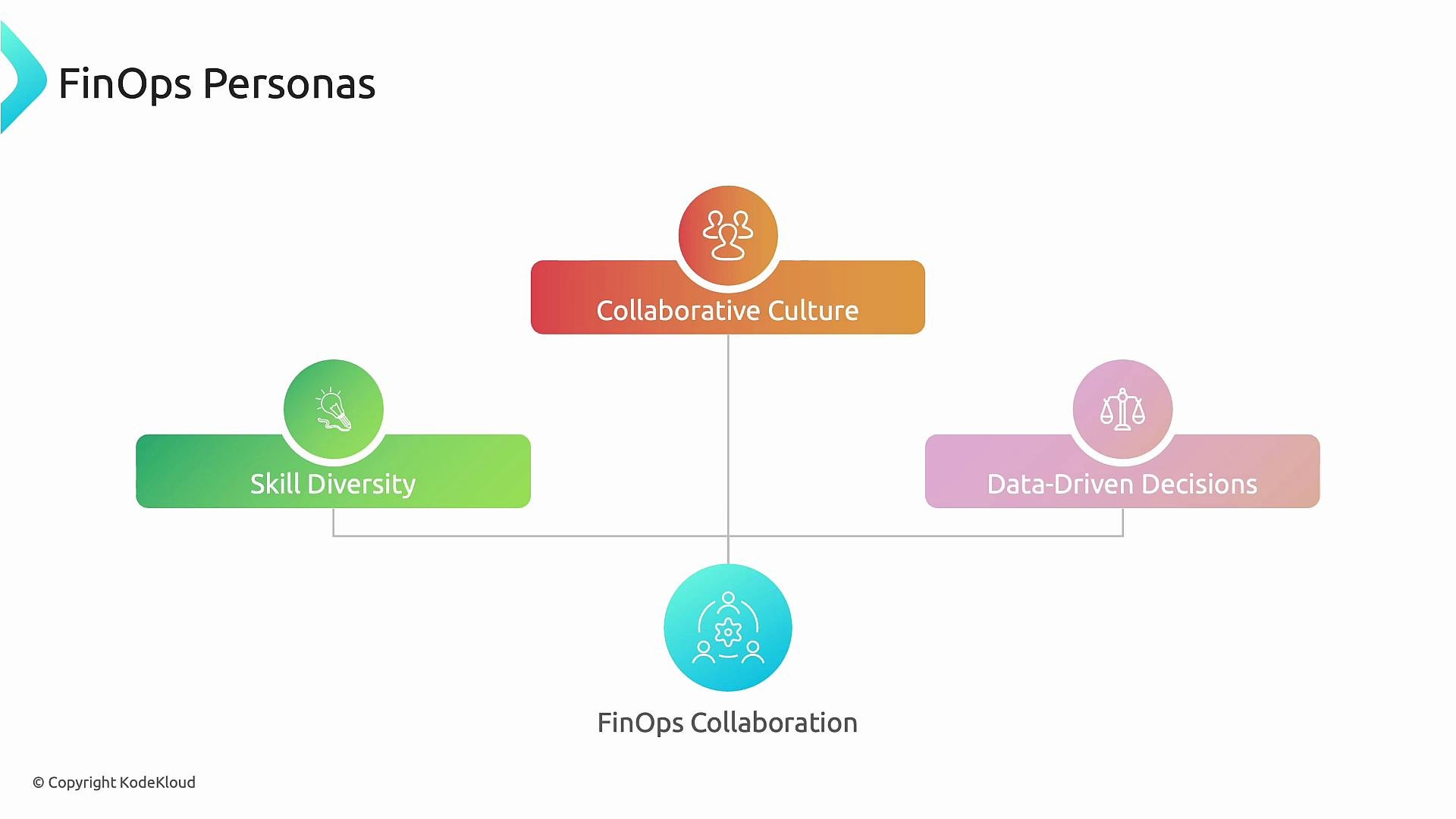
Poor or missing tagging, inconsistent billing data, or lack of ownership will undermine FinOps. Establish tagging, naming conventions, and a single source of truth for cost data early.
FinOps Personas: Who Does What?
FinOps personas fall into two categories: core personas (day-to-day owners) and allied personas (supporting stakeholders). Below is a concise reference that maps common personas to responsibilities. Table: Personas, primary responsibilities, and outcomes
Practical role mapping — who monitors, decides, implements, measures:
- Monitor: Cloud Financial Analyst, FinOps engineer
- Decide: Product owners, engineering managers, finance partners (based on recommendations)
- Implement: Engineering teams, platform/SRE teams
- Measure: FinOps team and finance for financial validation; engineering for performance validation
Best Practices and Handoff Patterns
- Define clear SLAs and decision authorities: who approves architecture changes that affect cost?
- Make cost data actionable: dashboards should tie spend to owners and products, not just accounts.
- Automate where possible: tag enforcement, rightsizing recommendations, and policy-driven scheduling reduce manual overhead.
- Communicate trade-offs: every cost optimization should document the expected performance impact and risk.
Links and Resources
- FinOps Foundation: https://www.finops.org/
- Cloud provider cost management:
- AWS Cost Management: https://aws.amazon.com/aws-cost-management/
- Google Cloud Billing: https://cloud.google.com/billing
- Azure Cost Management: https://azure.microsoft.com/en-us/services/cost-management/
- FinOps best practices and guides: https://www.finops.org/resources/