

How commitment-based discounts work
- Providers offer deeper discounts in exchange for predictable, long-term commitments to usage or spend.
- The basic trade-off is commitment versus discount: larger commitments in capacity or duration typically yield larger percentage savings.
- Common commitment terms are 1 or 3 years; enterprise customers may negotiate multi-year or customized arrangements.
- Savings typically range from about 20% up to 70% off On‑Demand rates, depending on the product, term length, and payment option.
- Best practice: spread commitments across a portfolio (instance types, regions, or accounts) to balance risk and maintain flexibility.
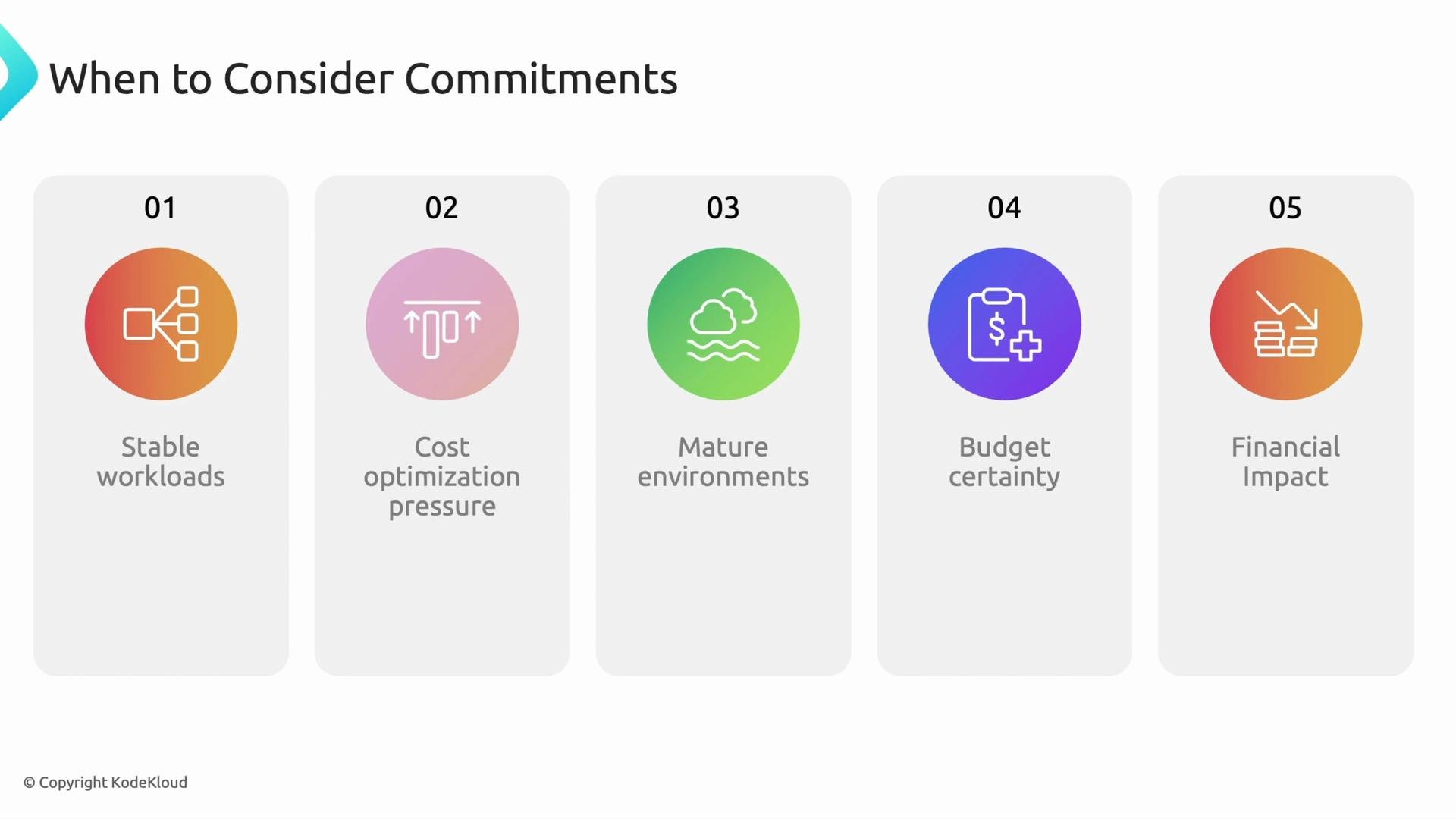
- Your workload runs continuously or is highly predictable.
- FinOps or engineering teams must lower cloud spend.
- You’ve already right-sized and optimized resources; commitments are the next lever.
- You require steady, predictable spend throughout the year.
Before committing, establish a clear baseline of usage and ensure workloads are stable and right-sized. Commitment discounts are most effective when you can forecast steady demand.
Reserved Instances (RIs): the classic model
Reserved Instances let you purchase a fixed commitment for a specific instance type and region (or Availability Zone) for a set term—typically 1 or 3 years. When a running instance matches the reservation attributes, the reservation automatically applies and reduces the effective hourly cost. Key considerations:- RIs provide predictable, high-percentage savings but reduce flexibility if your usage changes.
- They work best for baseline workloads you expect to run continuously.
- Monitor utilization: unused reserved capacity still incurs cost for the duration of the term.
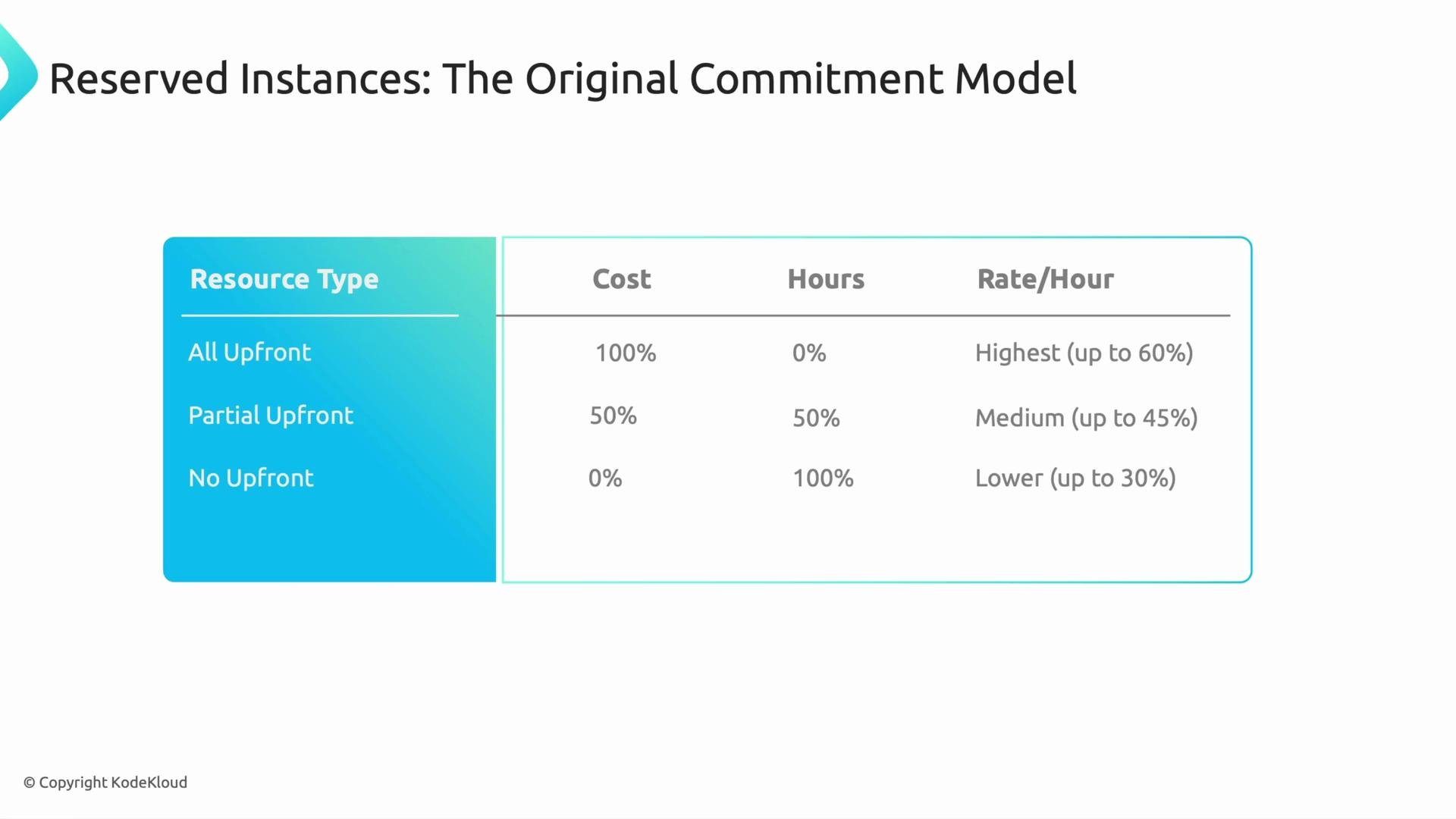
Payment options for RIs
Payment choice affects upfront cash flow, effective hourly rate, and total savings. Use the table below to compare common options and decide based on budget and risk tolerance.
Note: Generally, paying more upfront yields larger percentage savings—but increases financial exposure if usage patterns change.
RI types and typical use cases
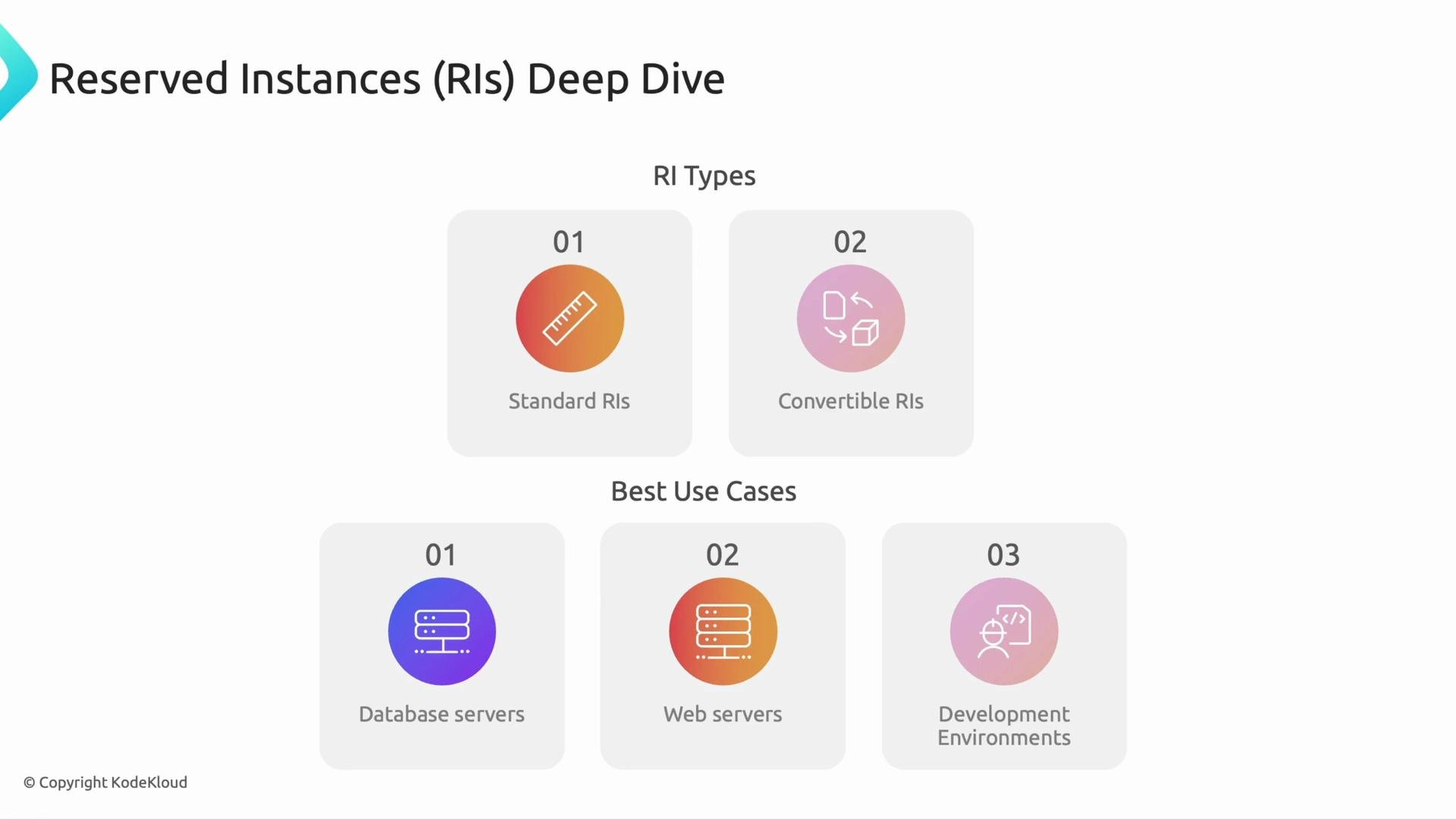
Two common RI variants provide different flexibility/savings trade-offs:- Standard RIs: deliver the highest savings but are the least flexible. They are ideal when instance attributes (family, OS, tenancy) are stable.
- Convertible RIs: provide lower discounts than Standard RIs but allow modification of attributes (instance family, OS, tenancy) within provider rules—useful when you expect some change in instance types.
- Database servers with predictable capacity requirements.
- Web servers supporting steady traffic patterns.
- Always-on development or CI environments that run continuously.
Think of RIs as part of your cost foundation: identify baseline workloads and apply commitments strategically across a portfolio to reduce exposure.
Summary — plan commitments strategically
- Commitment-based discounts exchange flexibility for cost savings. Only evaluate commitments after you have accurate baseline usage and have completed right-sizing and optimization.
- Use a portfolio approach (diversify across instance types, regions, and accounts) to mitigate risk.
- For organizations with large predictable spend, even single-digit percentage improvements can yield substantial dollar savings.
Links and references
- Cloud cost optimization basics
- AWS Savings Plans and Reserved Instances
- Kubernetes cost management and FinOps resources