In this lesson we cover Backstage integrations — how Backstage reads from and publishes data to third‑party systems such as GitHub, GitLab, S3-compatible object storage, and LDAP/identity providers. Integrations enable Backstage to:
  • Ingest entity YAML files from source control or object storage.
  • Discover entity files automatically across accounts or storage locations.
  • Import organizational data (users, groups, hierarchy) from identity systems or code hosts.
  • Publish or synchronize data back to external systems when required.
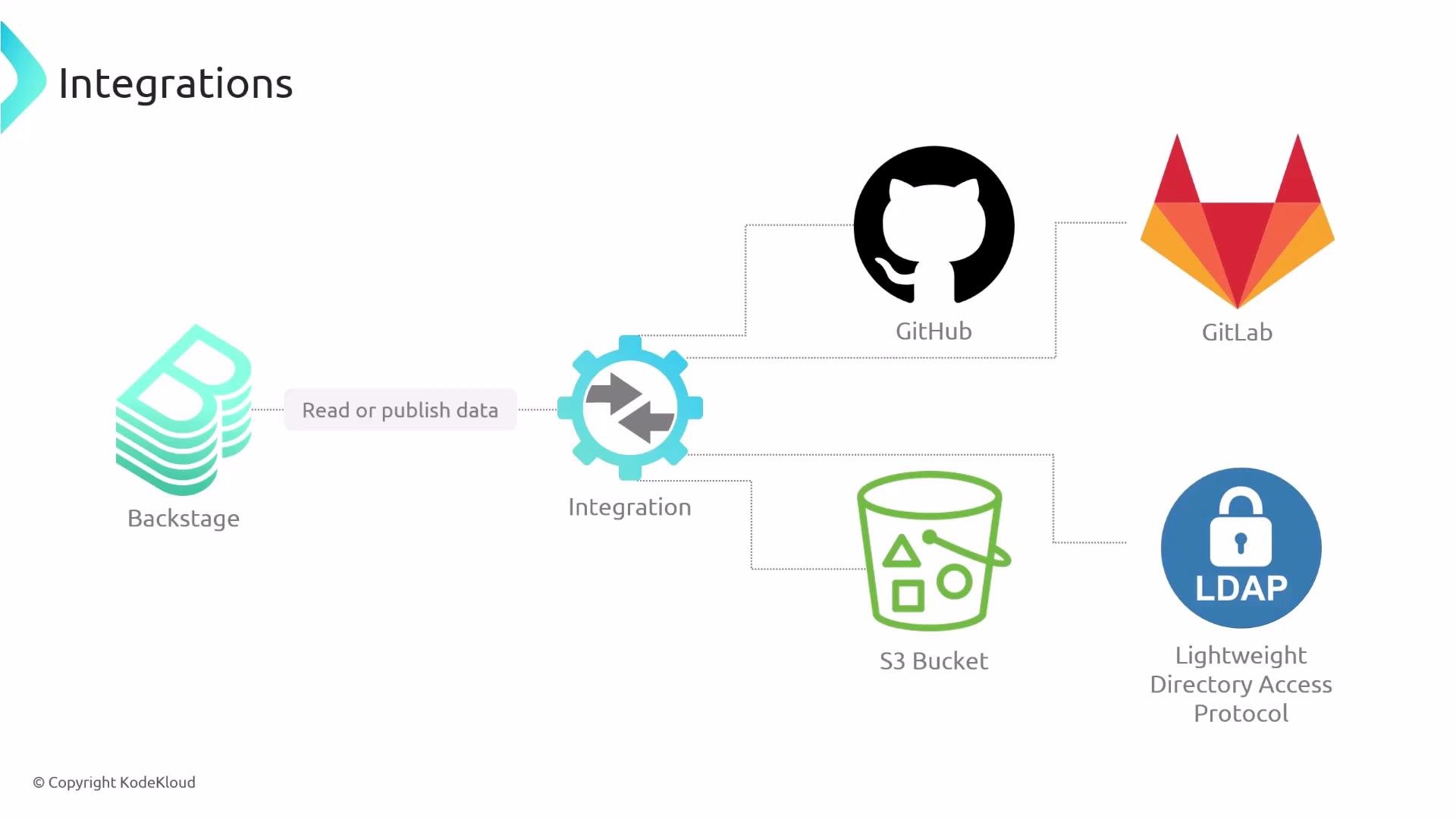
A diagram titled "Integrations" showing Backstage connected through an integration component to external services like GitHub, GitLab, an S3 bucket, and LDAP (with a "Read or publish data" label).
What can integrations do? Loading entities from repositories Backstage commonly stores entity files as YAML in source code repositories. To load entities from private repositories, Backstage needs credentials to access those repositories. For example, configure a GitHub integration and provide a token with the minimal required scopes so Backstage can read repository contents:
When using a GitHub token, grant only the minimal scopes required to read repository contents (for example, repo for private repos or appropriate read-only scopes). Keep tokens secure — use environment variables, secret managers, or vaults. See GitHub’s guidance for creating personal access tokens: https://docs.github.com/en/authentication/keeping-your-account-and-data-secure/creating-a-personal-access-token
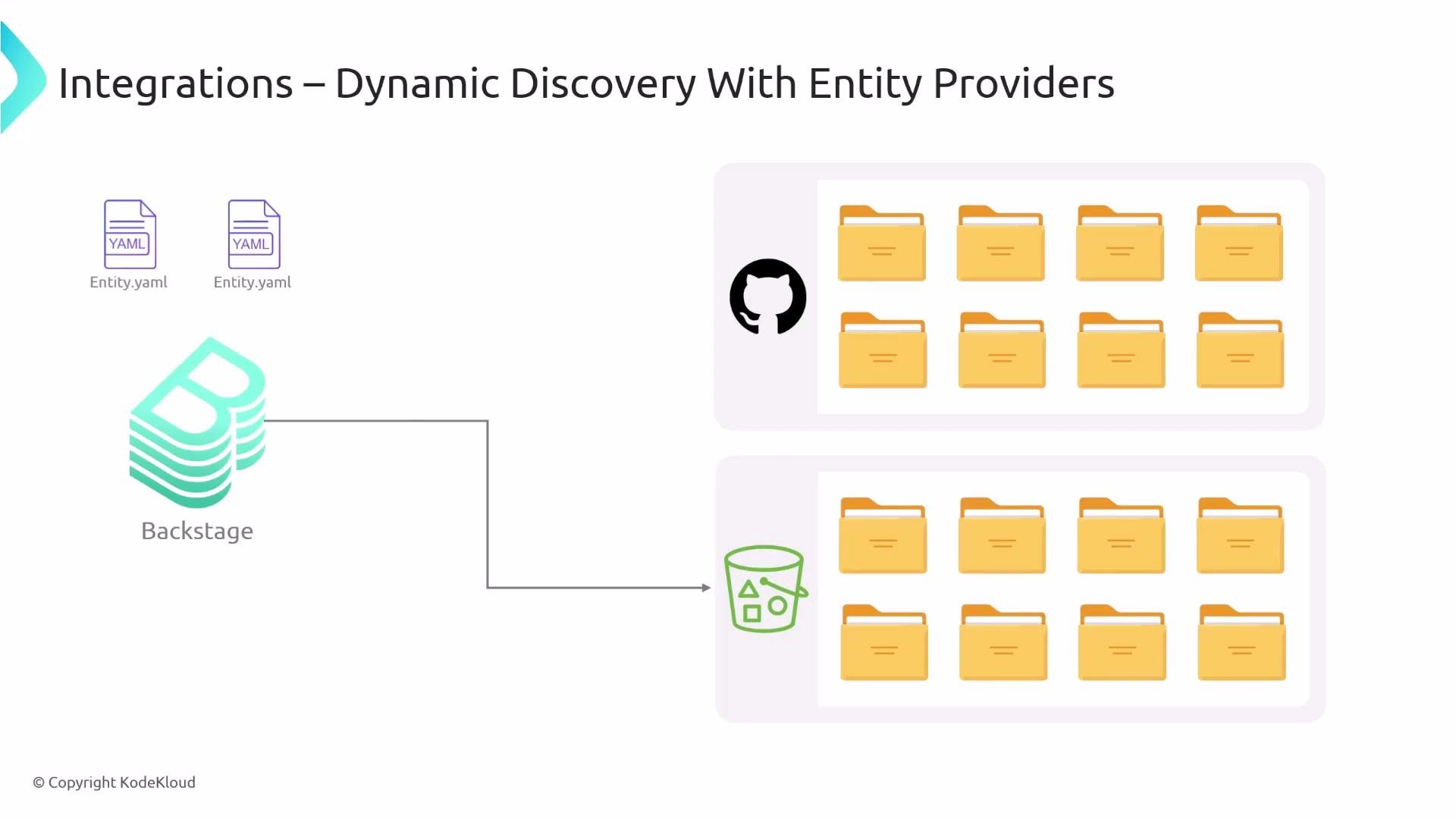
Entity Providers: dynamic discovery Manually listing every repository that contains entity YAML quickly becomes unmanageable. Backstage supports Entity Providers that automatically scan sources (GitHub, GitLab, object storage, etc.) to discover entity definitions and register them with the catalog. This automates onboarding of components, libraries, and services without requiring per-repo configuration. The same pattern applies to object stores: store entity YAML files in an S3 bucket (or S3-compatible store) and configure Backstage to scan and ingest entities from that bucket.
A simple diagram titled "Integrations – Dynamic Discovery With Entity Providers" showing Backstage connecting to external sources (a GitHub repo and an object storage bucket) that contain many folders. Two YAML entity files are shown at the top-left to represent discovered entity definitions.
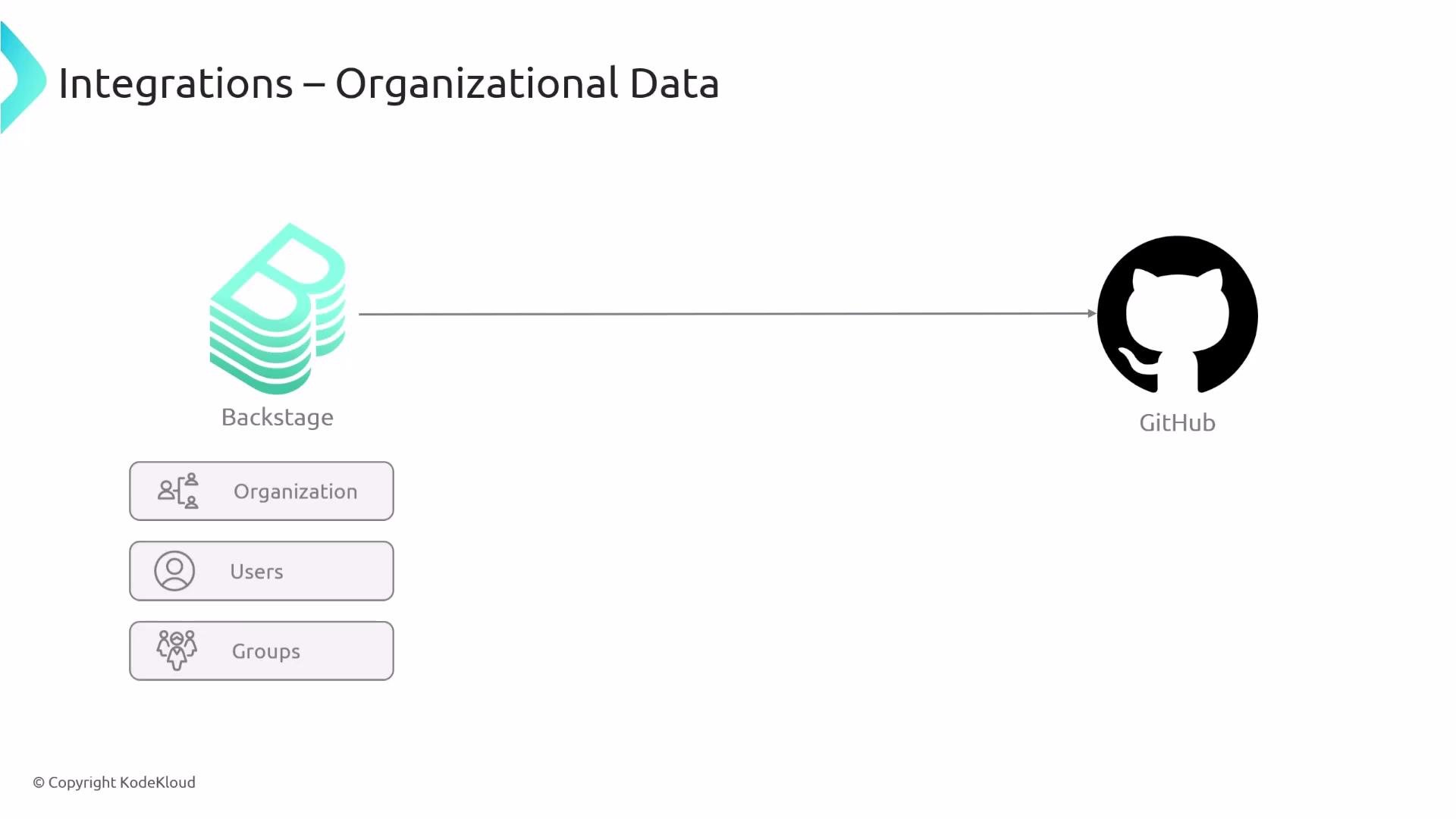
Organizational data Integrations let Backstage import and maintain organizational information — users, groups, and hierarchy — from your existing single source of truth (identity providers or code host organizations). For example, Backstage can synchronize users and teams from a GitHub Organization or an identity provider such as Okta, avoiding the need to recreate that data inside Backstage.
A slide titled "Integrations – Organizational Data" showing a Backstage logo on the left connected by an arrow to a GitHub logo on the right. On the left are labeled boxes for Organization, Users, and Groups.
Common integration types and examples Links and references Use these integration patterns to keep your Backstage catalog synchronized with the systems you already maintain, reduce duplication, and automate onboarding of new components.

Watch Video