


Overview — the basic rule
We start with ten example vectors. Binary quantization reduces each floating‑point component to a single bit using a sign threshold:x >= 0becomes1x < 0becomes0
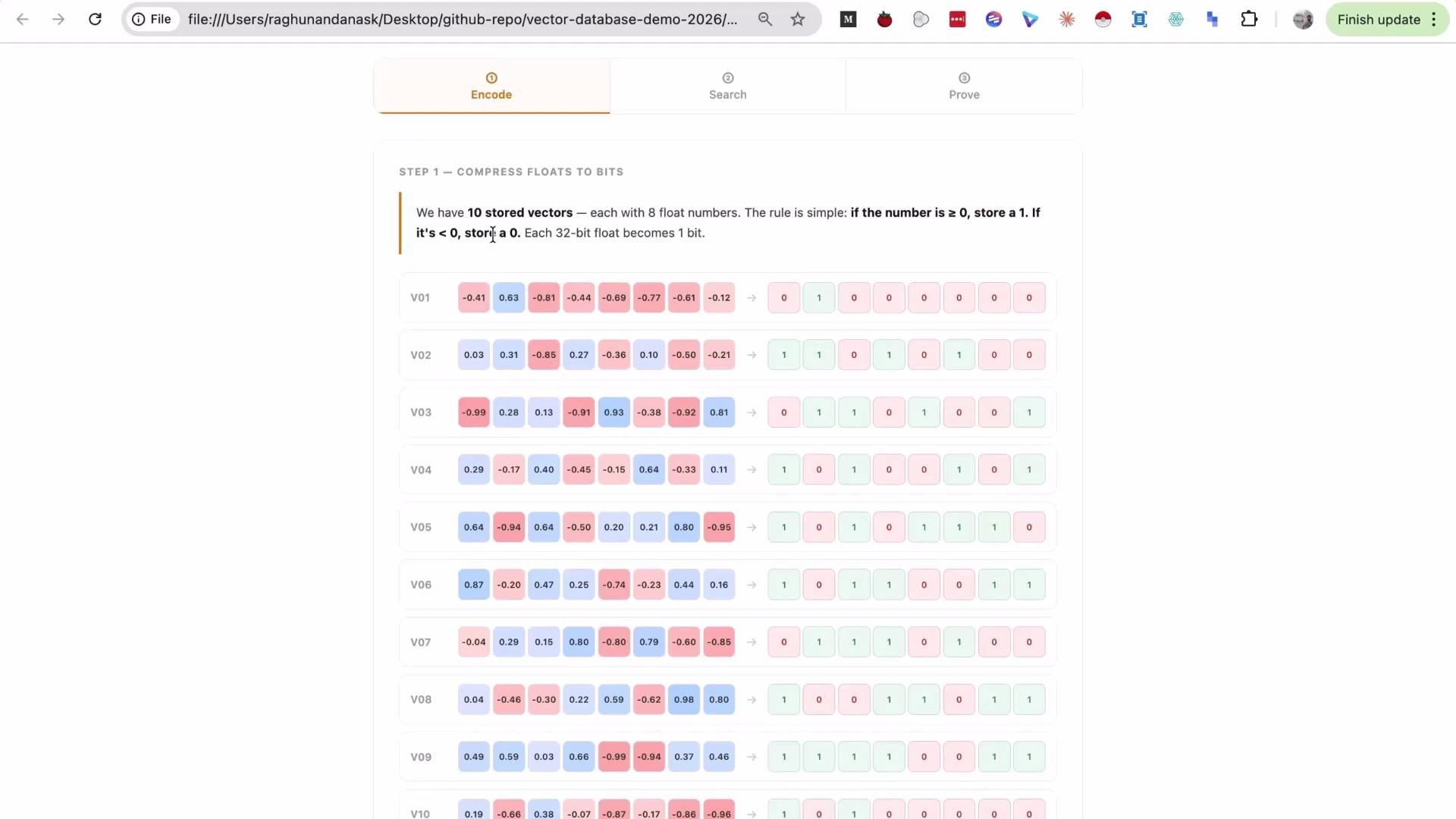
0, while positive components quantize to 1. Every vector in the set is converted into a binary representation for storage and search.
Searching with quantized vectors
After quantizing the dataset, quantize the query vector with the same sign rule. You can then run:- Exact search on the original floating‑point vectors (no quantization).
- Binary search on the bit-vectors (using Hamming distance or bitwise similarity).
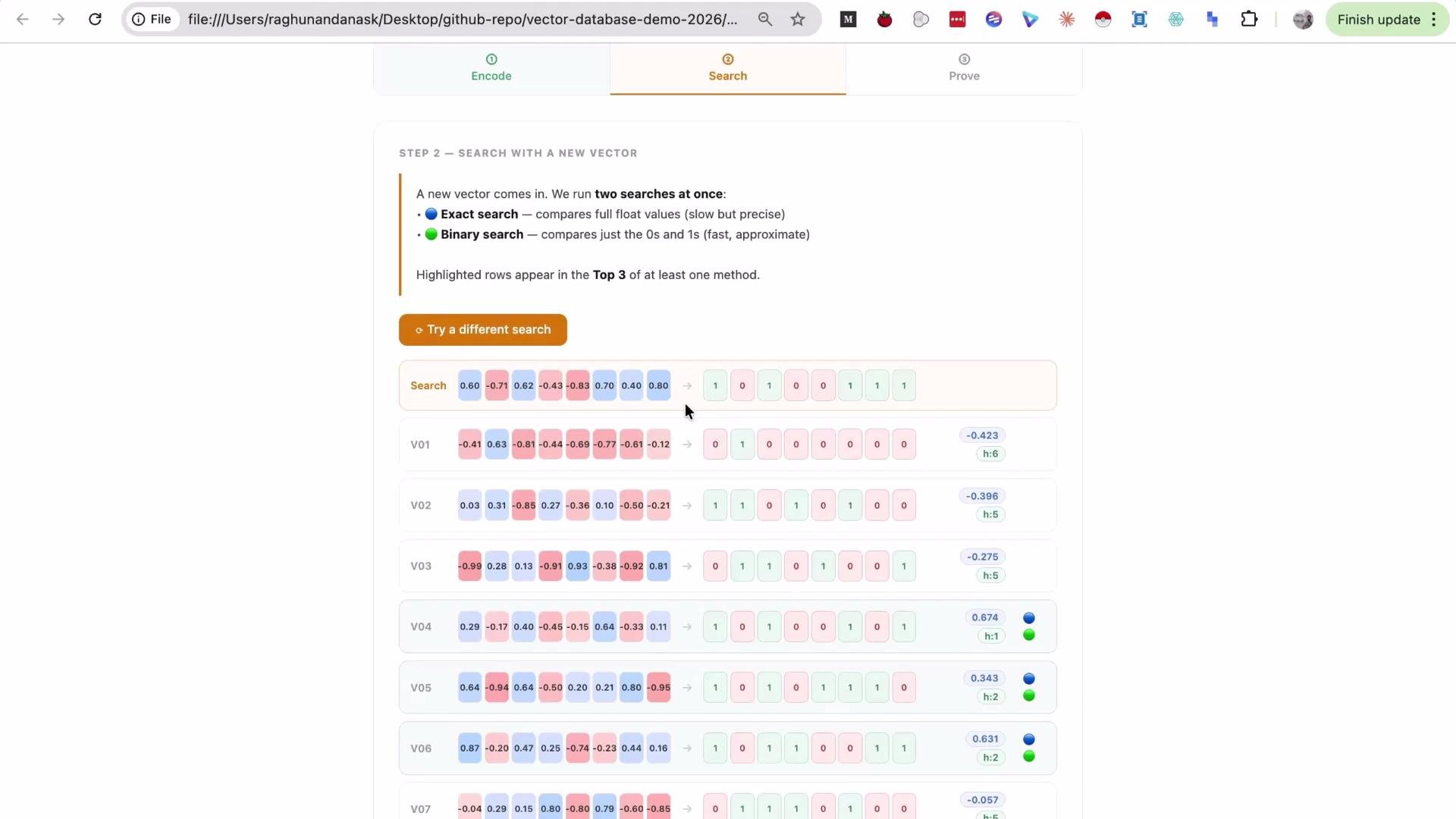
- Sometimes binary search returns the same top result(s) as exact search — one demo query had a 100% match.
- Other queries diverge. In one case binary search returned vector 2 (green) while exact search did not, reducing recall to 67%.
How dimensionality affects binary quantization
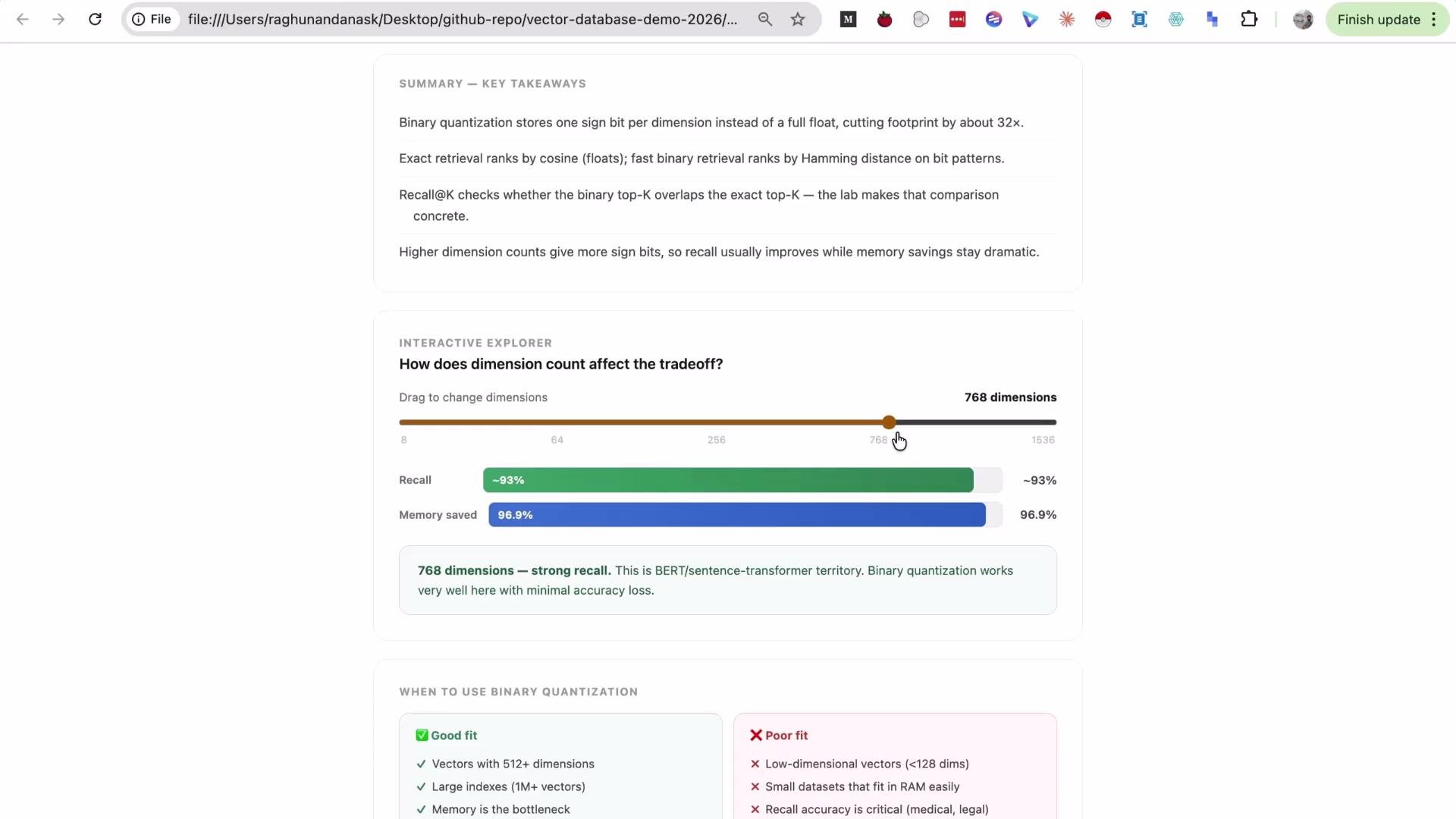
Embedding dimensionality is the primary factor determining whether binary quantization preserves search accuracy.- Higher-dimensional embeddings tend to retain more relative structure after binarization, improving recall while delivering large memory savings.
- Low-dimensional embeddings lose more information when converted to bits, causing recall to drop sharply.

The interactive explorer below highlights a 768‑dimension example (~93% recall with ~96.9% memory saved) and provides guidance on when binary quantization is a good fit.
Practical guidance
Binary quantization is most valuable for very large collections (millions to billions of vectors) where storage reduction is critical. It performs best with higher-dimensional embeddings (hundreds of dims), typically delivering massive memory savings (often ~96% when converting 32‑bit floats to bits). Always validate recall on representative queries before production.
For low-dimensional embeddings (tens of dimensions), binary quantization can drastically reduce recall. Test quantized search against exact search on your workload; do not assume parity.
- Prefer binary quantization for embeddings ≥ ~256 dimensions to balance acceptable recall with large memory savings. For lower dims, expect significant recall loss.