

- Managerial controls (implemented by people)
- Operational controls (implemented by people)
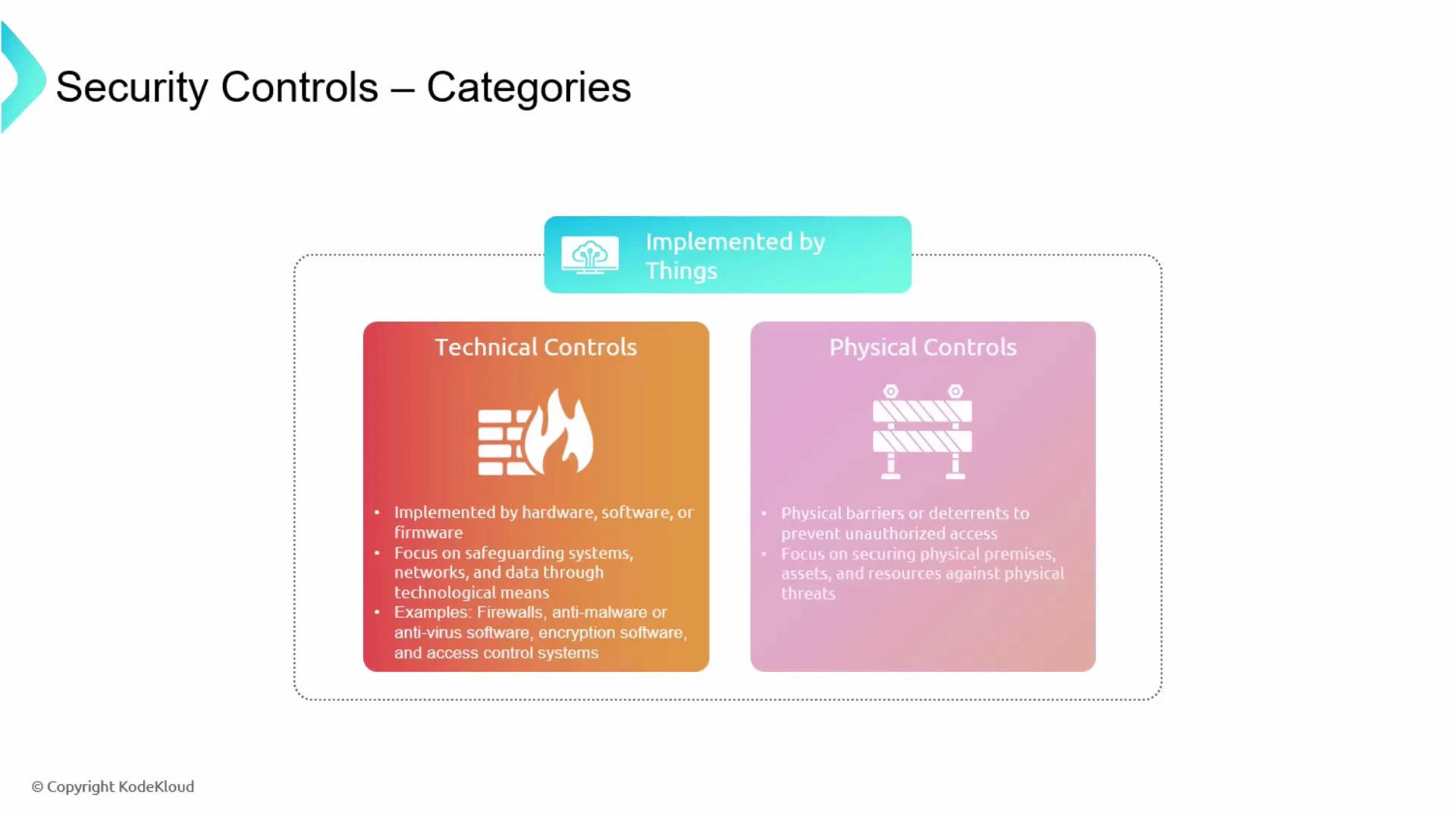
- Technical controls (implemented by things)
- Physical controls (implemented by things)
Managerial controls establish the rules and acceptable risk levels. Operational controls are the human actions that enforce and follow those rules. Technical and physical controls are the automated or tangible mechanisms that enforce security, either electronically or physically.
Managerial Controls (implemented by people)
Managerial controls are set by organizational leadership to define what must be done and who is accountable. They build the foundation for a security program and typically include:- Policies, standards, and procedures
- Security governance and oversight
- Risk assessments, business impact analysis, and acceptance criteria
- Security planning and resource allocation
- Vendor/third-party risk management
Operational Controls (implemented by people)
Operational controls are the everyday security-related activities performed by staff to implement managerial direction. They typically focus on processes and human behavior:- Incident response and forensics
- Change management and configuration control
- Asset management and inventory
- Data labeling, classification, and handling
- Physical security patrols and identity verification
Technical Controls (implemented by things)
Technical controls are implemented via hardware, software, or firmware. They are designed to automatically enforce security policies and reduce human error:- Network defenses: firewalls, IDS/IPS, network segmentation
- Endpoint protections: antivirus/anti-malware, EDR
- Access controls: authentication, authorization, access control lists (ACLs)
- Data protection: encryption (at-rest and in-transit), tokenization
- Monitoring and logging systems
Physical Controls (implemented by things)
Physical controls protect facilities, systems, and personnel from physical threats. They are implemented as tangible barriers and detection systems:- Structural: fences, gated perimeters, walls
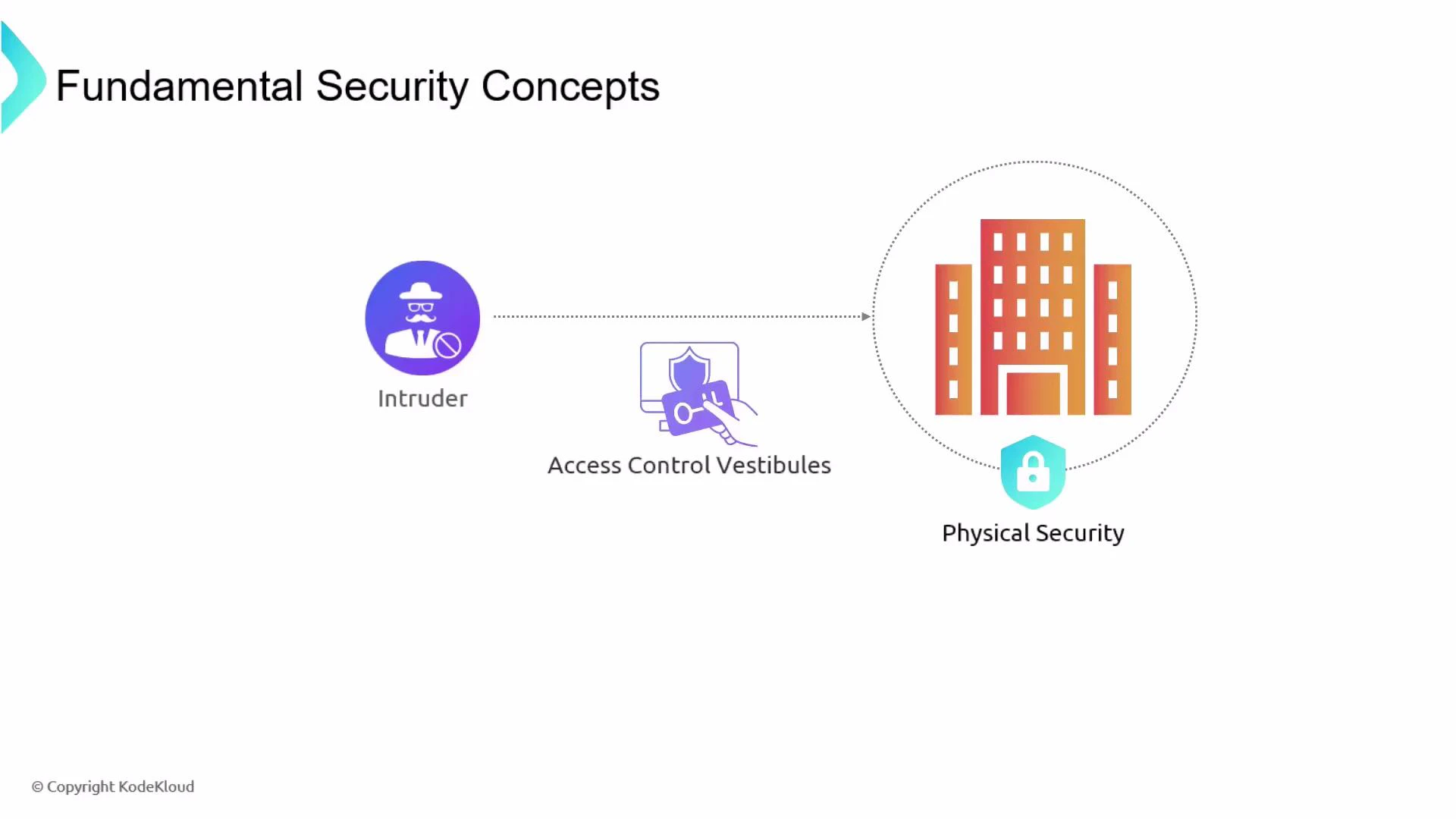
- Entry controls: locks, badge readers, turnstiles, vestibules
- Environmental: lighting, secure enclosures, tamper-evident seals
- Detection: cameras (CCTV), motion sensors, alarms
- Human: security guards, reception screening
Deception-based Controls (honeypots and honeynets)
Deception-based controls are designed to lure, observe, and analyze attackers. A honeypot is a deliberately vulnerable or enticing system deployed to attract adversaries so defenders can study attacker behavior and tactics without risking production assets. Key considerations for honeypots:- Isolate them from production networks to prevent lateral movement.
- Instrument honeypots with detailed logging and monitoring.
- Treat honeypots as research and detection tools, not replacements for hardening real systems.
- Consider legal and privacy implications before recording or interacting with attackers.
Honeypots require careful design and legal consideration: they must be isolated to prevent attackers from pivoting into production, and monitoring/collection must comply with privacy and legal requirements.
Further reading and references
These references provide deeper guidance for designing, implementing, and assessing managerial, operational, technical, and physical controls.