

1. Complexity
Complexity arises from the intricate, interconnected nature of automated systems, making management and troubleshooting more challenging as systems grow. Managing interdependencies and ensuring seamless collaboration between components often lead to issues with design, operational management, and debugging.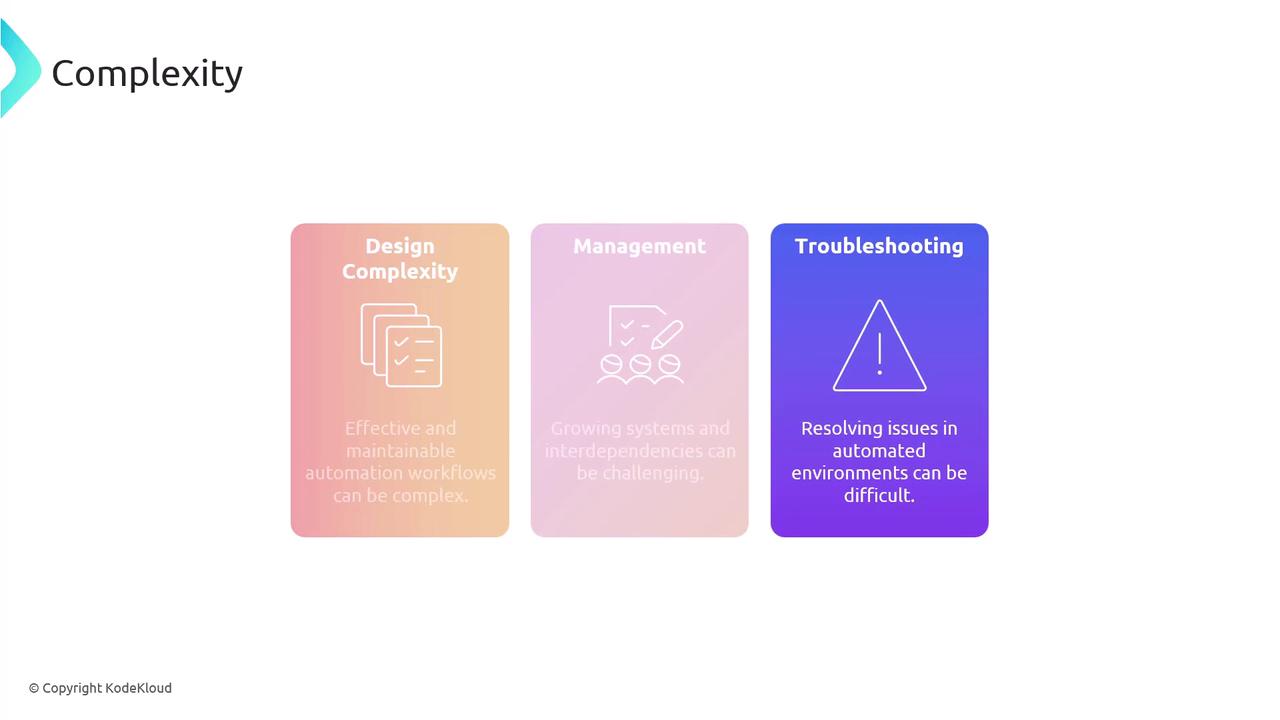
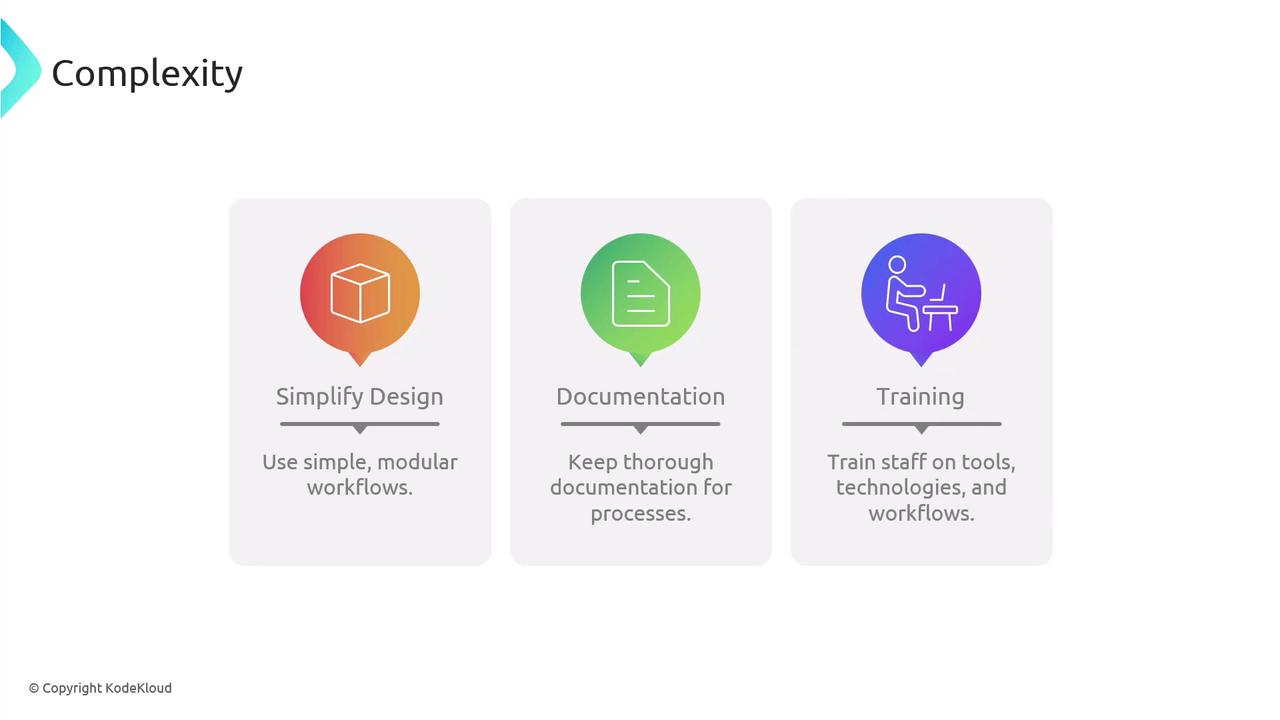
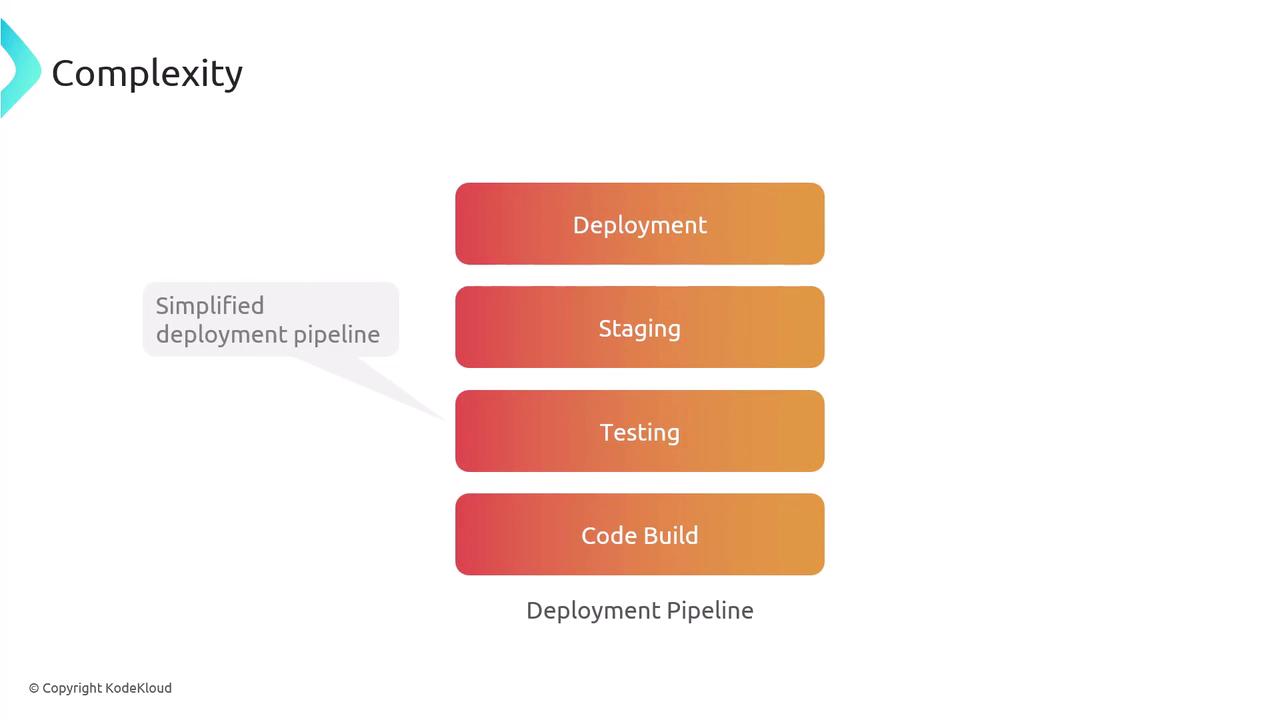
- Simplify overall design and workflows.
- Maintain comprehensive and up-to-date documentation.
- Provide thorough training for technical staff.
2. Cost
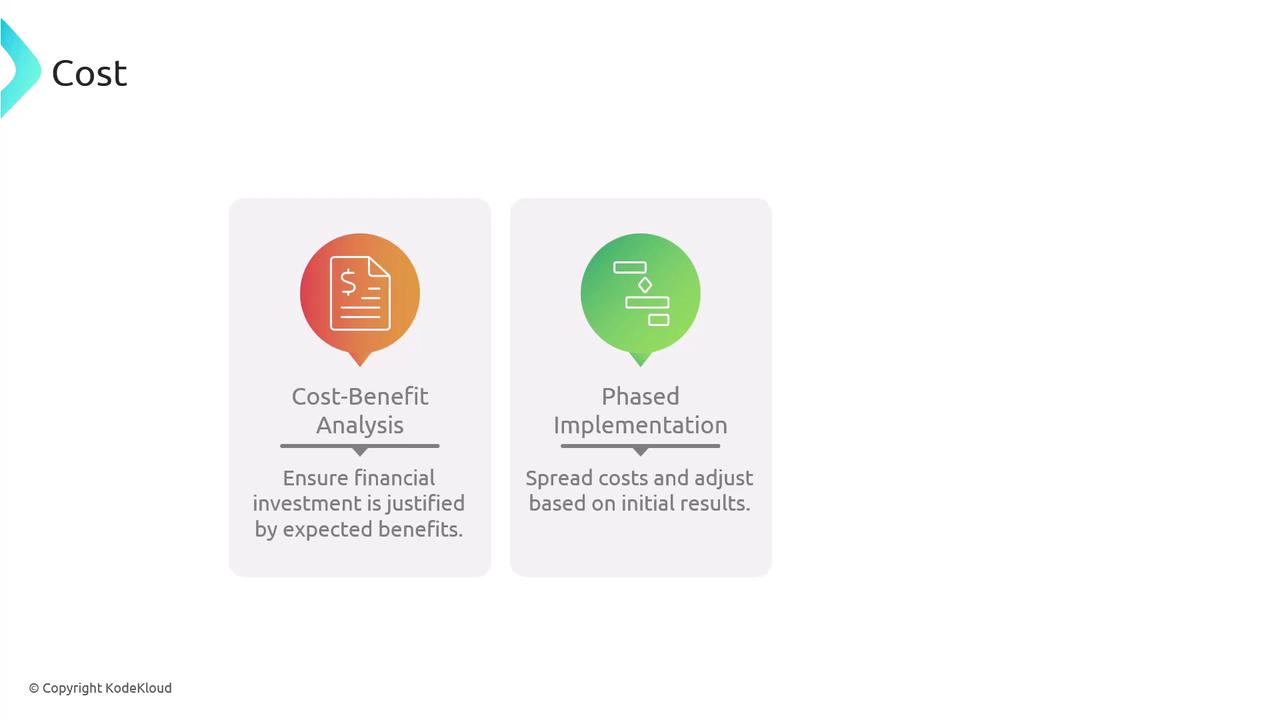
Cost covers the financial investment required for implementing and maintaining automation and orchestration tools. This includes initial expenditures, ongoing operational expenses, and hidden costs like maintenance, updates, and training.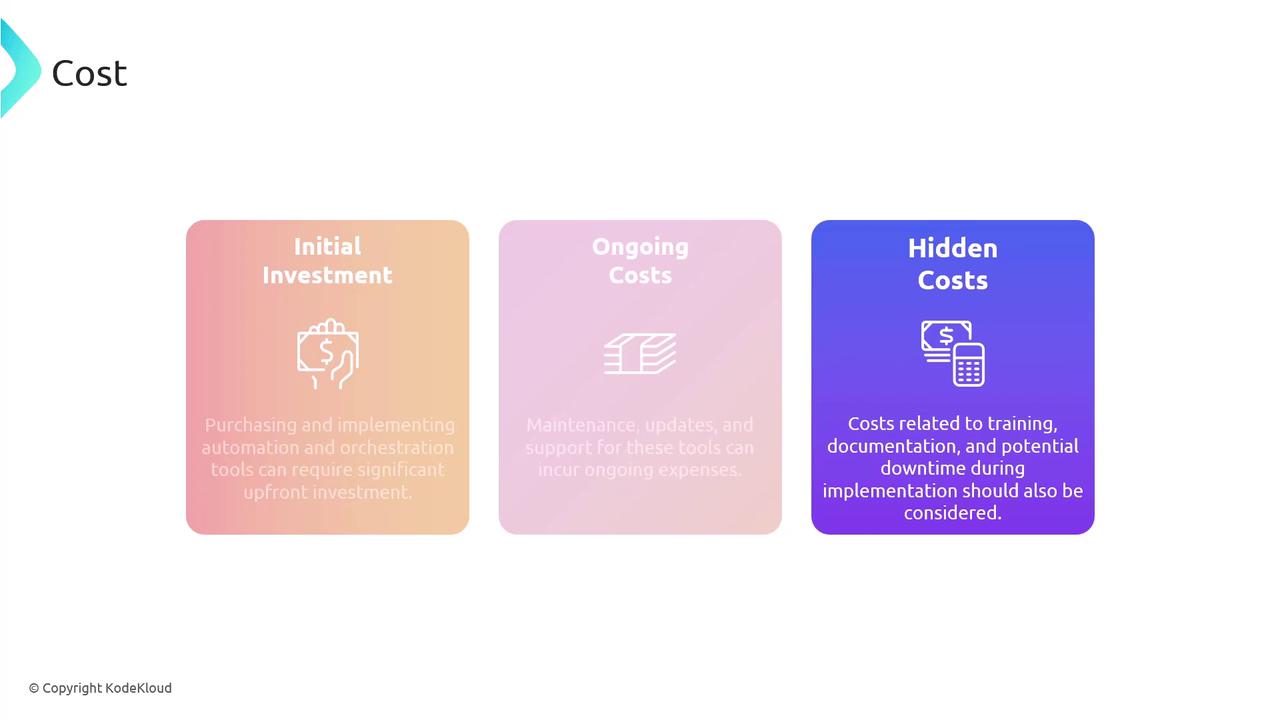
- Conducting a detailed cost-benefit analysis.
- Phasing the implementation of automation and orchestration.
- Leveraging open-source tools where possible.
3. Single Points of Failure
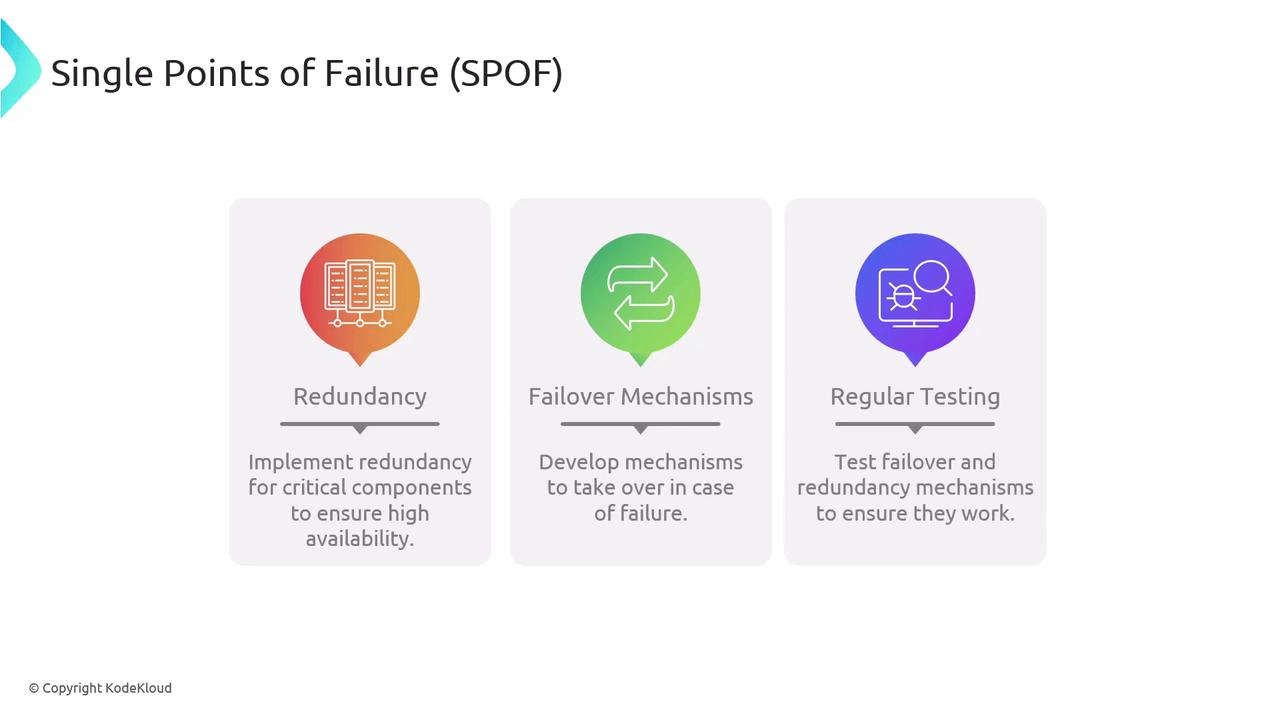
A single point of failure (SPOF) is any system component that, if it fails, could halt the entire operation. Relying on a single tool or script can create vulnerabilities that result in significant downtime.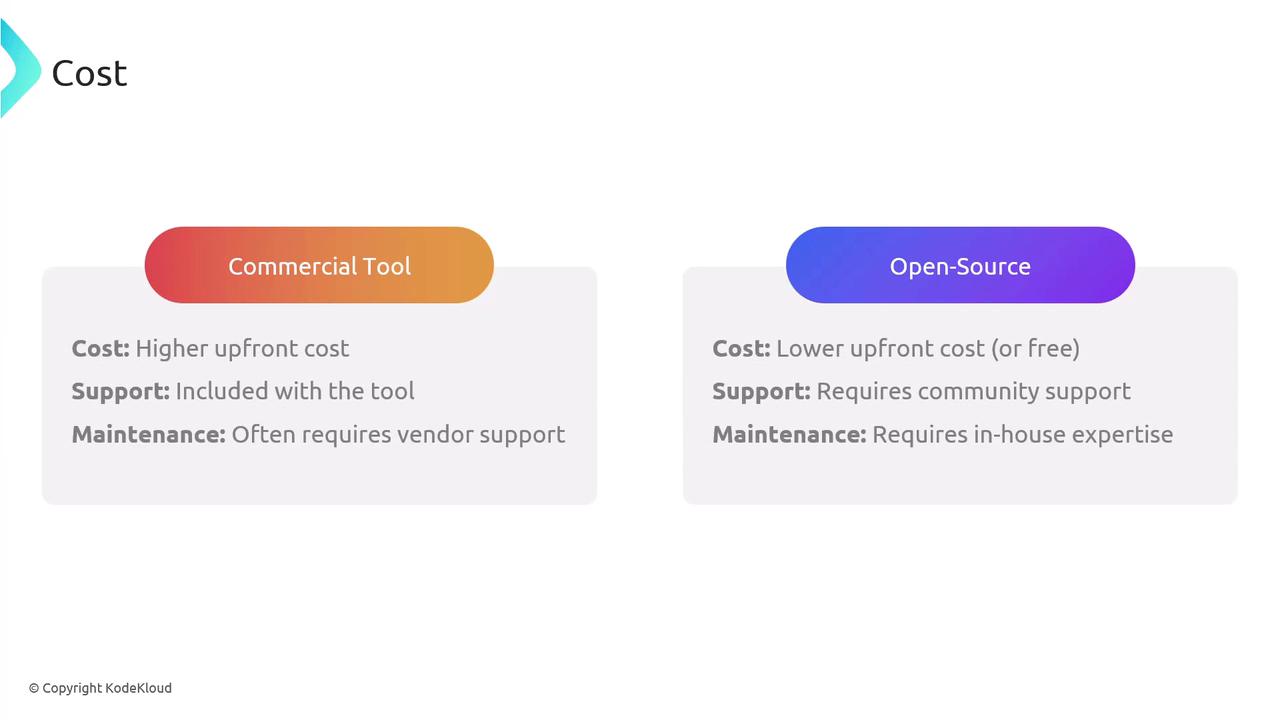
- Building redundancy into critical components.
- Developing robust failover mechanisms.
- Conducting regular tests to ensure failover efficacy.
4. Technical Debt
Technical debt refers to the long-term challenges and costs incurred from quick, temporary solutions. Over time, these workarounds can accumulate, making the system more difficult to maintain and scale, and increasing maintenance costs.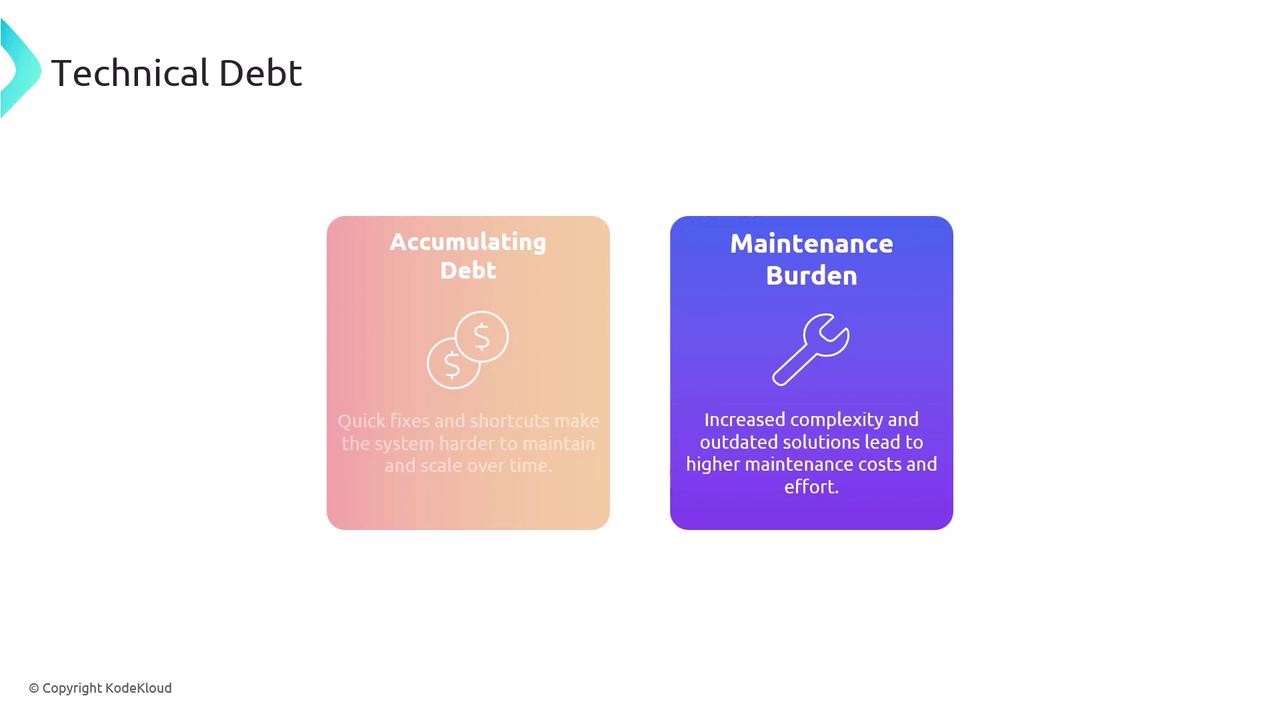
- Perform thorough code reviews to catch issues early.
- Regularly refactor and update automation scripts.
- Follow industry best practices and standards in system development.
Proactively managing technical debt helps ensure that your automation systems remain scalable and maintainable as your infrastructure evolves.
5. Ongoing Supportability
Ongoing supportability is the capacity to maintain and extend automated systems over time. Challenges include managing regular tool updates, bridging skill gaps, and keeping documentation current.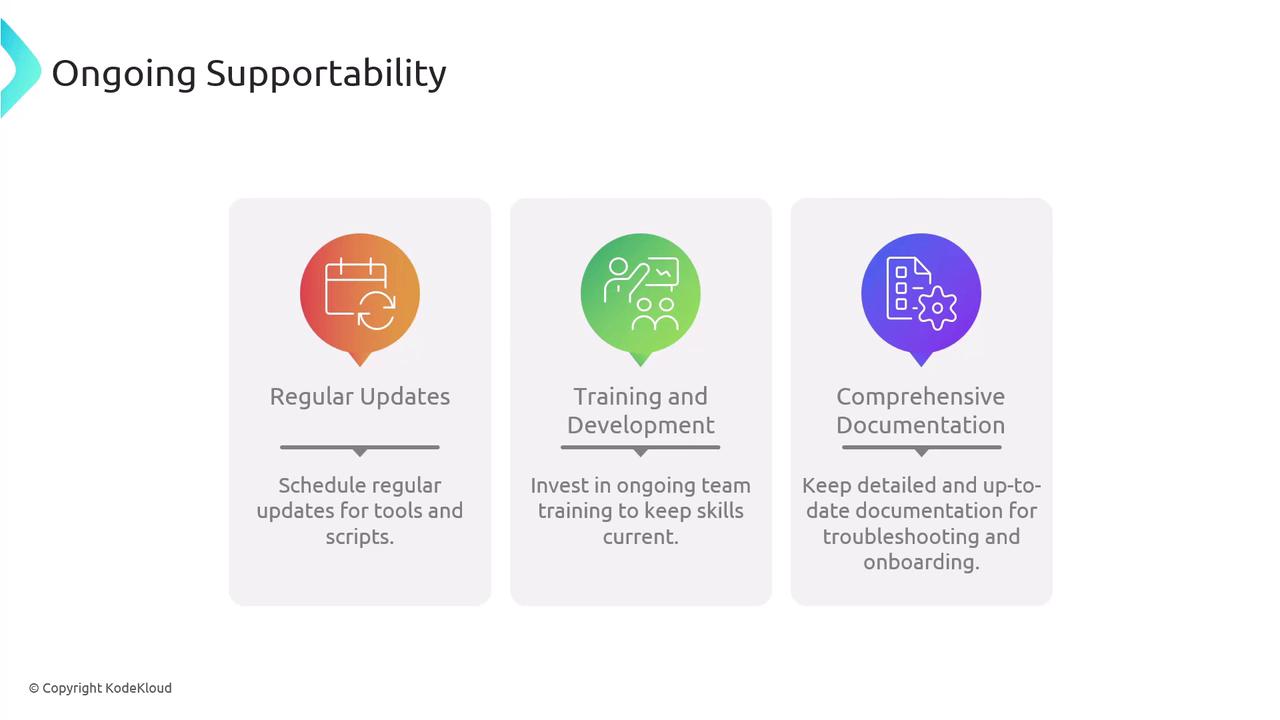
- Establish and adhere to a regular update schedule for tools and scripts.
- Invest in continuous training and development for your team.
- Keep documentation detailed and updated to support troubleshooting and onboarding.
Neglecting ongoing supportability may lead to outdated systems, security vulnerabilities, and operational bottlenecks. Regular updates and training are critical to sustaining system performance.