Data Sanitization
Data sanitization is the process of completely erasing data from a storage device before it is disposed of or repurposed. Often, files on hard drives appear to be deleted but can be recovered using specialized tools if not properly sanitized. The standard sanitization process involves overwriting existing data with random bits (ones and zeros), making it virtually impossible to retrieve the original information.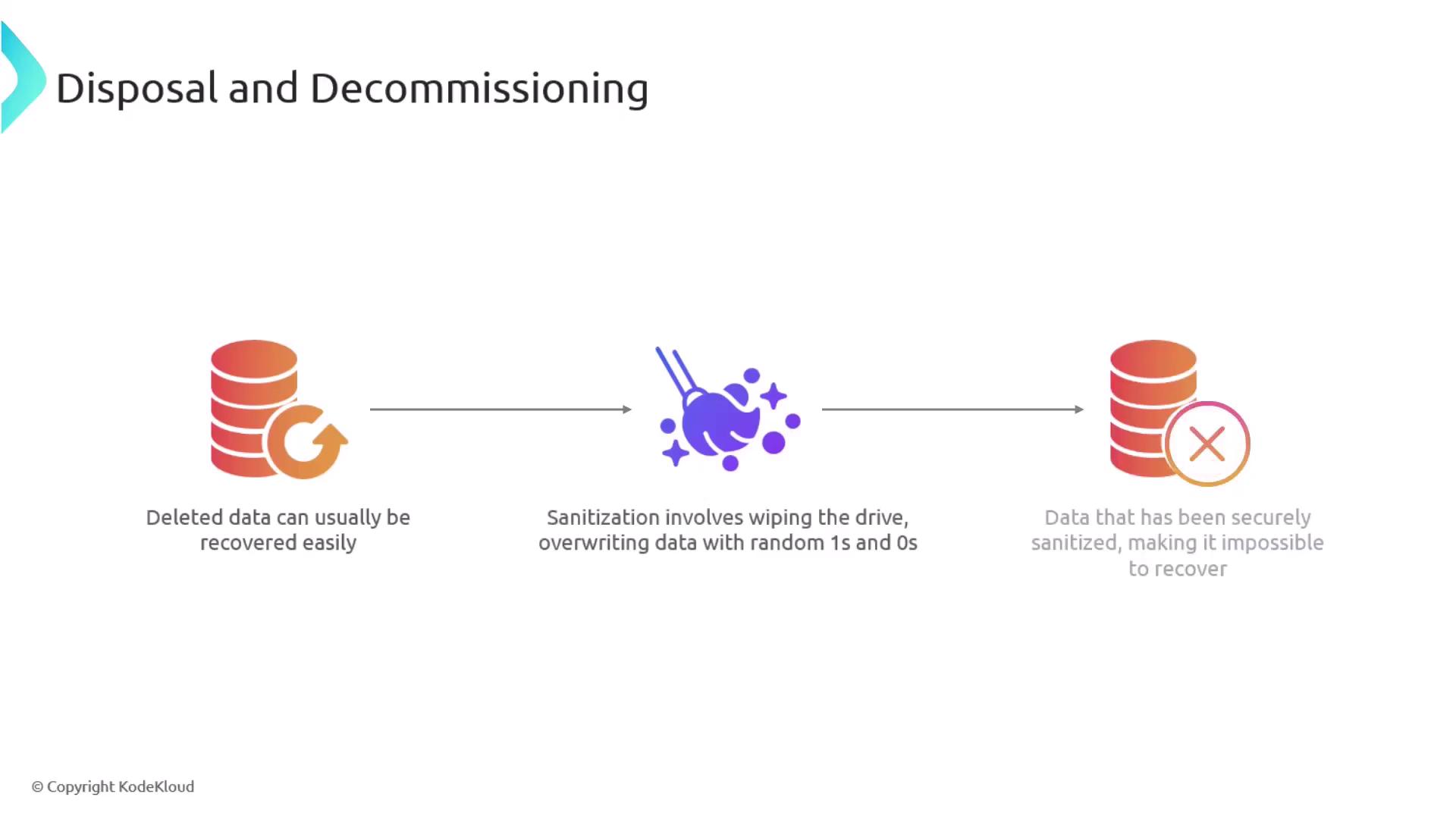
Ensure that your data sanitization practices comply with industry standards and regulatory requirements to mitigate risks related to data leaks.
Data Destruction
In contrast to data sanitization, data destruction permanently damages the storage hardware to prevent any possibility of data recovery. Physical destruction methods, such as using a hammer to smash the hard drive, are employed when maximum security is needed and the device must be rendered entirely unusable.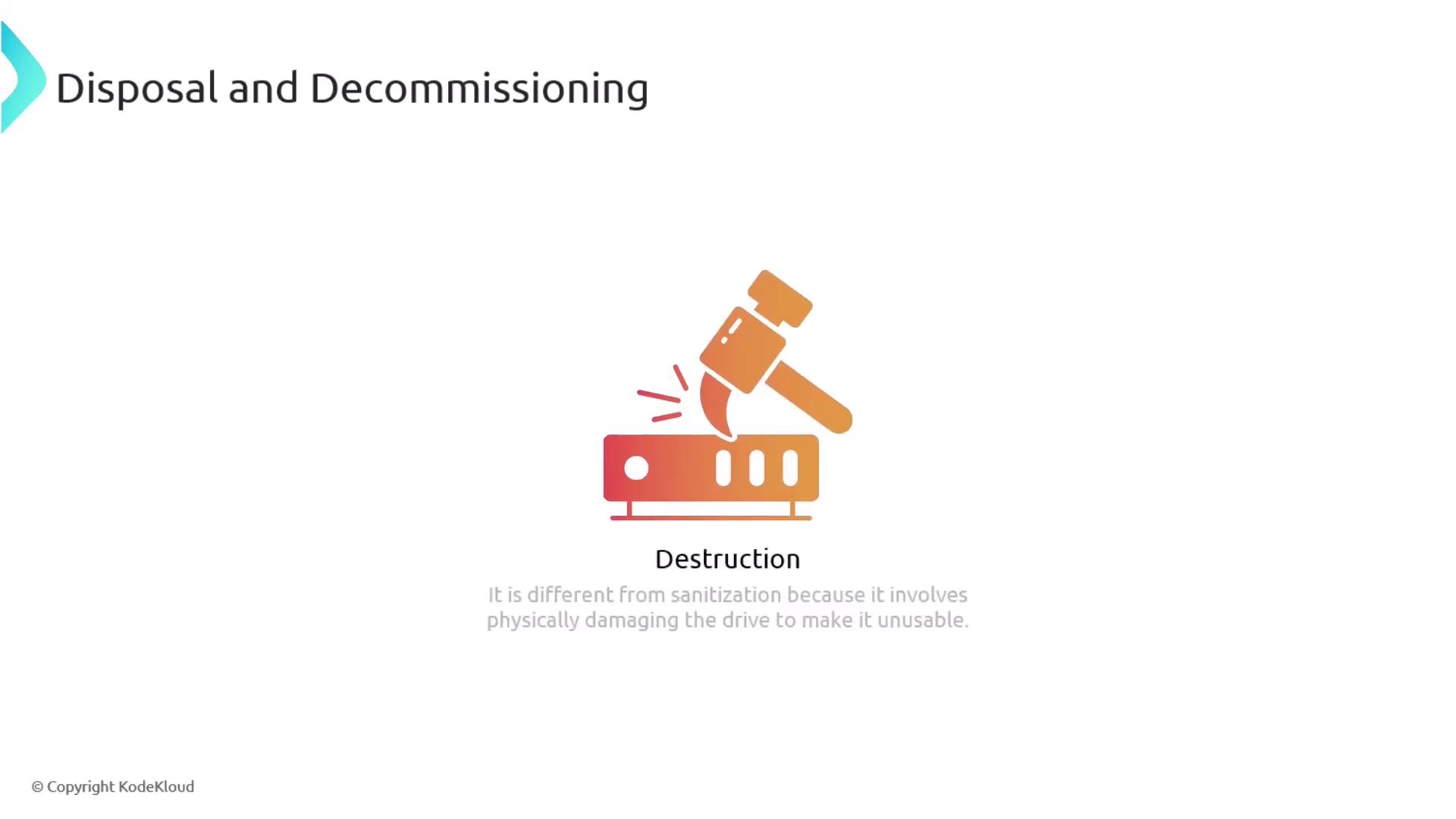
Physical destruction should only be used when data sensitivity is extremely high, as the device becomes irrecoverable and cannot be repurposed or recycled.
Establishing a Data Retention Policy
A comprehensive data retention policy is a cornerstone of effective asset management. This policy clearly defines how long data should be retained and specifies the conditions under which it should be securely deleted. For instance, organizations may be legally required to store customer transaction records for a predetermined period before disposing of them securely.