Potential Consequences of Non-Compliance
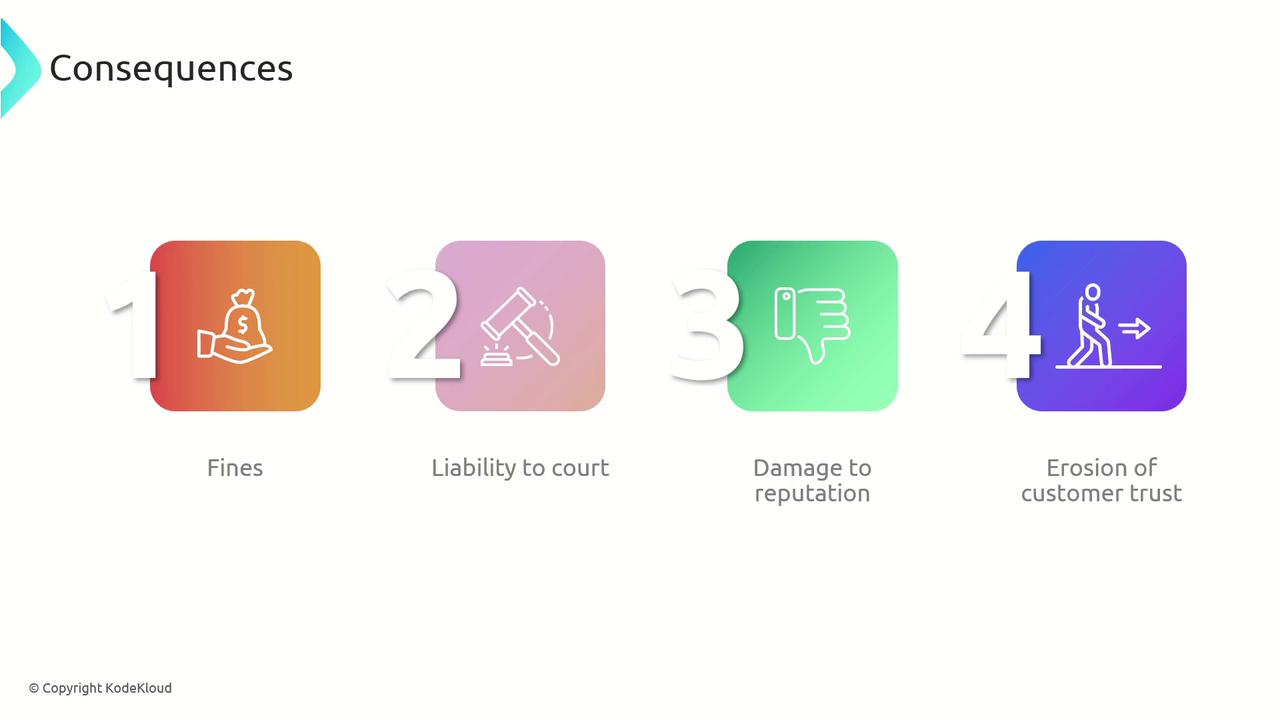
Failing to comply with relevant laws and regulations can result in significant consequences, which vary by jurisdiction and regulation. The most common outcomes include:- Legal Penalties: Significant fines may be imposed by regulatory authorities—these fines can reach millions or even billions of dollars.
- Liability: Courts might hold organizations legally responsible, leading to costly lawsuits and settlements.
- Reputation Damage: Loss of customer trust and a declining reputation can result in reduced business opportunities.
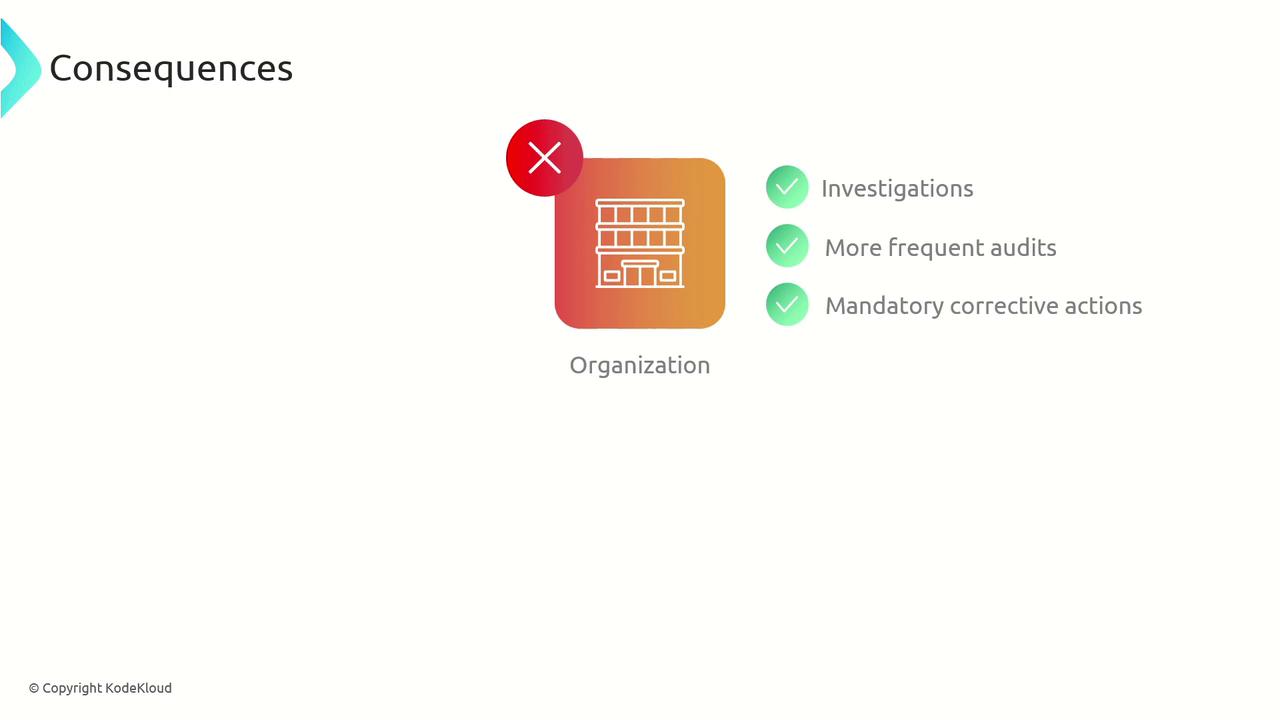
- Increased Scrutiny: Regulatory bodies may subject non-compliant organizations to more frequent investigations, audits, and mandatory corrective actions.
Mitigating Risks Through Proactive Compliance
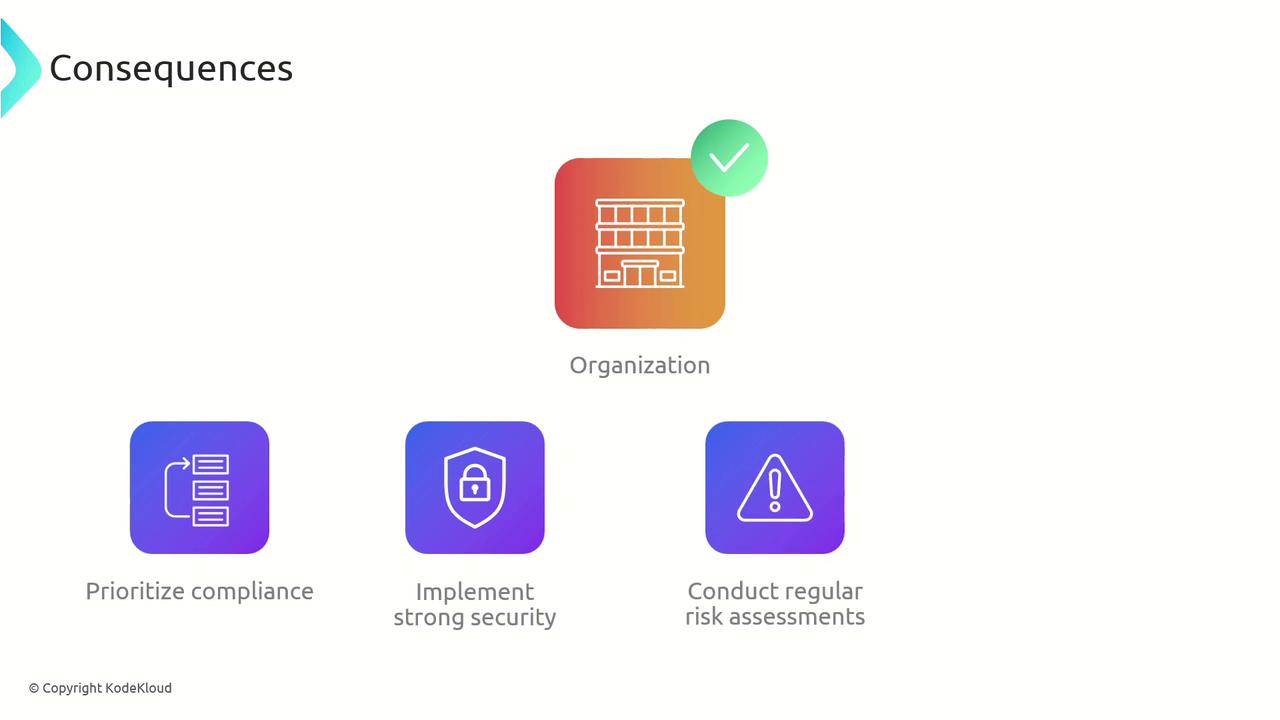
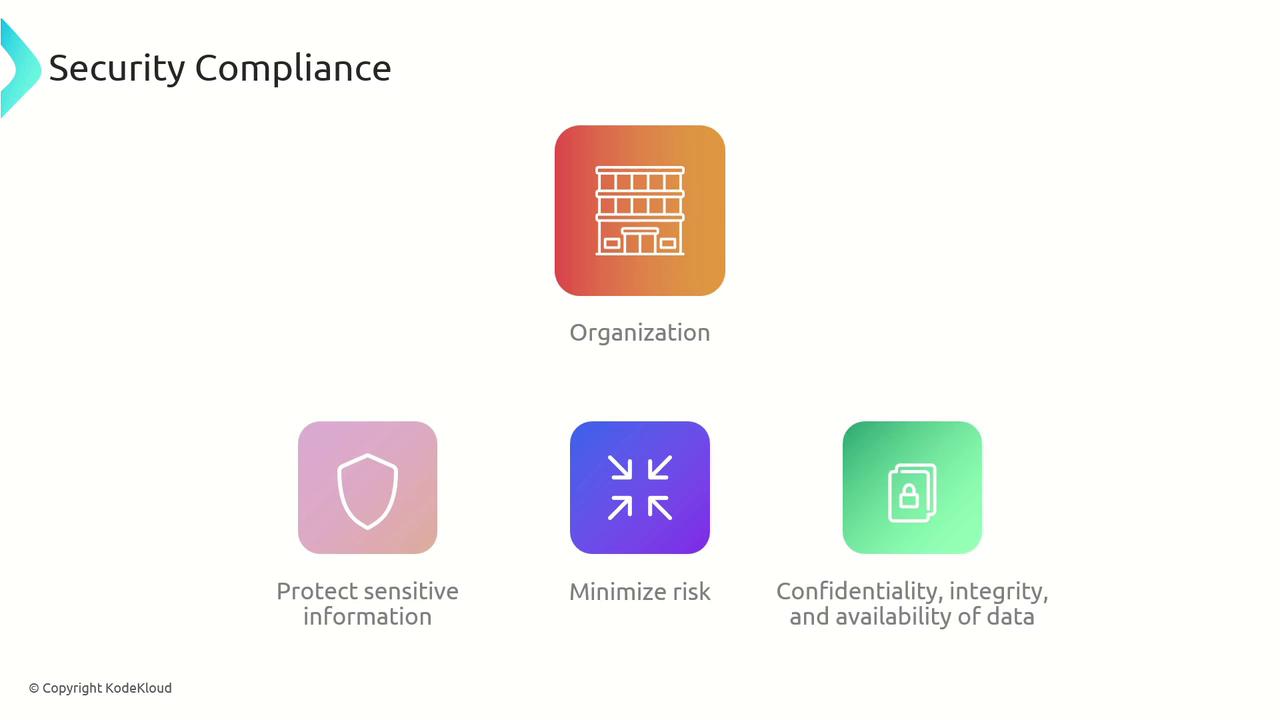
Prioritizing security compliance mitigates the risks associated with non-adherence. Organizations can protect themselves by taking the following proactive steps:- Prioritize compliance initiatives in line with the applicable regulatory framework.
- Implement robust security measures to safeguard critical data.
- Conduct regular risk assessments to identify and address vulnerabilities.
- Stay updated on evolving legal requirements and industry best practices.
Adopting proactive compliance measures not only helps in avoiding legal and financial penalties but also strengthens your organization’s overall security posture.