

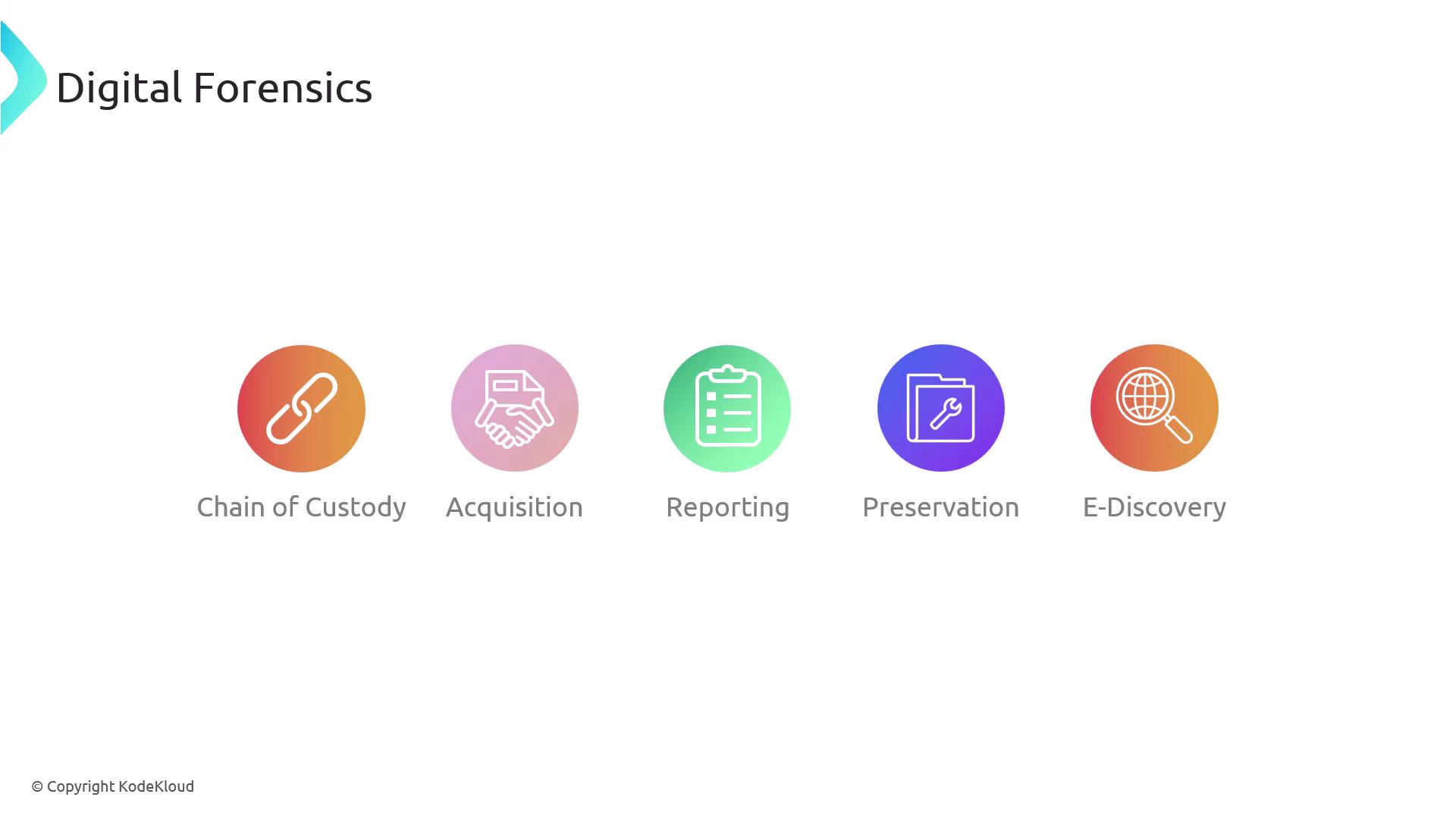
Accurate digital forensics practices ensure that evidence integrity is maintained throughout every stage of an investigation.
Chain of Custody
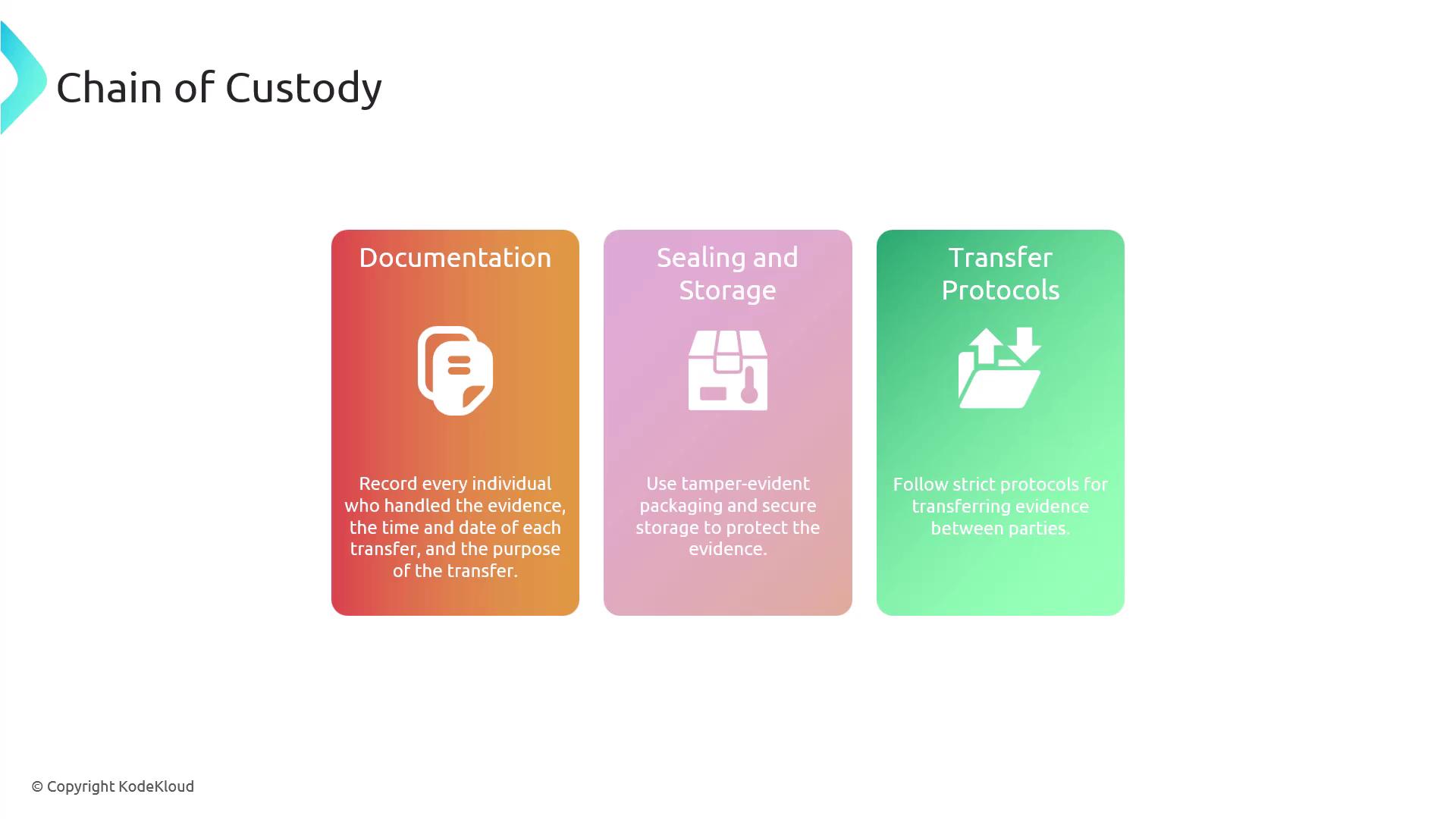
The first and most crucial principle is the chain of custody. This process documents every movement and handling of both physical and electronic evidence, ensuring its integrity and authenticity under legal scrutiny. Key elements include:- Detailed records of when evidence was collected.
- Documentation of who handled and stored the evidence.
- Secure storage using tamper-evident packaging and strict protocols.
Acquisition
Acquisition is the process of creating an exact, bit-for-bit forensic image of digital evidence without modifying the original data. Specialized tools are used to ensure the fidelity of this image through cryptographic hash functions—often SHA-256—to verify data integrity. For example, tools like FTK Imager can generate and validate forensic copies, ensuring that the evidence remains unaltered during analysis.
Reporting
Clear and accurate reporting is a cornerstone of effective digital forensics. The report should be structured to include:- An executive summary that highlights key findings.
- Detailed findings describing the evidence collection, methodologies used, and results.
- Conclusions and recommendations outlining next steps or further investigation insights.

Preservation
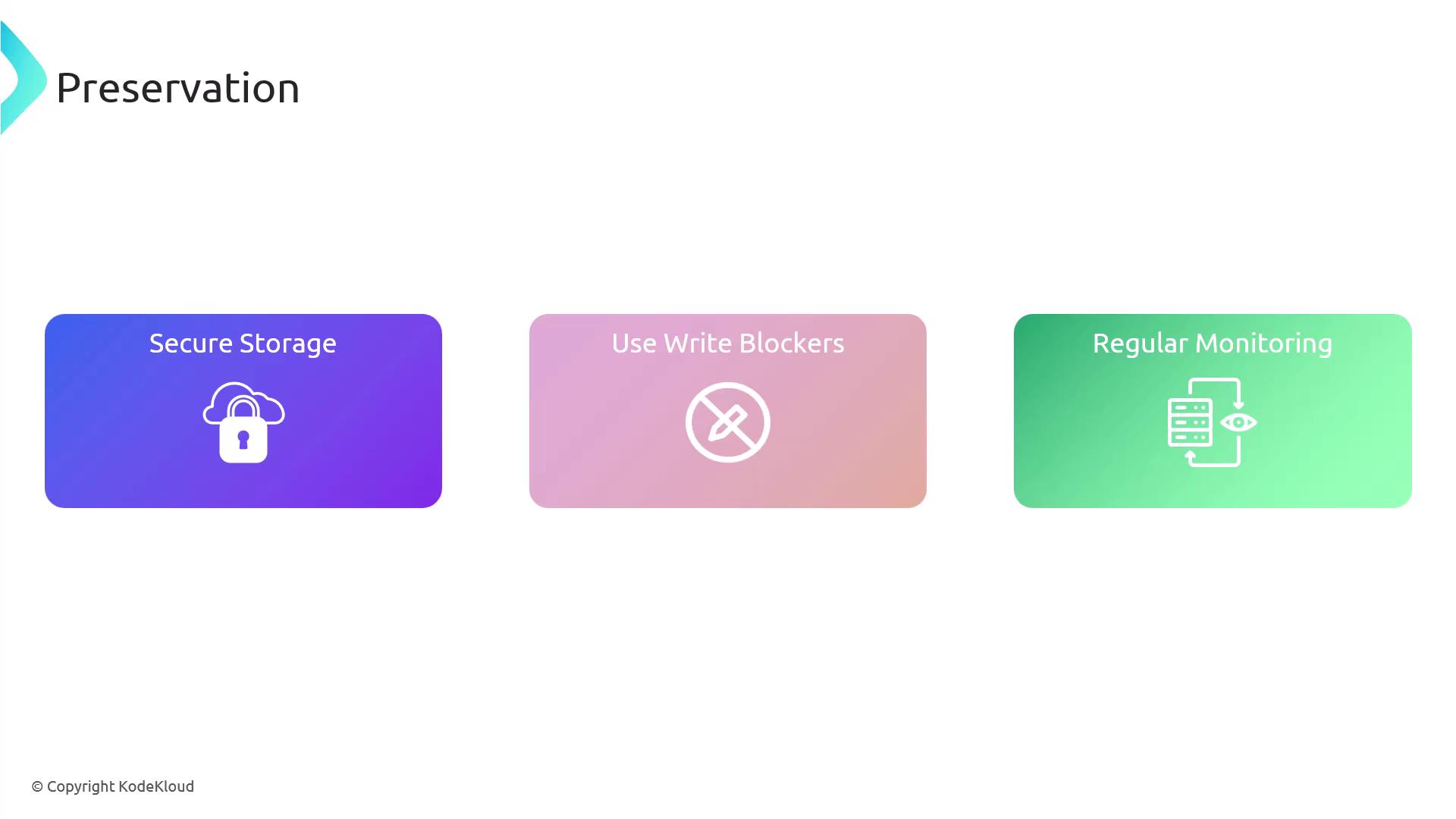
Preservation involves maintaining the integrity and authenticity of digital evidence over time. This step is essential for the evidence to remain legally admissible. Key preservation techniques include:- Secure storage within controlled environments.
- The use of hardware or software write blockers to prevent modification.
- Constant monitoring of storage conditions to guard against tampering or degradation.
E-Discovery
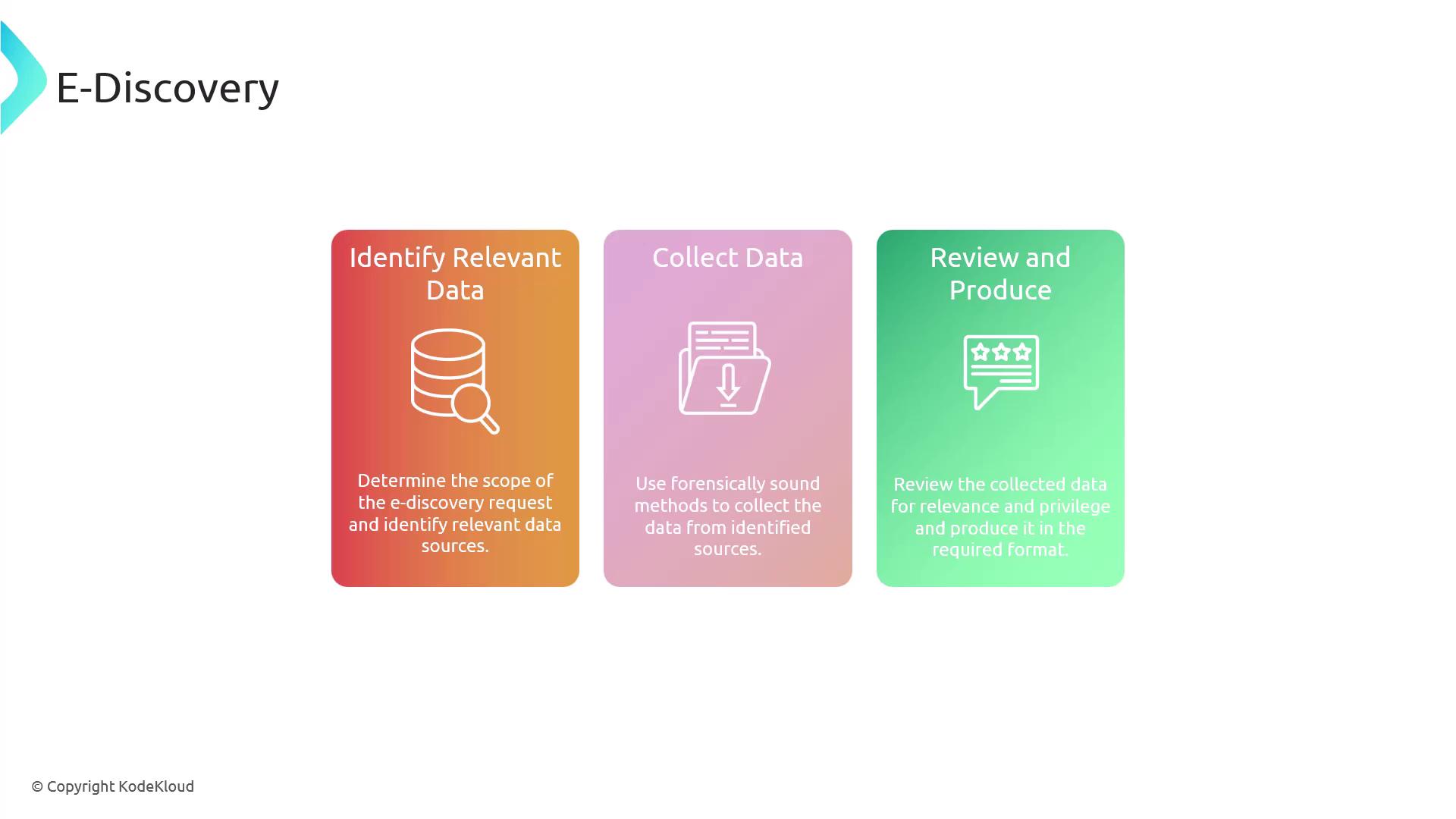
E-discovery focuses on the identification, collection, and production of electronically stored information in response to legal requests. This process is performed in three main steps:- Identification: Define the scope of relevant data and identify potential sources.
- Collection: Use forensically sound methods to retrieve data.
- Review and Production: Evaluate the collected data, ensure its relevance, and prepare it for legal review.
It is essential to follow forensically sound methods during every phase of e-discovery to ensure that electronic evidence is admissible in court.
Conclusion
Digital forensics plays a vital role in upholding cybersecurity and supporting legal investigations. By following best practices in chain of custody, acquisition, reporting, preservation, and e-discovery, organizations can ensure that digital evidence is handled with precision—maintaining its integrity and reliability throughout the investigative process.