

Symmetric Encryption
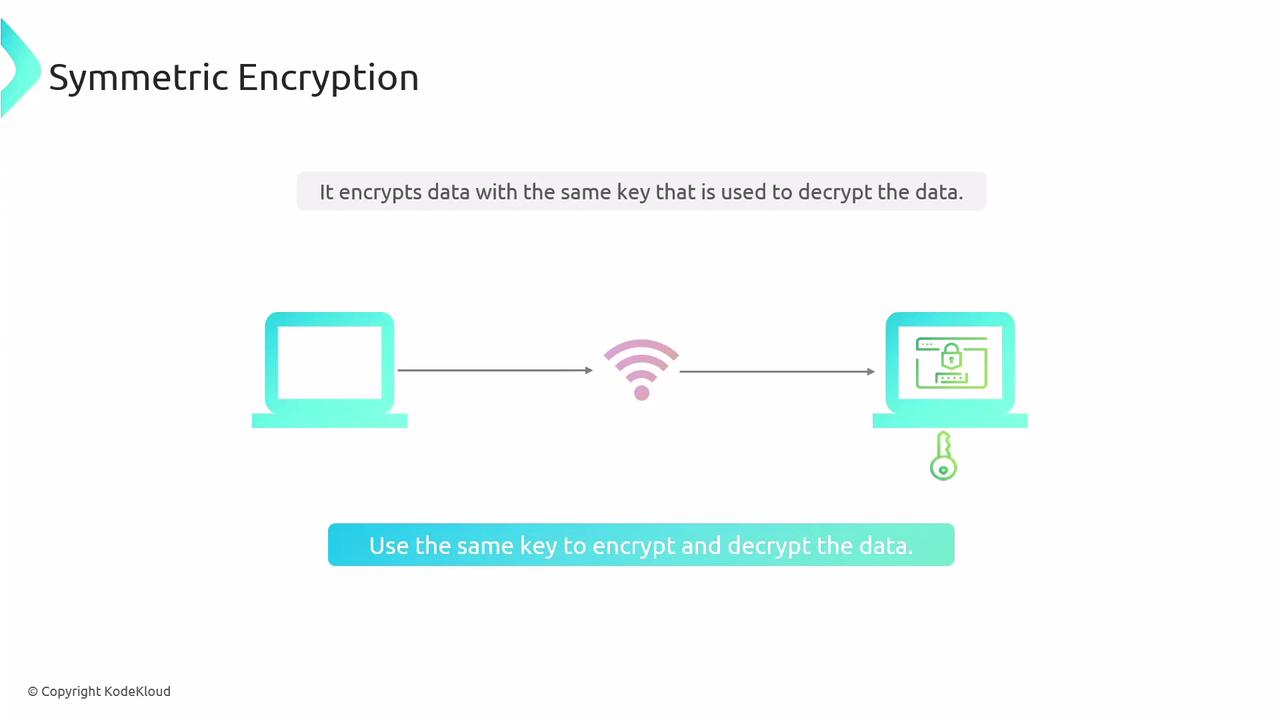
Symmetric encryption uses a single key for both encryption and decryption. For example, when sensitive information is transmitted over the internet, it is encrypted with a key that the recipient must also possess to decrypt and read the data. This approach offers rapid performance, making it ideal for large volumes of data, but poses challenges in securely exchanging the key.
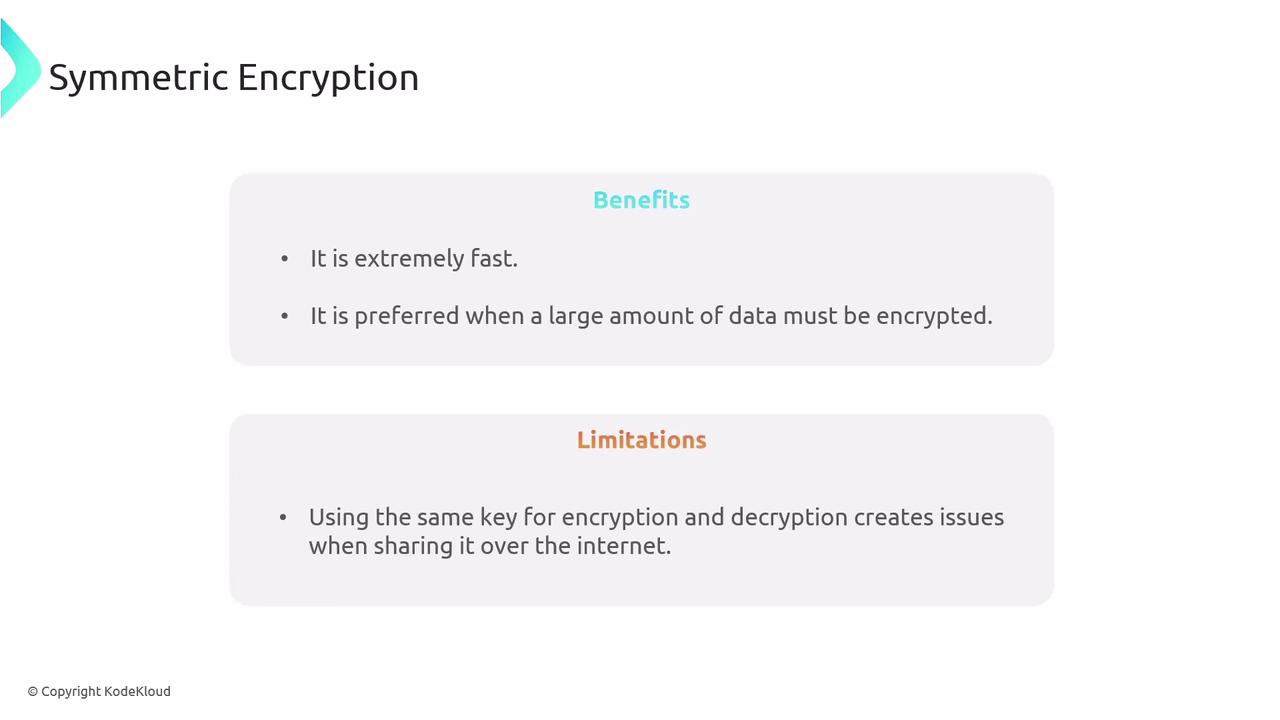
Selecting the right symmetric encryption method depends on the data’s location and sensitivity, as well as the system’s performance requirements.
Types of Symmetric Encryption
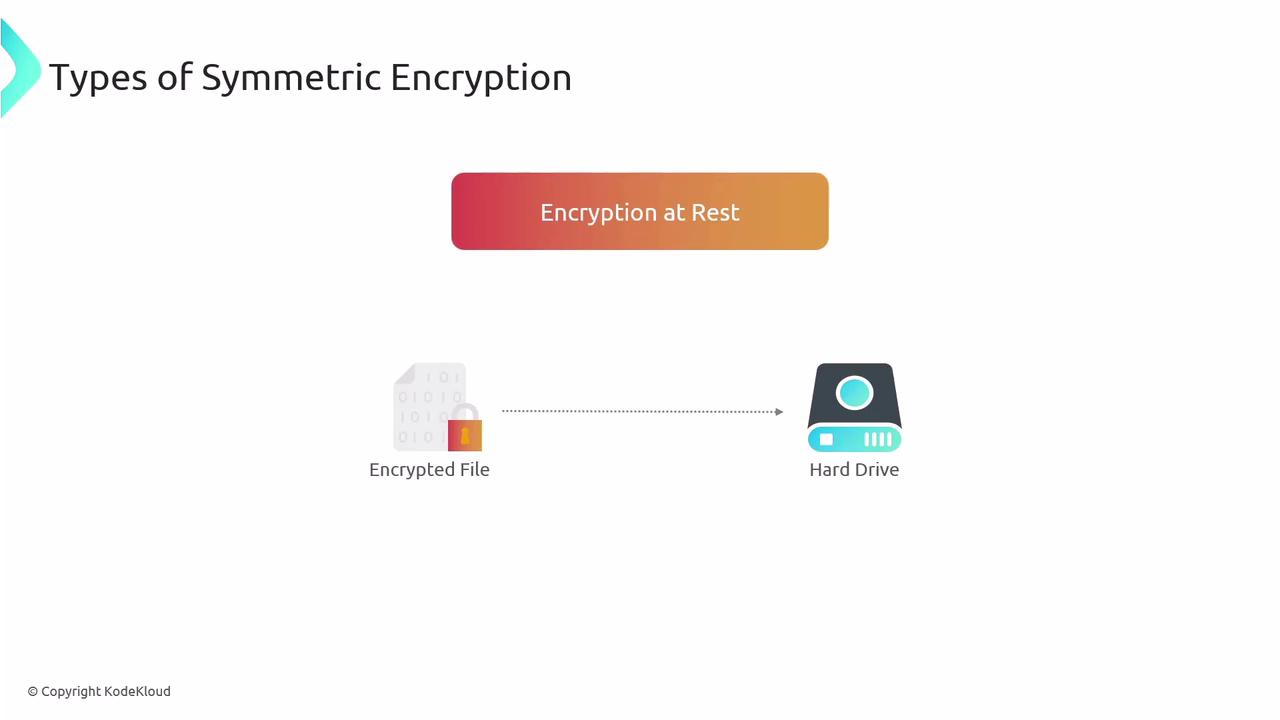
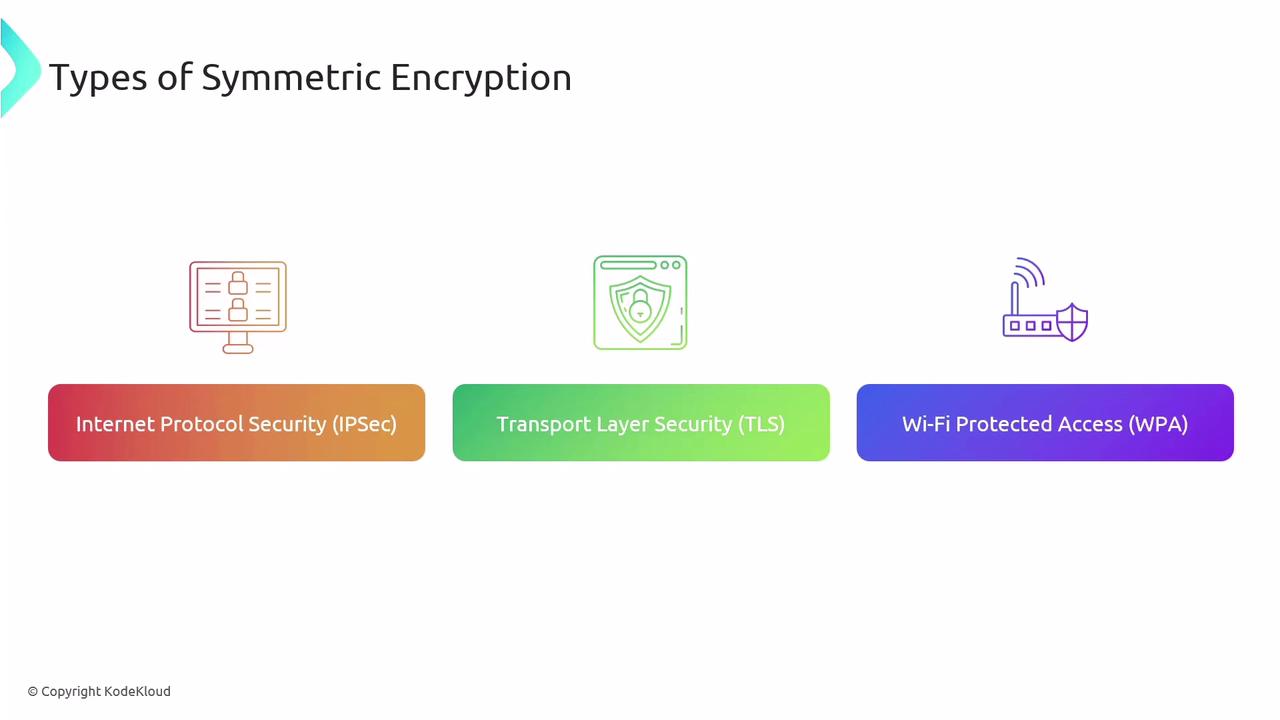
Symmetric encryption is applied in several contexts:Encryption at Rest
Encryption at rest involves protecting stored data on physical media such as hard drives. This can include:- Full Disk Encryption: Encrypting the entire drive, including free space and file metadata.
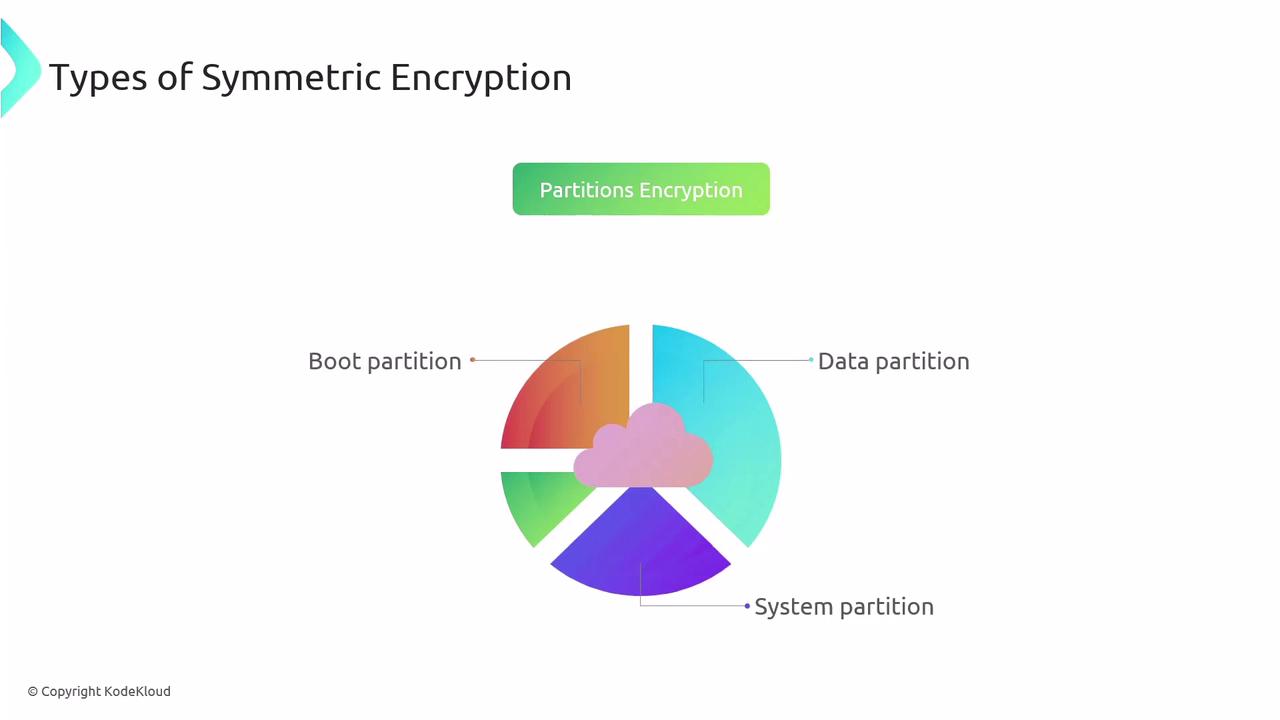
- Partition Encryption: Dividing the drive into segments (e.g., boot, system, and data partitions) and encrypting each separately with unique keys.
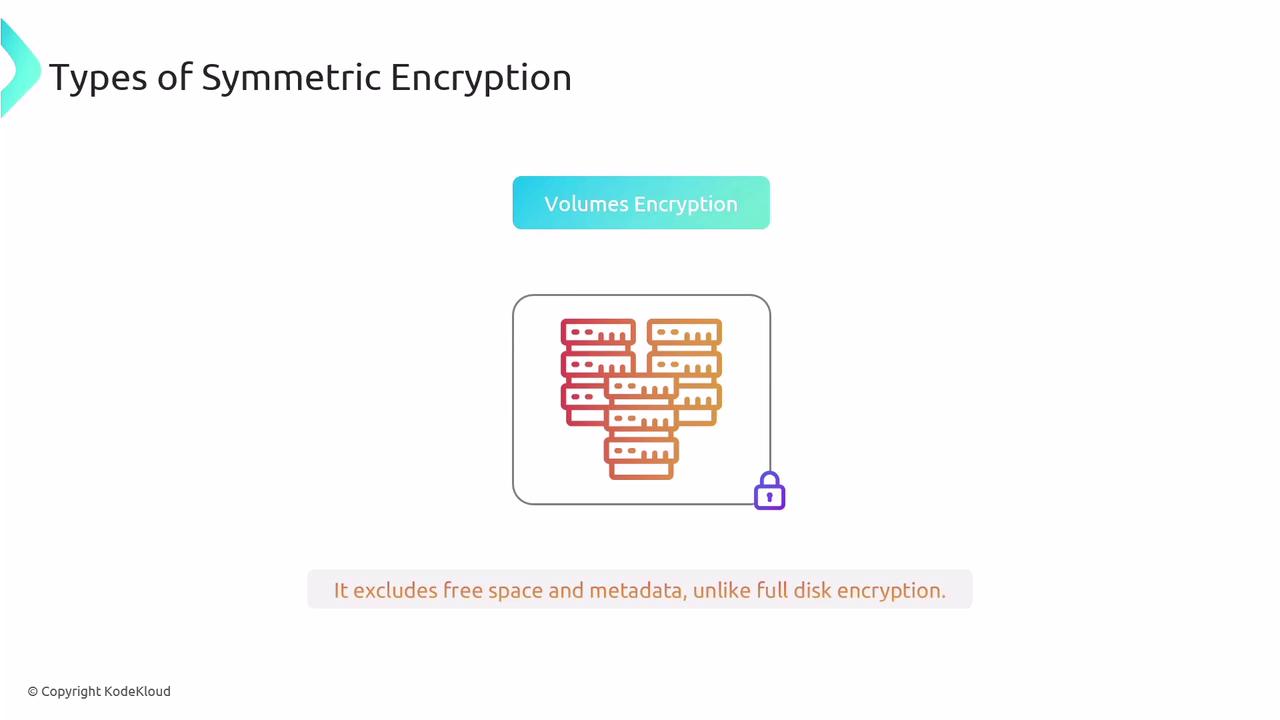
- Volume Encryption: Encrypting specific volumes while typically excluding free space and metadata. Popular examples include Microsoft BitLocker and Apple FileVault.
Database Encryption
Databases often contain highly sensitive information and may require encryption either for the entire database or for individual records to ensure confidentiality.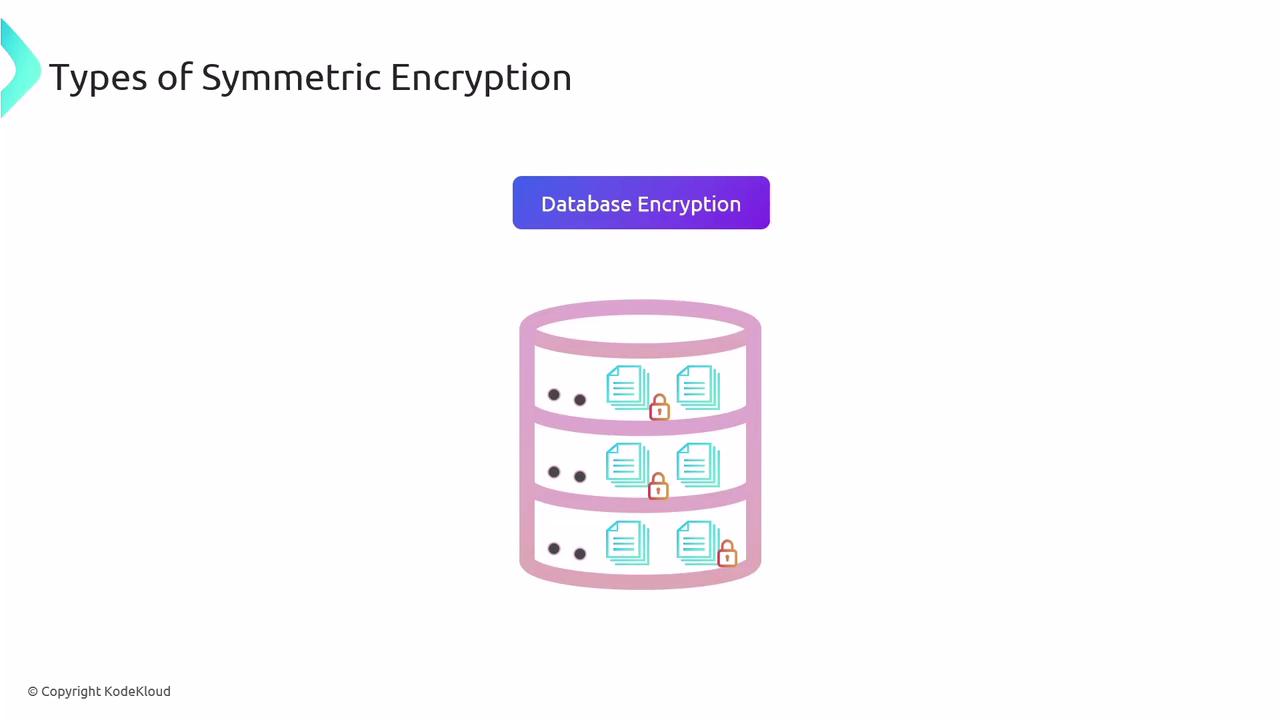
Asymmetric Encryption
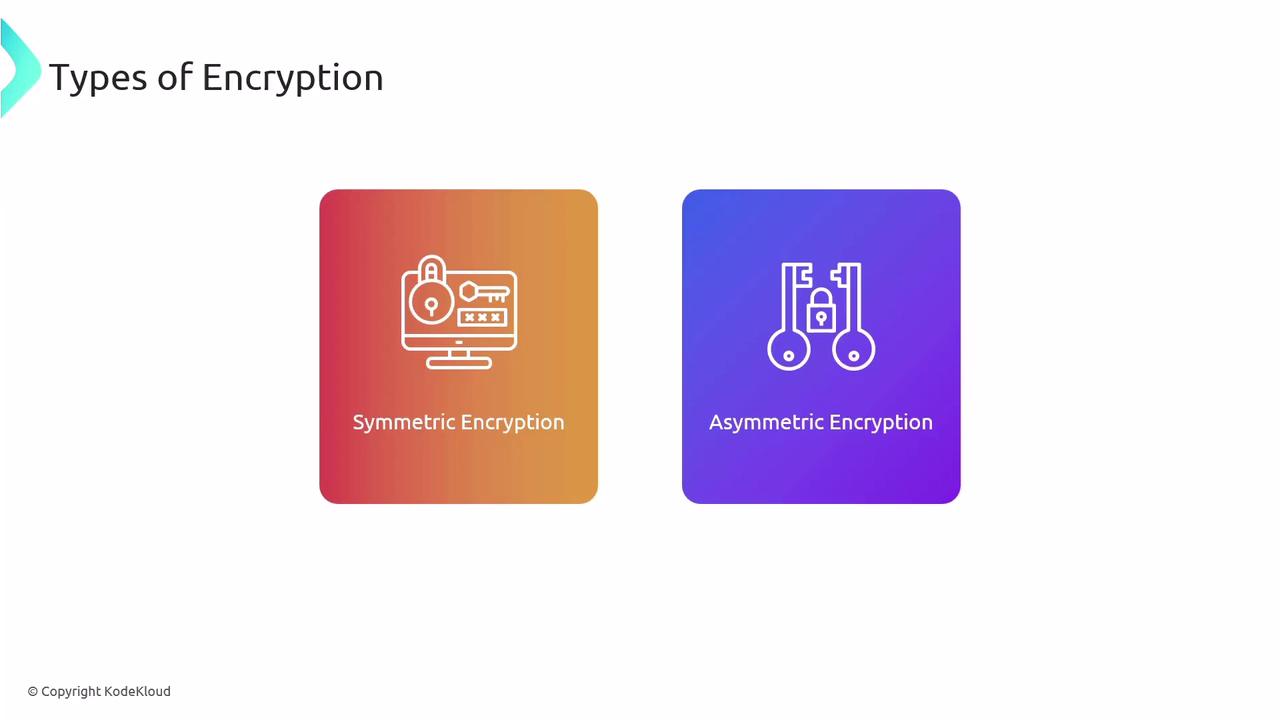
Unlike symmetric encryption, asymmetric encryption uses a pair of keys—one for encryption and a different one for decryption. This method eliminates the need to share a common key and is a vital component of Public Key Infrastructure (PKI), facilitating secure communication without complex key exchanges.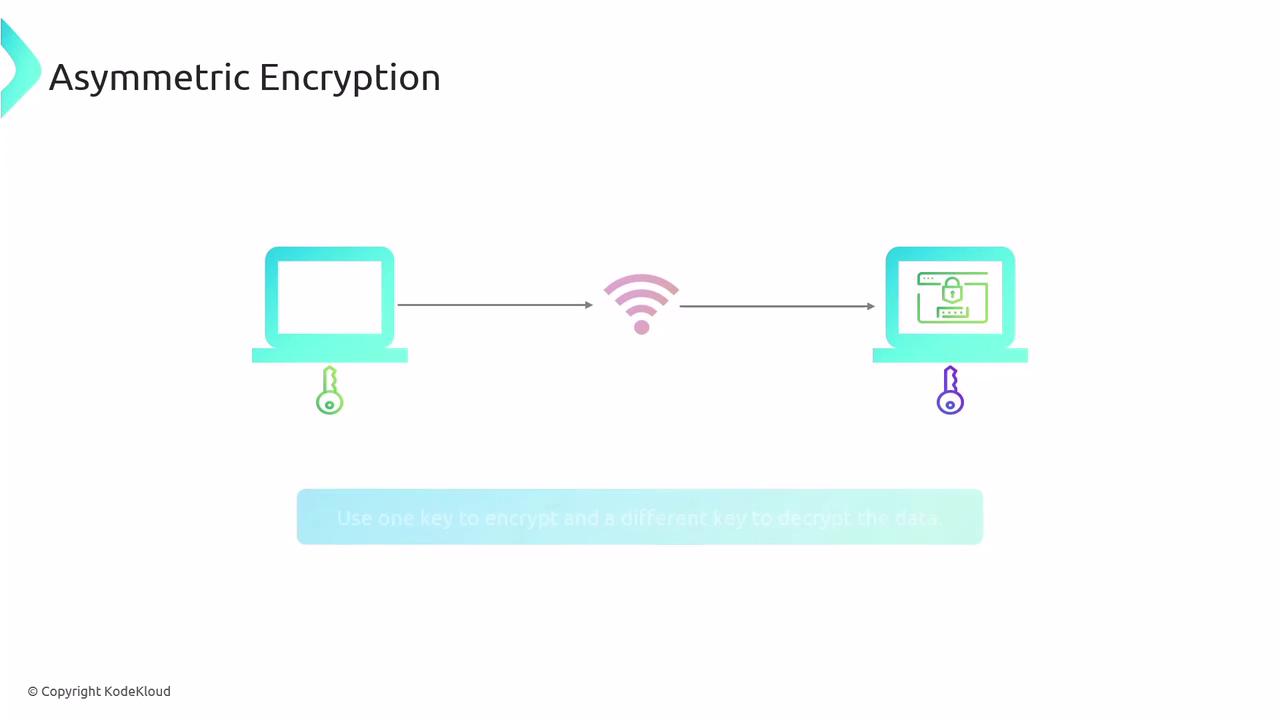
Key Length and Encryption Algorithms
Choosing the correct encryption algorithm and key length is essential for robust data security. The Advanced Encryption Standard (AES) is the current benchmark for symmetric encryption. By using longer key lengths, AES makes brute-force attacks computationally infeasible.

While symmetric encryption delivers high performance, its key management issues mean that organizations must weigh its benefits against potential vulnerabilities when choosing an encryption strategy.