

- Local Attacks: Directly target systems through physical access.
- Remote Attacks: Exploit vulnerabilities via network access, often bypassing conventional security measures.
- Confidentiality: Ensuring that sensitive information is not disclosed to unauthorized individuals.
- Integrity: Maintaining the accuracy and consistency of stored data.
- Availability: Guaranteeing reliable and timely access to data and resources.
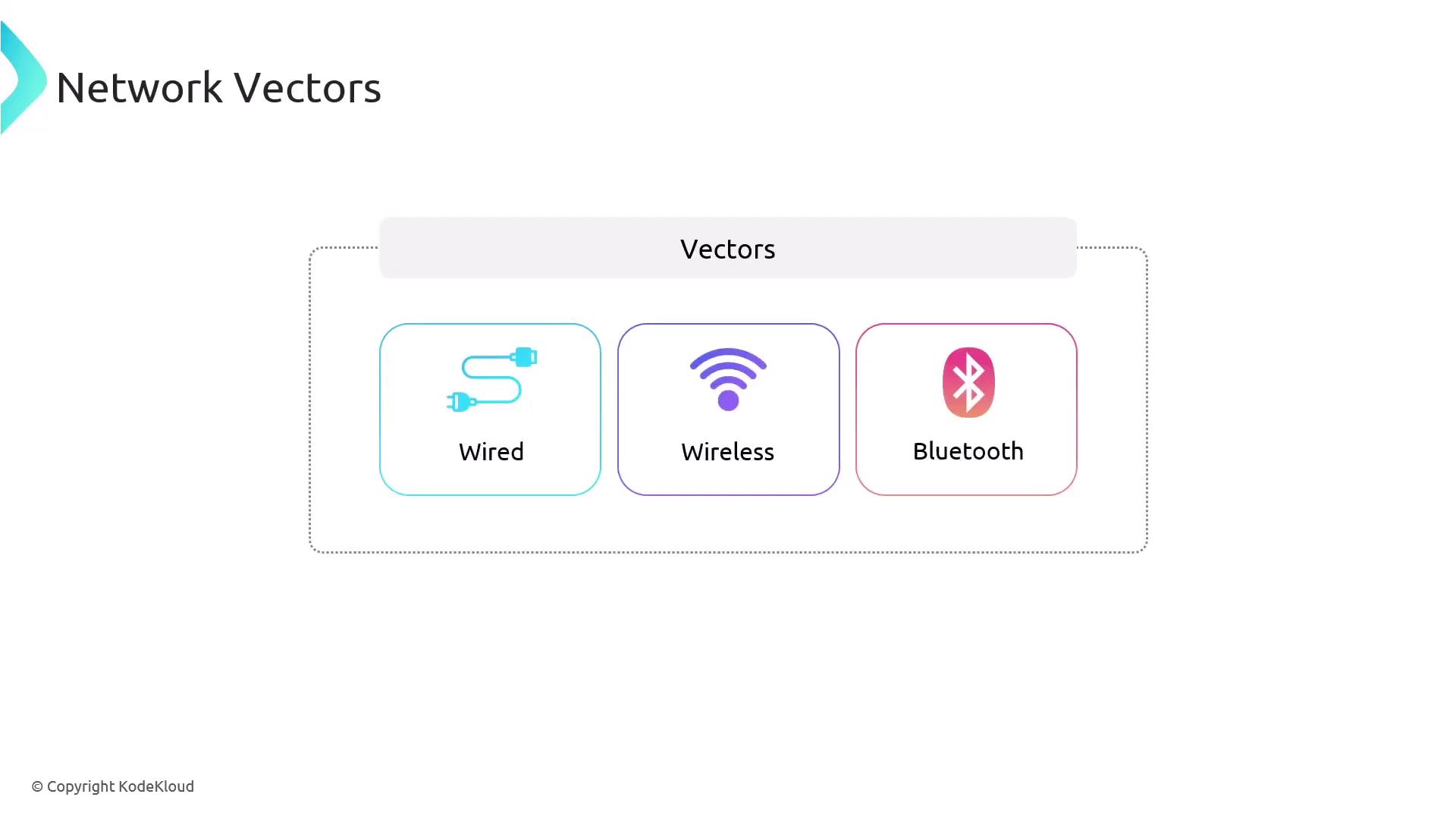
- Wired Connections: Direct physical access can lead to hacking and data interception.
- Wireless Connections: Susceptible to eavesdropping and unauthorized access due to their broadcast nature.
- Bluetooth: Introduces additional risks through proximity-based exploits.
Regular network security audits and prompt infrastructure updates are vital to mitigate these threat vectors and maintain robust security measures.