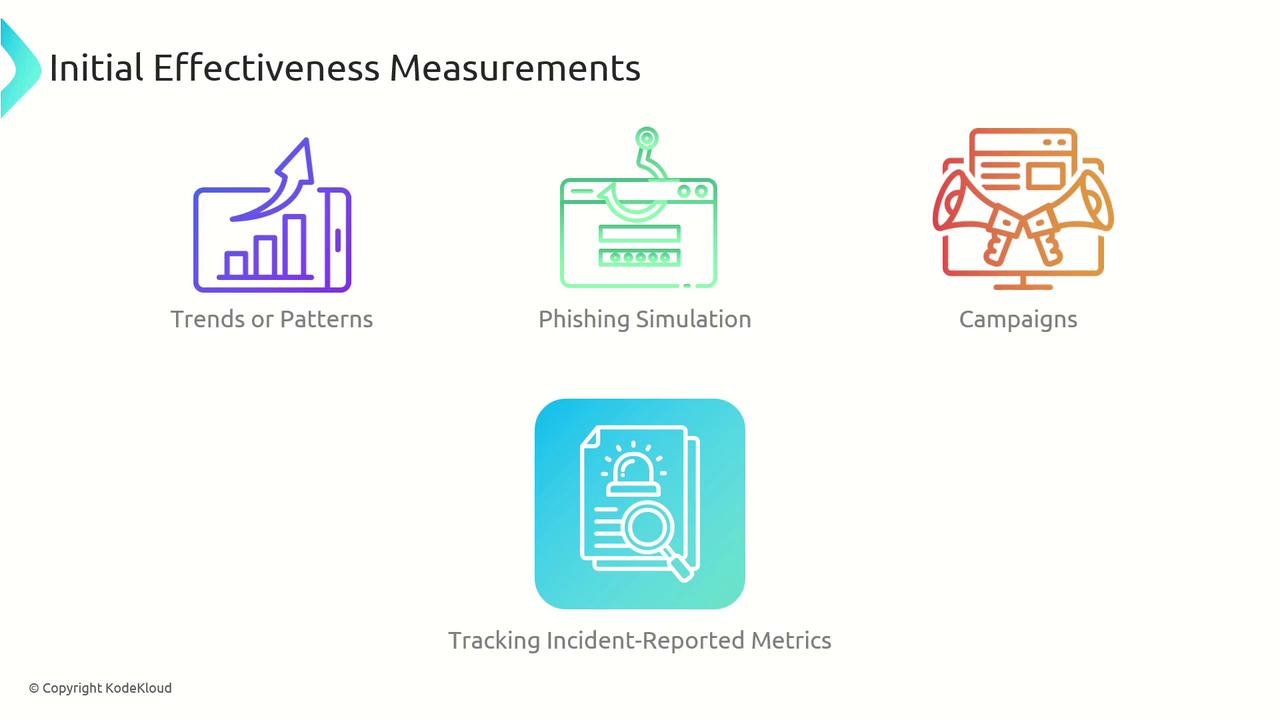
Initial Effectiveness
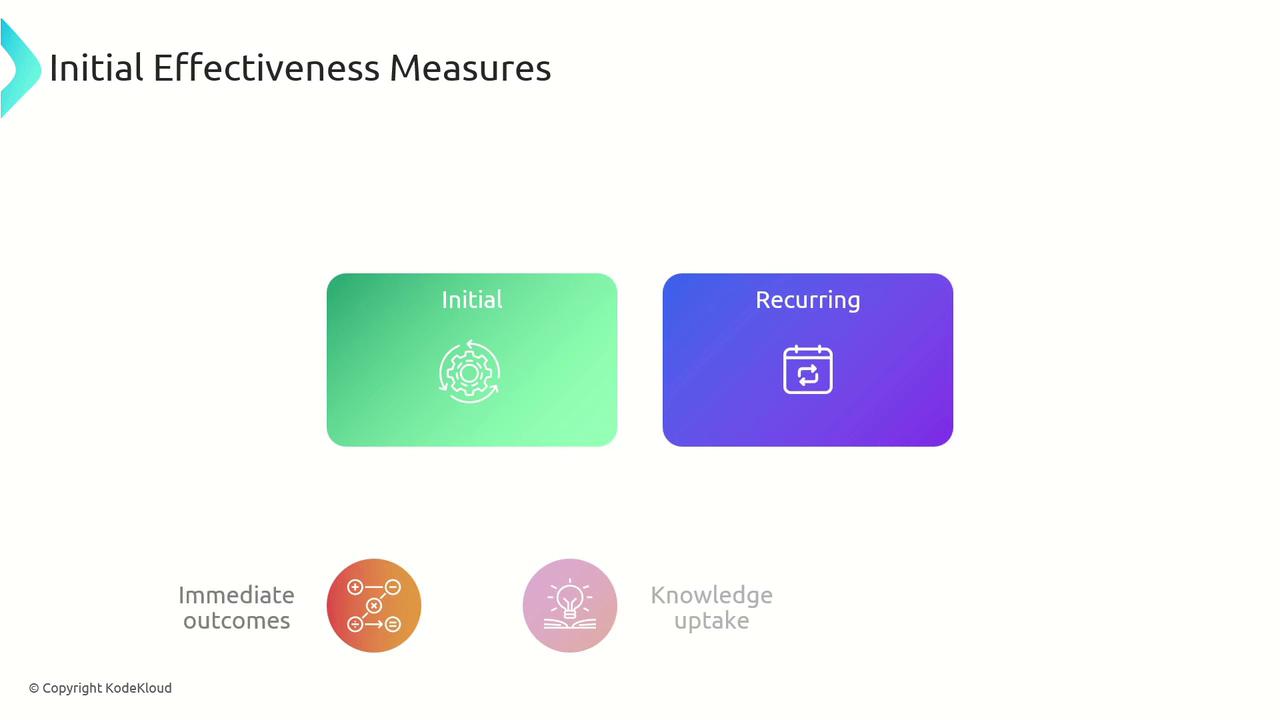
Initial effectiveness focuses on the immediate changes in behavior following the training. The primary goal is to identify measurable shifts in security practices right after the session. Evaluation methods include:- Pre- and post-assessments for baseline and post-training comparisons
- Quizzes and surveys to gauge the participants’ understanding of the security concepts before and after the training session
For best results, ensure that the assessments are conducted in a controlled environment to minimize external variables that could affect the evaluation outcomes.
Recurring Effectiveness
Recurring effectiveness focuses on the long-term impact of the training. It examines if participants have retained the security knowledge and practices over time. This sustained evaluation is essential for fostering an enduring culture of security awareness.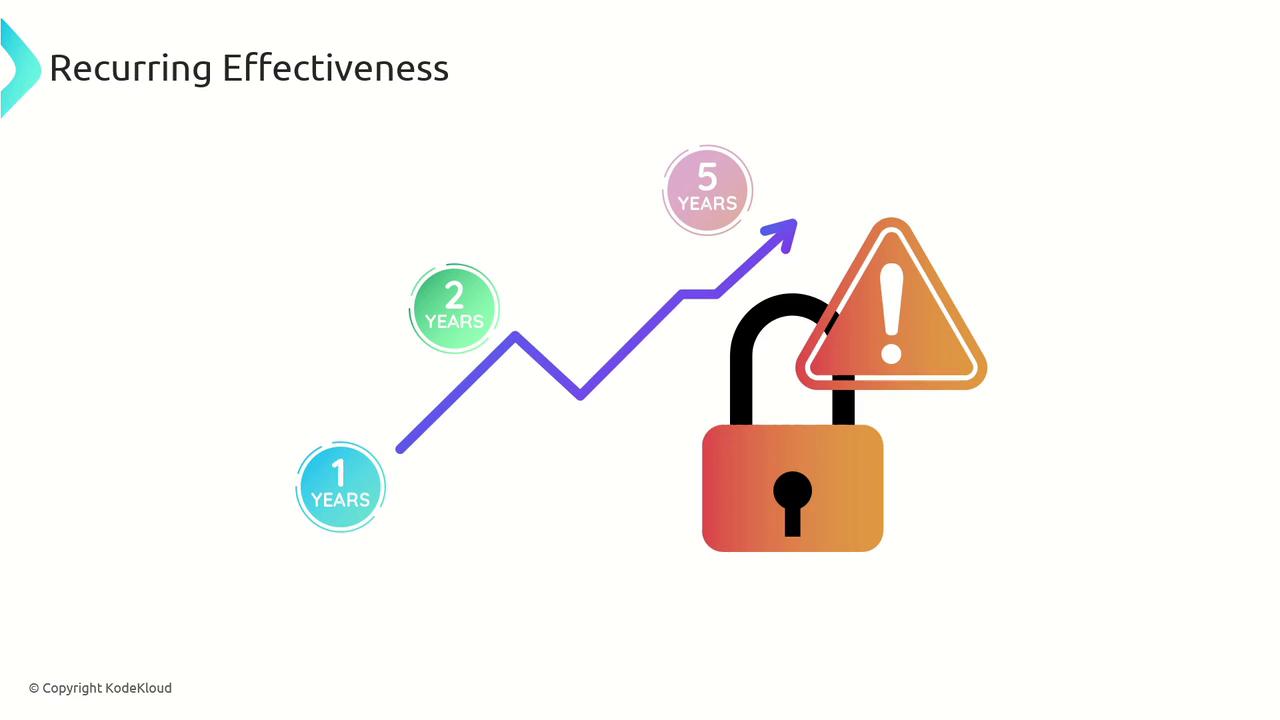
- Tracking incident-reporting metrics to analyze trends and changes over time
- Conducting phishing simulations and security campaigns to monitor behavioral improvements
- Gathering feedback from managers and supervisors on employee security practices
-
Monitoring performance indicators, such as:
Neglecting recurring evaluations can lead to undetected security gaps. Regular assessments are critical in ensuring that the training yields long-term benefits and that potential vulnerabilities are promptly addressed.