This article discusses risk analysis, its importance in risk management, and the two primary approaches quantitative and qualitative analysis.
Risk analysis is an essential component of the overall risk management process. It is important to distinguish risk analysis from risk assessment: while the latter prioritizes risks for subsequent evaluation, risk analysis is conducted earlier to identify risks and define their unique characteristics. The insights gained during risk analysis subsequently inform the risk assessment phase. There are two primary approaches to risk analysis: quantitative and qualitative.
Quantitative risk analysis assigns a monetary value to risks, enabling a clear measurement of the financial impact should a risk materialize. The key factors in this approach include:
Single Loss Expectancy (SLE): The estimated financial loss from a single occurrence of a risk.
Annualized Rate of Occurrence (ARO): The expected frequency of the risk occurring within a year.
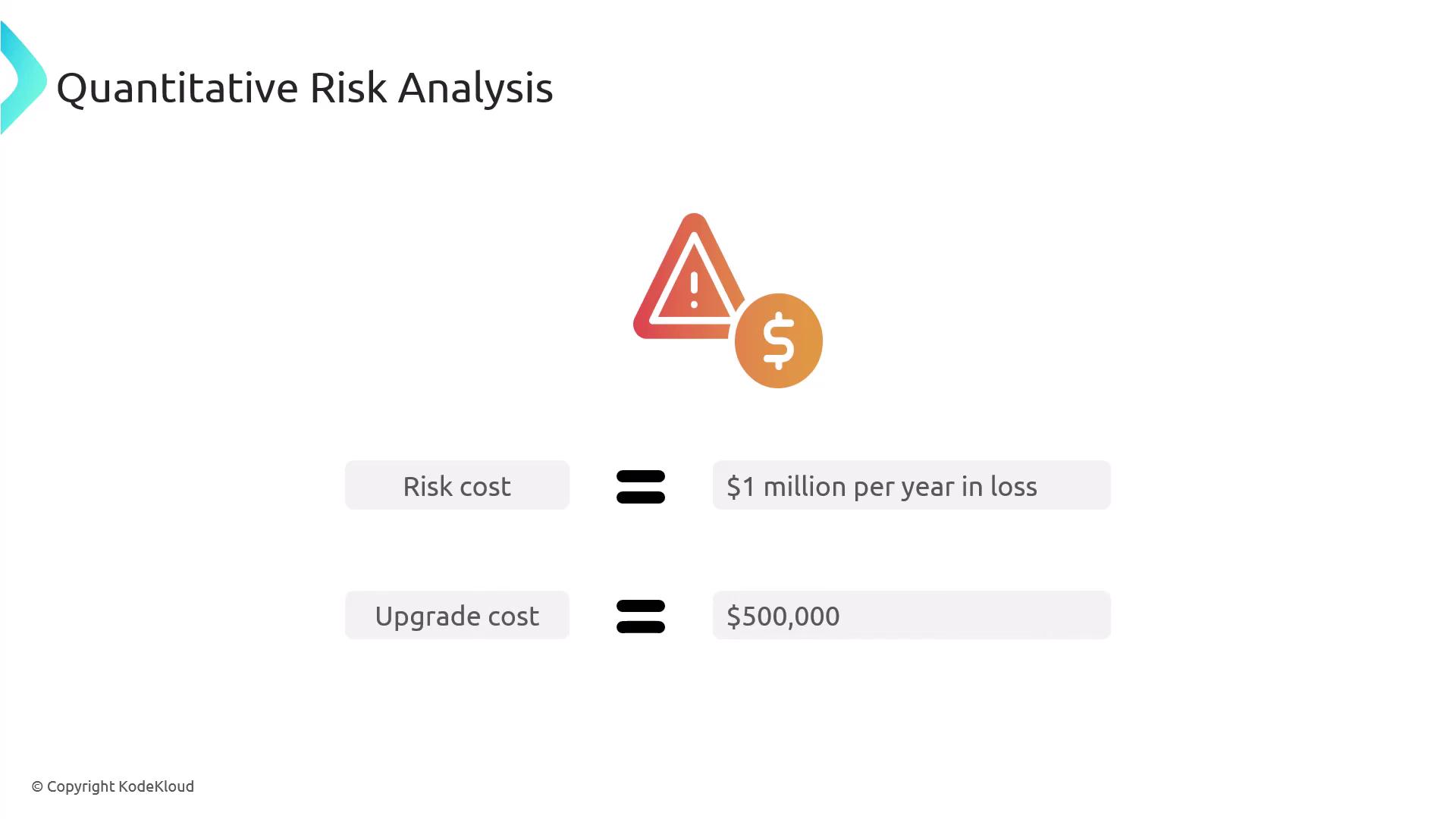
Once you determine the SLE and ARO, you can calculate the Annualized Loss Expectancy (ALE), which represents the total yearly cost associated with the risk. This monetary figure is critical in evaluating whether mitigation measures are financially justifiable. For instance, if a risk is estimated to result in an annual loss of 1million,butthecosttoupgradesystemsandmitigatethisriskisonly500,000, then investing in the upgrade is a prudent decision.
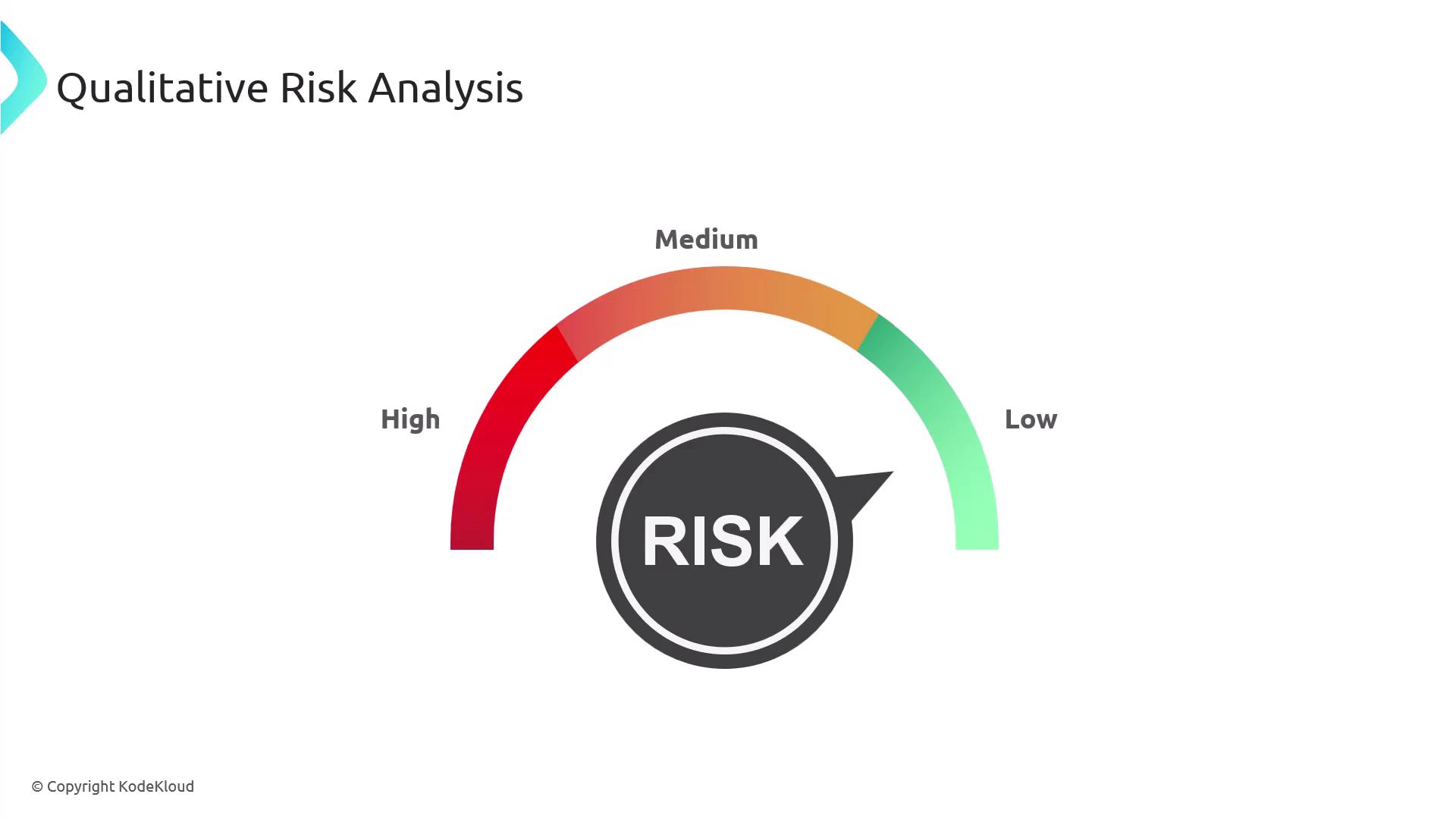
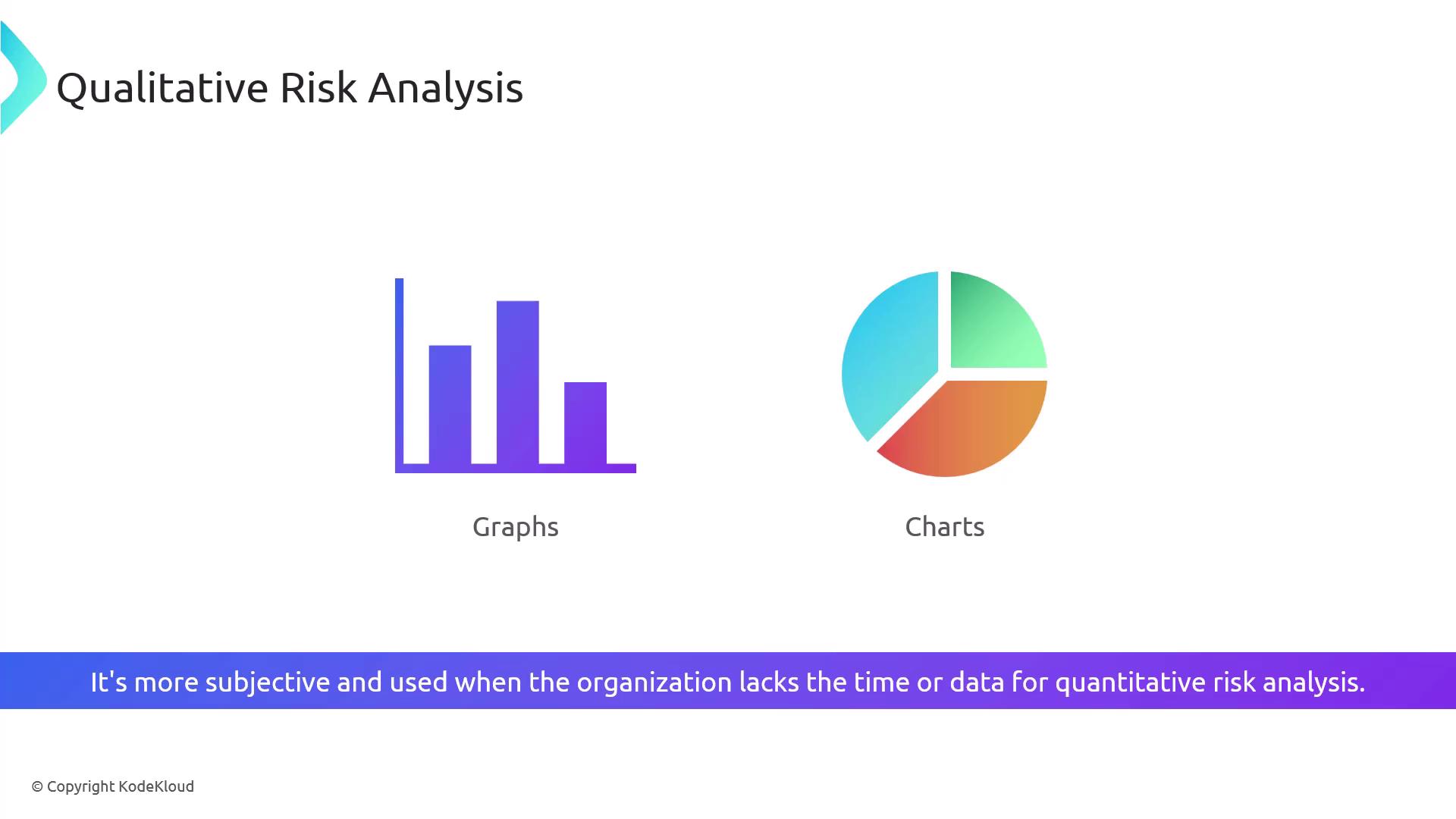
Unlike quantitative analysis, qualitative risk analysis does not rely on numerical values. Instead, it uses descriptive scales—such as high, medium, or low—to evaluate risks. The results are often visualized using graphs and color charts, which effectively communicate the severity of each risk. This method is particularly useful when detailed numerical data is unavailable or when a rapid assessment is needed.
Qualitative analysis is sometimes described as “using words instead of numbers” to define risk. Its main advantages are speed and simplicity; however, this approach is inherently subjective and may be more susceptible to human error. Despite these drawbacks, qualitative risk analysis is often favored when detailed, quantitative data is not accessible.
Both quantitative and qualitative methods are invaluable in risk management. Quantitative analysis provides a clear financial perspective that supports cost-benefit decisions for risk mitigation, while qualitative analysis offers a quick, visual representation of risk severity, making it particularly useful when precise numerical data is limited.