

-
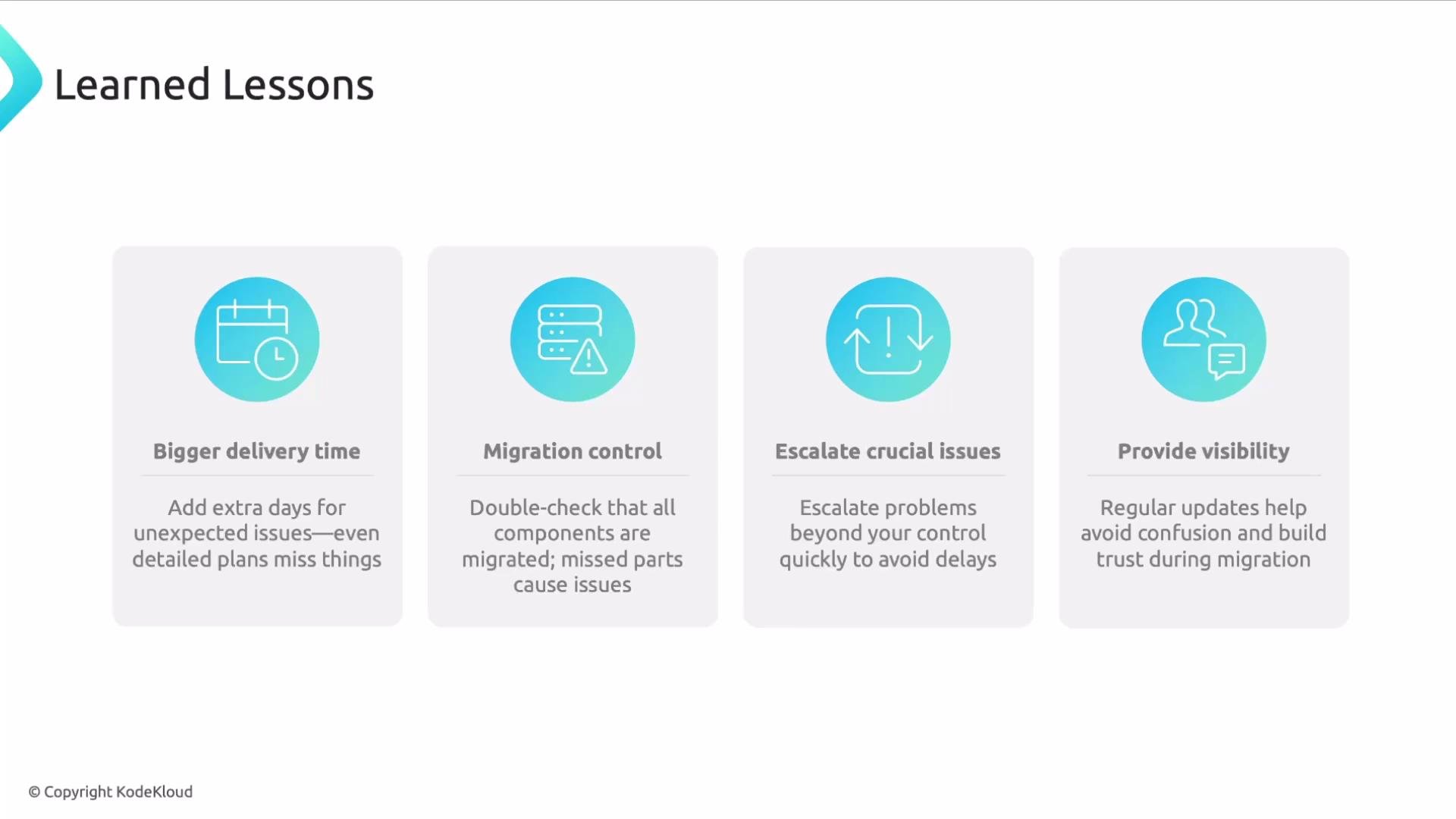
Allow for a bigger delivery window
Add contingency—days or even weeks—beyond your optimistic estimate. Even with careful risk mapping, unexpected problems will surface. Build buffer into your schedule, include time for discovery spikes, and explicitly define rollback and mitigation plans before you start. -
Prevent migration scope creep
Maintain a documented migration scope and an explicit inventory of systems, services, and observability components to migrate. Assign an owner for each item and use a checklist with clear acceptance criteria so nothing gets left behind. Regularly confirm scope with both engineers and their managers. -
Escalate crucial issues early
If you hit blockers outside your team’s control, escalate immediately. Engage management to resolve cross-team dependencies, resource constraints, or organizational blockers. Let managers handle political negotiations so engineers can focus on execution. -
Provide and maintain visibility
Share regular status updates (progress, blocked items, risks) with stakeholders and managers. Provide dashboards or tracking boards so everyone sees the same information. Proactive visibility reduces miscommunication and prevents last-minute surprises.
A consistent communication strategy—regular updates, clear owners, and a documented scope—resolves most common migration problems before they escalate.
- Define migration scope and inventory before kickoff.
- Assign owners and acceptance criteria for each component.
- Build contingency into timelines and plan rollback paths.
- Establish an escalation path and involve management for cross-team issues.
- Publish a single source of truth (dashboard or tracking board) and send concise, regular updates.
- Change management & migration practices — Atlassian
- Cloud migration strategies — AWS
- Runbooks and incident playbooks — Google SRE guidance