

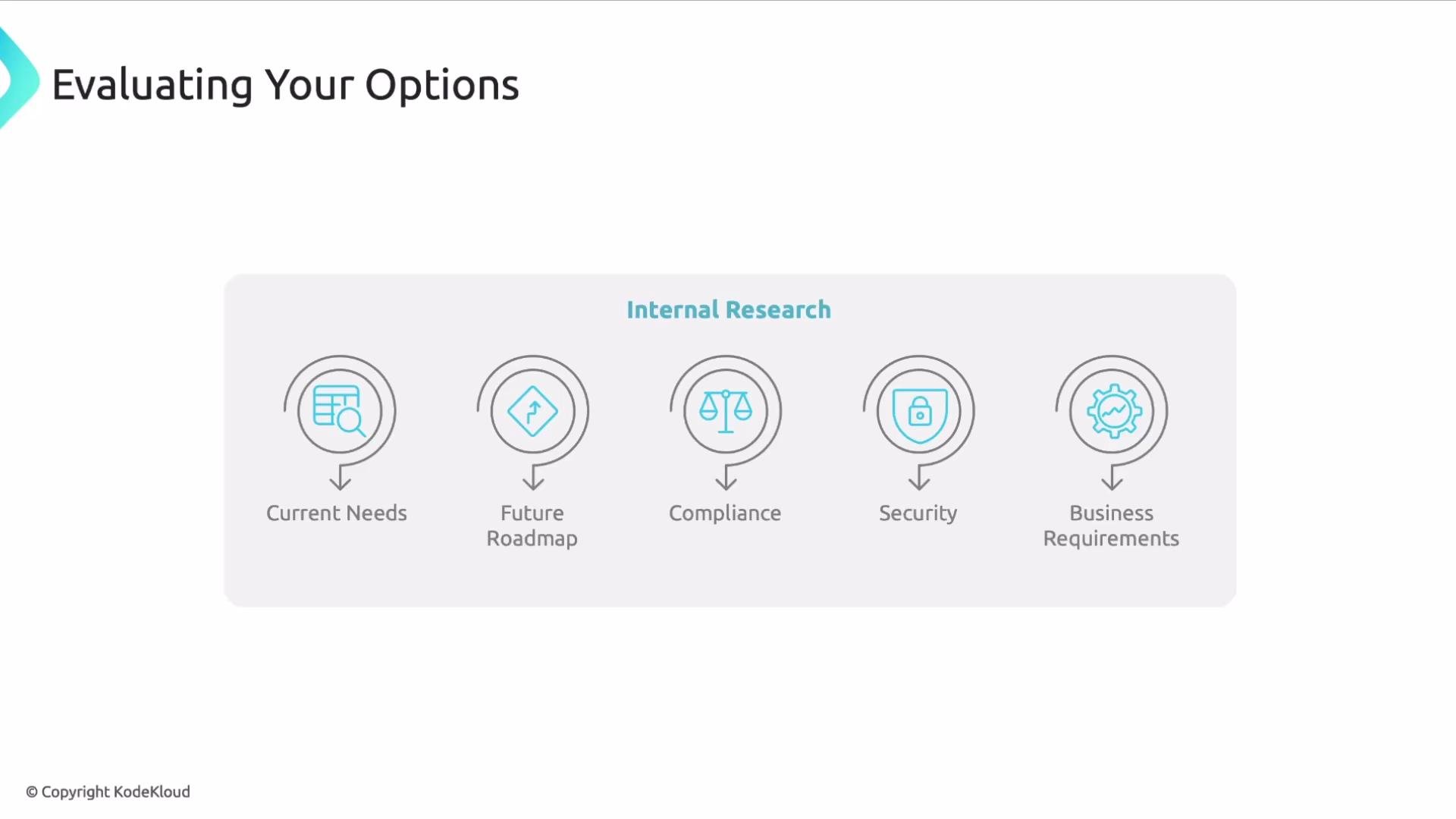
1) Internal research — define what you need today and tomorrow
Begin by documenting the technical, operational, security, and business drivers that the new solution must satisfy. This reduces scope creep and prevents rework when organizational roadmaps change (for example, a planned multi-cloud rollout). Capture the following areas:- Current technical and operational needs (what you monitor today).
- Future roadmap items that will affect observability (new services, multi-cloud, platform changes).
- Compliance and regulatory controls you must meet.
- Security constraints and required integrations.
- Business goals and success metrics (MTTR, alert noise reduction, coverage).
Involve security, compliance, and business stakeholders early. Their requirements frequently determine acceptable architectures, data retention policies, and vendor restrictions.
2) Market research — compare vendors against your requirements
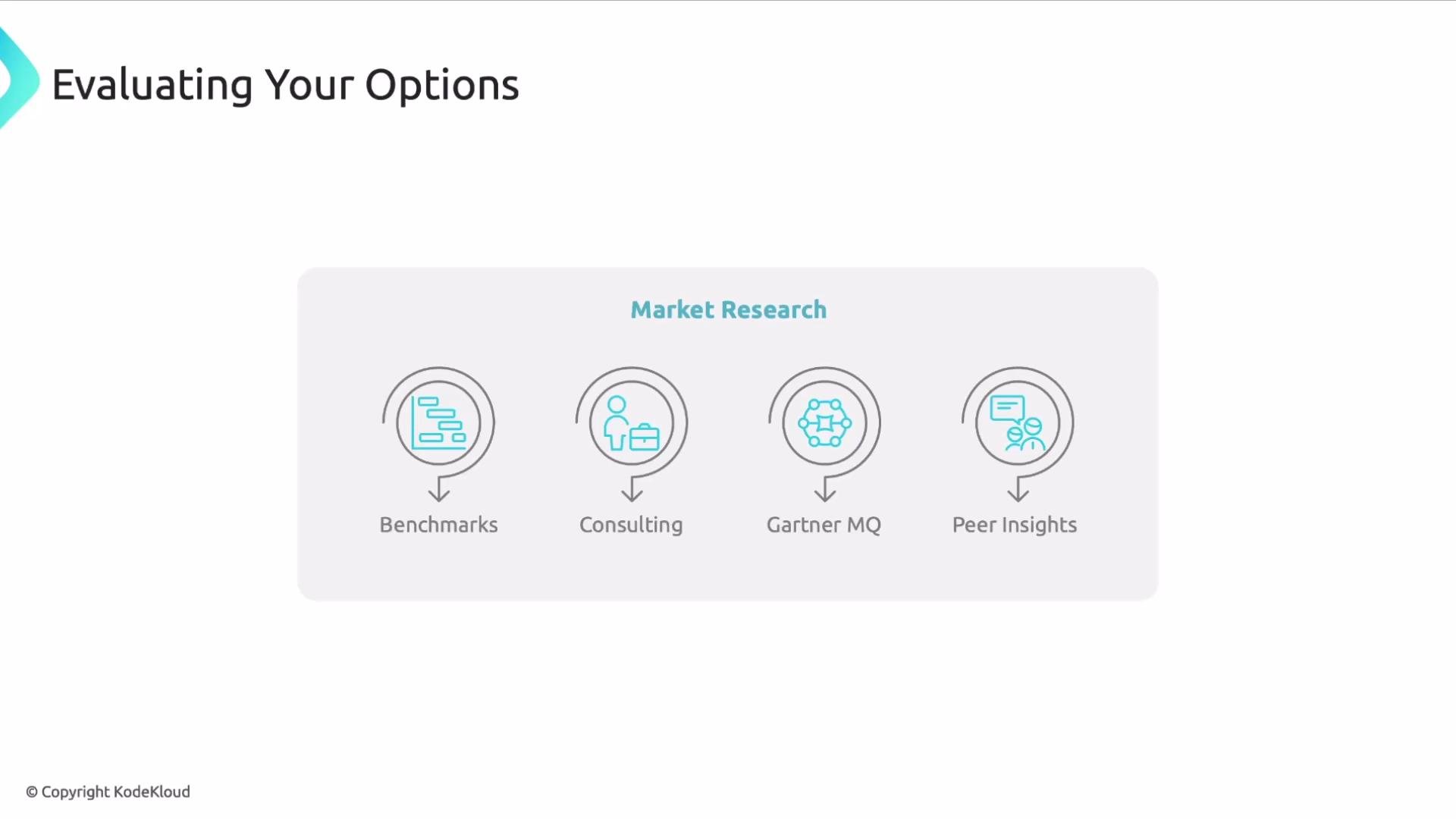
With an internal requirements document in hand, perform market research to identify vendors that meet your technical and business constraints. Combine quantitative testing with qualitative insights. Common market research activities:- Benchmarks: run comparative tests (ingest rates, query latency, storage cost) using representative workloads.
- Consulting: engage consultants or systems integrators for architecture validation and migration planning.
- Industry reports: consult resources such as the Gartner Magic Quadrant to surface leaders and niche players.
- Peer insights: interview engineering teams at similar organizations to learn operational trade-offs.
These activities will help you narrow the field and reveal integration complexity, scaling behavior, and expected TCO.
3) Vendor engagement — validate claims with focused PoCs
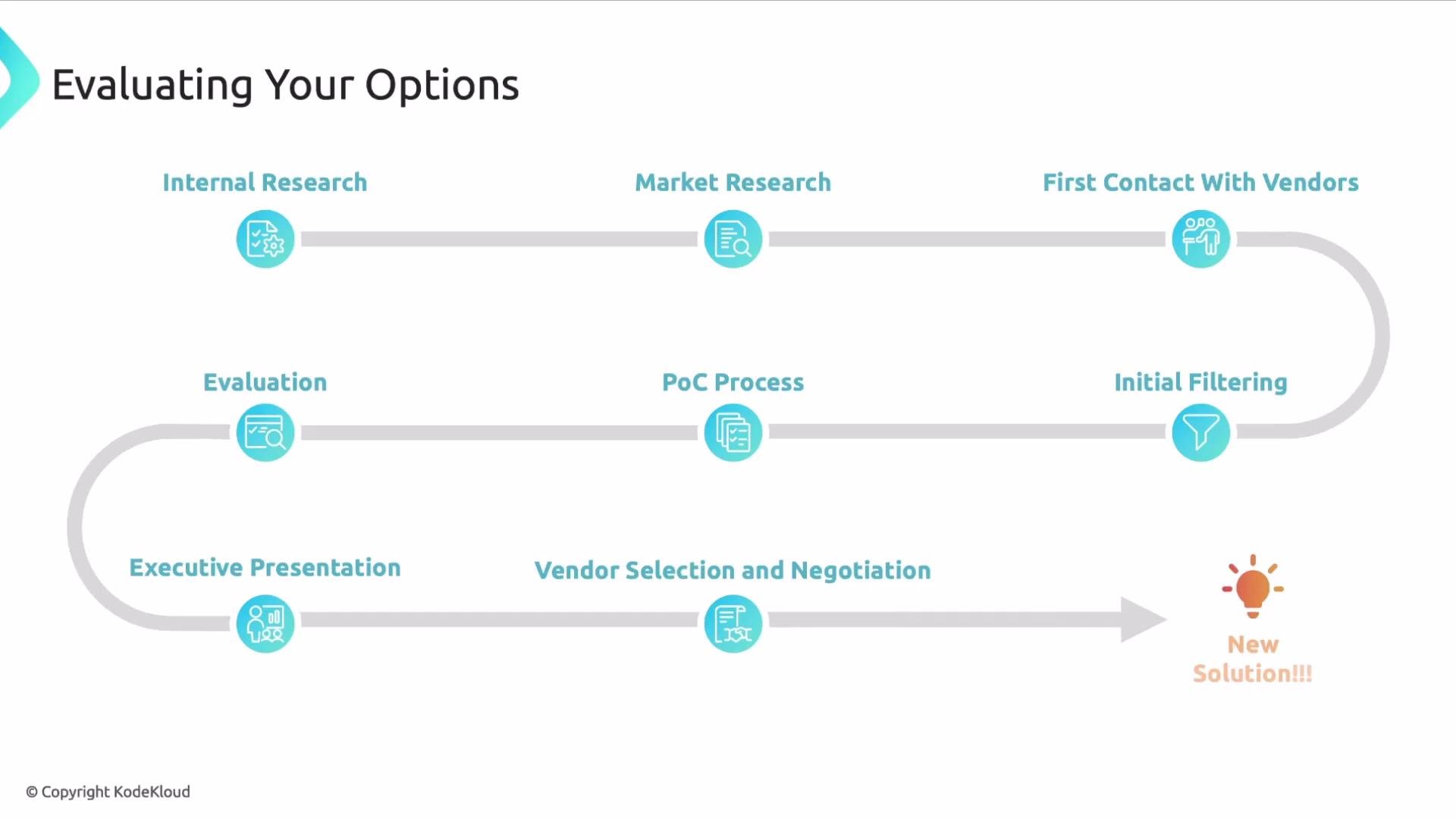
Vendor engagement is the time to confirm fit through demos, architecture reviews, and hands-on proofs of concept. Keep evaluations objective by using a scored checklist tied to your requirements. Typical vendor engagement steps:- Initial vendor calls: confirm feature fit, architecture, compliance posture, and support model.
- Product demos: focus demos on your core use cases and failure scenarios.
- Consolidation: standardize notes and scorecards from all evaluations.
- Proofs of Concept (PoCs): run PoCs against a checklist that includes ingest, retention, alert fidelity, dashboarding, integrations, scaling, and failover.
- Evaluation: score vendors on functional fit, operational overhead, ecosystem compatibility, and cost.
- Present results: share findings with leadership to align on business impact.
- Selection and negotiation: finalize vendor, SLAs, contract terms, and support arrangements.
Avoid picking a solution solely on short-term feature fit. Overlooking retention costs, data egress, or vendor lock-in can cause significant operational and financial pain later.
4) Define the implementation strategy before you build
Once you select a vendor, document an implementation plan that answers how you’ll deploy, onboard, secure, and measure the new platform. A clear plan reduces rollout risk and accelerates adoption. Key planning topics and practical examples:
Example data strategy snippet:
- Decide which services send traces versus only metrics.
- Set sampling and retention per-data-type to control cost.
- Define which logs are retained long-term for compliance.