

Platform engineers
Platform engineers design, implement, and maintain the enterprise observability platform. They own platform-wide configuration, shared integrations, and architecture decisions. Because their changes affect many teams, validation and careful change management are critical.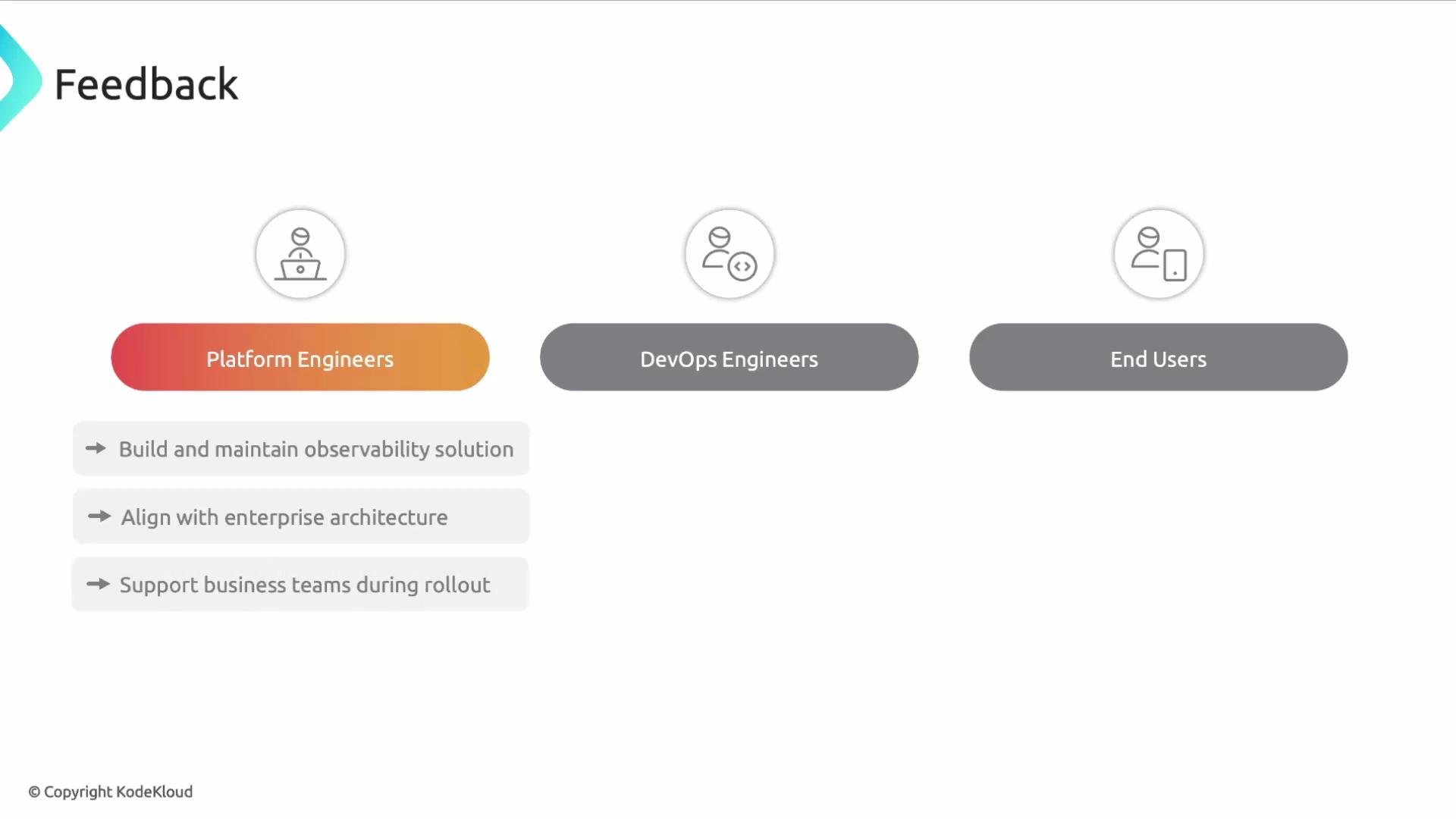
DevOps engineers
DevOps engineers operate the environments where business applications run. They configure observability components for specific services, maintain application stability, and coordinate closely with both platform engineers and end users during migration and incidents.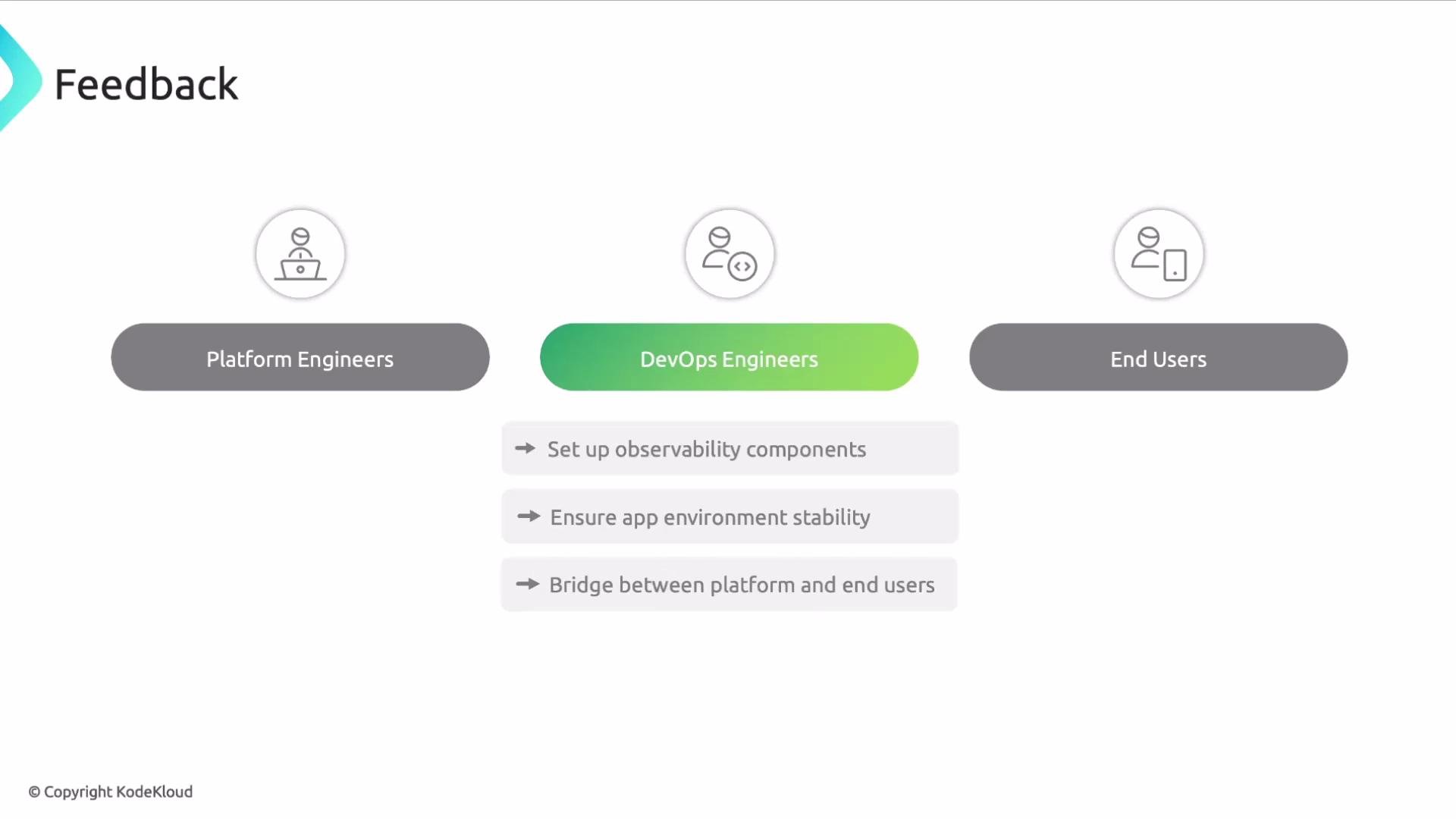
End users
End users are the developers and business teams who rely on the platform day to day. They create dashboards and alerts relevant to their services and provide practical feedback about what works — and what doesn’t — in real scenarios.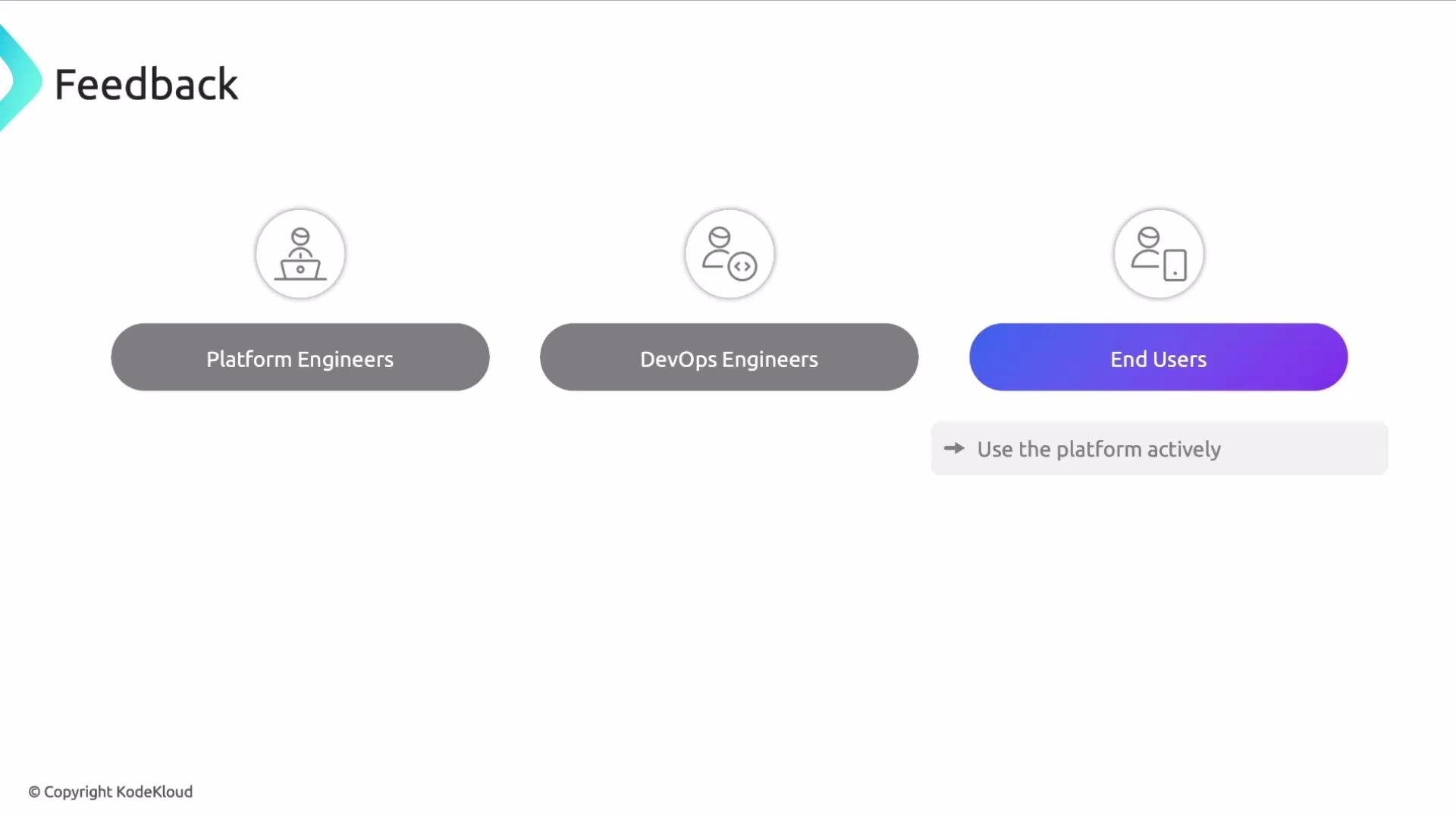
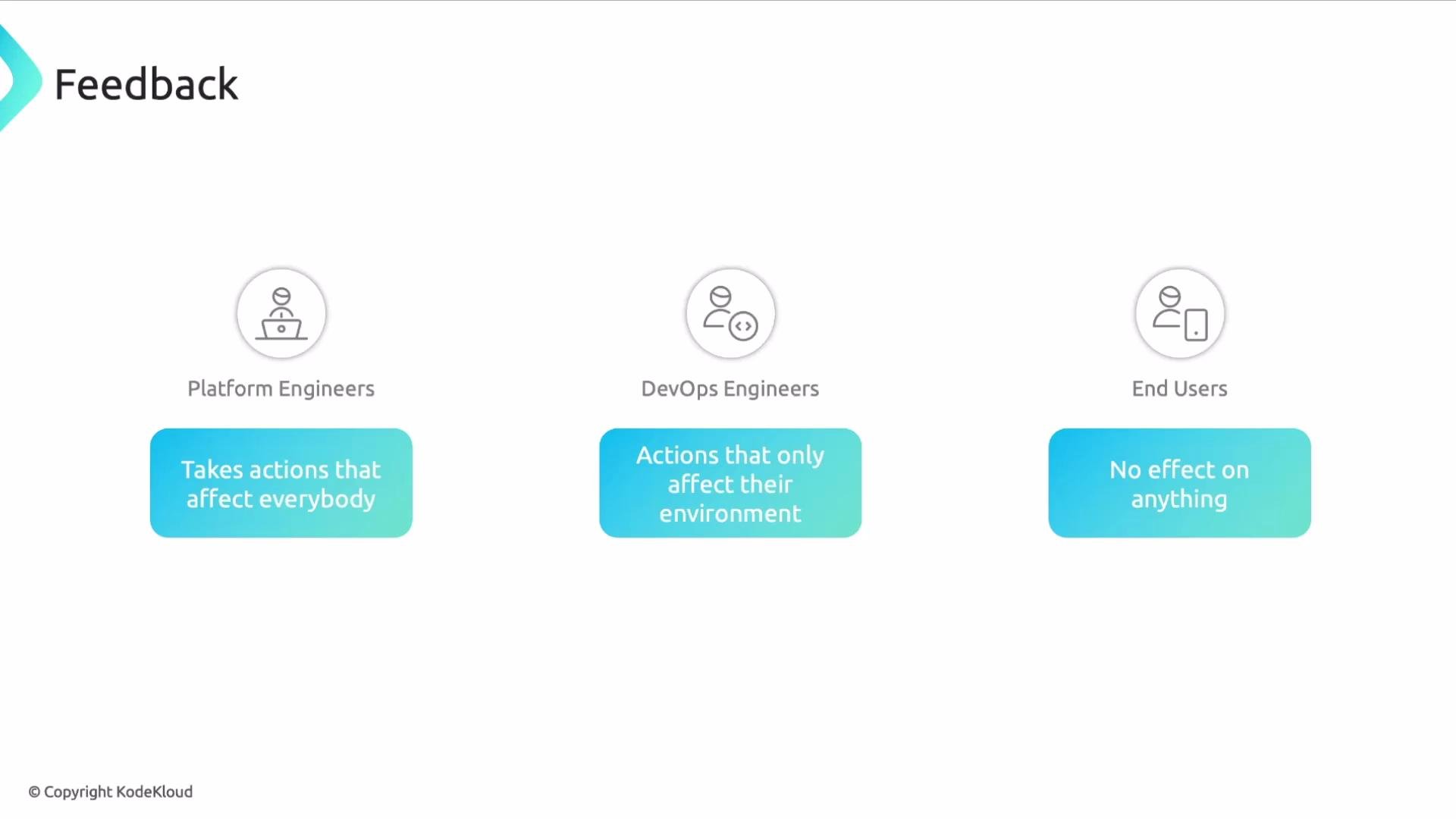
- Platform Engineers receive requests and incident reports from many teams. Their changes are high-impact: a misconfiguration can affect the whole company.
- DevOps Engineers manage the specific environments that will adopt the observability platform. Configuration errors can directly disrupt business services, and they often coordinate fixes with both platform and business teams.
- End Users generally do not change platform configuration. They report issues and depend on DevOps and platform teams to remediate them.
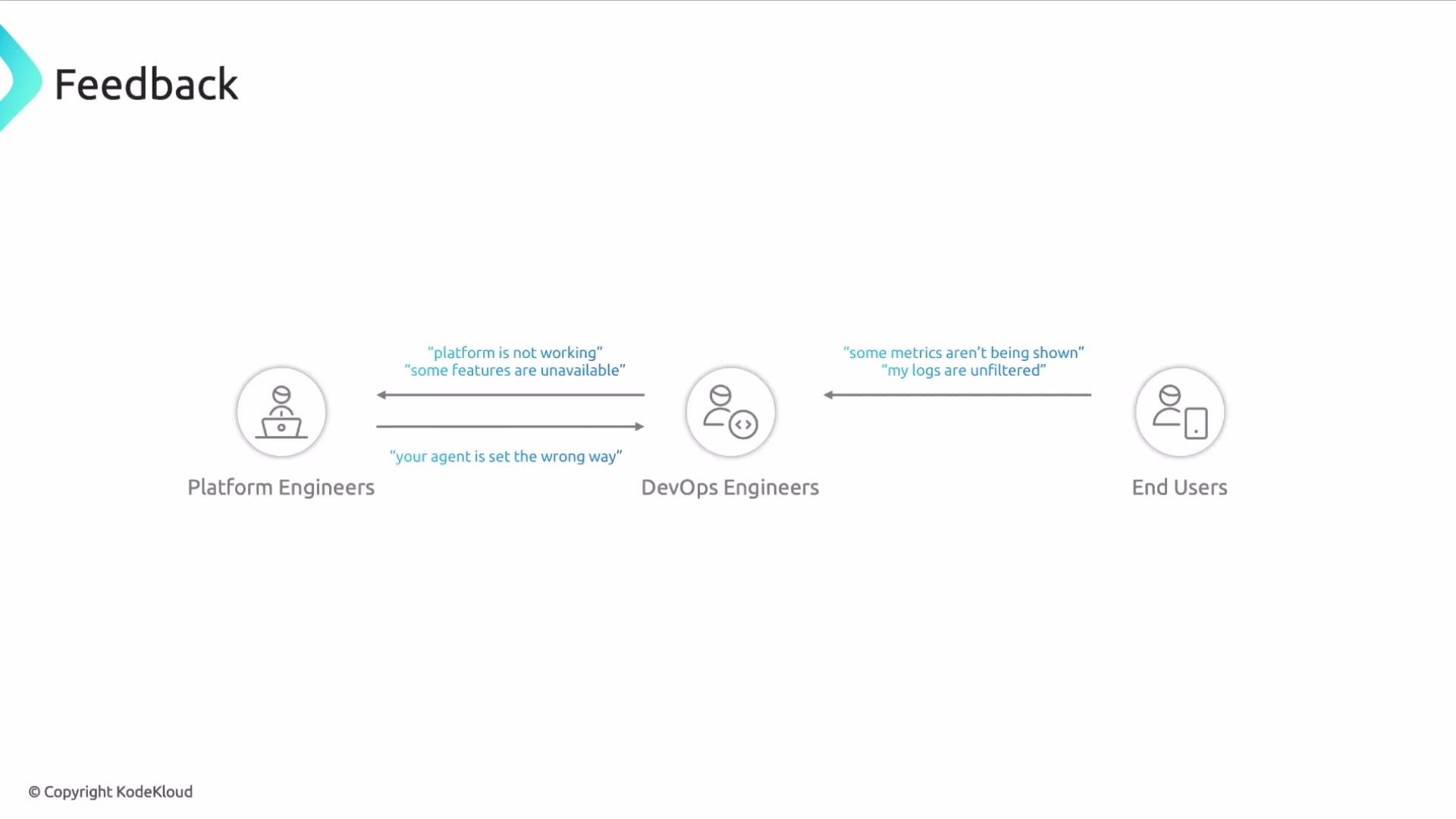
A typical feedback path during migration or incident handling looks like this:
- An end user discovers a problem (missing metric, alert noise, dashboard gap) and notifies their DevOps team.
- The DevOps engineer investigates. If the issue stems from environment configuration or requires platform-wide changes, they escalate to platform engineering.
- The platform engineer reviews platform-wide settings, corrects platform-level misconfigurations, and communicates remediation steps back to DevOps.
- DevOps engineers validate the fix in the affected environment and confirm resolution with the end user.
Collaboration is essential. Define roles, responsibilities, and escalation paths up front. Use standardized configurations, automated validation checks, and clear documentation to minimize risky changes and speed up resolution. For platform-specific guidance, consult your provider’s observability docs (for example,
https://docs.datadoghq.com/) and align on change management processes before migration.