

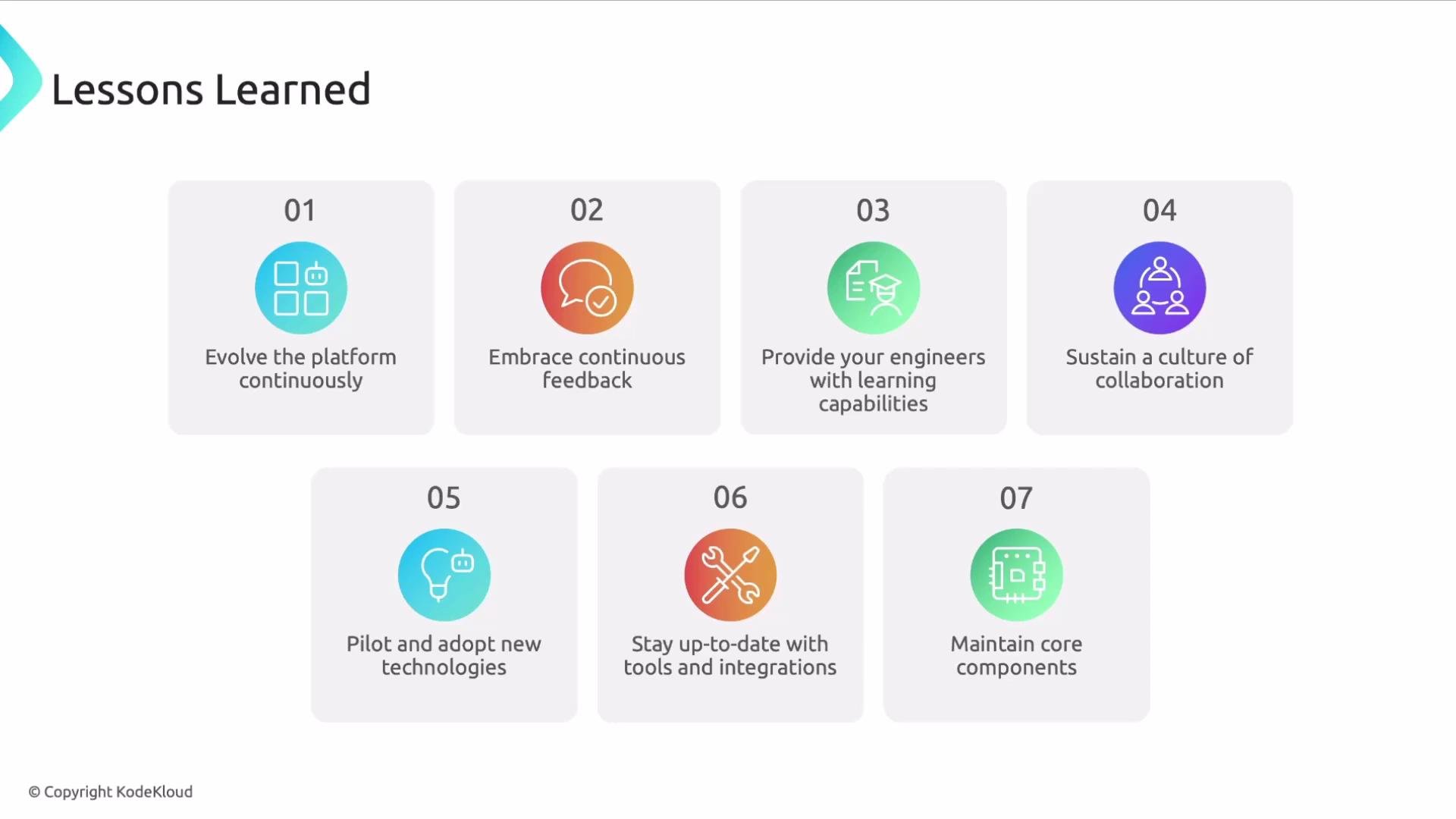
- Continuously evolve the platform using user feedback. Treat monitoring and observability as living products that improve incrementally.
- Provide engineers with ongoing learning and improvement opportunities so they can propose enhancements and add features.
- Foster a collaborative culture across teams to encourage idea-sharing and cross-functional experimentation.
- Encourage curiosity and safe experimentation with new features and integrations to validate value quickly.
- Keep core components properly maintained and versioned — update container images, libraries, and dependencies on a regular cadence.
Actionable next steps
- Shorten the feedback loop: instrument usage metrics and solicit qualitative feedback from teams on a regular cadence.
- Prioritize technical debt items alongside feature work and track them in your backlog.
- Establish a maintenance schedule for container images, SDKs, and monitoring libraries.
- Run periodic retrospectives to surface platform friction and convert findings into small, testable improvements.
Keep the feedback loop short: collect usage data and team feedback, prioritize improvements, and roll out incremental changes so the platform stays relevant and reliable.
- Kubernetes Documentation — general guidance on deployments and version management
- Docker Hub — best practices for container images and tagging
- Datadog Documentation — monitoring and observability patterns