

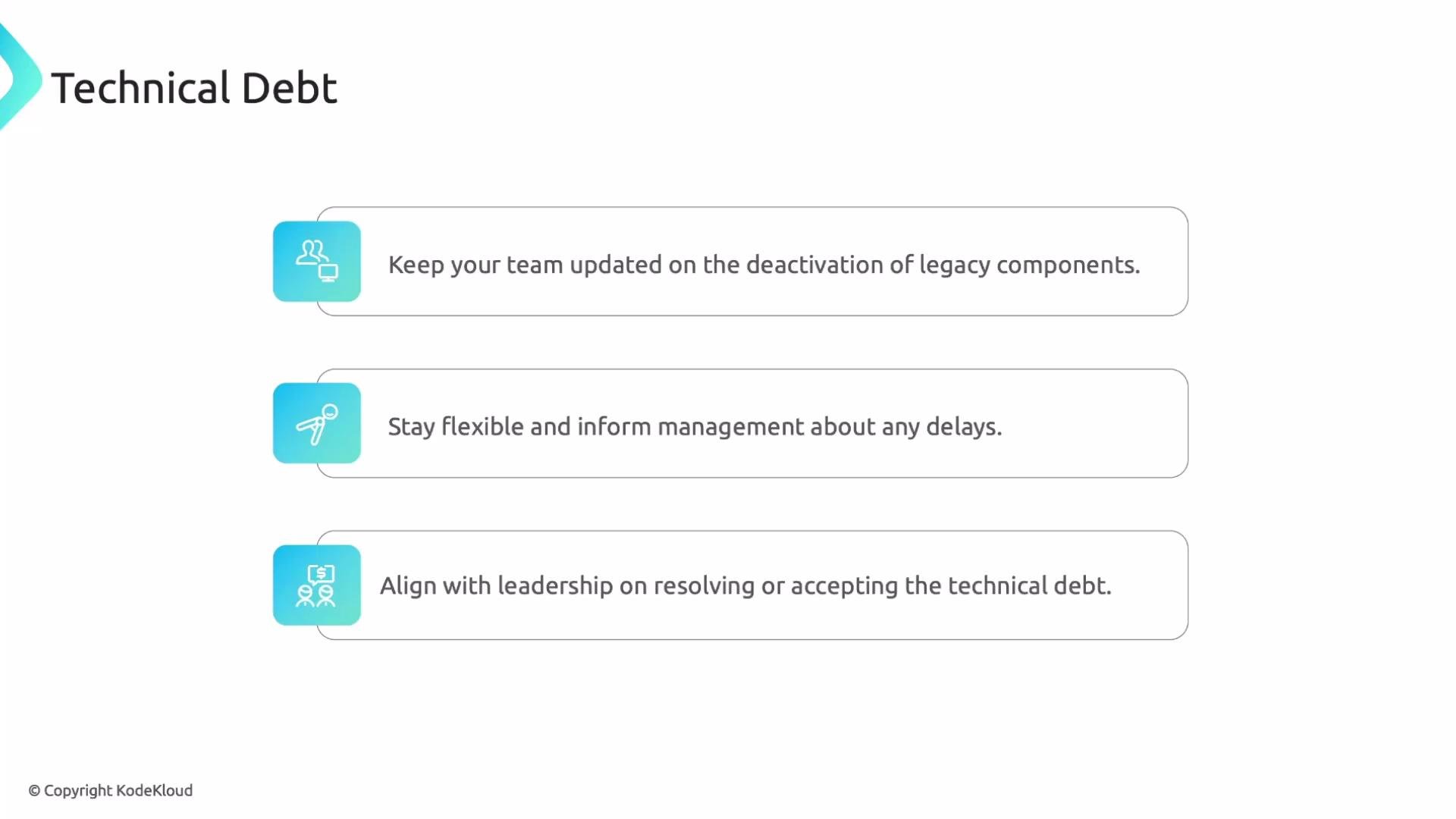
Document every legacy component and its owner as early as possible. A simple control log (Excel, Kanban board, or an issue tracker) that lists component state, owner, and deactivation date will save significant time and risk down the line.
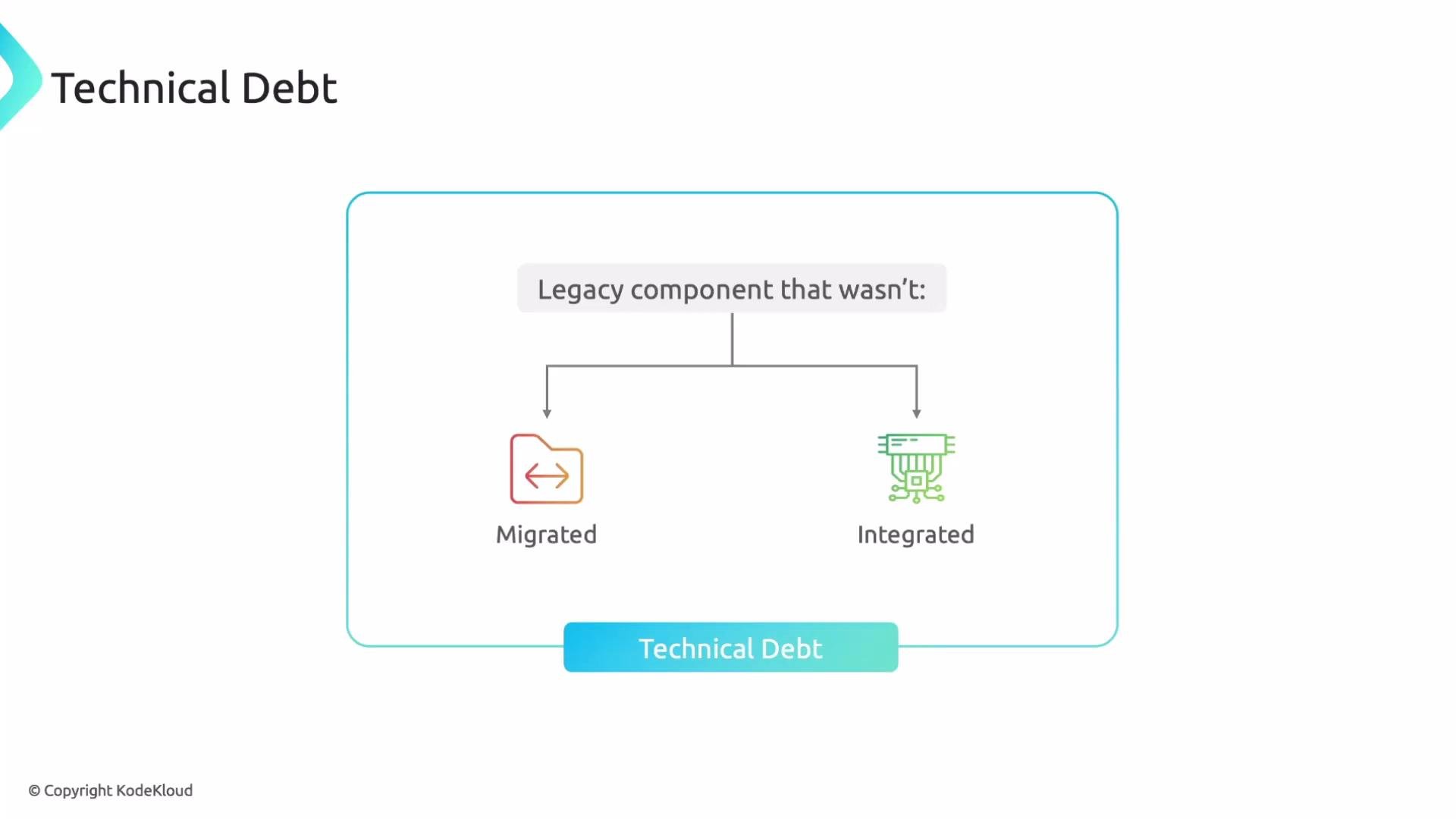
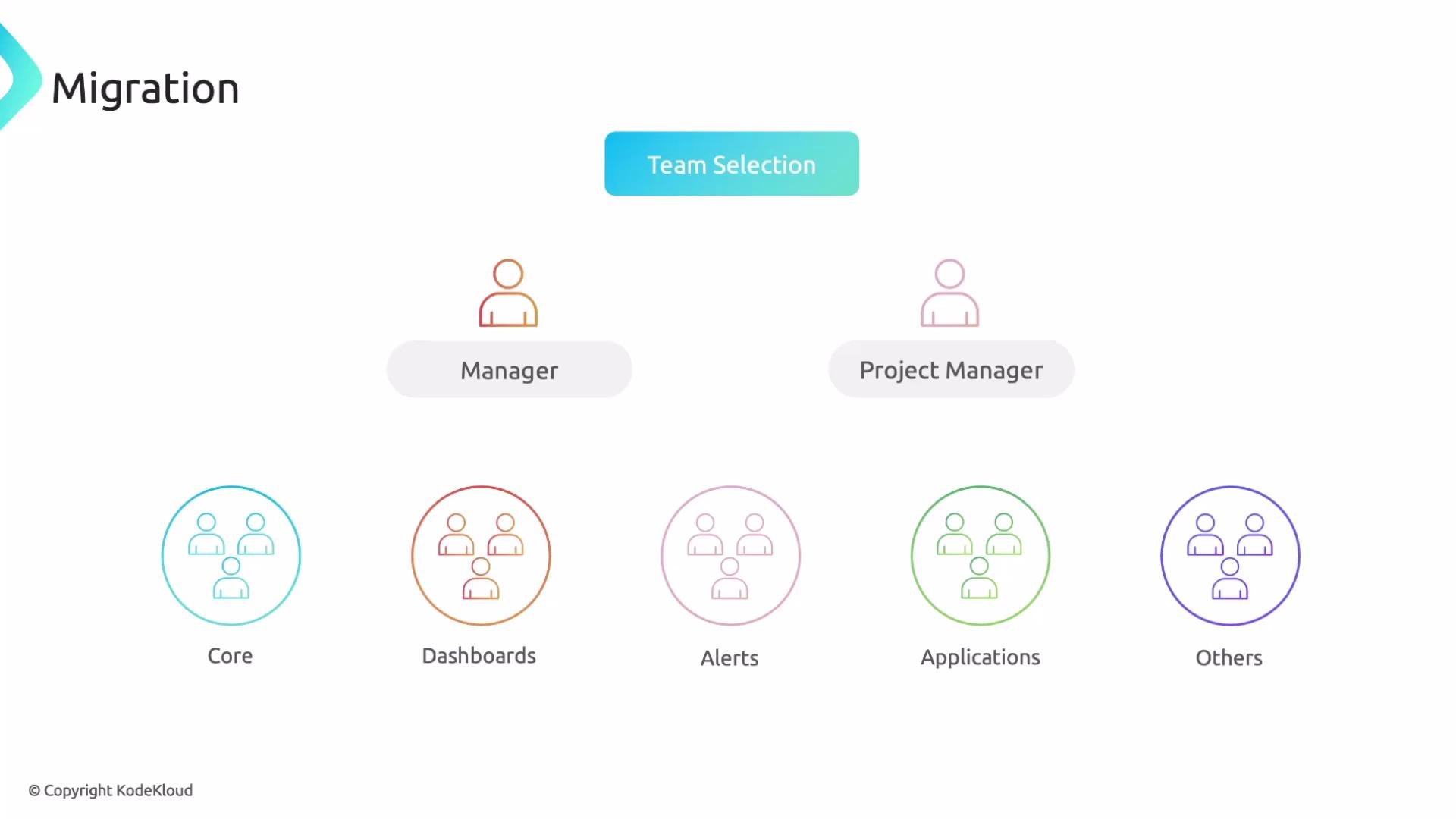
- Legacy components: the concrete list of items to be migrated or retired.
- Coordinator(s): typically the project manager (PM) who tracks progress, ownership, deadlines, and blockers.
- Engineering teams: the squads that implement integrations, instrument services, and troubleshoot issues.
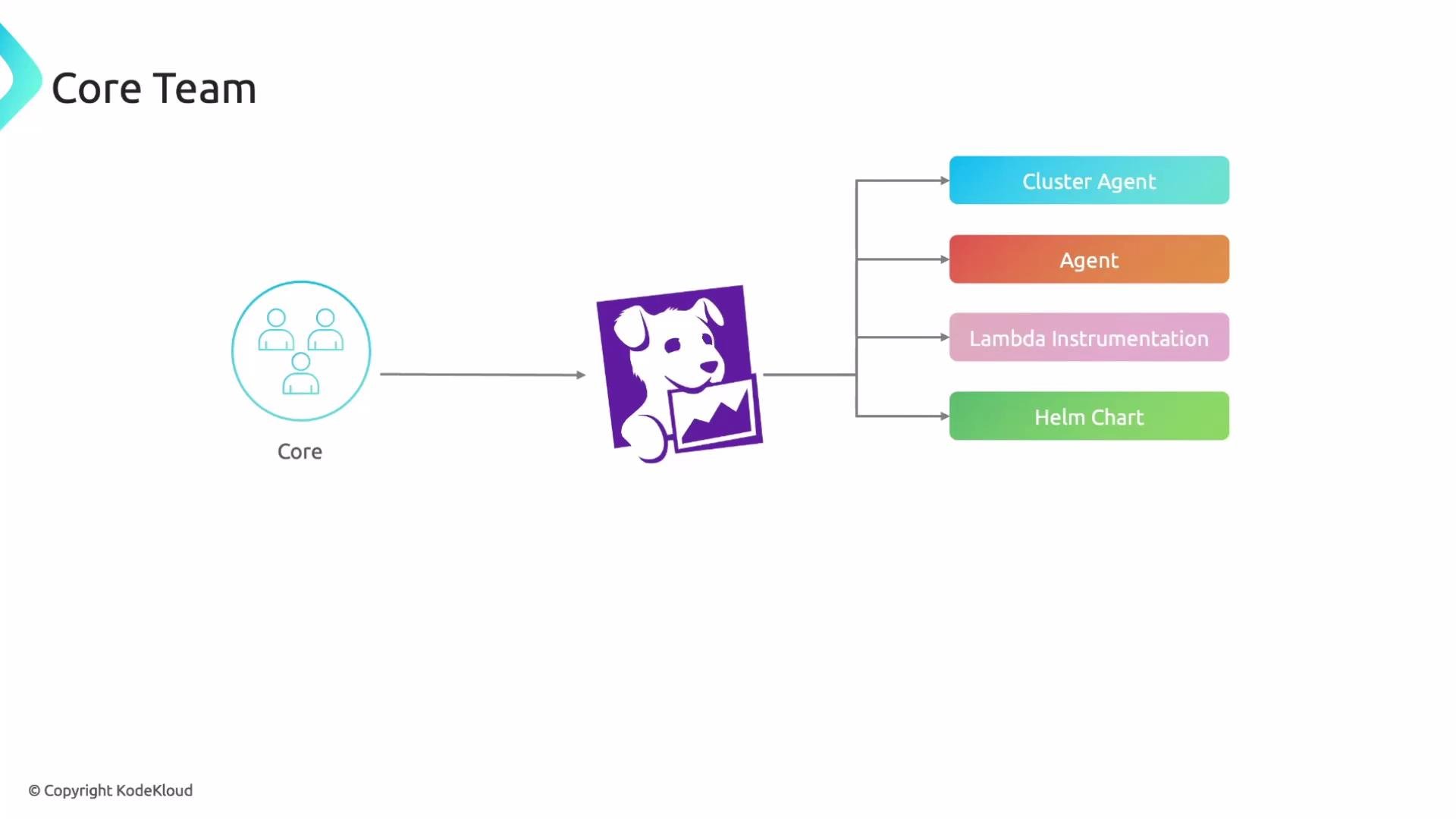
- Owns backbone observability components: agent configuration, cloud-provider integrations, internal libraries, Helm charts, host/cluster agents, and platform-level tooling.
- Provides shared configuration and support that other teams rely on.
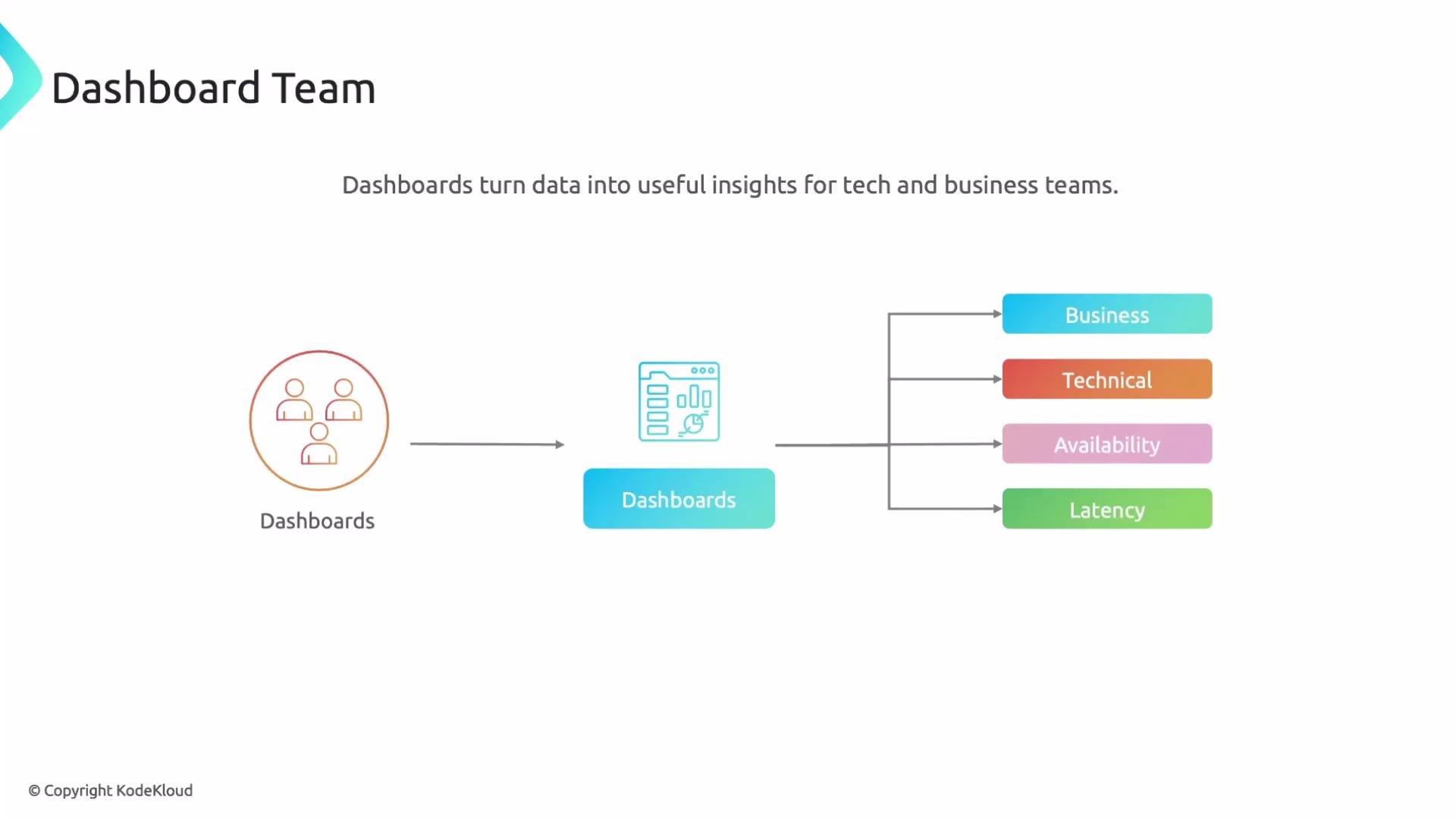
- Converts telemetry into actionable views for both engineering and business stakeholders.
- Responsible for migrating legacy dashboards, improving visualizations, and building views that track availability, latency, and business metrics.
- Ensures teams are notified when problems occur so they don’t need to constantly watch dashboards.
- Migrates existing alerts and creates new ones for business, technical, availability, latency, and anomaly detection to reduce manual monitoring overhead.
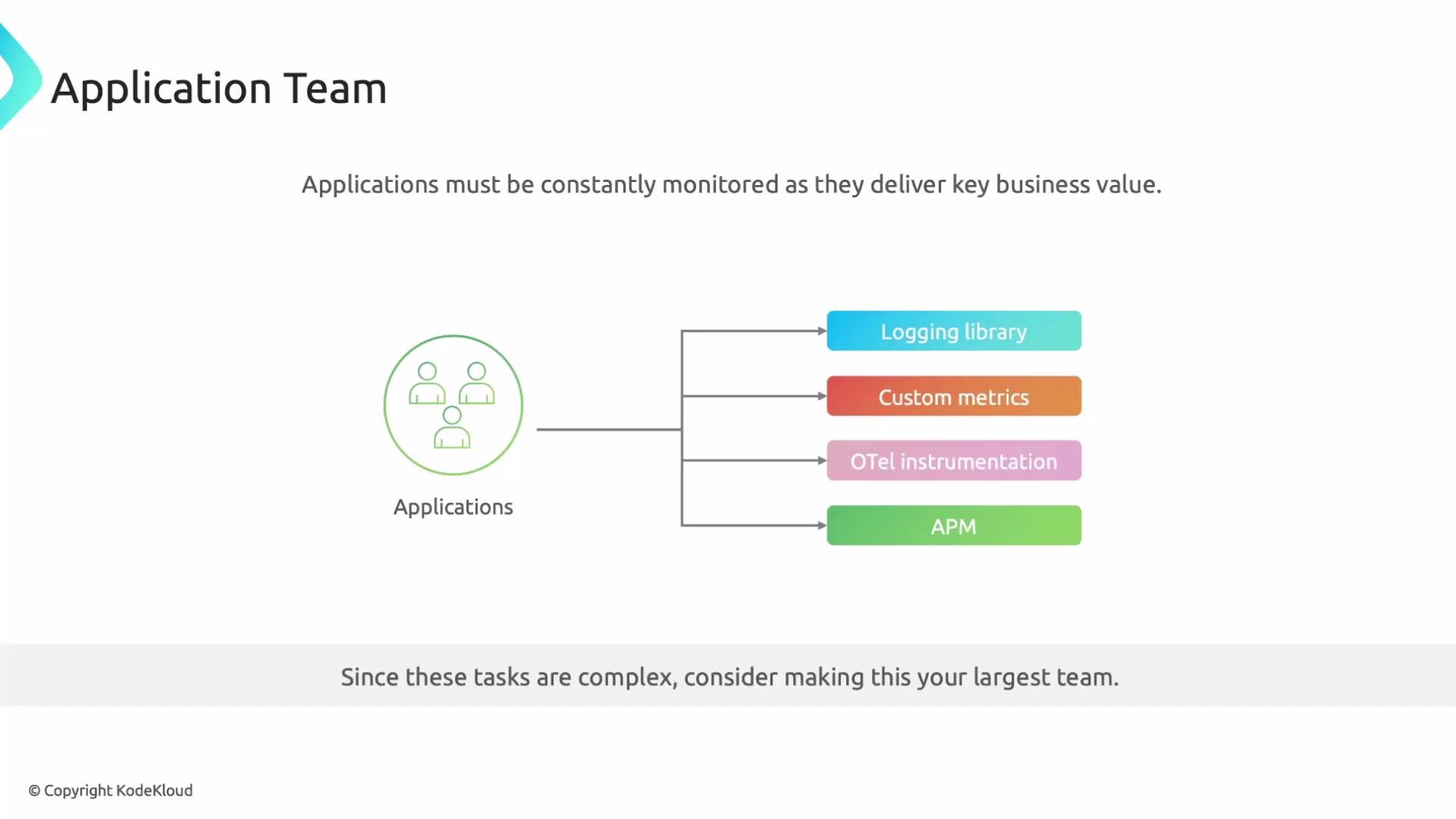
- Implements deep application-level observability: logging libraries across languages, custom application metrics, OpenTelemetry instrumentation, and APM enablement.
- Because instrumentation is often the most involved work, this should often be the largest team.
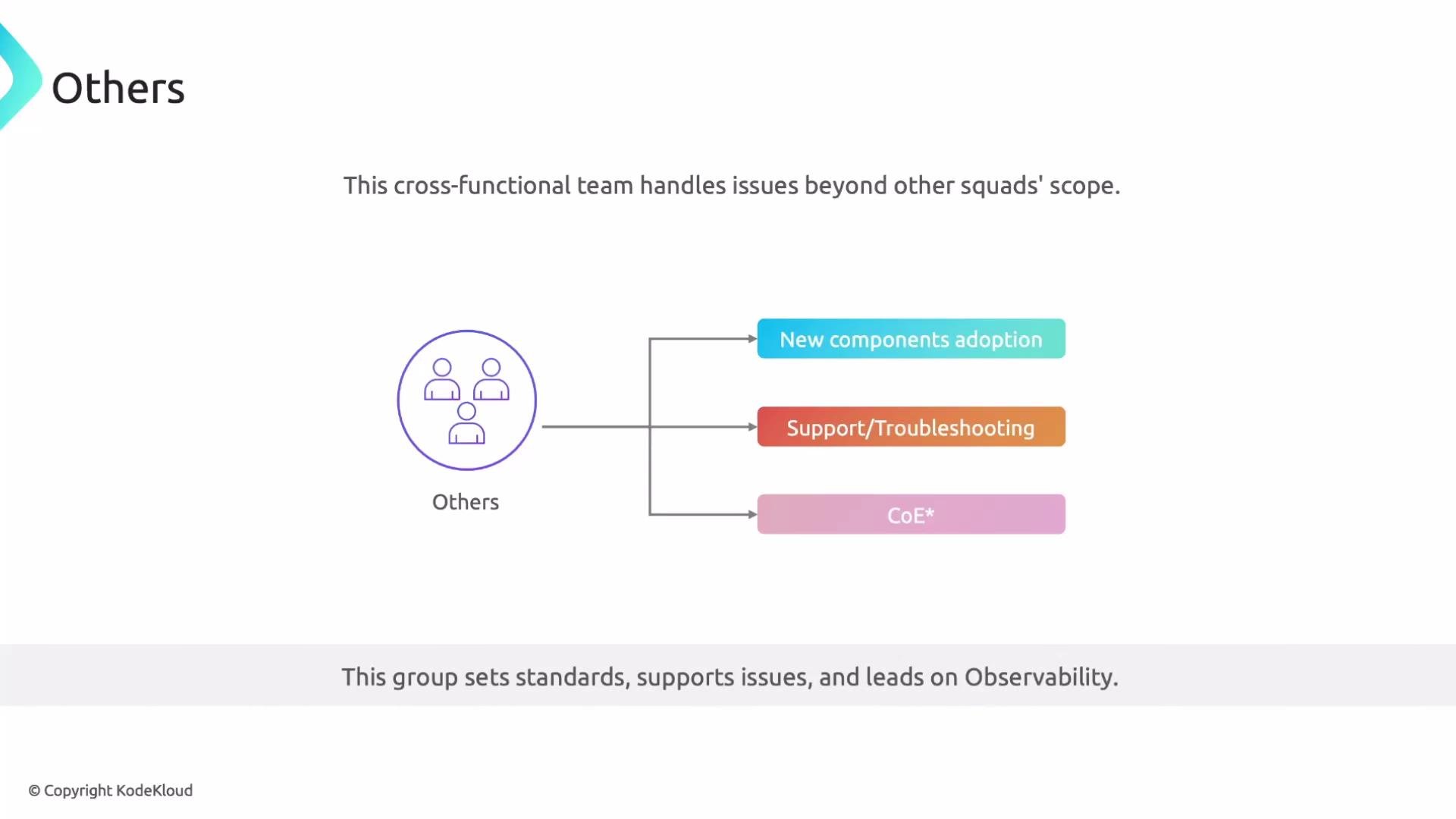
- A CoE is a multi-disciplinary group of subject-matter experts who define best-practice patterns, help troubleshoot hard problems, run knowledge-sharing, and guide observability strategy.
- The PM ensures the migration progresses: setting deadlines, communicating with management, coordinating teams, and protecting engineering squads from unrelated interrupts.
- The PM manages prioritization, handles urgent issues, resolves inter-team conflicts, and removes blockers.
- Reserve capacity for unplanned operational work and incident response during migration.
Best practices and practical tips
- Prioritize high-risk legacy components first—those with no owner or those that have been patched repeatedly.
- Start simple: migrate basic telemetry before advanced features like distributed tracing and anomaly detection.
- Use the migration as an opportunity to improve observability: replace brittle dashboards, reduce alert noise, and standardize instrumentation.
- Keep documentation and runbooks updated as you migrate components.
- Measure progress with clear milestones and a control log of deactivations.
Do not leave legacy components “running and forgotten.” Each unmanaged component is ongoing technical debt—plan explicit decommission dates and accountabilities before cutover.