

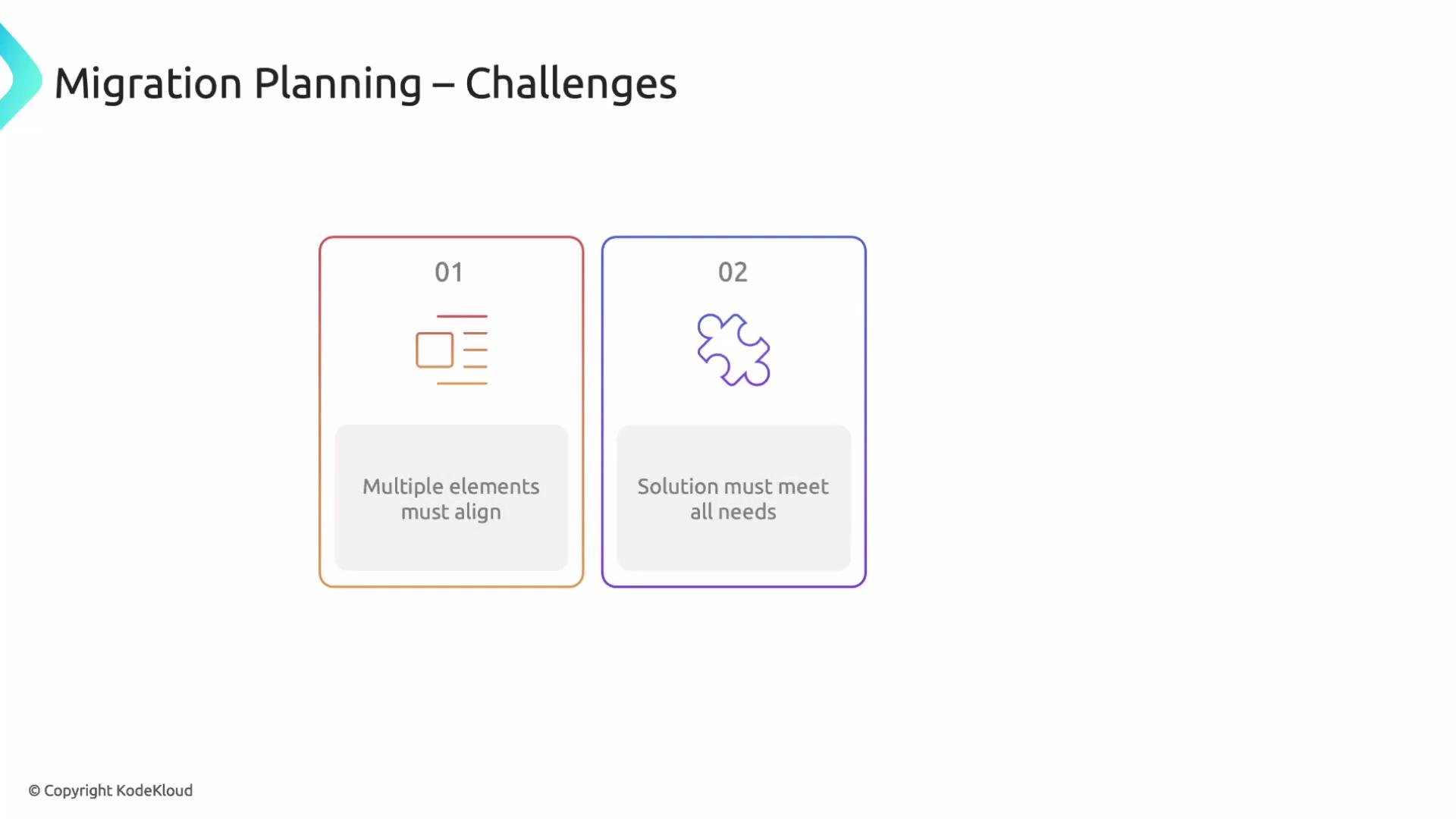
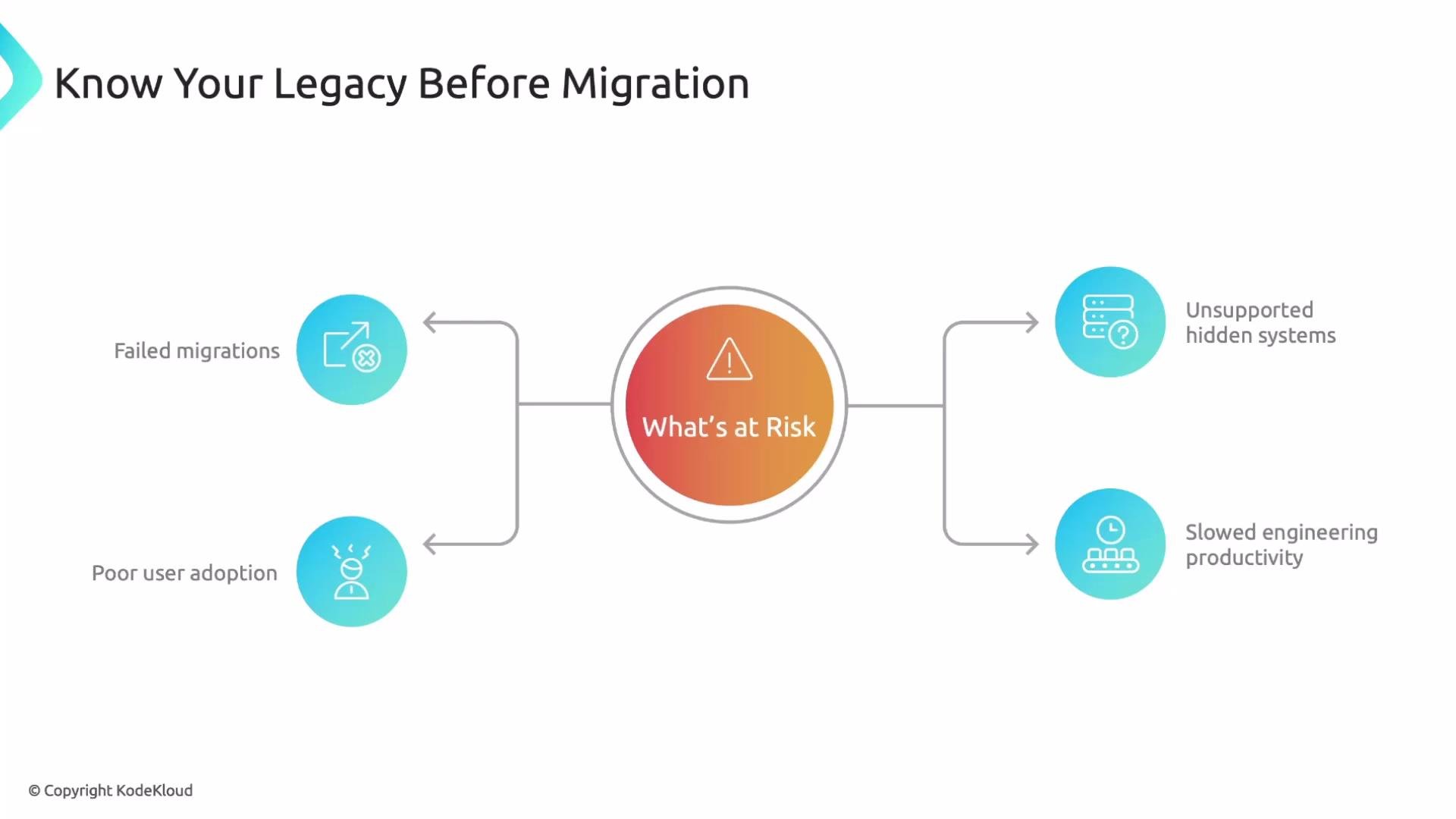
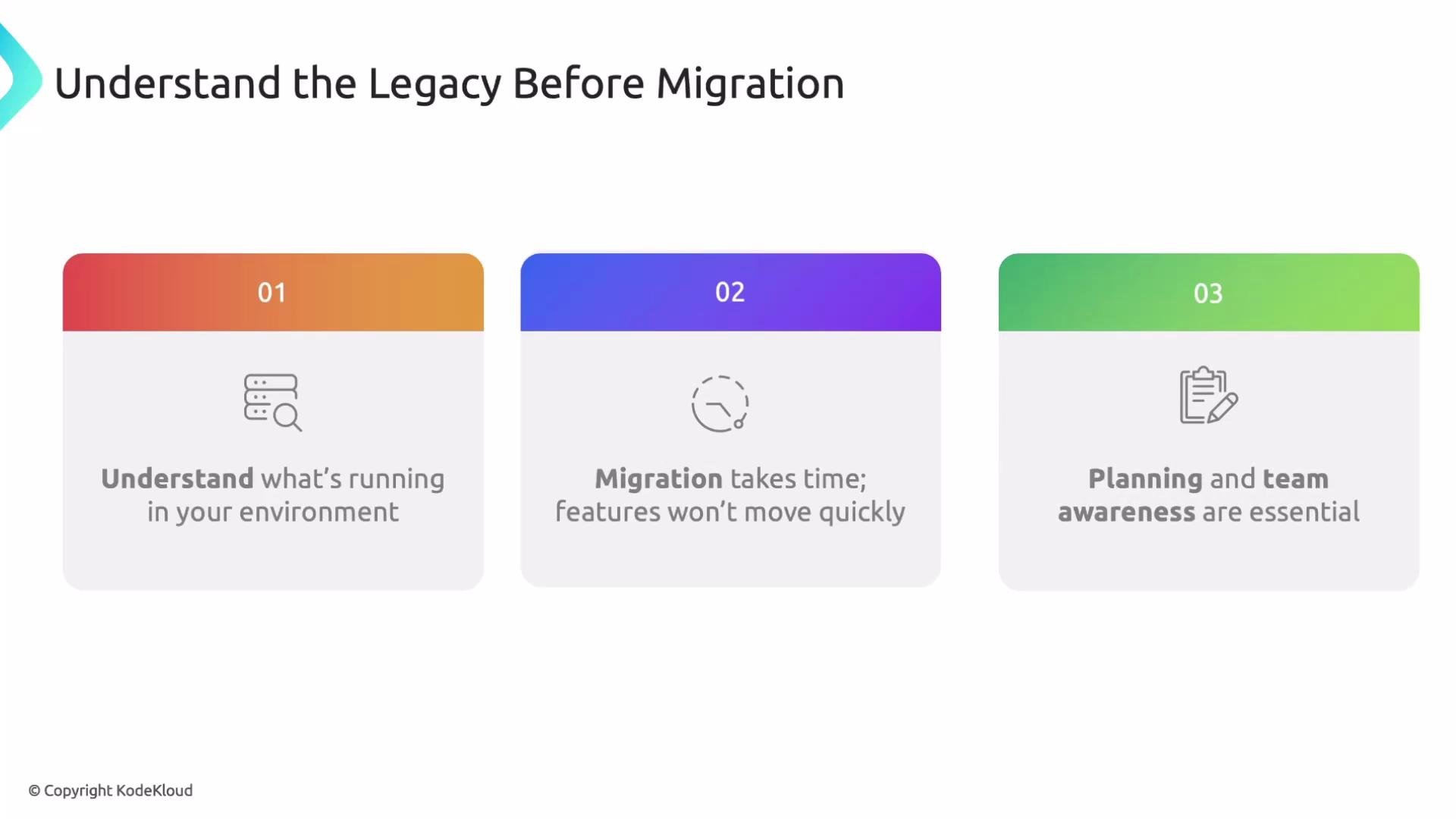
Understanding your legacy environment uncovers risks early and helps you select a target platform that supports your business needs, integrations, and compliance constraints.
- Reveal actual business needs and whether the current stack provides them.
- Surface shadow IT and undocumented systems for proper support and security.
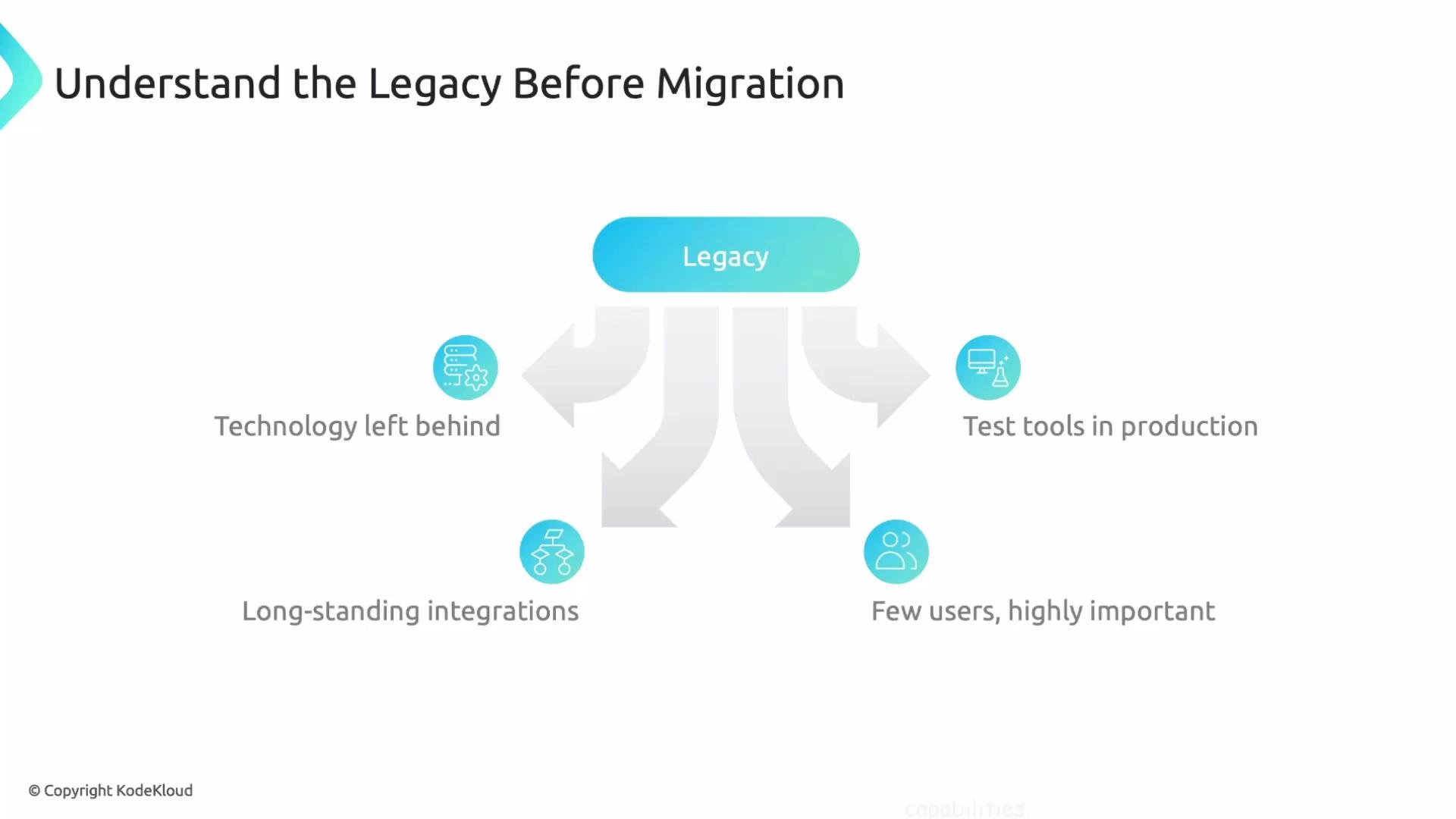
- Document customizations to reproduce or improve them in the new platform.
- Expose application-level issues and environmental gaps that migrations must address.
Practical to-do list for mapping legacy systems
Below is a concise migration discovery checklist followed by detailed steps you can follow.
Detailed steps:
-
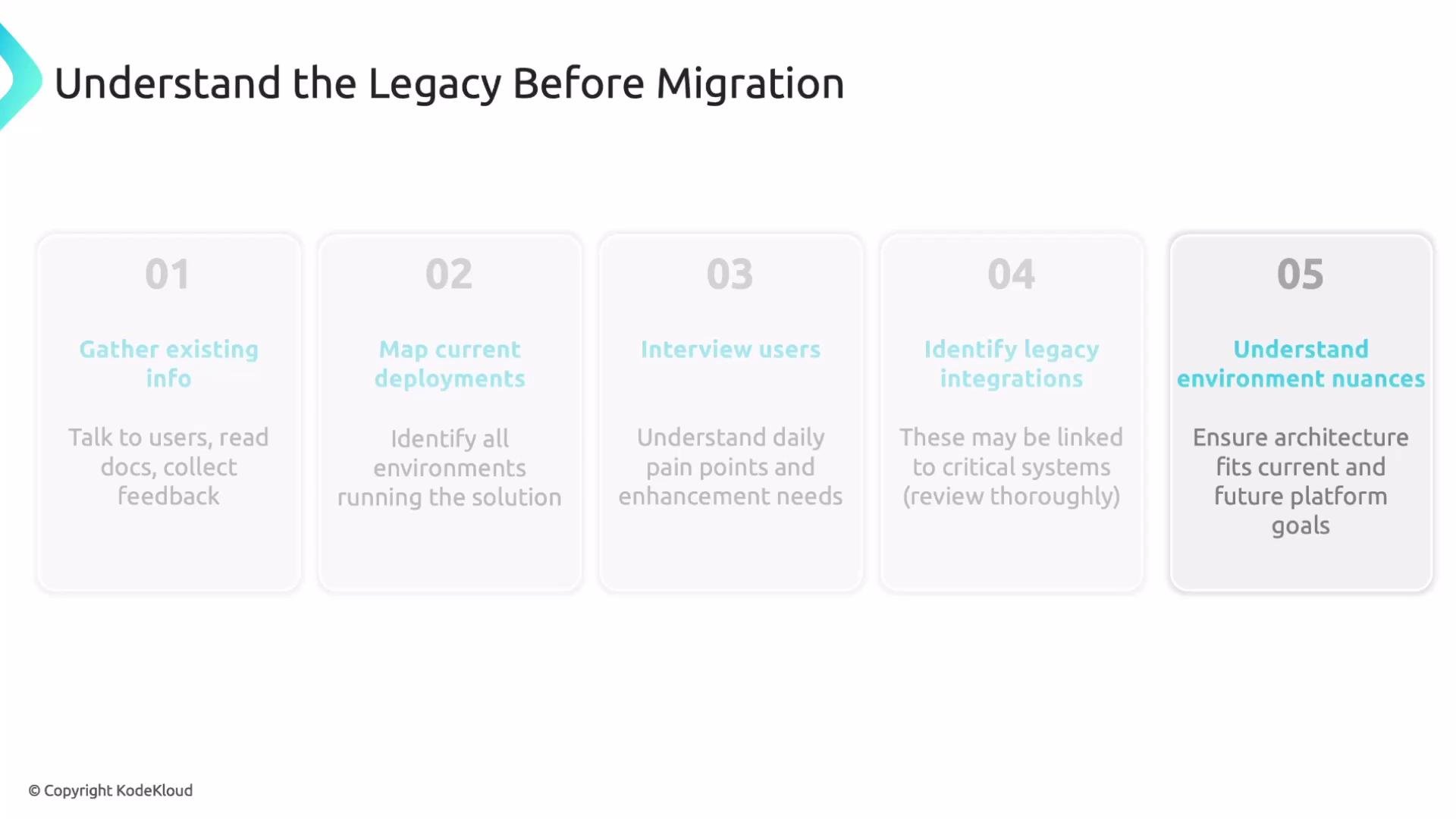
Gather existing knowledge
- Interview long-time users and operators who understand historical decisions.
- Retrieve available documentation and extract configuration directly from existing systems.
- Collect feedback on pain points and common workarounds that you should address in the migration.
-
Map current deployments and environments
- Inventory where each solution is deployed (dev, stage, prod) and regional variations.
- Identify multiple implementations of the same product and where configuration drift exists.
- Record operational runbooks, maintenance schedules, and escalation paths.
-
Interview users and owners
- Understand how each tool is used daily and which features are critical.
- Capture feature gaps and prioritize which issues the migration should resolve.
- Use migration windows to deliver immediate value (e.g., fix known pain points during cutover).
-
Identify legacy integrations
- Trace integrations between systems: APIs, message buses, mainframes, custom scripts, and scheduled jobs.
- Mark integrations that are business-critical and need continuity during migration.
- Document undocumented or fragile connections that require careful migration handling.
Undocumented integrations are a major risk—map them before cutover. Migrating without this knowledge can break essential business functionality.
- Understand environment nuances
- Capture environment-specific constraints: network topology, compliance zones, data residency, and resource limits.
- Confirm the target architecture accommodates these constraints and remains maintainable long-term.
Design principles for the target platform
Apply these guiding principles when designing the new platform so your migration delivers sustainable value:- Users first: Prioritize developer and operator experience. The platform should make teams faster and more confident.
- Technology alignment: Align with company standards so performance, cost, and maintainability are predictable.
- Security and compliance: Involve security and compliance teams early; noncompliance can invalidate the migration outcome.
- Sustainability: Design for maintainability and future migrations. Expect platforms to evolve; make future moves cheaper and faster.
Next steps and resources
- Start with the discovery checklist and schedule interviews with platform owners.
- Build a phased rollout plan with validation windows and rollback criteria.
- Prioritize integrations and high-impact, low-effort fixes for early wins.
- Kubernetes Basics
- Datadog Migration Resources (for tool-specific guidance)
- Terraform Registry (example for automation modules)