

What Is a ConfigMap?
A ConfigMap is a Kubernetes API resource used to store configuration data as key-value pairs. Each key represents a configuration name, while the value holds its associated data. The primary purpose of a ConfigMap is to inject configuration details into containers, thereby separating configuration from application code. For instance, when deploying a Pod within a Deployment, you might need to pass in parameters such as a database username or database name. ConfigMaps enable you to provide these details without hardcoding them into your Deployment manifests.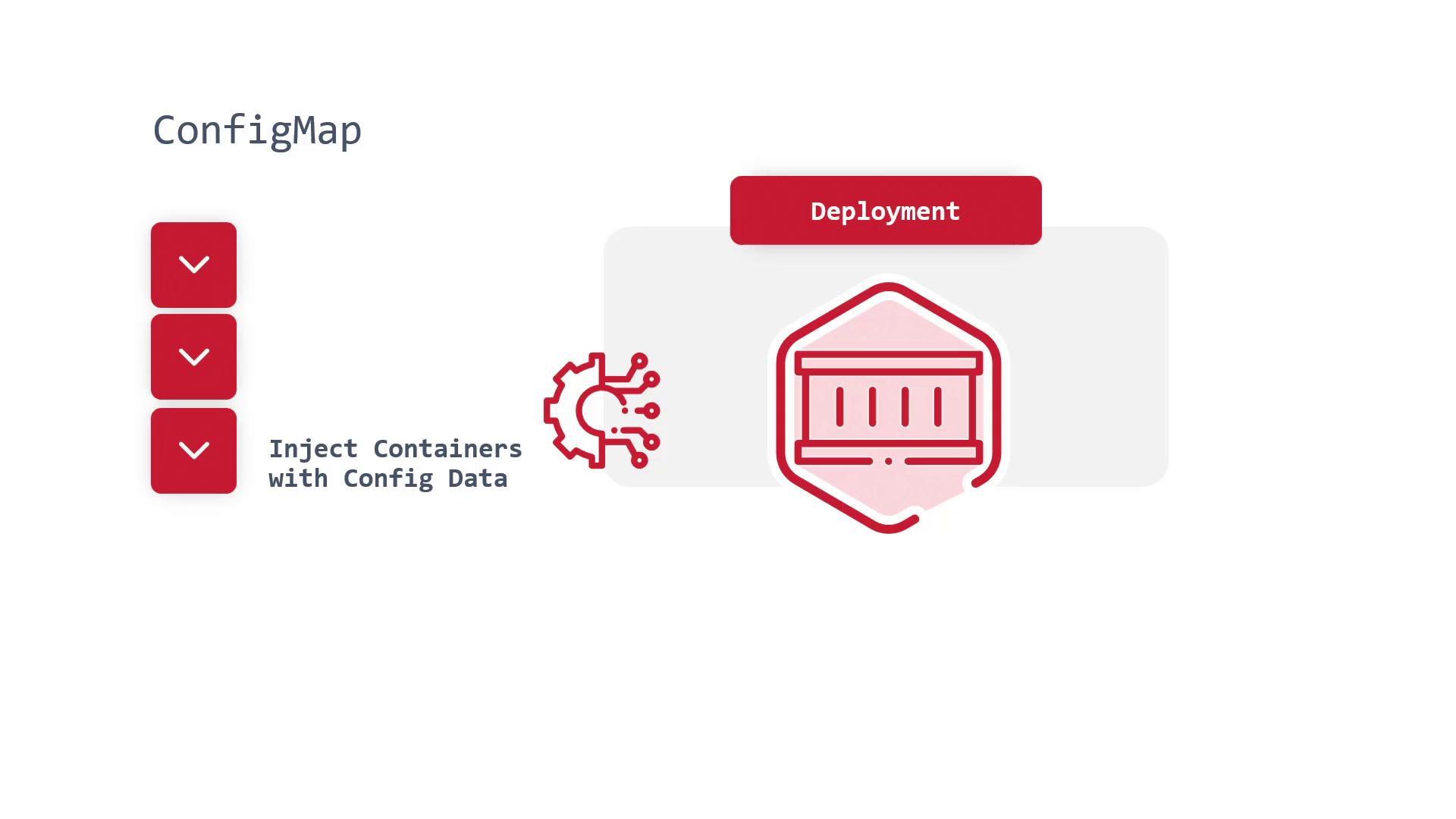
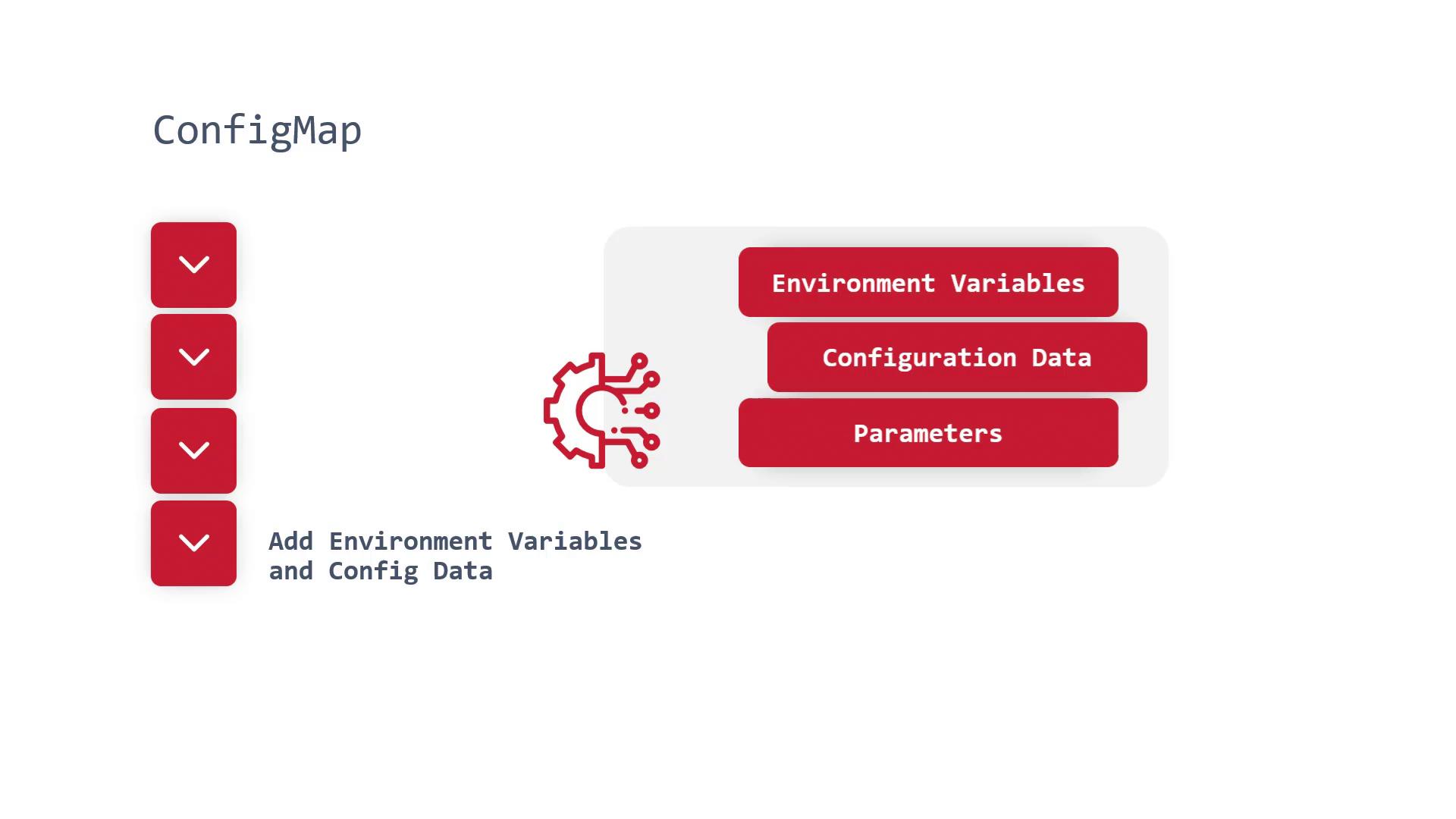
Working with ConfigMaps
There are multiple ways to create and manage ConfigMaps in your cluster:-
Using YAML Files:
You can define ConfigMaps in YAML files, similar to other Kubernetes manifests including Deployments, Pods, and Services. Once defined, apply the YAML file to your cluster. -
Using CLI Commands:
You can quickly create and manage ConfigMaps via command-line tools. For Kubernetes, you’d usekubectl, and for OpenShift, the equivalent CLI command isoc.
You can inspect and troubleshoot ConfigMaps using commands like
oc describe configmap and display all ConfigMaps with oc get configmap.