

Application Overview
The Python application has been altered to read a file located at/data/testfile.txt when the /read_file endpoint is accessed. Below is the relevant portion of the application code:
/read_file without configuring persistent storage, you will encounter an error due to a missing file or directory on the pod.
To troubleshoot this error, use the OpenShift Web Console to access the pod’s terminal. This allows you to execute commands to inspect file paths and mounts within the container.
Setting Up Persistent Storage
Follow these steps to add a persistent storage volume to your pods:1. Create a Storage Pool
Begin by creating a storage pool. Execute the following commands in your terminal session to list files and verify the directory structure:2. Create a Persistent Storage Claim
Navigate to the Storage section in the OpenShift Web Console and click on Create Storage. Provide a name for your storage claim and specify the desired size.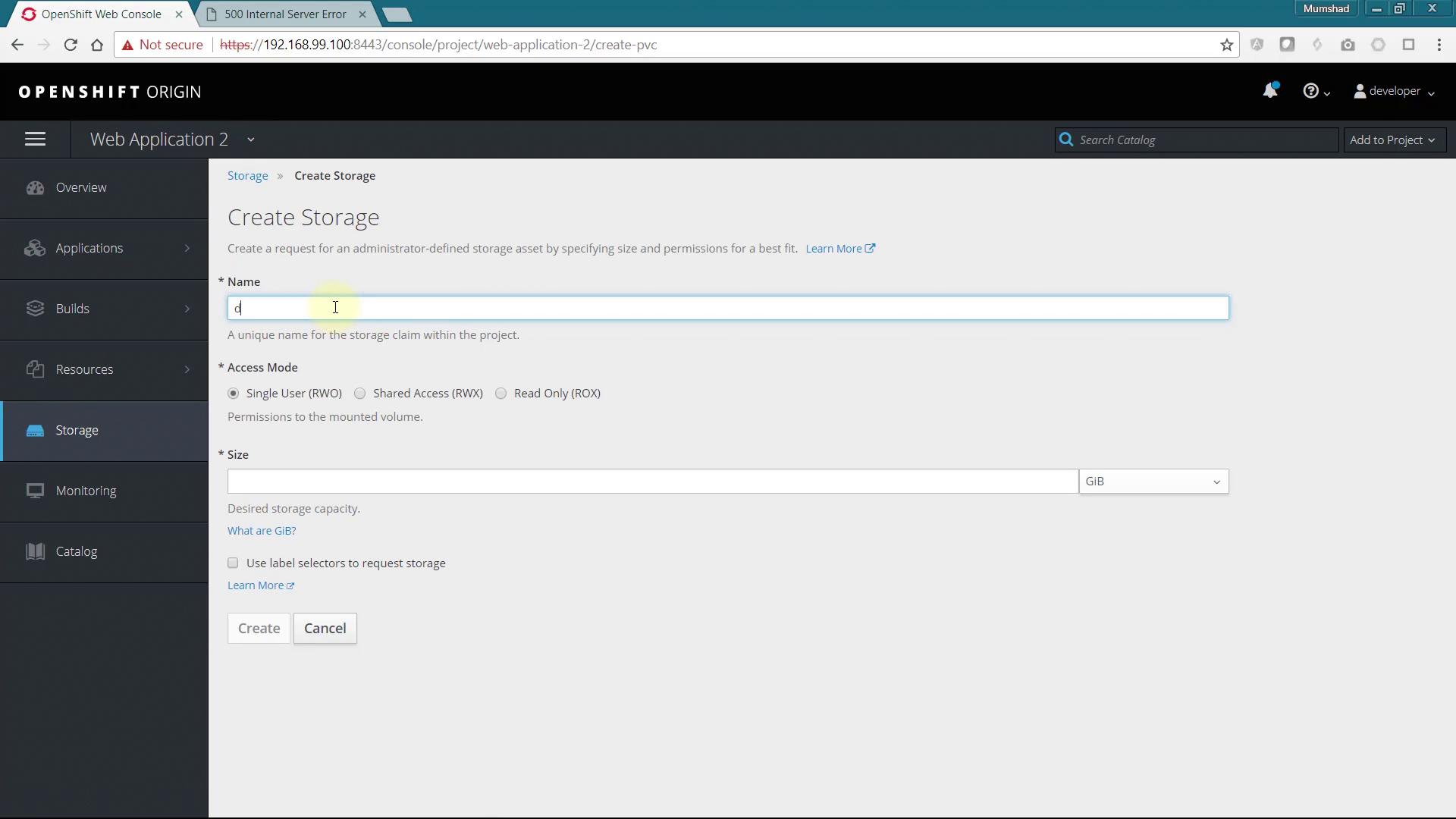
3. Attach the Storage to Your Deployment
After creating the storage claim, update the deployment configuration by adding the newly created storage under volumes. Apply the changes to your deployment with this command:/data.
Once the storage is attached, verify the new mount point within the pod’s terminal. Then, create a test file with the following content:
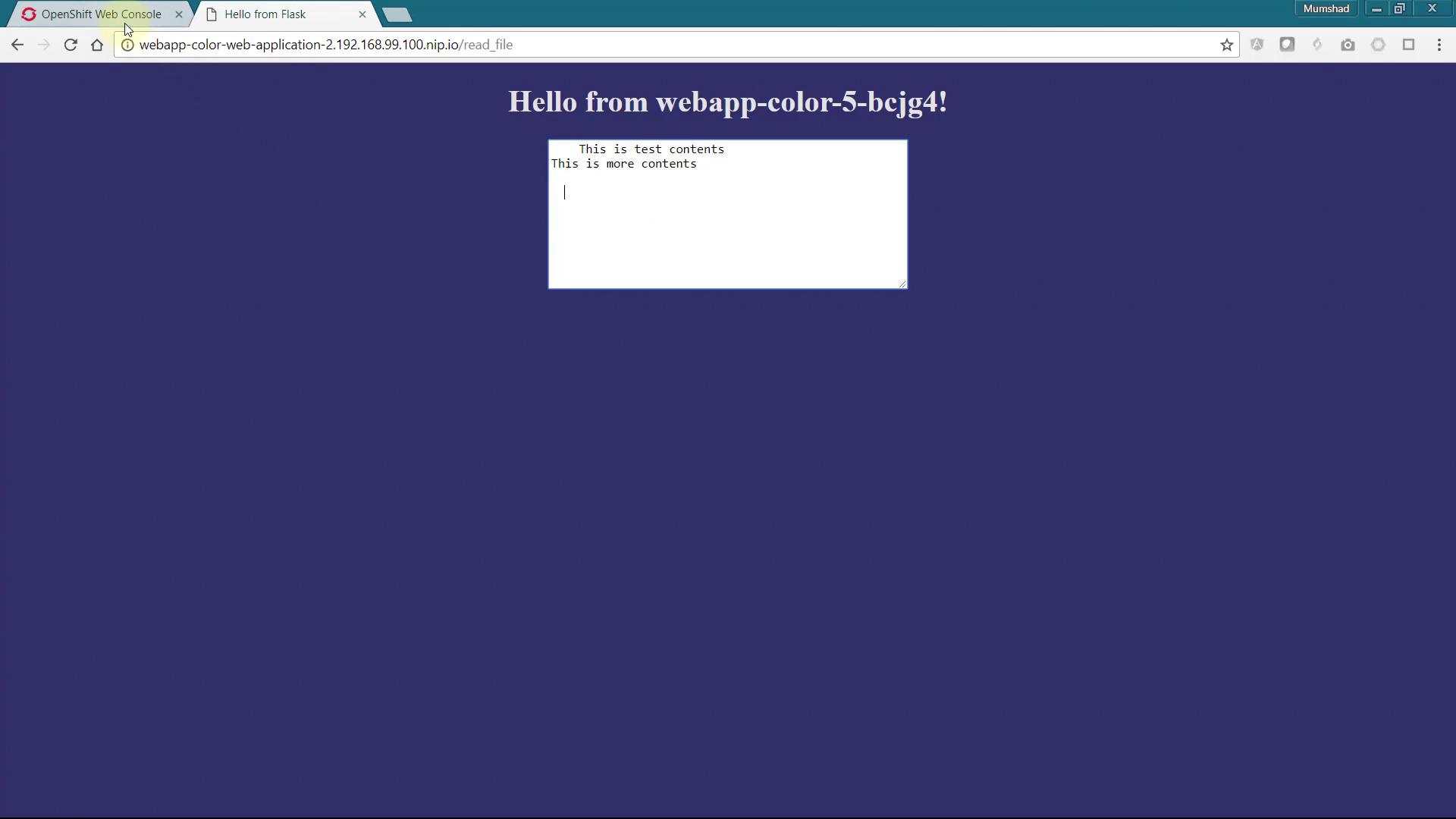
/read_file endpoint in your browser will display the file’s contents. Any subsequent updates to the file can be viewed by refreshing the browser.
Scaling the Application
When scaling your application, all replicas will share the same persistent storage. As new instances are deployed, each replica will display the identical file contents. This verifies that the persistent storage is functioning correctly across the entire deployment.Using persistent storage in OpenShift not only ensures data durability but also simplifies troubleshooting and scaling. Make sure to follow best practices when configuring your deployments.