Main Use Cases
Generative AI models are highly adaptive and versatile. One of their primary functions is text generation. These models can create or modify content based on various prompts and objectives. They can generate blog posts, adjust technical documents, or simplify complex manuals for beginners. Additionally, generative AI is extremely effective at summarizing meetings, extensive documents, financial reports, or legal records while preserving critical information. Another prominent application is code generation. AI-powered tools can produce YAML, JSON, or other code snippets, and they help automate coding tasks with smart completions and suggestions. Moreover, generative AI extends its capabilities to audio and visual domains — such as generating 3D content, creating images, and producing videos.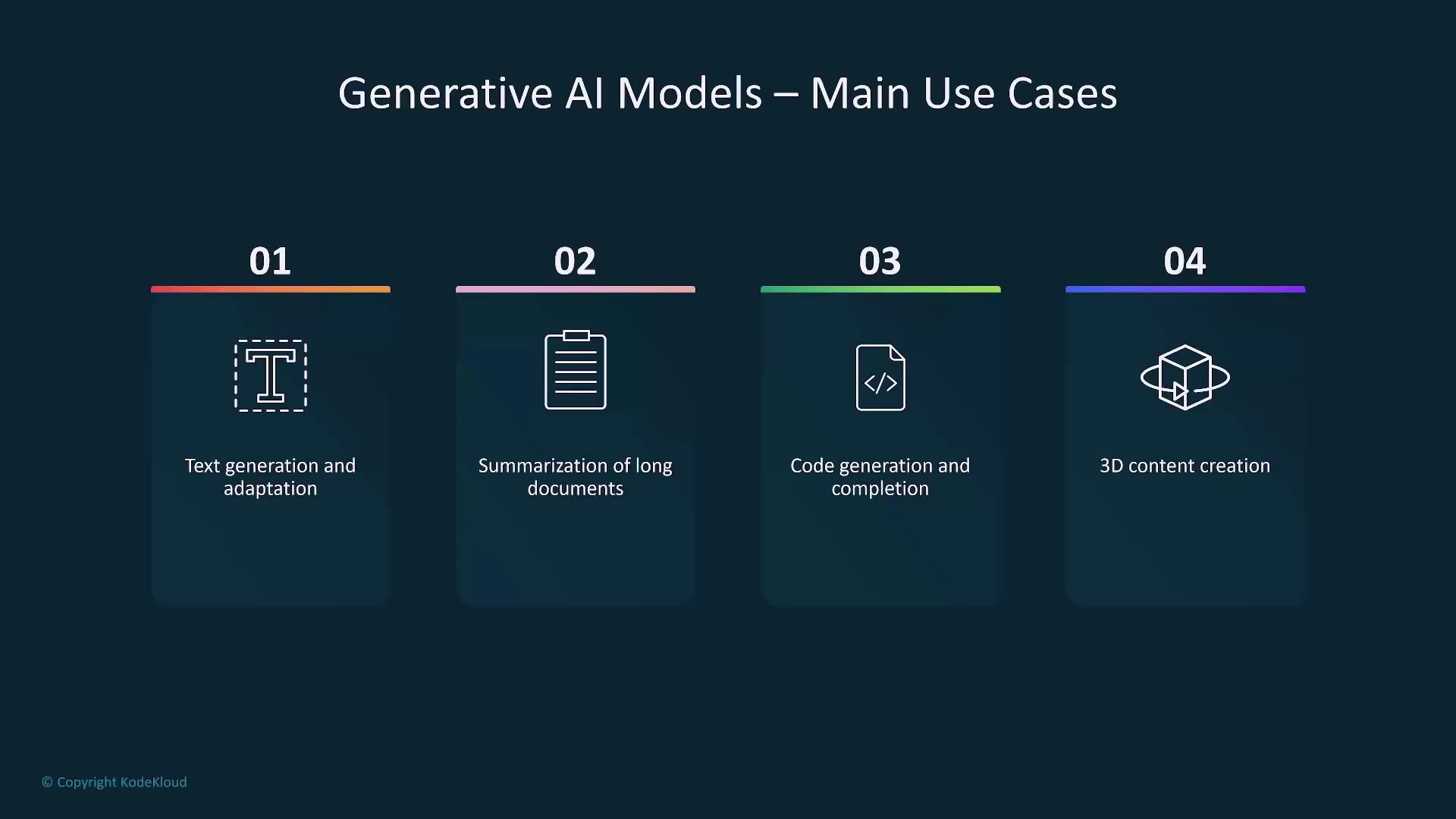
- Text generation and adaptation
- Summarization of long documents
- Code generation and assistance
- 3D content creation, image, and video production
Supporting Services and Architectures
Platforms and services designed to support these generative AI use cases are foundational to deploying and scaling these models effectively. A key component is Amazon Bedrock, which serves as the generative AI hosting system. Alongside Bedrock is Amazon Titan, AWS’s foundational model, akin to Google’s Gemini and OpenAI’s GPT series. Bedrock also supports several open models, ensuring a broad range of functionalities. Another important service is Amazon Q for Developers (formerly known as CodeWhisperer), complemented by Amazon SageMaker. SageMaker is AWS’s flagship machine learning service, providing a comprehensive suite of tools for building and training models at scale.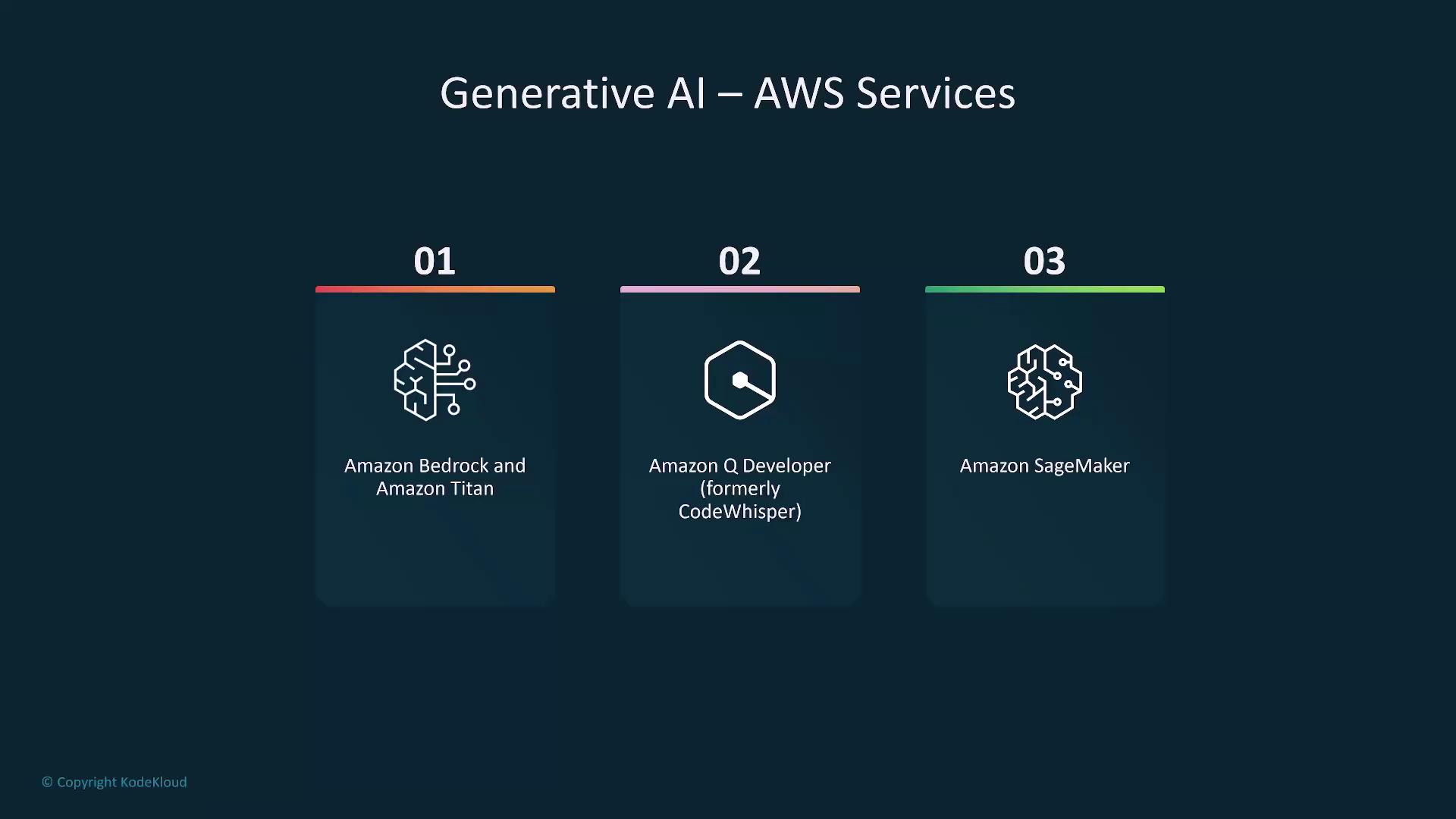
Generative AI’s capability to extract key insights from complex documents — such as legal contracts, pattern identification, and content categorization — makes it invaluable in industries requiring personalized and dynamic content delivery.
Underlying Architectures
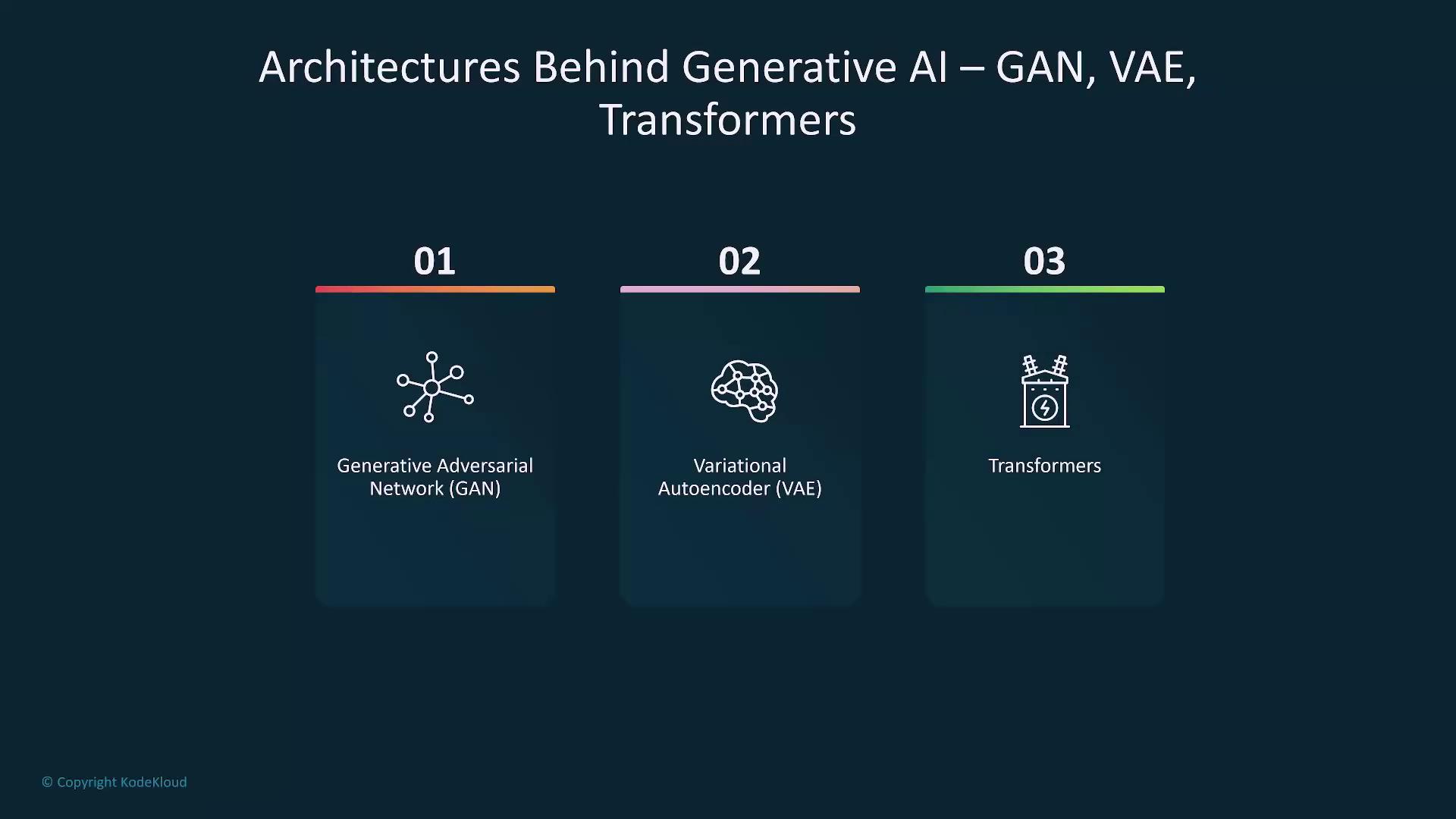
Generative AI is powered by a range of architectures, each with unique strengths. The primary models include:- Generative Adversarial Networks (GANs): Ideal for generating synthetic data like images and videos.
- Variational Autoencoders (VAEs): Efficient in tasks such as reconstructing images from latent representations.
- Transformers: The backbone of large language models, transformers excel at handling sequential data. They play a pivotal role in models like GPT.