Course objectives
By the end of this course you will be able to:- Understand the fundamentals of machine learning (ML) and artificial intelligence (AI).
- Explain generative AI and how it differs from general AI/ML.
- Use foundation models on AWS to add generative capabilities to applications.
- Apply guidelines for responsible and ethical AI.
- Evaluate security, compliance, and governance considerations for AI solutions (including hallucinations, plagiarism, and prompt injection).
- Prepare for the AWS Certified AI Practitioner exam.
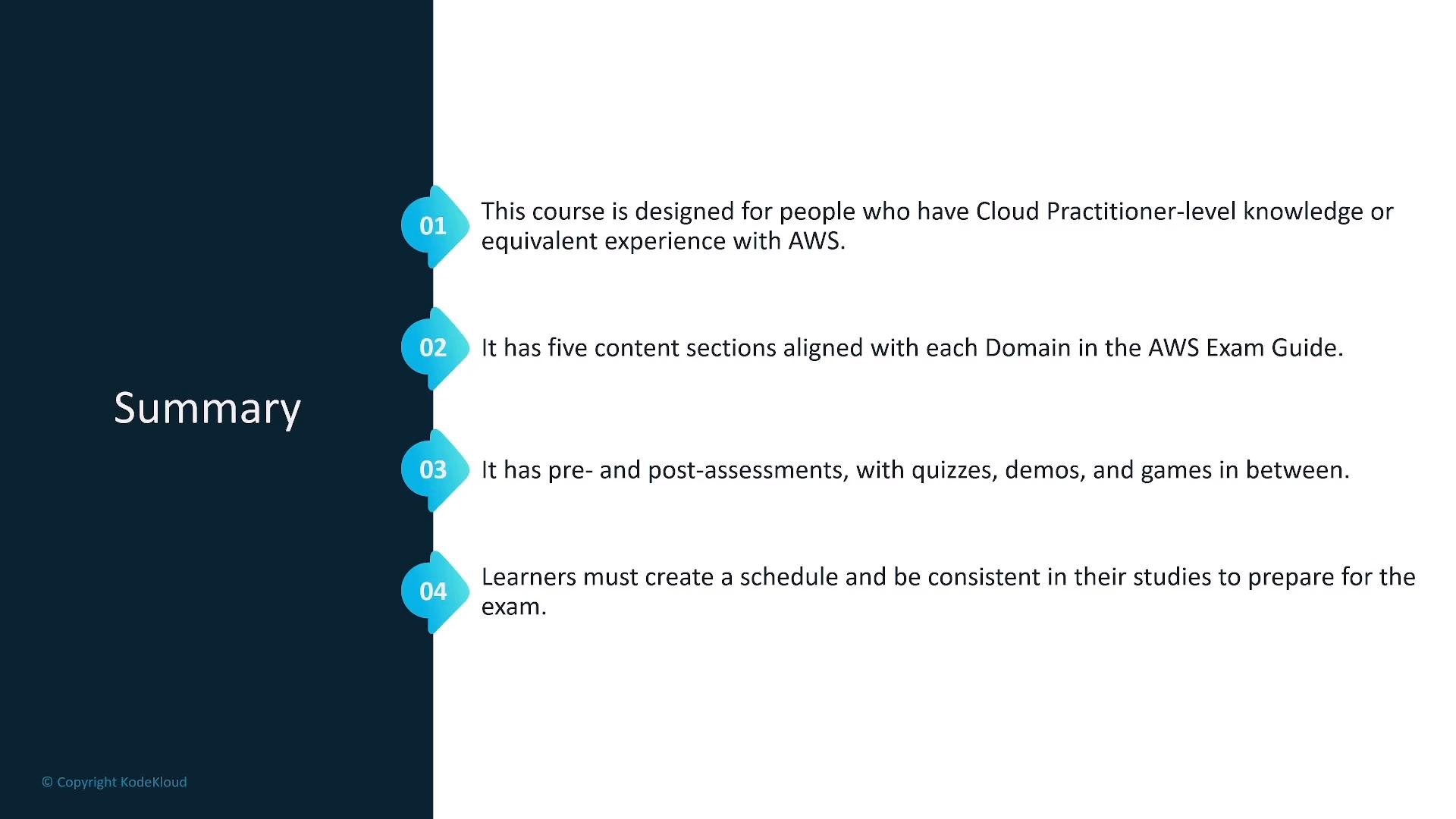
Prerequisites: Cloud Practitioner-level knowledge or equivalent experience with AWS is recommended before taking this course.
Who should take this course
This course targets learners who already understand the AWS Shared Responsibility Model, basic IAM concepts, global AWS infrastructure, and AWS pricing. If you don’t yet have that foundation, consider the AWS Cloud Practitioner (CLF-C02) course or certification first.Course structure at a glance
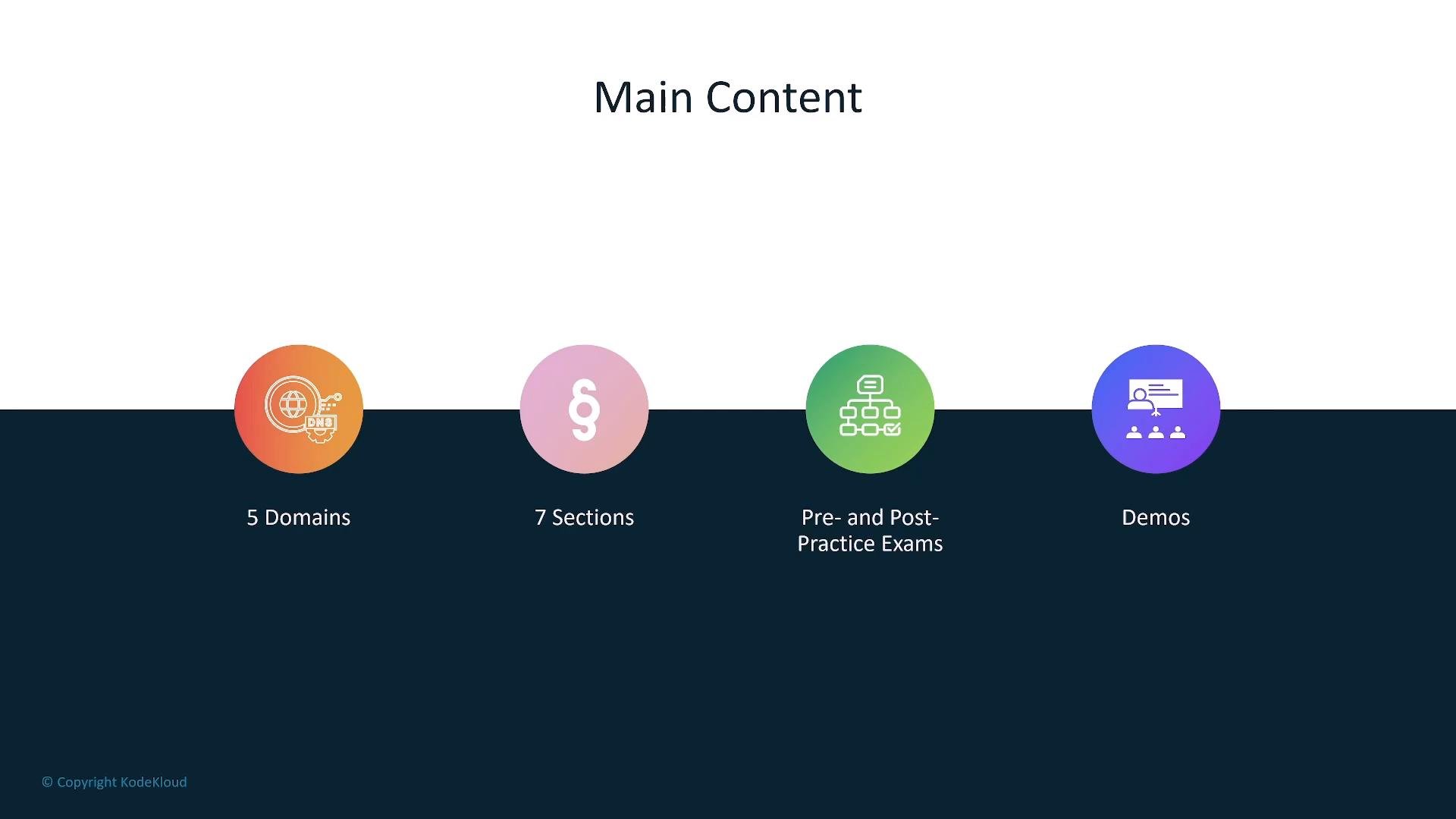
The course maps to the official AWS Exam Guide for the AI Practitioner and is organized to make study and revision efficient:- Five core content domains (the technical and conceptual heart of the course).
- Seven total sections (an intro and closing section that bookend the five domains).
- Pre- and post-assessments that mirror exam conditions.
- Demos and short hands-on activities where appropriate.
What the introduction and closing sections cover
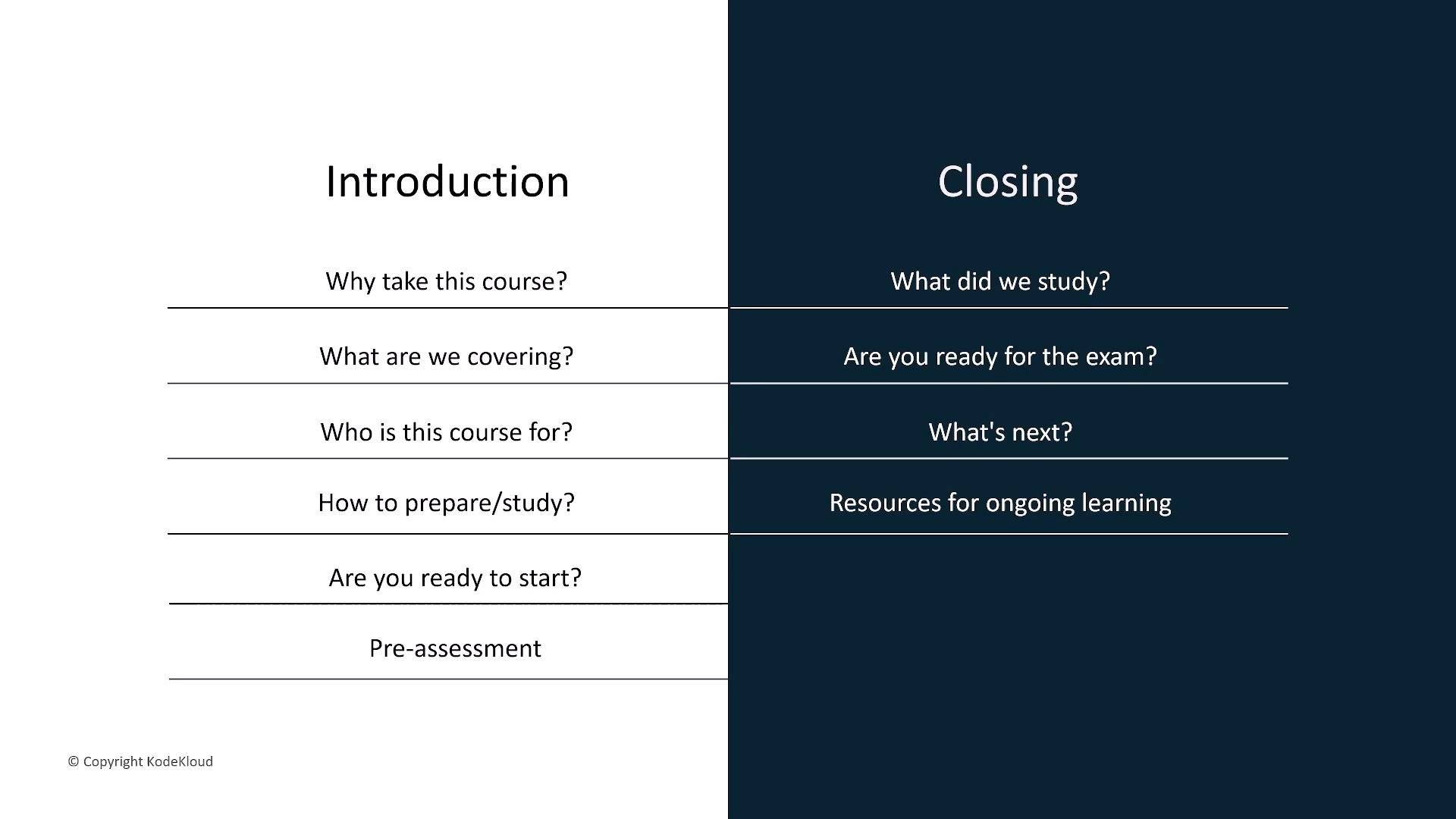
- Introduction: why take the course, what we cover, who the course is for, how to prepare, and the pre-assessment.
- Closing: a summary of what you studied, exam-readiness checks, next steps, and resources for continued learning.
Pre- and post-assessments (exam-style practice)
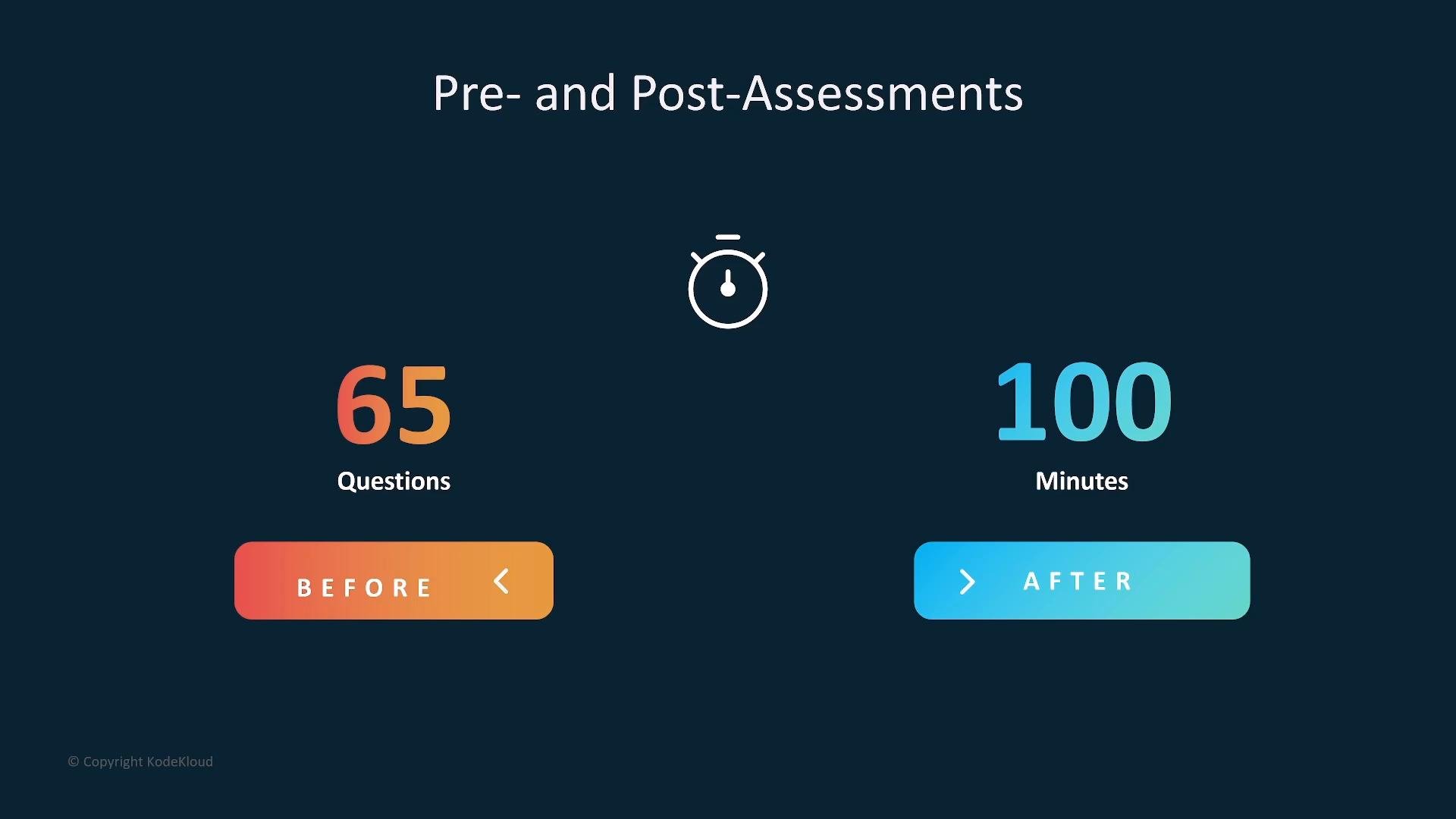
Both assessments match the exam format to help you practice timing and question strategy. Exam facts:
Use these assessments to identify knowledge gaps and to rehearse pacing under exam conditions.
Core content domains
The five domains you’ll study are:- Fundamentals of AI and ML — key concepts, model types, and evaluation metrics.
- Fundamentals of generative AI — architectures, tokenization, and generation techniques.
- Applications of foundation models — how to integrate foundation models with AWS services.
- Responsible and ethical AI — bias mitigation, transparency, and usage policies.
- Security, compliance, and governance for AI — data protection, model risk, and attack vectors (e.g., prompt injection).
For hands-on practice, create a free AWS account and explore documentation for Bedrock and SageMaker.
Study approach and practical tips
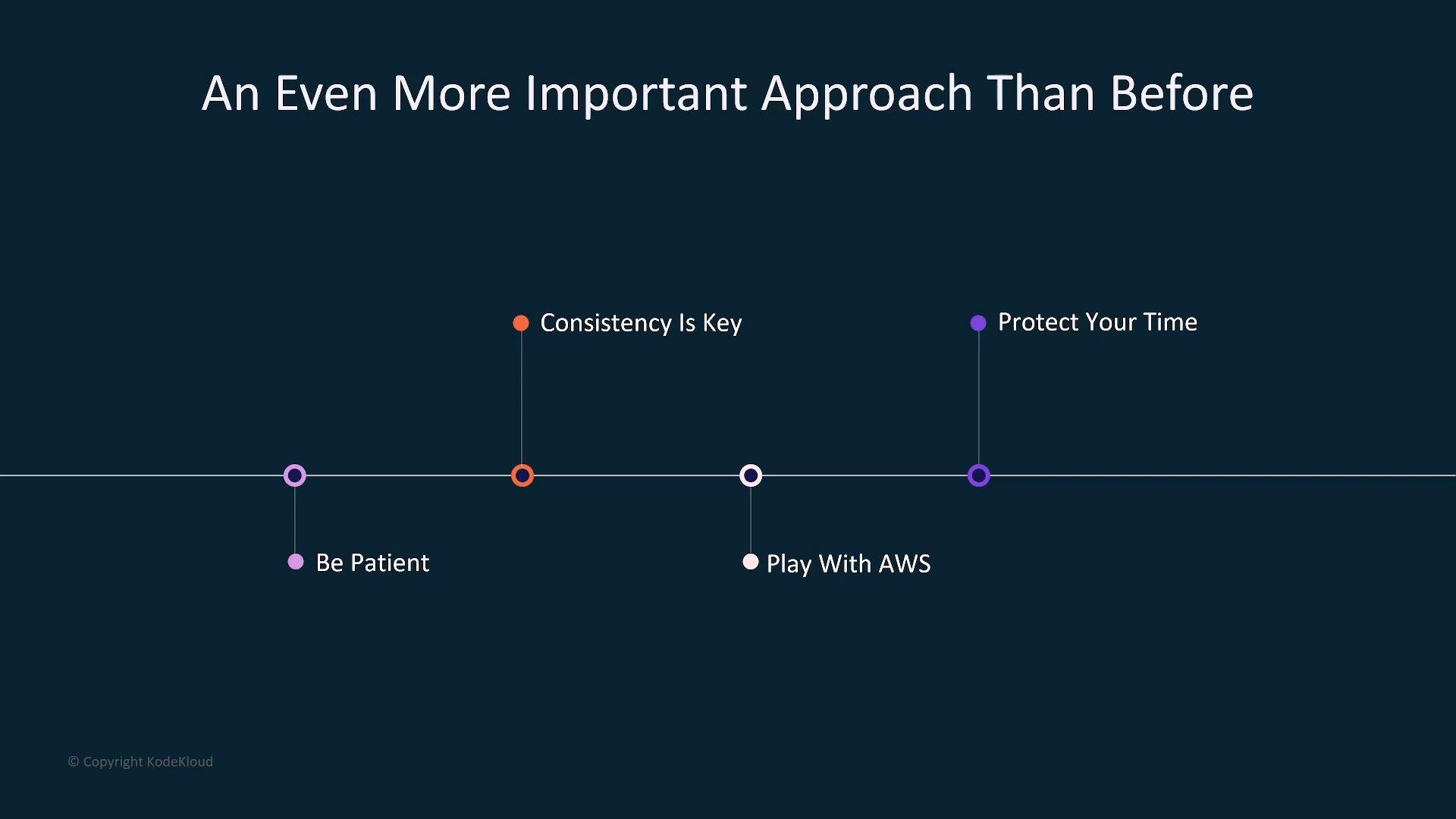
- Be patient — the material can feel unfamiliar at first; steady practice wins.
- Study consistently — 15–30 minutes daily is a good starting cadence.
- Prioritize hands-on learning — build small, focused labs to reinforce concepts.
- Protect study time — many learners spend 20–30 hours preparing for this exam.
- Early adopter incentive — if you take the exam before February 2025, you may receive an early adopter badge in addition to the certification badge.
Summary and how to proceed
- Target audience: learners with Cloud Practitioner-level knowledge or equivalent experience.
- Structure: five content domains aligned to the AWS Exam Guide, organized across seven course sections (including intro and closing).
- Assessments: pre- and post-practice exams that reflect actual exam conditions.
- Format: primarily conceptual content supported by demos, labs, and quizzes.
- Recommendation: build a study schedule, practice consistently, and use the assessments to measure progress.