

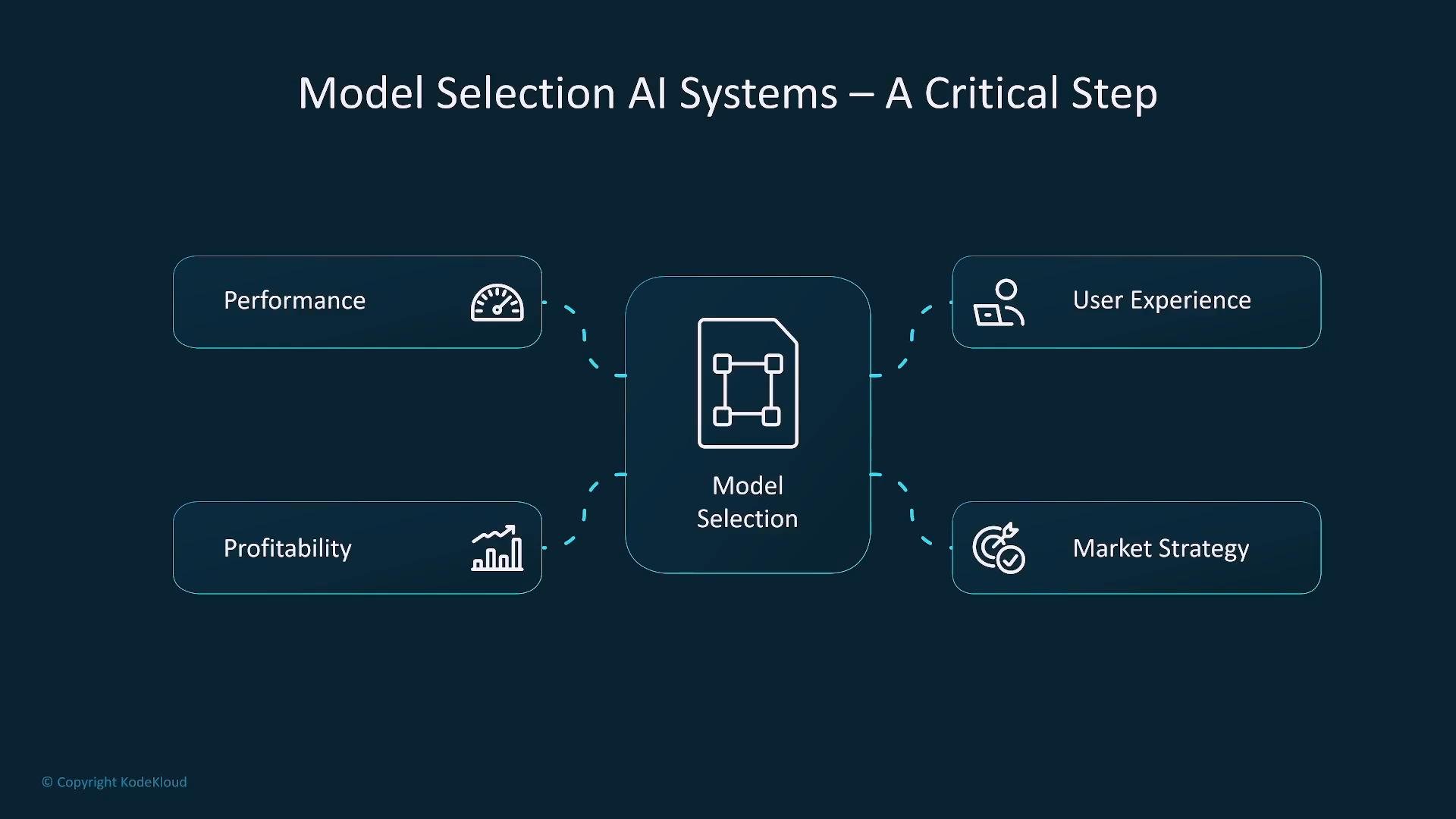
- Larger models frequently offer higher capability but also increase latency, energy use, and cost.
- Commercial third‑party models may have licensing or usage restrictions that conflict with open-source or export strategies.
- Models not trained or tuned for your target domain can degrade user experience.
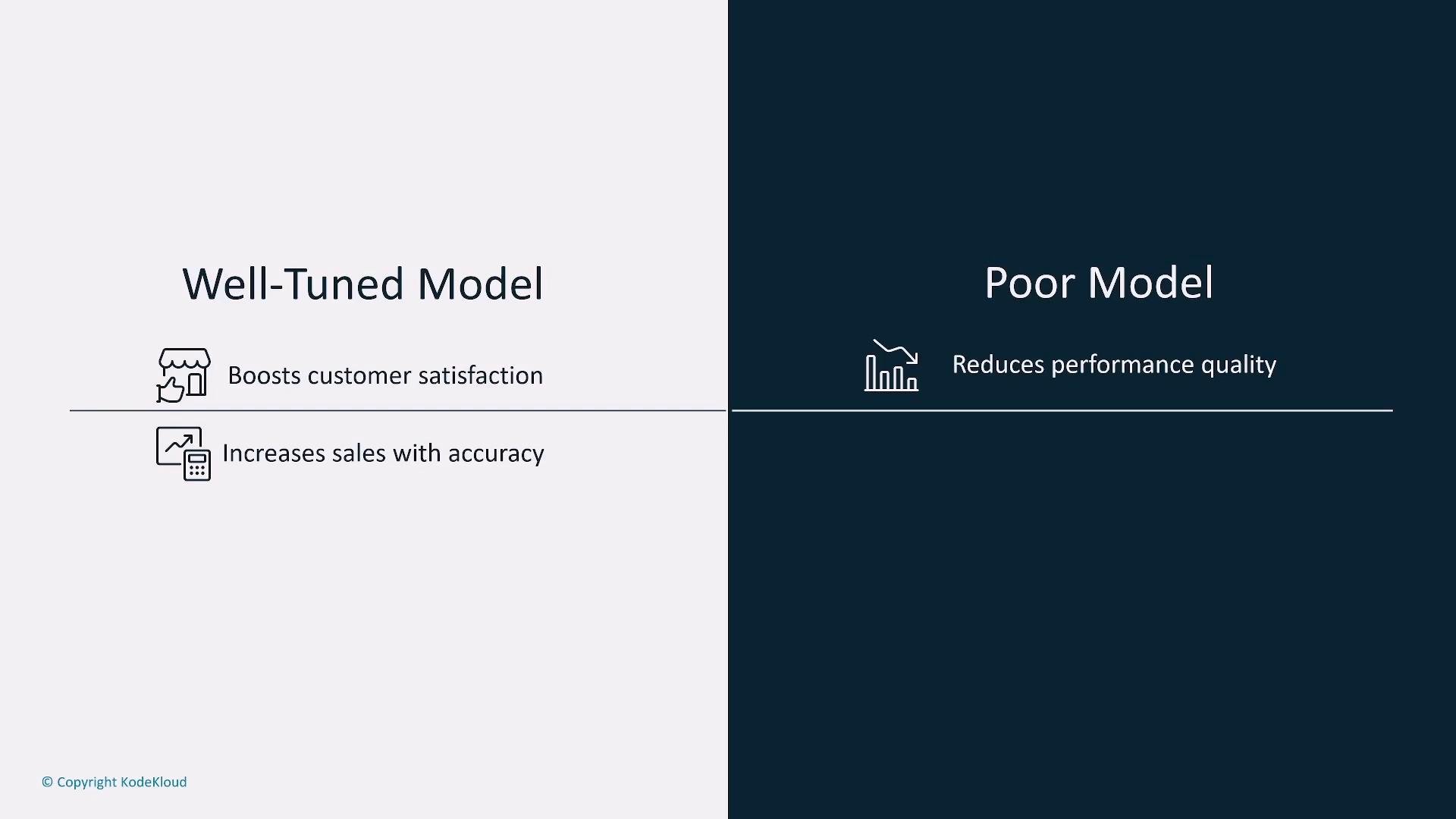
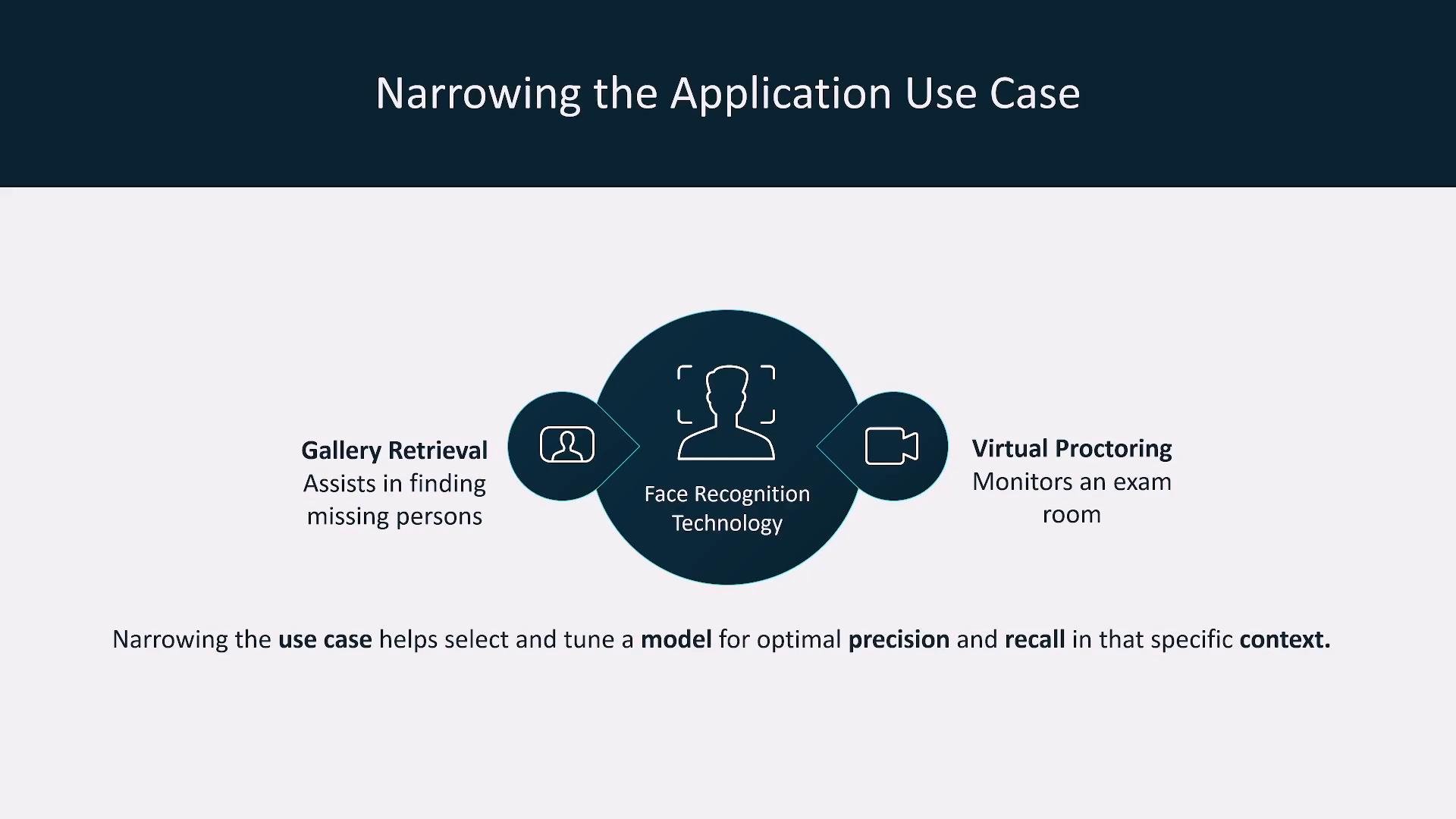
1. Start by narrowing the application use case
Define the real application first — driven by business objectives and domain constraints — not by available technology. Distinguish capability (what the model can do) from use case (how you will use it). For example, face recognition is a capability; the use case might be:- gallery retrieval to find missing persons, or
- virtual proctoring to detect exam integrity violations.
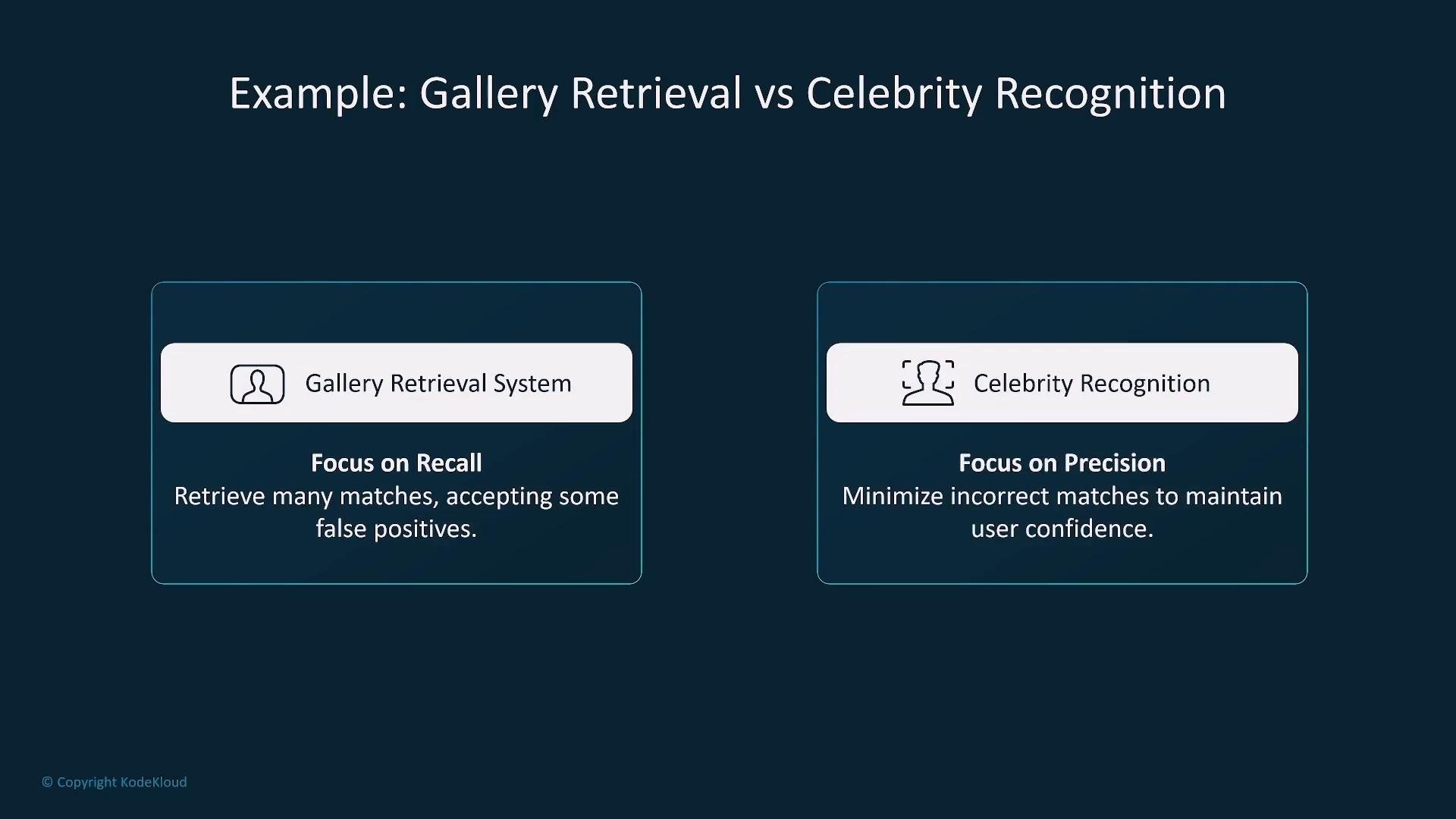
2. Choose metrics that reflect user and business goals
Selecting appropriate evaluation metrics is critical. Two common patterns:- Gallery retrieval (find as many possible candidates): prioritize recall — you accept more false positives to avoid missing true matches.
- Celebrity recognition (high-confidence identification): prioritize precision — minimize incorrect matches to preserve trust.
3. Use-case-driven tuning: neutrality vs personalization
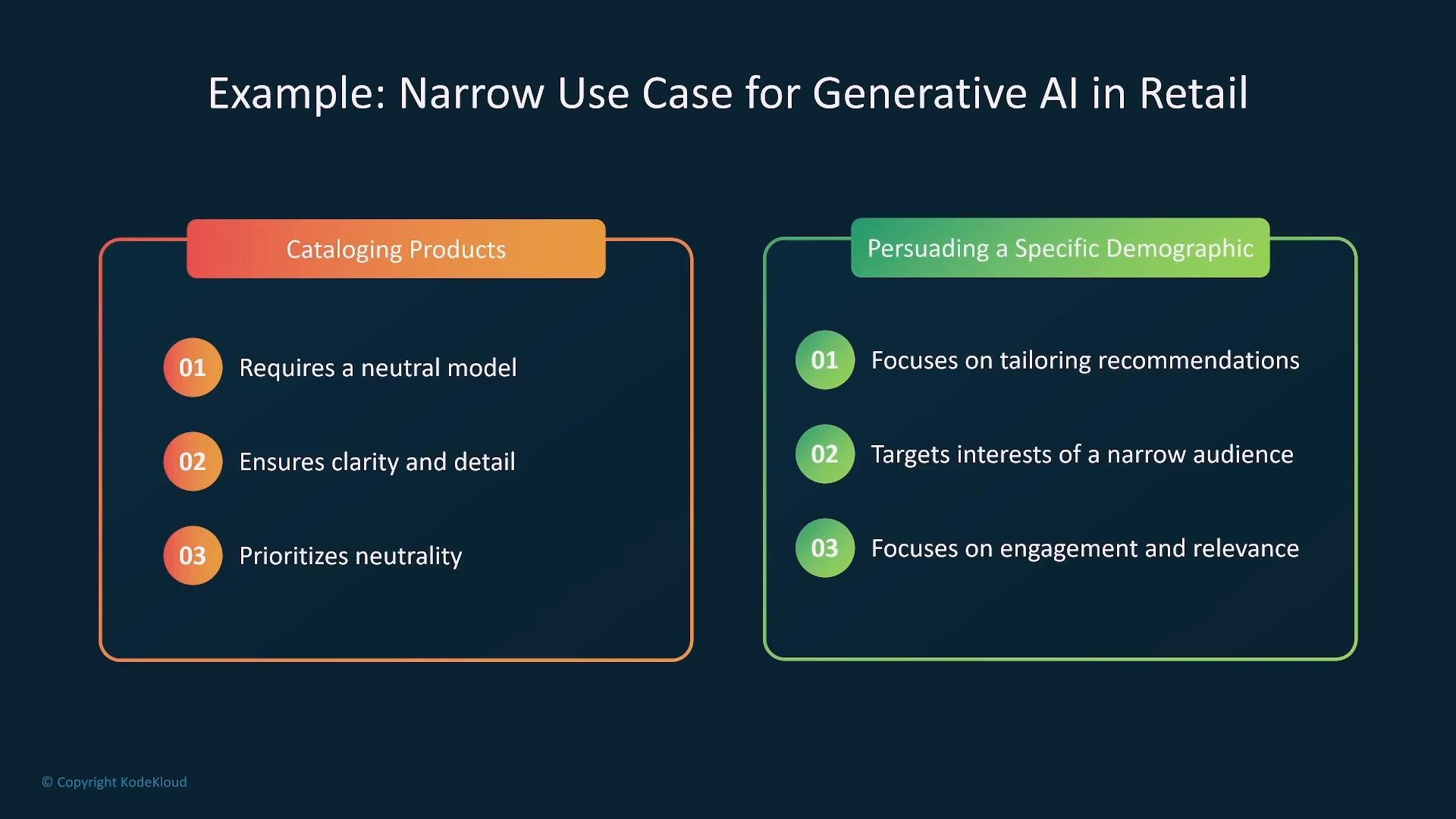
Different applications require different model behaviors. For retail, for example:- Cataloging products: choose neutral, broad-reaching models that prioritize clarity and coverage.
- Persuasion or personalized recommendations: choose models tuned for engagement and relevance to a target audience.
4. Validate performance on representative data and realistic environments
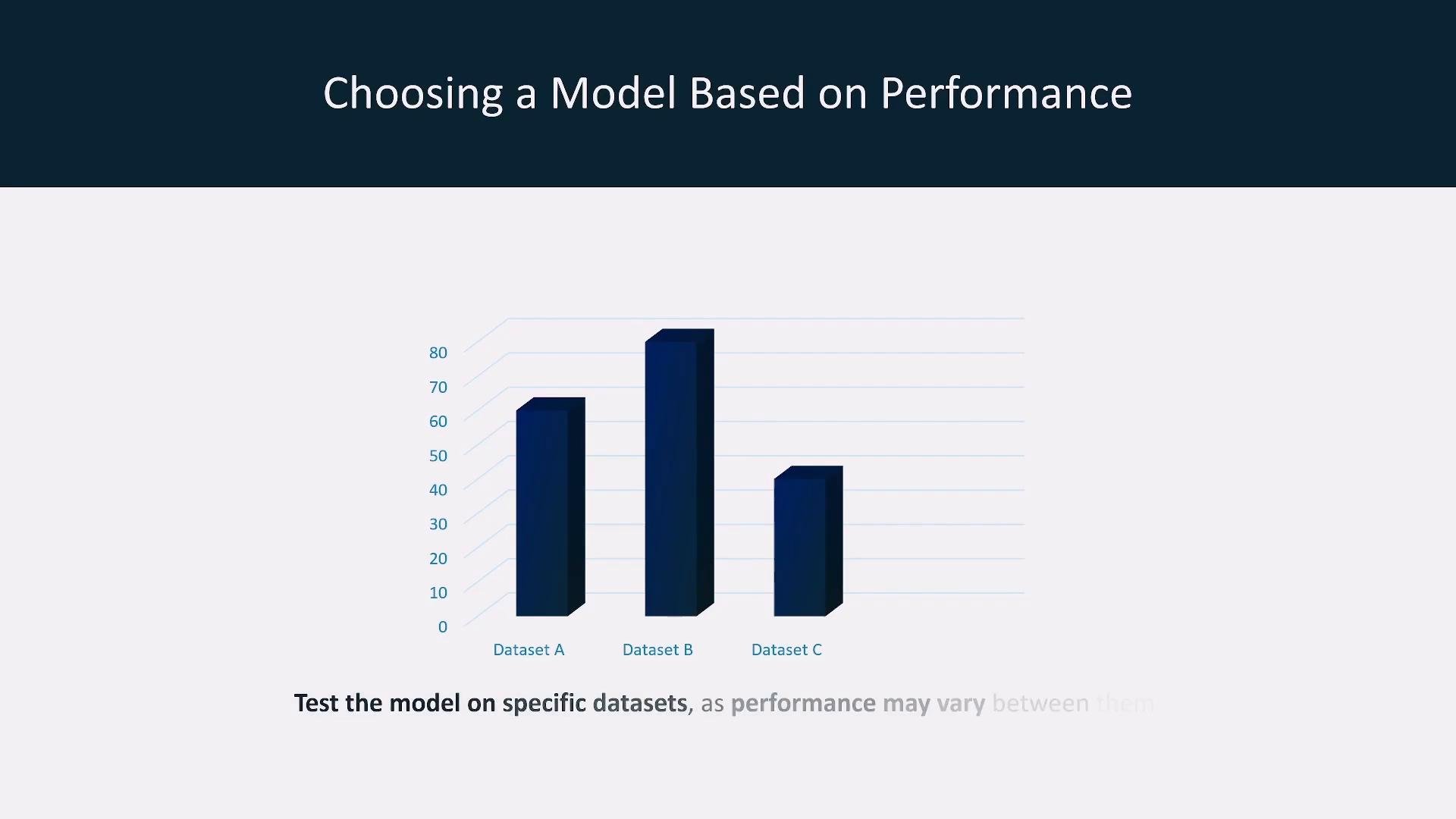
Model performance is dataset- and environment-specific. Never assume a model that performs well on benchmark data will generalize to your production data. Always:- Test candidate models on representative, realistic datasets (including edge cases).
- Measure latency, throughput, and accuracy under realistic load and hardware.
- Validate performance across demographic, geographic, and domain slices to find disparate behavior.
5. Continuous evaluation and periodic retuning
Model quality results from both architecture and the datasets used to evaluate it. Because models, data, and user behavior evolve, implement continuous evaluation and periodic retuning. A model that was optimal months ago may become suboptimal:- Instrument production to capture drift signals.
- Run offline evaluation pipelines against fresh data slices.
- Set retraining or redeployment triggers based on performance thresholds.
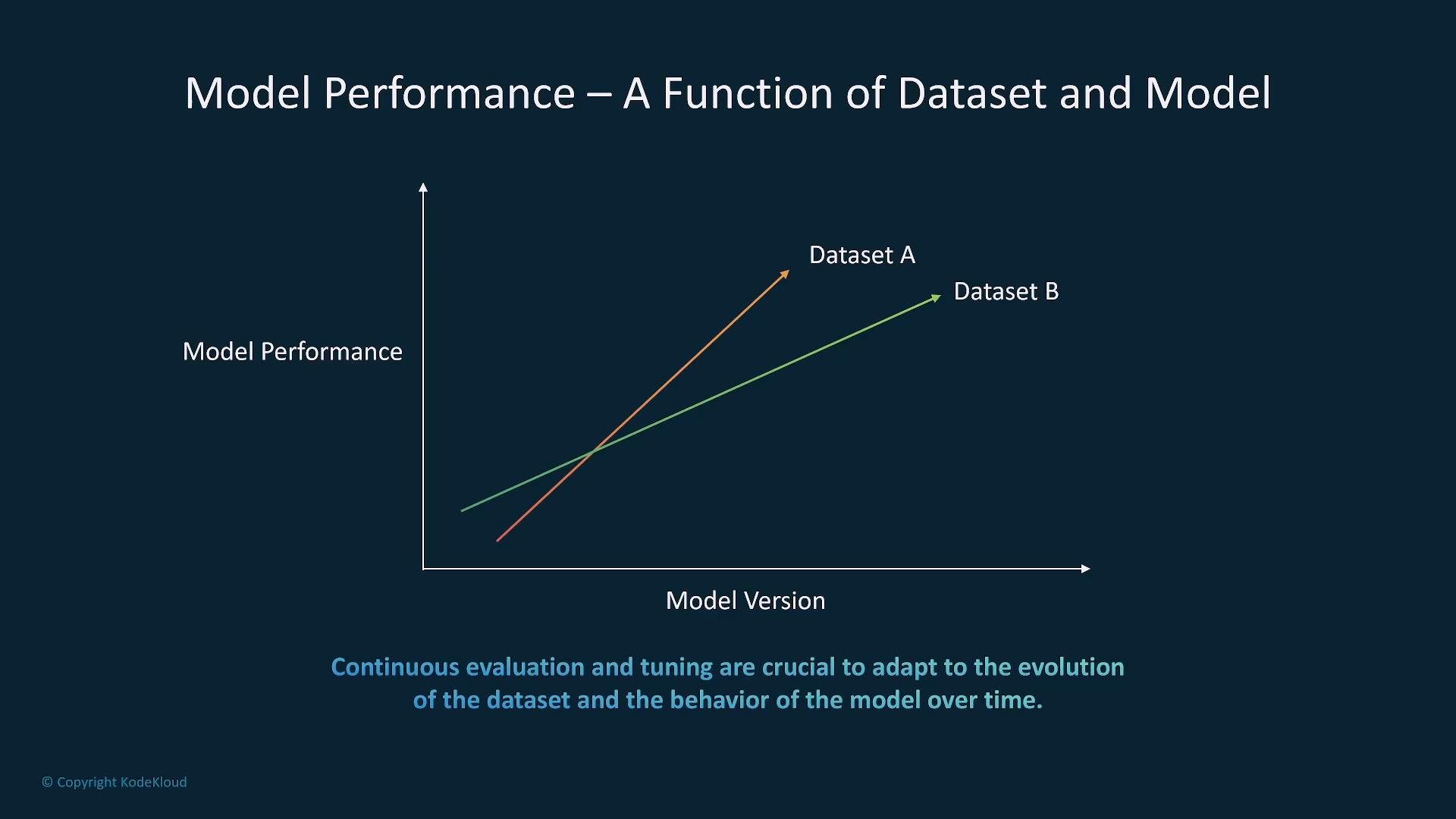
Continuously monitor model drift and dataset changes. Implement automated evaluation pipelines and retraining triggers so model performance remains aligned with evolving data and business goals.
6. Environmental, energy, and resource impacts
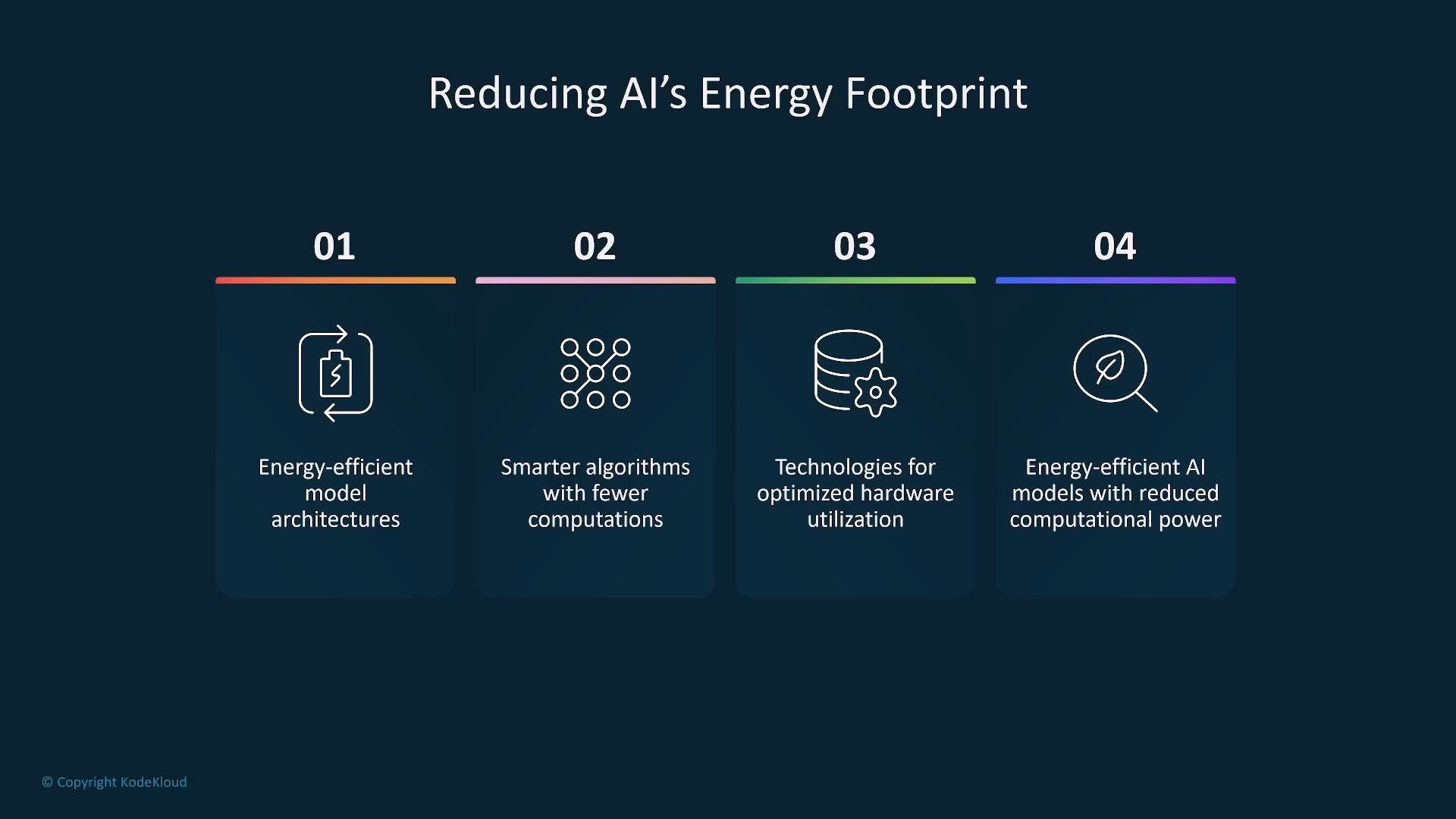
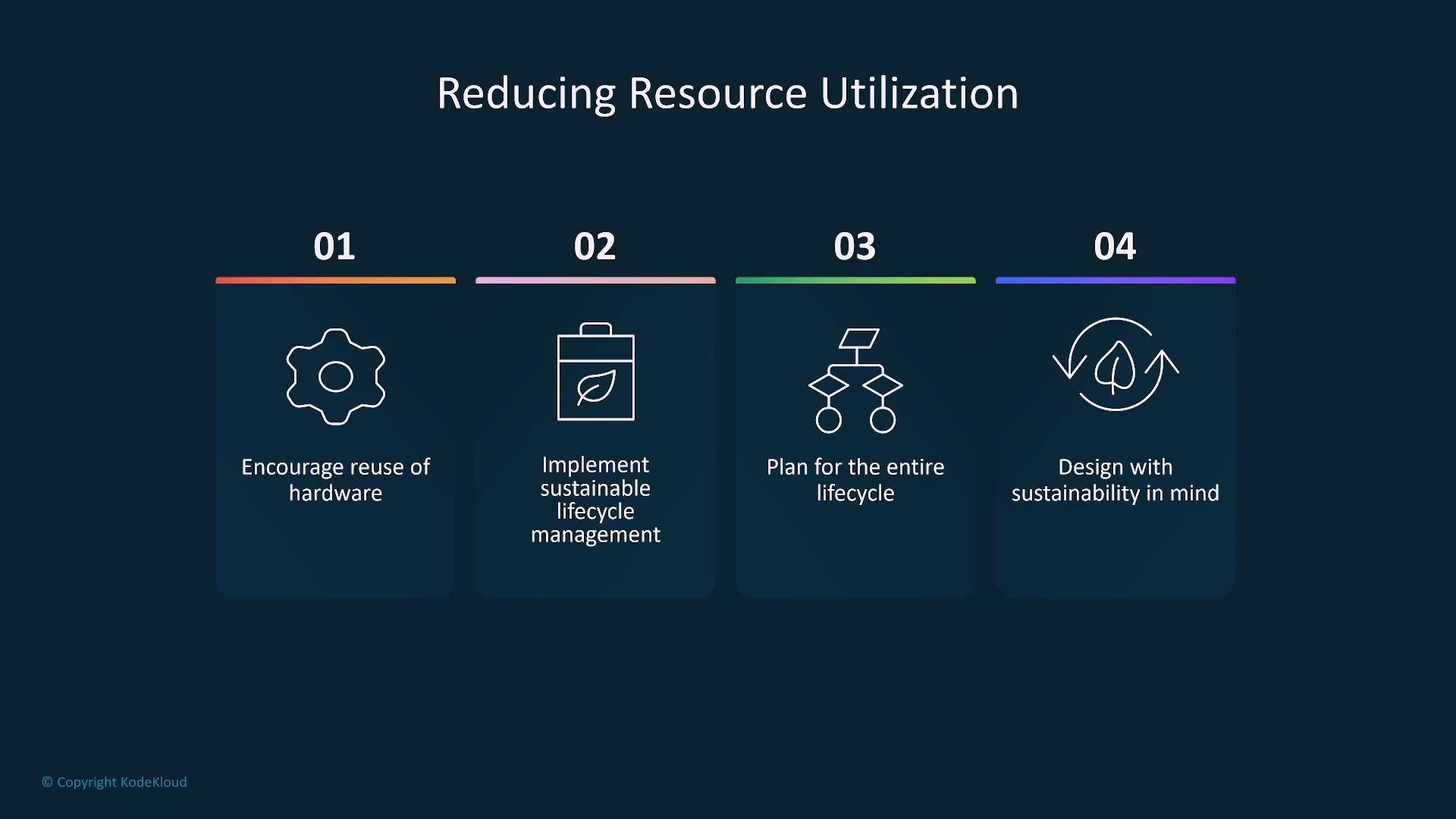
Large models consume more compute and energy. When selecting models, weigh accuracy gains against environmental and operational costs. Strategies to reduce energy footprint include:- Prefer energy-efficient architectures when feasible.
- Use algorithms that require fewer computations.
- Optimize hardware utilization and placement (right-sizing, batching, quantization).
- Select models that hit accuracy targets with less compute.
7. Assess direct and indirect impacts — economic and societal
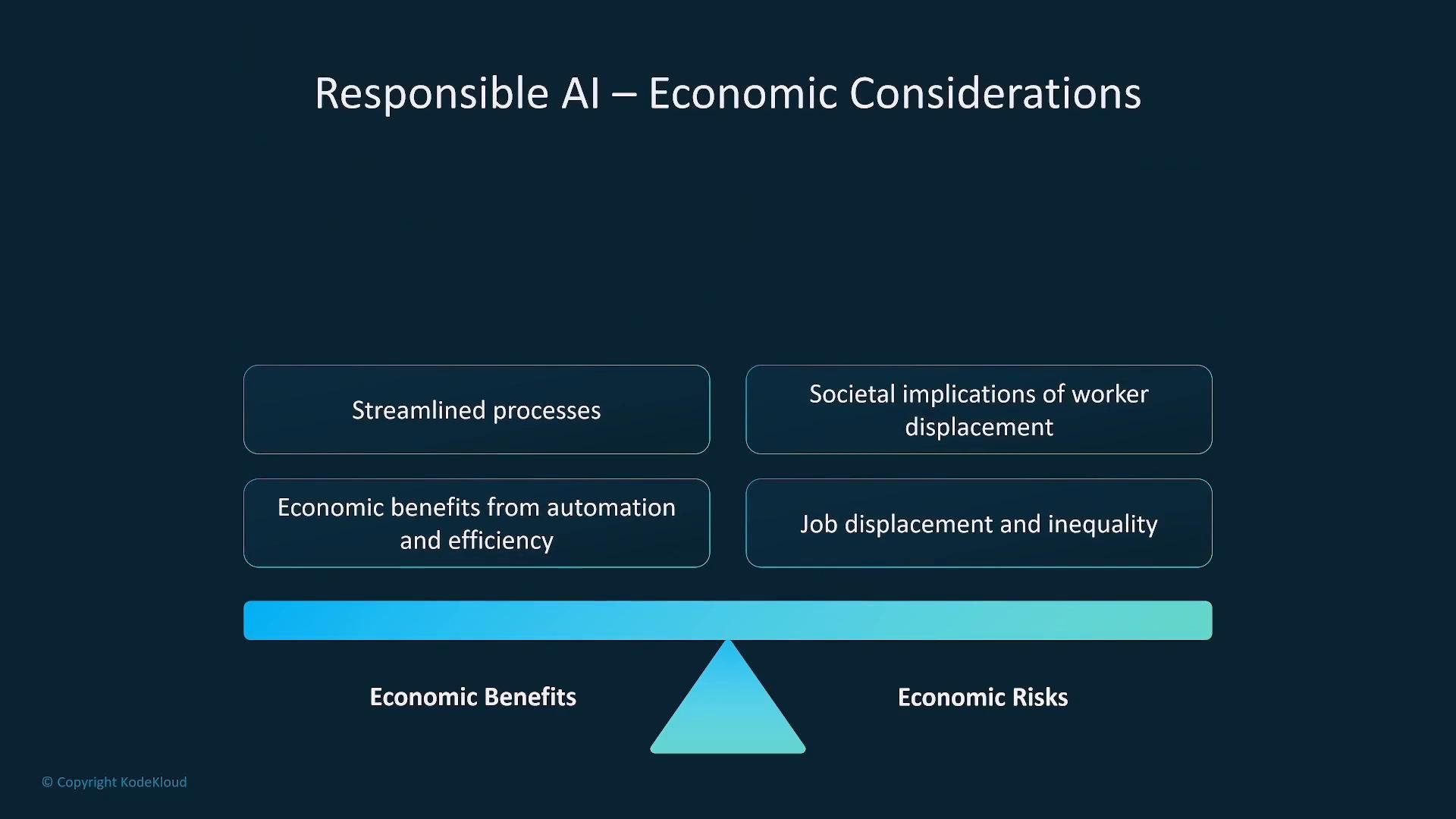
Responsible model selection requires assessment of both direct benefits and indirect societal impacts. Conduct impact assessments and mitigation planning that consider:- Performance benefits and business efficiencies.
- Privacy, security, and explainability trade-offs.
- Potential worker displacement, inequality, and concentration of data power.
8. Moral agency, transparency, and governance
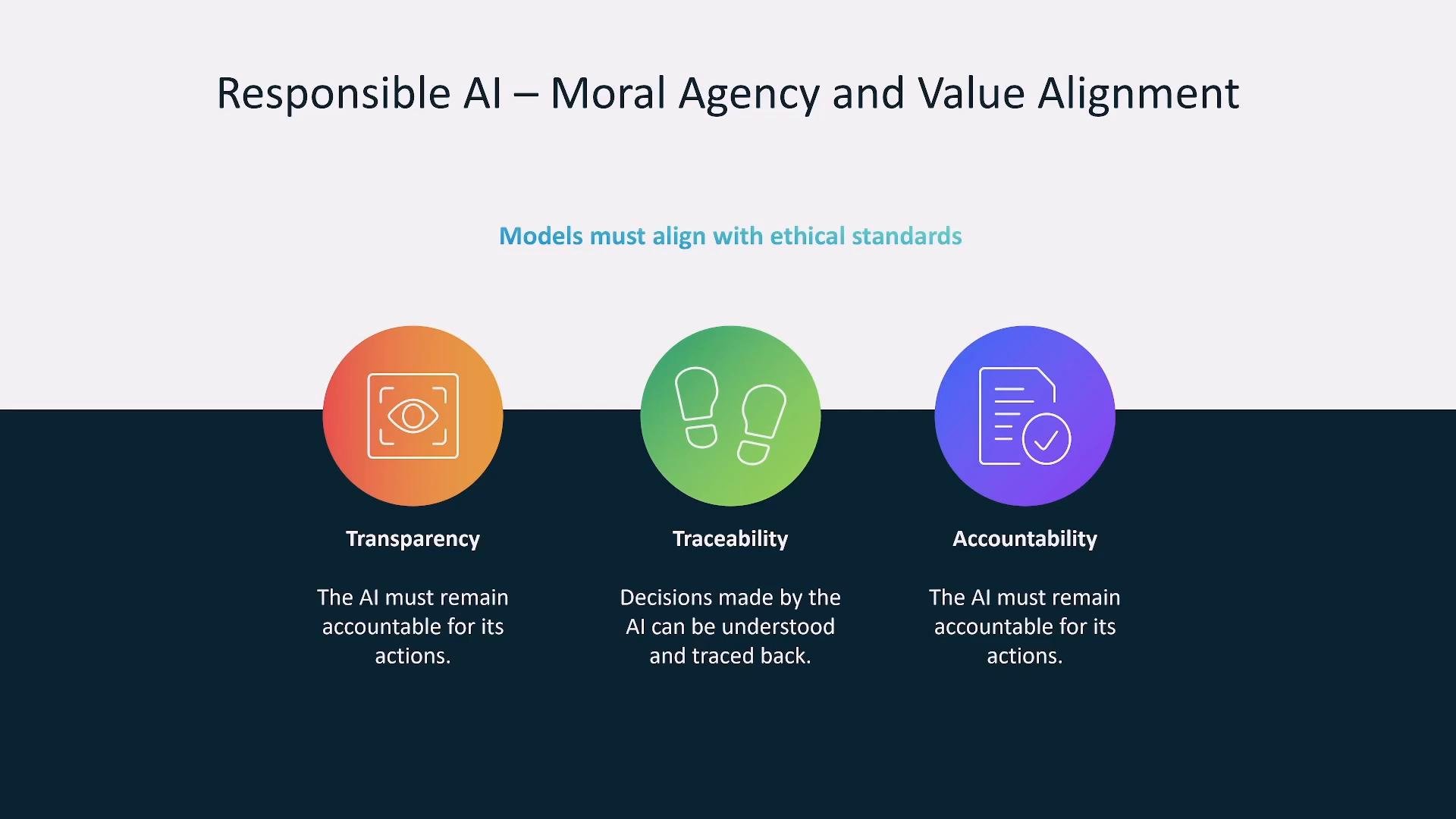
No current AI system possesses human-level moral reasoning. Implement guardrails that support transparency, traceability, and accountability:- Transparency: Document what the model does, its intended use cases, and its limitations.
- Traceability: Log inputs, outputs, and key decisions to enable audits and root-cause analysis.
- Accountability: Assign clear ownership for model behavior, remediation, and change control.
Be careful with third-party models: confirm licensing, data usage restrictions, and compliance obligations before integrating them into products. Failure to do so can create legal and operational risk.
Quick checklist for responsible model selection
- Define the concrete use case and metrics.
- Test candidate models on representative production-like data.
- Evaluate latency, throughput, and cost on target hardware.
- Validate fairness and slice-level performance across demographics.
- Measure energy and resource costs; include hardware lifecycle in TCO.
- Ensure transparency, logging, and clear ownership for model outputs.
- Schedule continuous evaluation and automated retraining mechanisms.
Links and further reading
- NIST AI Risk Management Framework
- Google Responsible AI Practices
- ML Model Evaluation Guidelines (Google Developers)