

- Ensure data is available, reliable (integrity), and secure.
- Data is the foundation of ML/AI — models require trustworthy inputs to perform reliably.
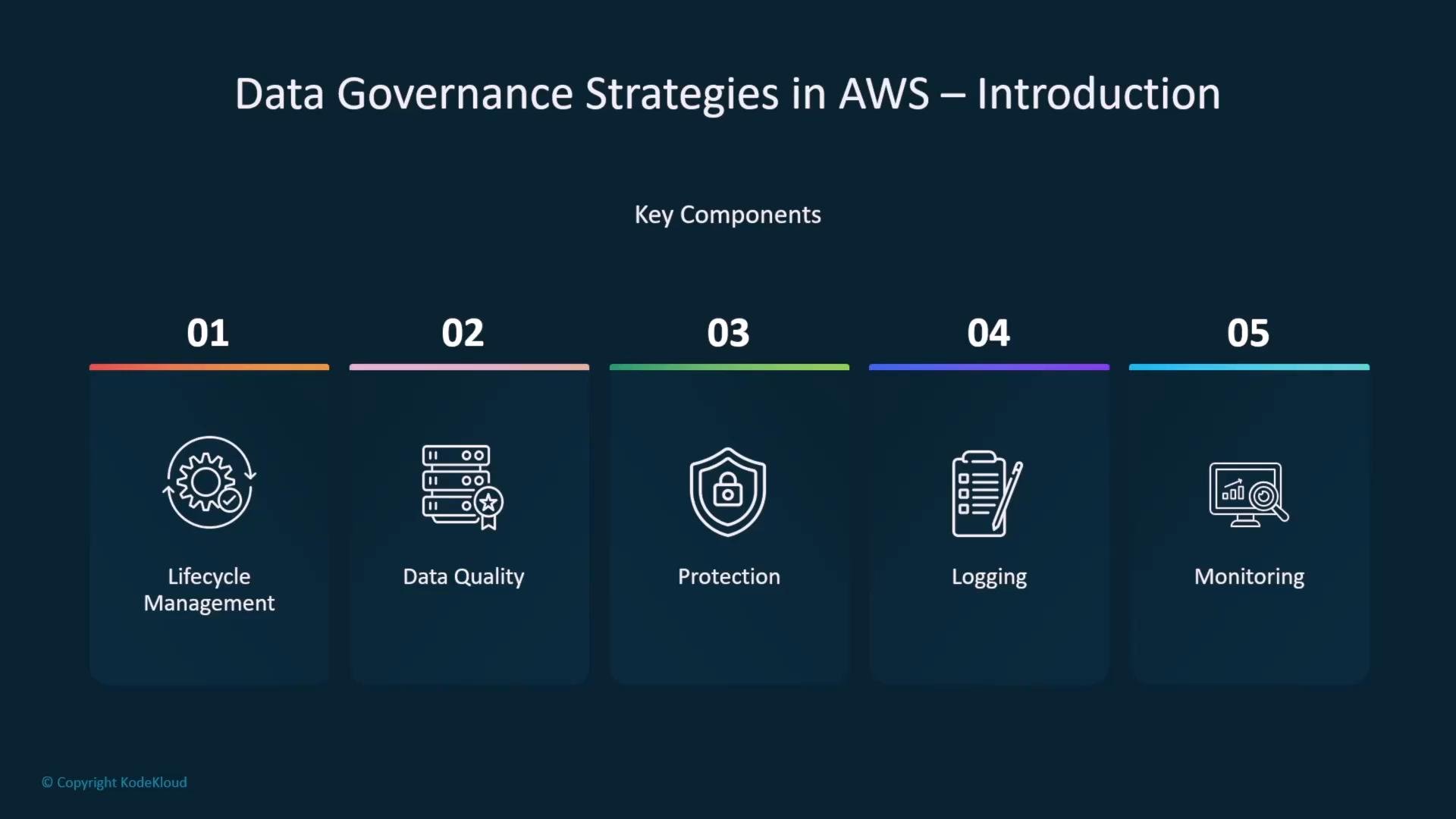
- Effective governance covers lifecycle management, data quality, protection & privacy, logging, and monitoring — all essential to operational and regulatory success.
Lifecycle management
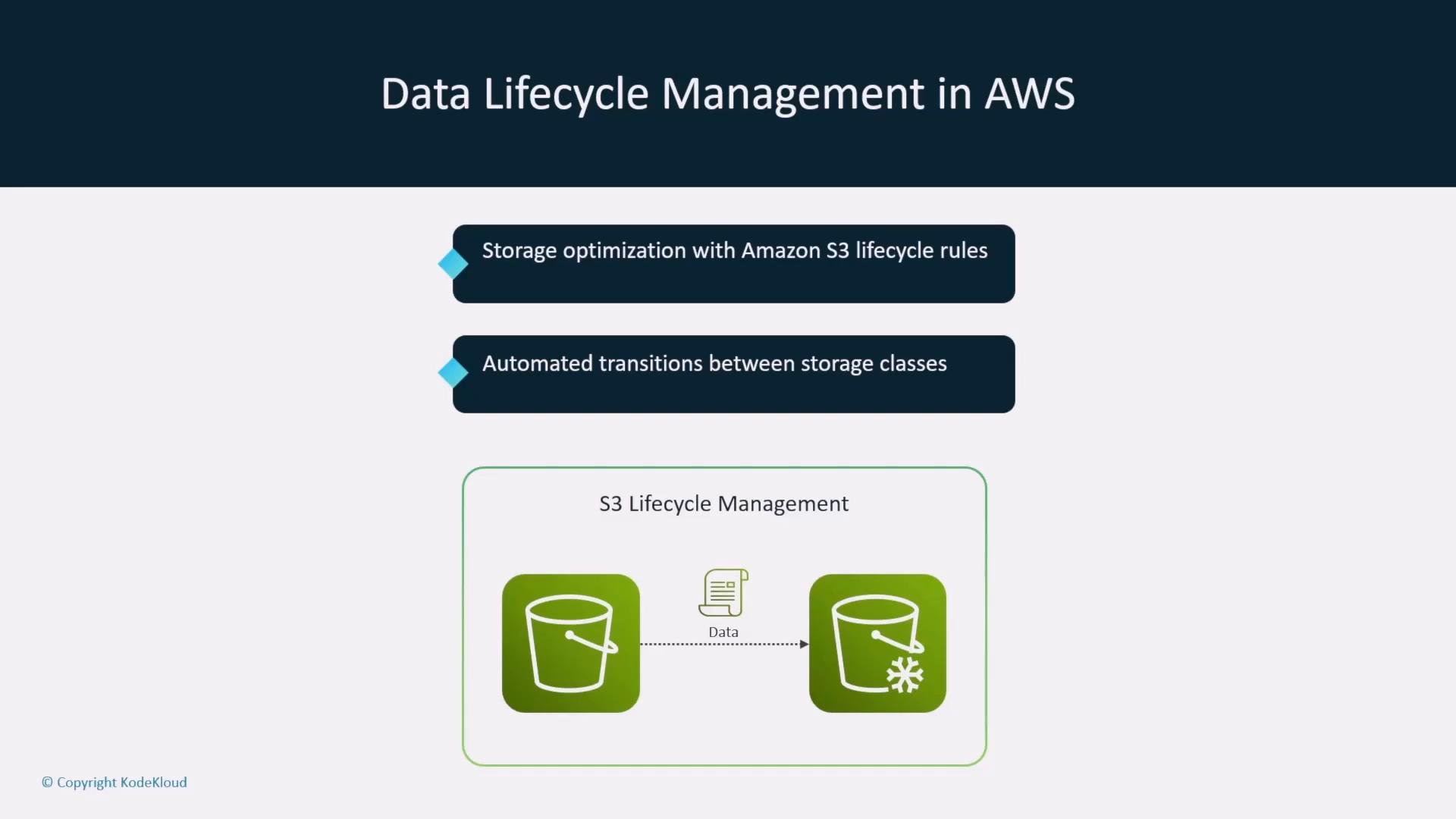
- Purpose: place data in the right storage tier based on access patterns and retention requirements to optimize cost and availability.
- AWS patterns: use Amazon S3 lifecycle rules or S3 Intelligent-Tiering to move objects between storage classes (Standard, Infrequent Access, Glacier, etc.).
- Practical note: archived data (Glacier/Deep Archive) lowers cost but increases retrieval time and expense. Choose archival policies aligned with business SLAs and compliance.
Logging (Auditability & Forensics)
- Purpose: create an immutable record of access and activity for troubleshooting, auditing, compliance, and post-incident analysis.
- Key AWS services:
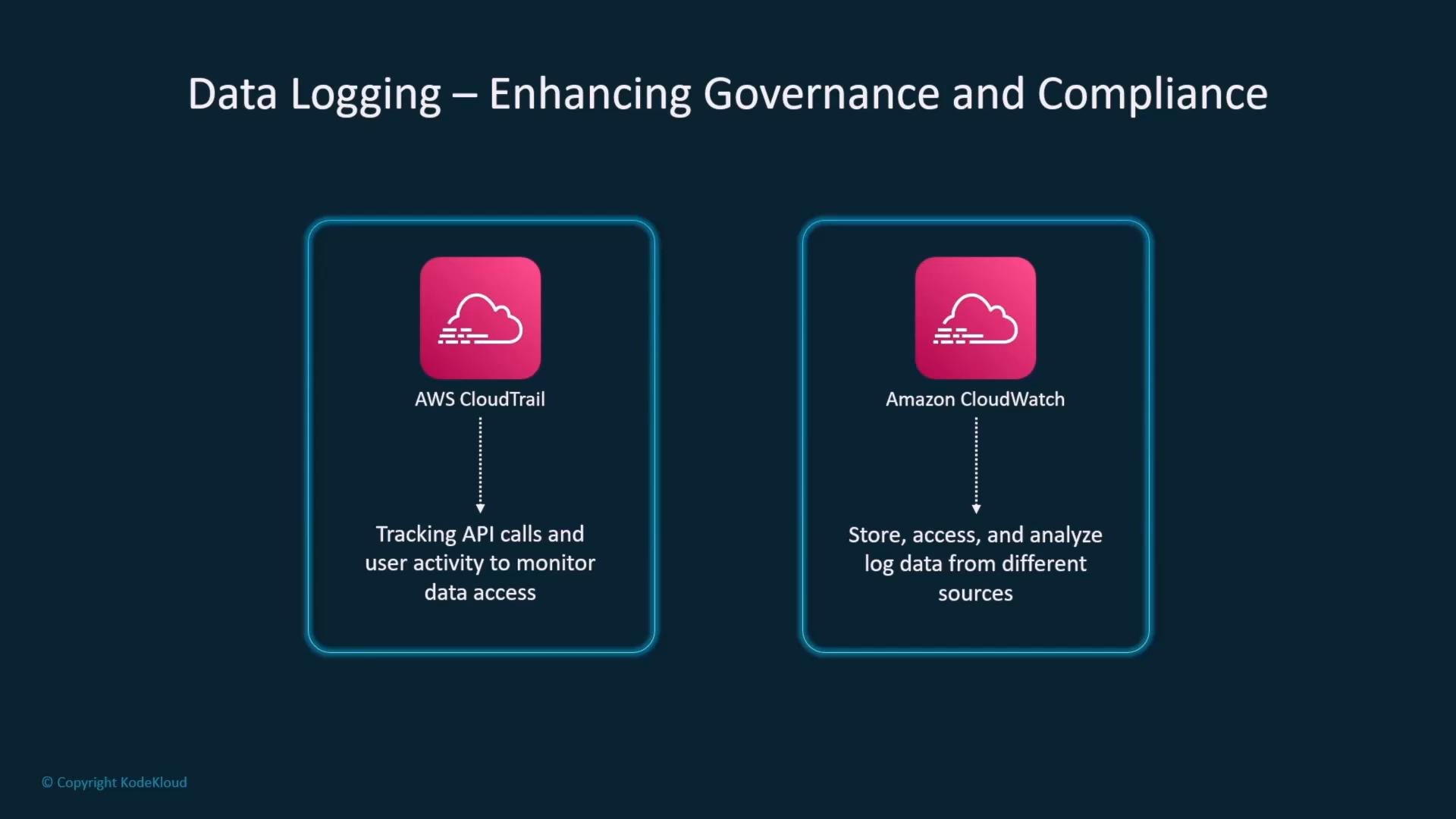
- AWS CloudTrail — records API calls and user activity.
- Amazon CloudWatch — collects and stores metrics, logs, and enables alerting and dashboards.
- Applications must emit structured logs (events, metrics) and forward them to your logging destination (CloudWatch Logs, S3, or third-party observability tools).
Always ensure your applications explicitly write structured logs, metrics, and events to your chosen logging system so they can be collected, retained, and analyzed.
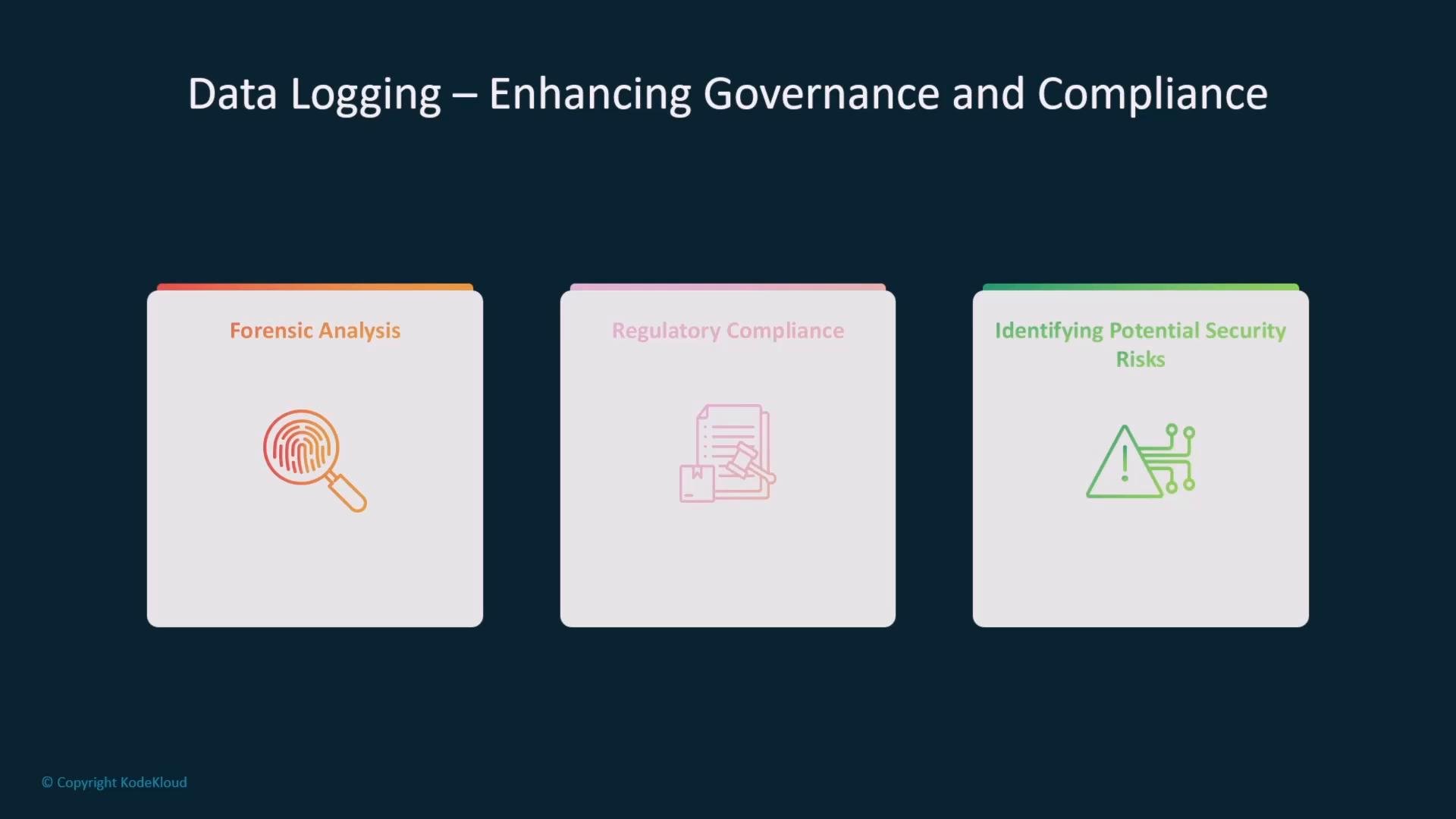
- Use logs to detect:
- Anomalies (sudden access spikes, unusual IPs).
- Repeated failed authentication or authorization attempts.
- Unauthorized modifications or unexpected data access.
- Combine automated detection (rules, signatures) and AI-driven tools to surface suspicious patterns rapidly.
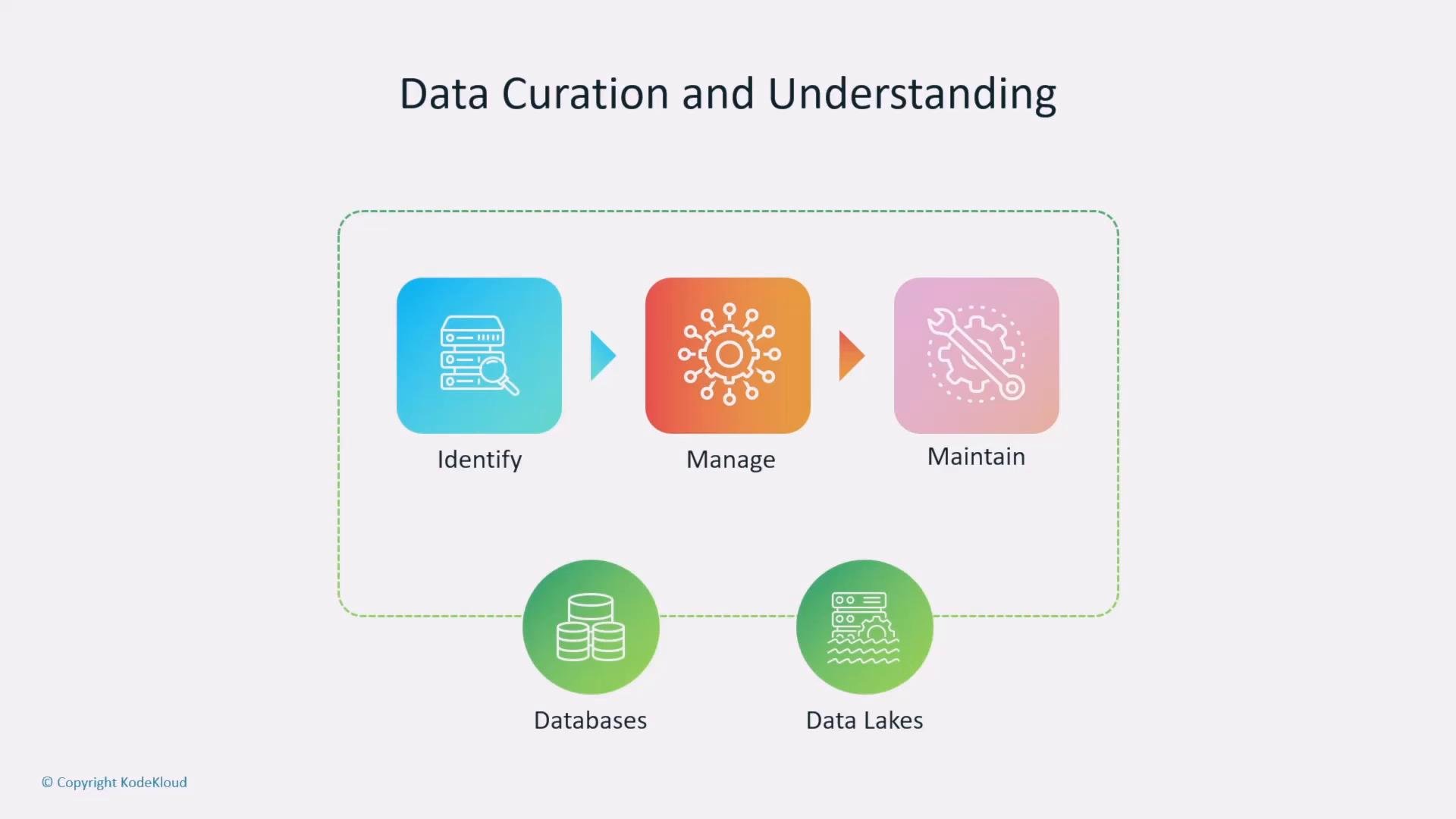
Data curation and cataloging
- Purpose: identify, tag, and maintain datasets across repositories so they are discoverable, trusted, and usable.
- Typical AWS components:
- S3-backed data lakes (most lake workflows are S3-based).
- AWS Glue Data Catalog for metadata and schema management.
- AWS Glue / DataBrew for profiling, transformations, and data preparation.
- Amazon Athena for interactive queries over S3 objects (logs, event data, parquet/CSV).
- Example workflow: export CloudTrail logs to S3, query with Athena for ad-hoc analysis, or profile/clean with DataBrew.
Data protection and privacy
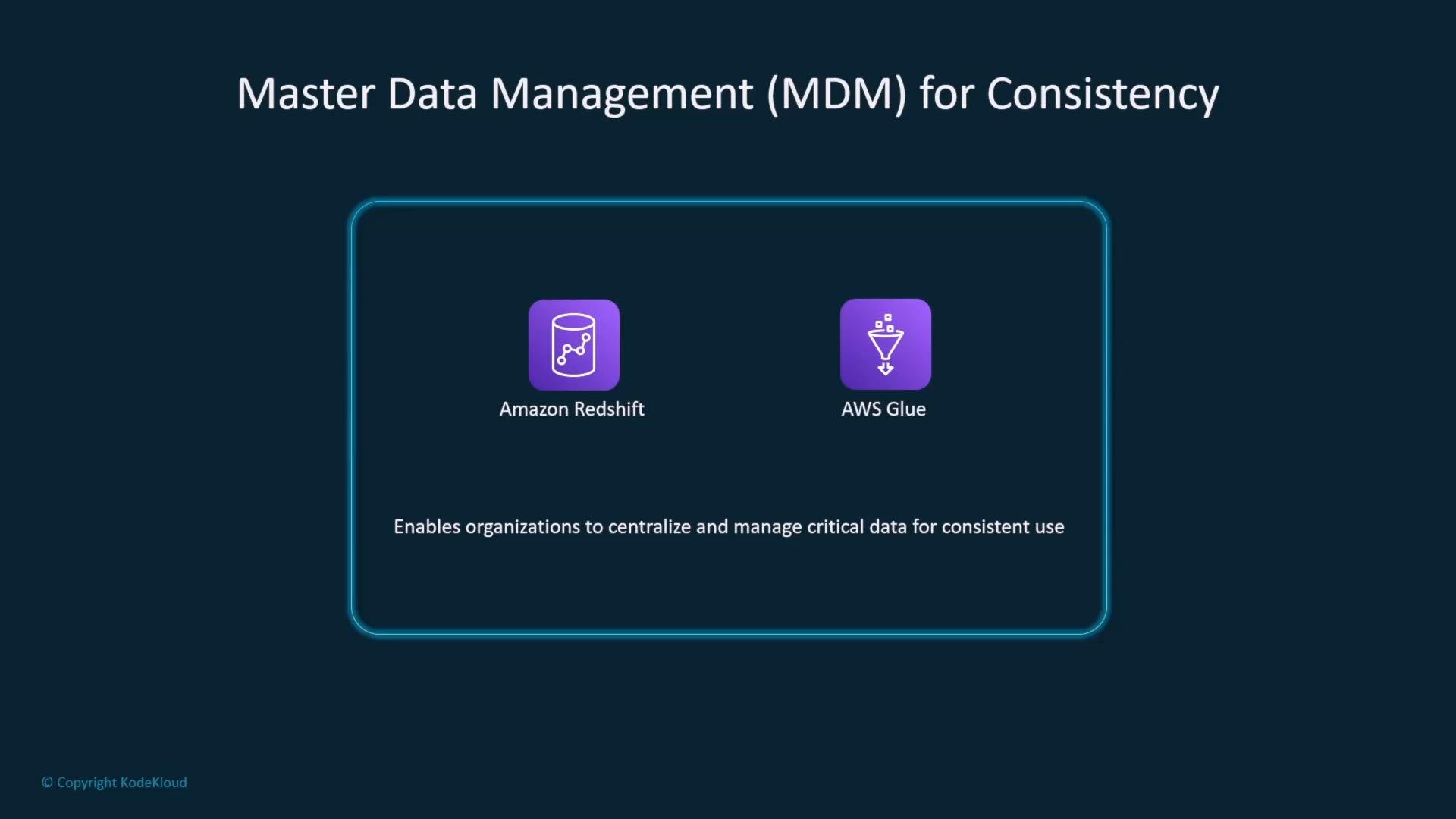
- Focus: balance accessibility with confidentiality and compliance.
- Controls and tools:
- AWS Lake Formation — fine-grained access controls for data lakes (table-, column-, and row-level in supported setups).
- IAM with least-privilege policies, role-based access, and temporary credentials (STS).
- Database-level controls (RDS/PostgreSQL permissions) for transactional systems.
- Best practices: encrypt data at rest and in transit, rotate keys, apply attribute-based access where possible, and log all access for audit.
Design access controls and retention policies with compliance requirements in mind (e.g., GDPR, HIPAA). Misconfigured access or retention workflows can lead to data exposure or non-compliance.
Data quality management
- Purpose: ensure data is accurate, complete, and consistent so ML models receive reliable inputs.
- Tools & tactics:
- Data profiling and validation (detect missing values, skew, outliers).
- AWS Glue DataBrew — automated profiling and remediation for common issues.
- Amazon Macie — discovery and classification of sensitive data (PII) in S3.
- Automate checks in pipelines and alert/remediate before data reaches training or production inference.
Master data management (MDM) and lineage
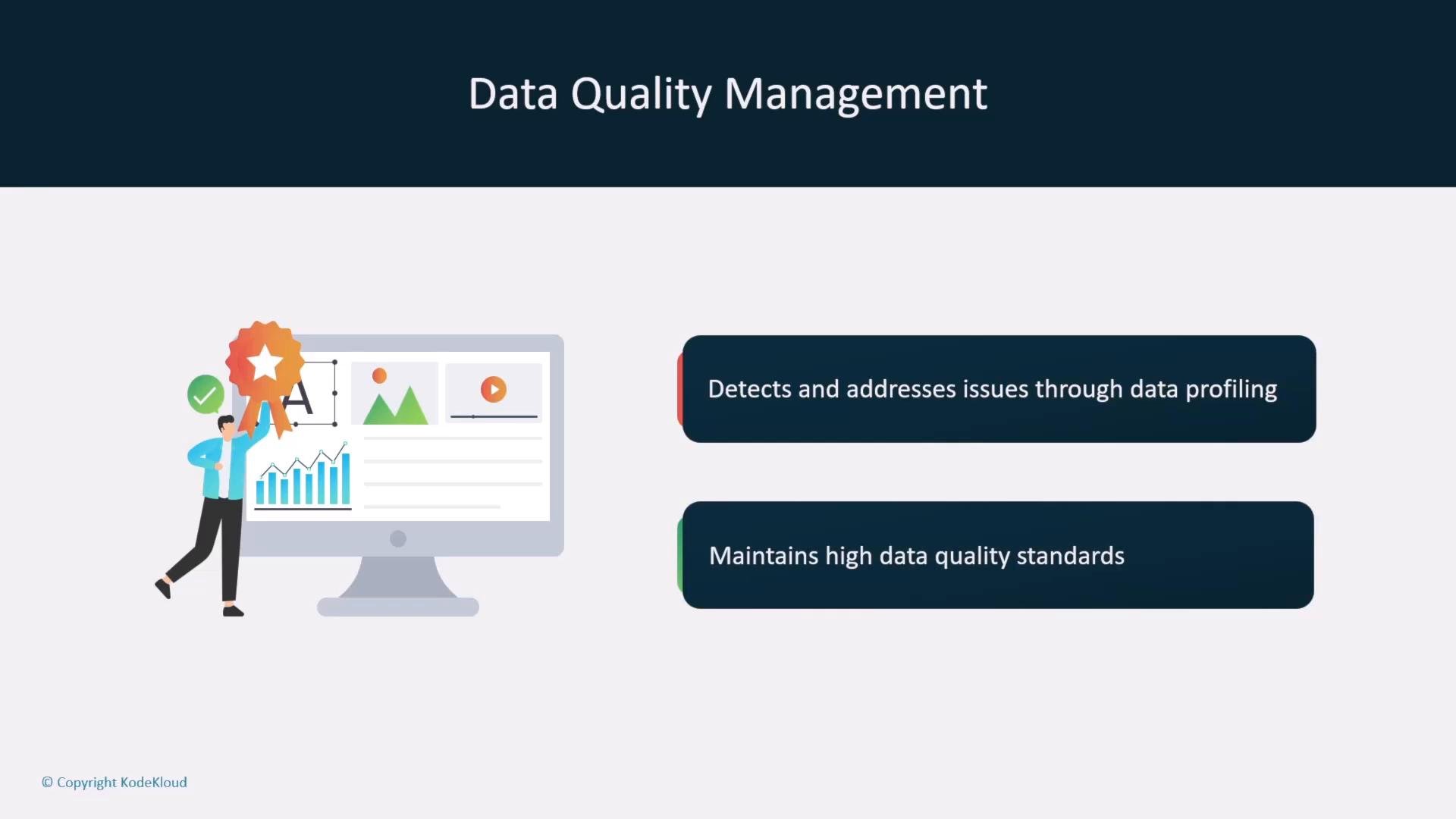
- Purpose: establish a single source of truth and traceability so teams can trust data provenance and transformations.
- Common pattern:
- Centralize authoritative records in a warehouse (Amazon Redshift) or an S3-backed data lake managed with Lake Formation.
- Use ETL/ELT tools (AWS Glue jobs, Redshift pipelines) to populate downstream systems and maintain lineage.
- Traceability: capture origin, transformation steps, and authors. Glue Data Catalog provides metadata and lineage for Glue jobs; SageMaker includes lineage tracking for ML datasets and artifacts created in SageMaker.
Data access controls, residency, and retention
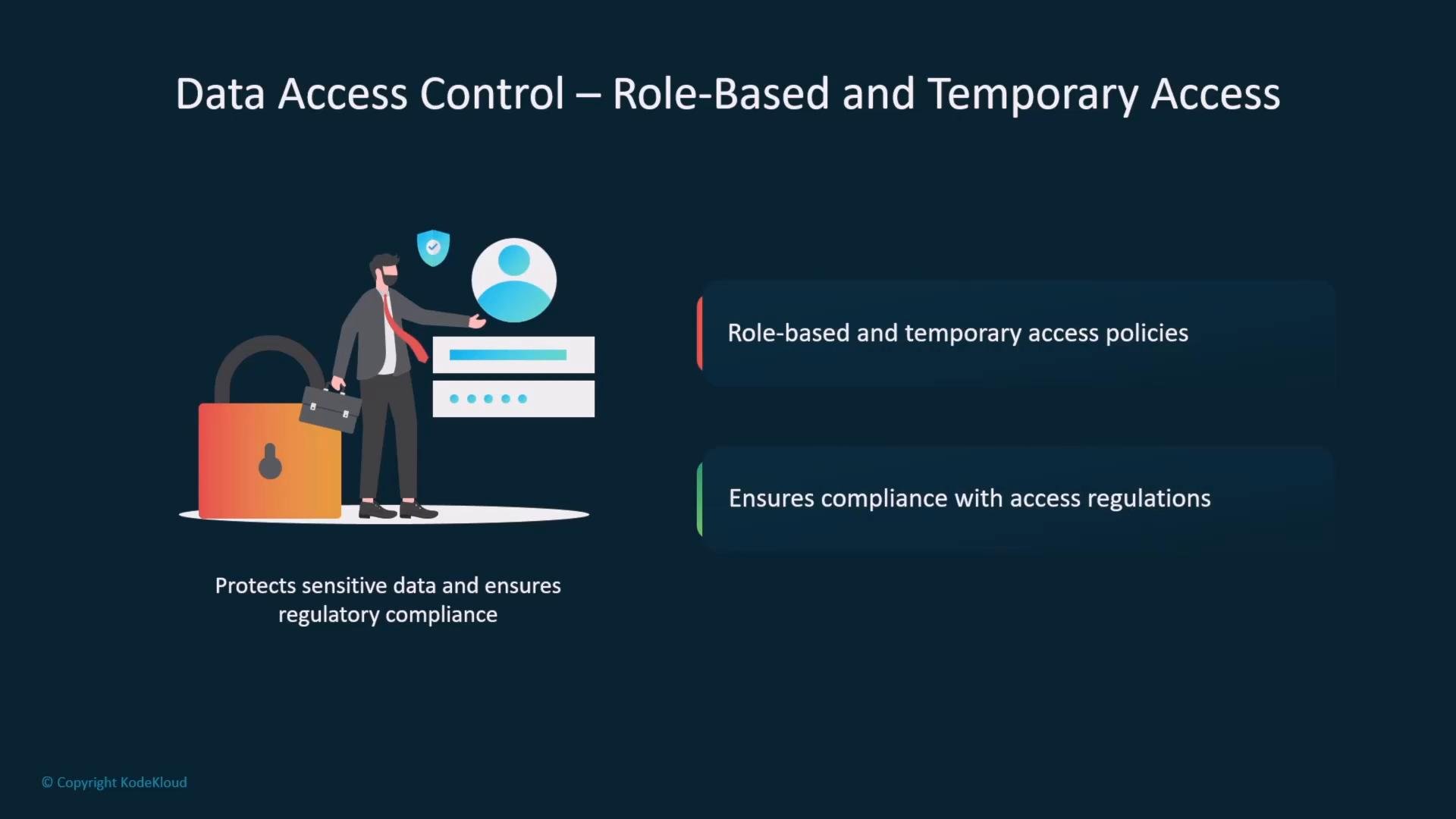
- Controls:
- Use role-based access, temporary credentials (STS), and least-privilege IAM policies.
- Implement attribute- or policy-based restrictions for sensitive datasets.
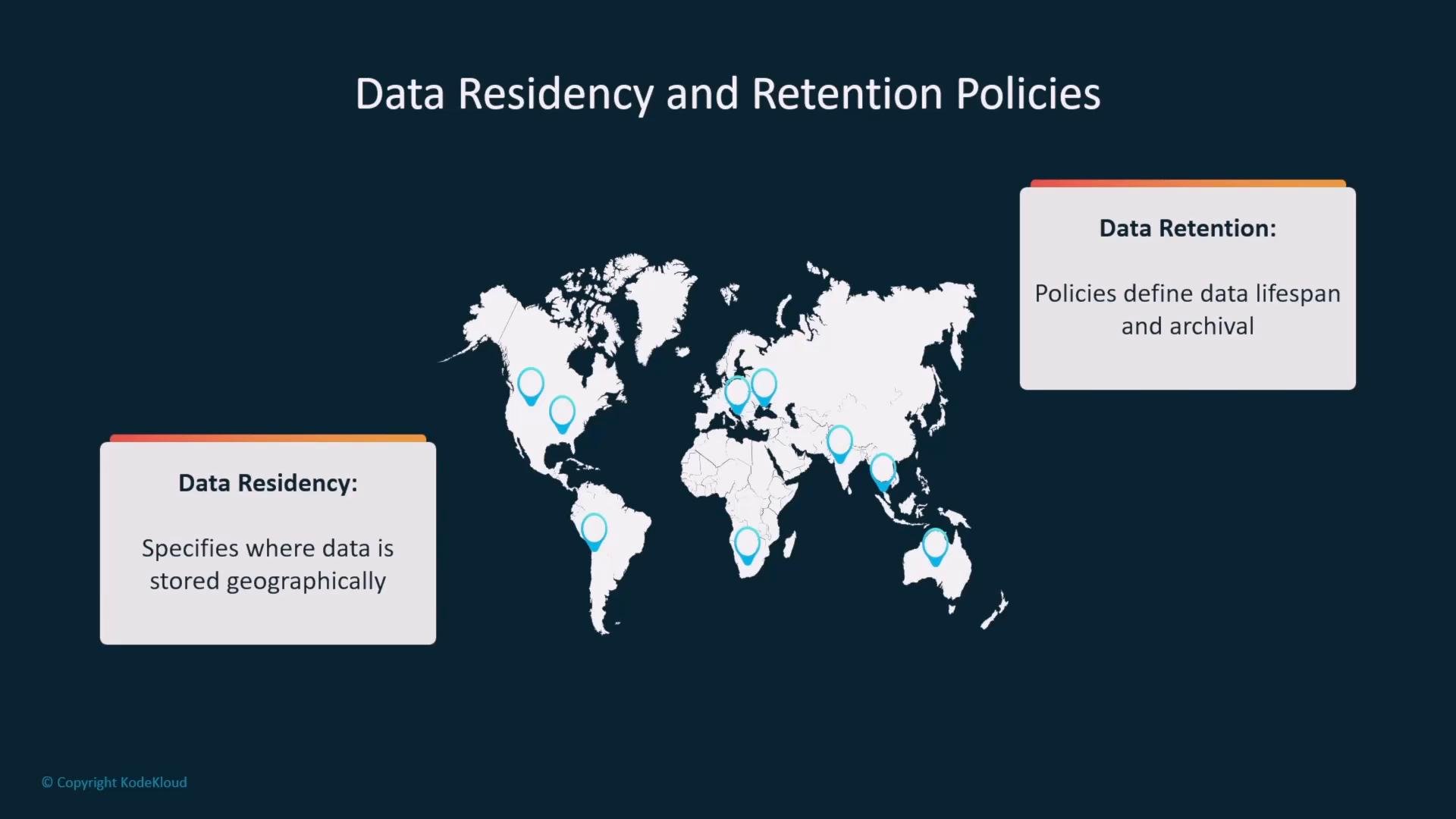
- Residency & retention:
- Determine geographic storage constraints and retention windows based on laws and business needs (e.g., GDPR).
- Ensure retention and deletion workflows are auditable, automatic where possible, and documented.
Monitoring and observability
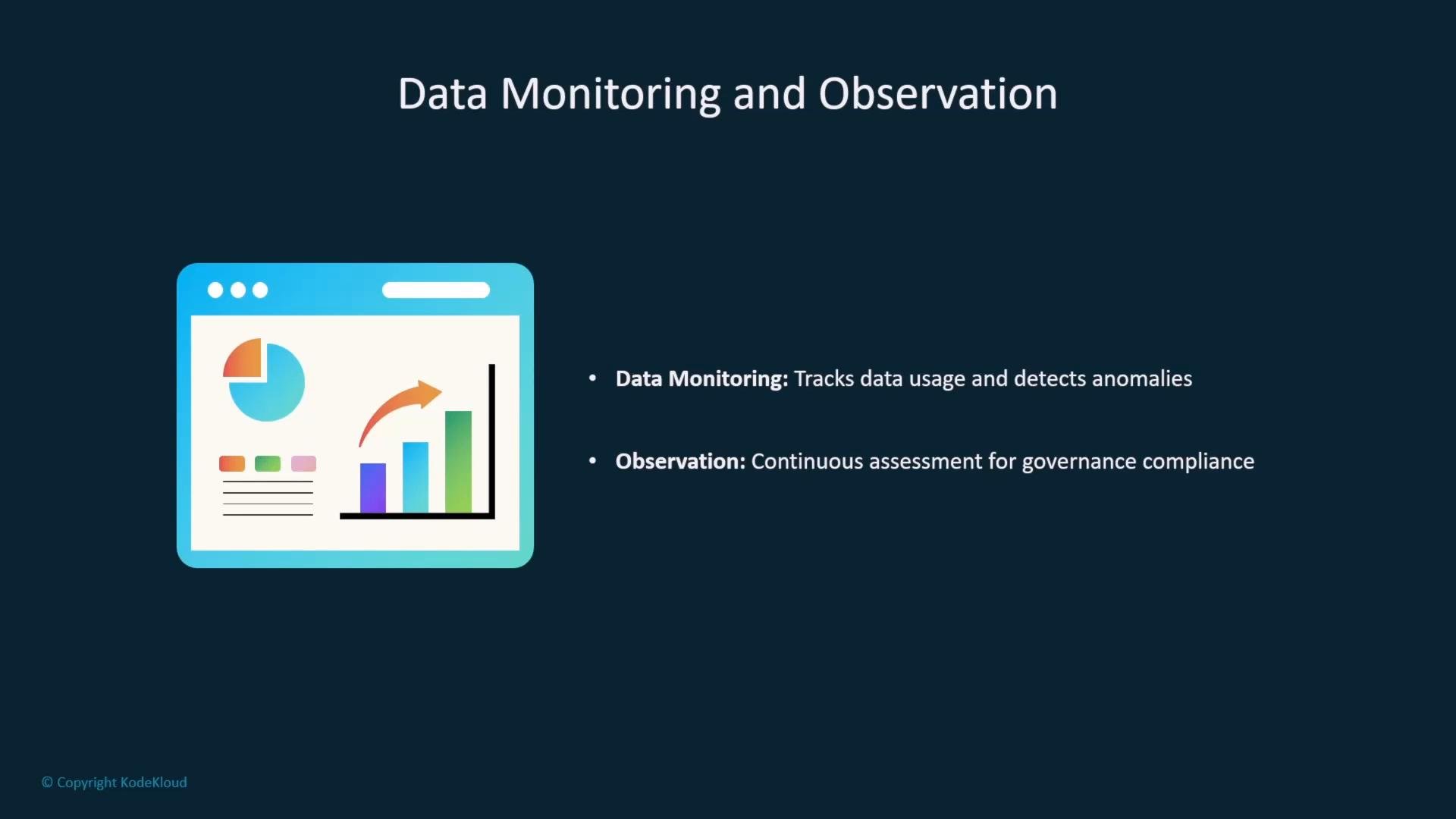
- Purpose: continuously measure governance posture, detect drift, and surface pipeline issues that affect model reliability.
- Key observability elements:
- CloudWatch metrics & dashboards for system-level trends and alerts.
- CloudTrail for API-level audit trails and auditing.
- Lake Formation/Audit logs to review data lake access and permission changes.
- Monitoring use cases: detect data distribution drift, pipeline failures, unusual access patterns, and performance regressions.
At-a-glance: Governance components and AWS services
Summary and exam tips
- The five pillars — lifecycle management, data quality, protection/privacy, logging, and monitoring — provide a practical governance framework for AI systems.
- Match AWS services to your architecture: S3 lifecycle for storage cost optimization, CloudTrail/CloudWatch for observability, Glue/DataBrew for curation, Lake Formation/Macie for protection, and SageMaker/Glue for lineage.
- For the exam and production: emphasize availability, integrity, and security, plus operational processes for logging, lineage, access control, and automated quality checks.
- AWS Documentation
- AWS services: S3 lifecycle, CloudTrail, CloudWatch, AWS Glue, Lake Formation, DataBrew, Amazon Macie, Amazon Redshift, SageMaker
- AWS Certified AI Practitioner — KodeKloud course