

Operational questions to drive evaluation
Ask these early so your experiments measure the right properties:- How fast must the model produce outputs (latency / response time)?
- What will inference cost at your expected scale?
- Can you accept lower model quality in exchange for speed, lower compute, or smaller storage footprint?
- How will the model behave under realistic production workloads (throughput, cold starts, concurrency)?
Common optimization levers
Practical ways to improve operational behavior and reduce costs:- Reduce model size — smaller models load faster and use less memory, at the risk of lower accuracy.
- Simplify prompts and system instructions to cut token usage and processing cost.
- Use retrieval-augmented generation (RAG), embeddings, or fine-tuning based on the use case — each has different compute and storage trade-offs.
- Prefer parameter-efficient fine-tuning (e.g., LoRA) over full model retraining when possible.
- Tune inference parameters, for example:
max_tokens— limit output length to reduce compute and latencytemperature— control randomnesstop_k,top_p— adjust sampling for diversity vs determinism
Generative models are inherently nondeterministic. Automated point-estimate metrics (accuracy, RMSE) often do not capture quality for free-form text — design your evaluation strategy around task-specific and semantic measures.
Evaluation metrics for text generation and language tasks
- N-gram overlap metrics:
- ROUGE — commonly used for summarization; emphasizes recall and measures n-gram and longest common subsequence overlap (ROUGE-N, ROUGE-L).
- BLEU — designed for machine translation; calculates modified n-gram precision with a brevity penalty.
- Embedding / semantic similarity:
- BERTScore — uses contextual token embeddings (e.g., BERT) and token-level similarity (cosine) to capture semantic overlap beyond surface forms.
- Task-specific metrics:
- Accuracy, precision, recall, F1, or exact match for classification, QA, or structured outputs.
LLM benchmarks and leaderboards
To compare models across capabilities, use standardized benchmark suites and leaderboards.
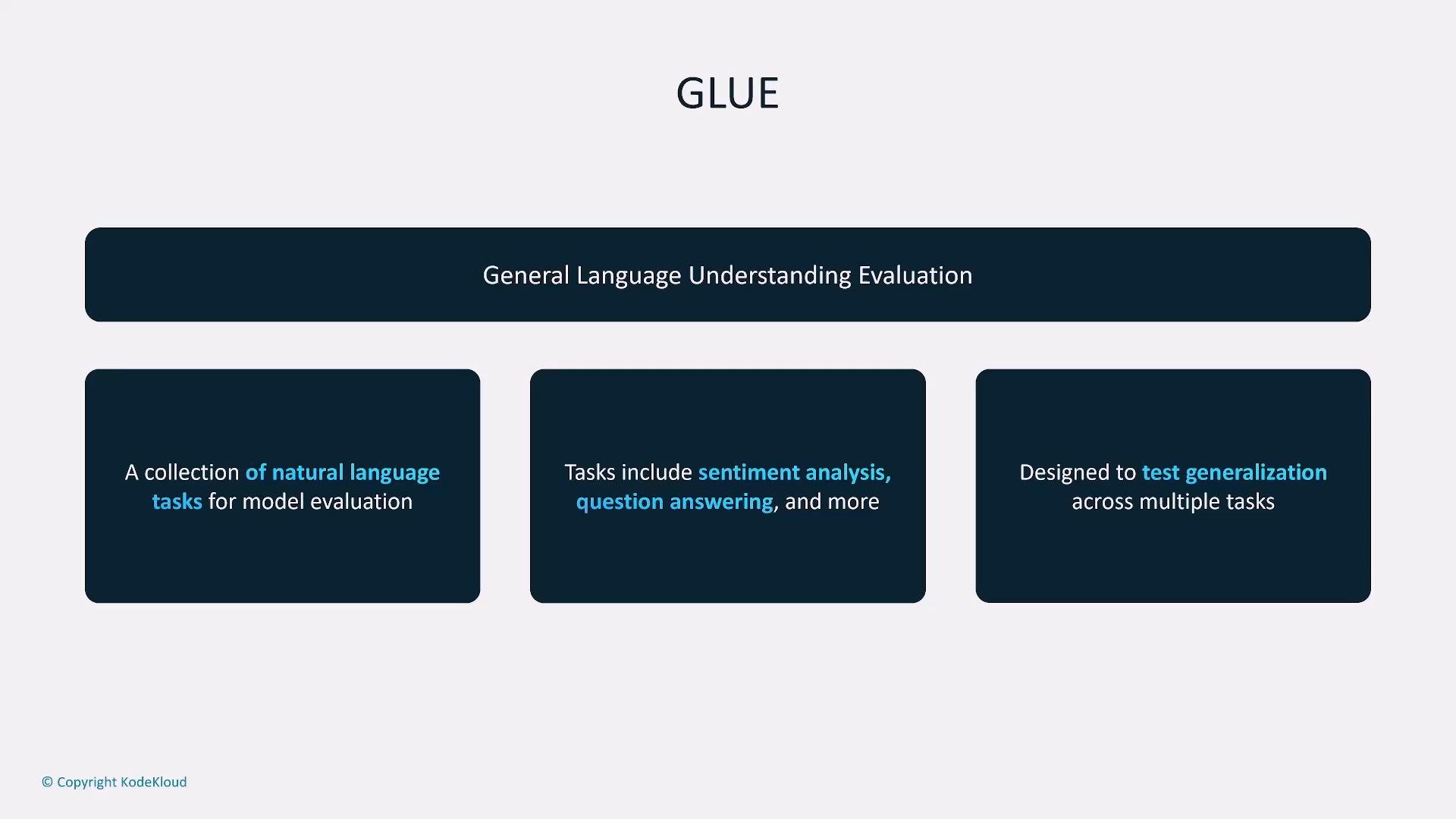
- GLUE (General Language Understanding Evaluation) — a suite of natural language understanding tasks (sentiment analysis, entailment, paraphrase detection) for testing generalization.
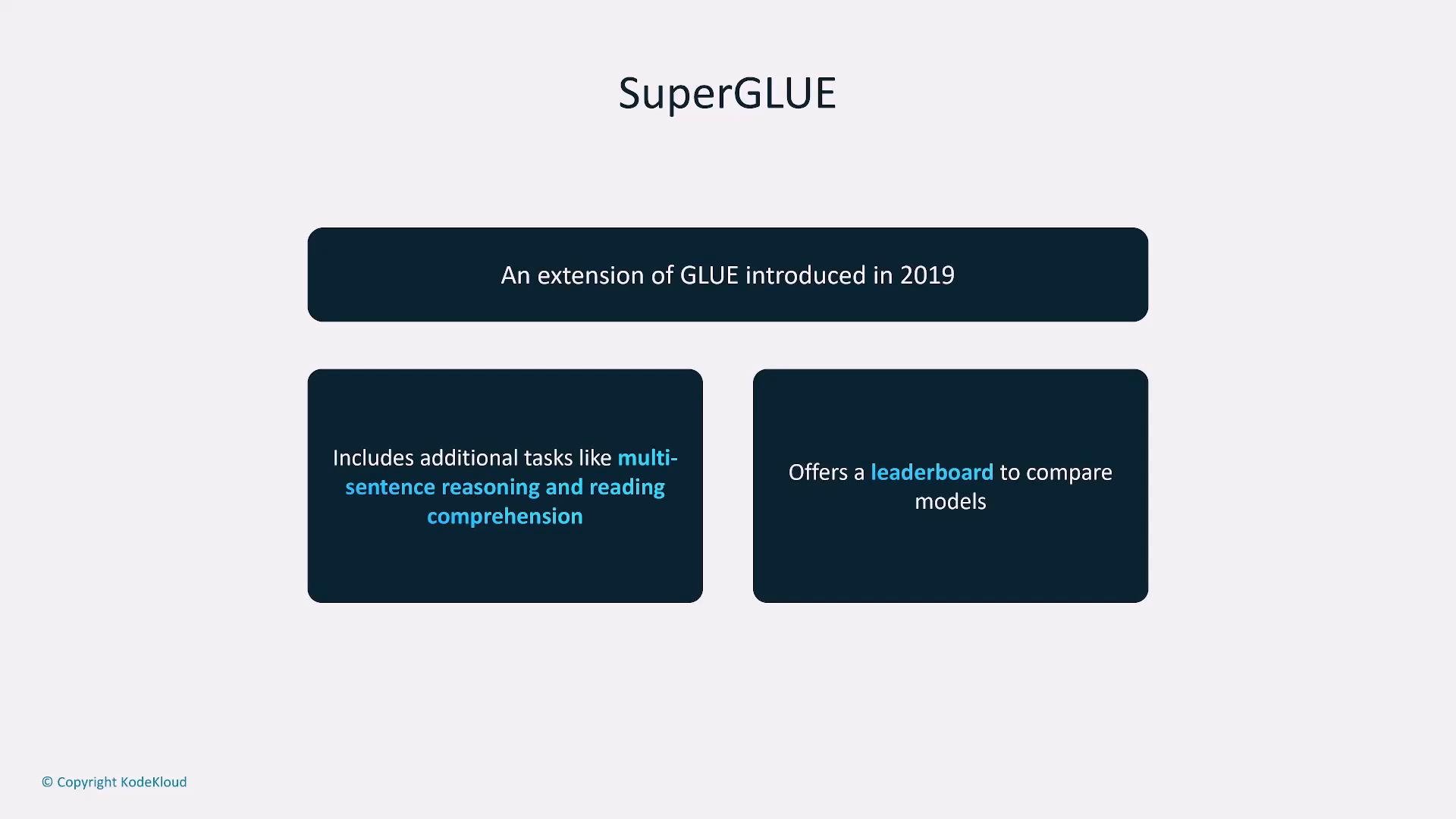
- SuperGLUE — a harder successor to GLUE with multi-sentence reasoning and comprehension tasks; used when you need more challenging NLU evaluation.
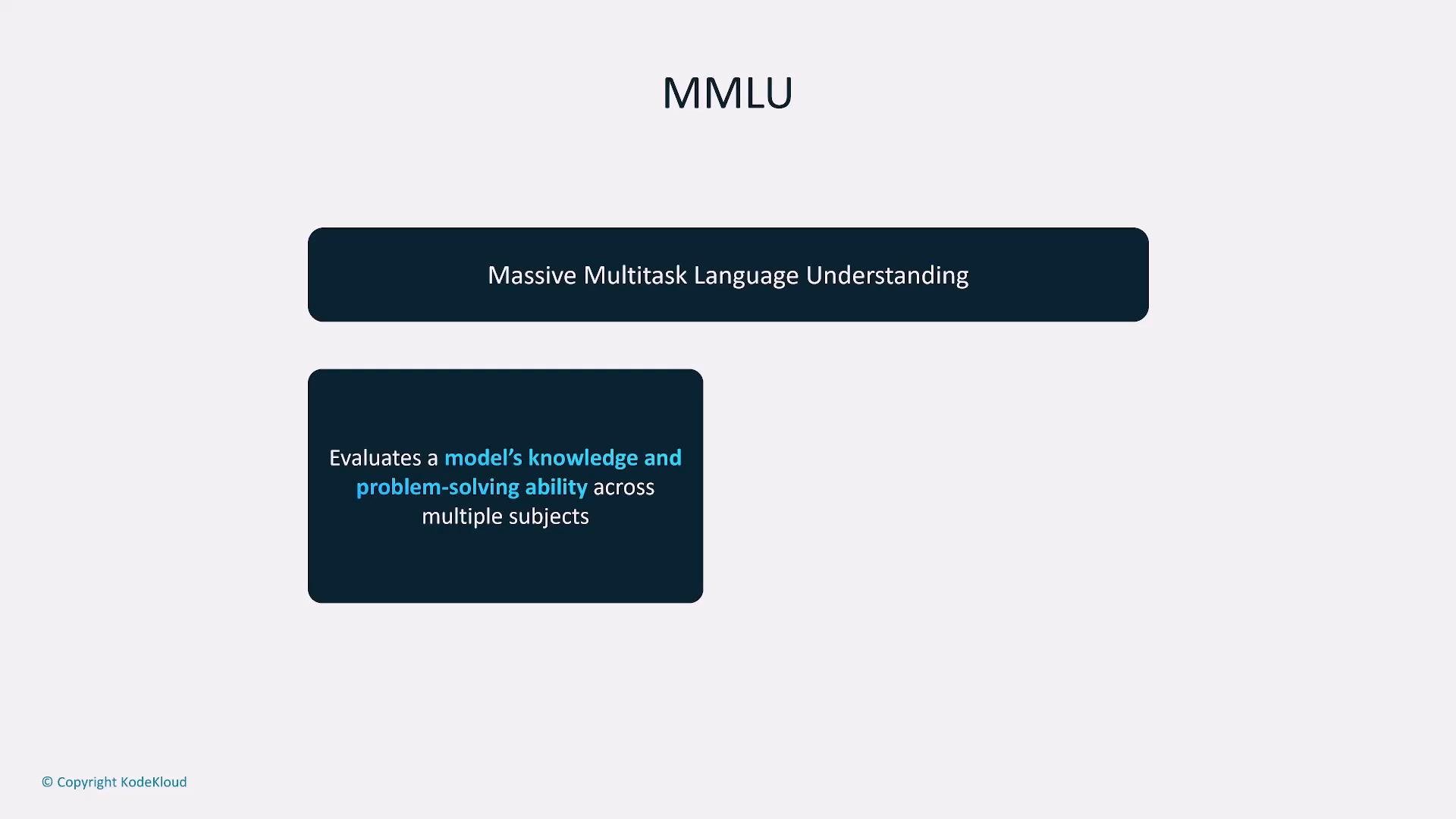
- MMLU (Massive Multitask Language Understanding) — evaluates domain knowledge across many academic subjects (math, law, biology, CS, history).
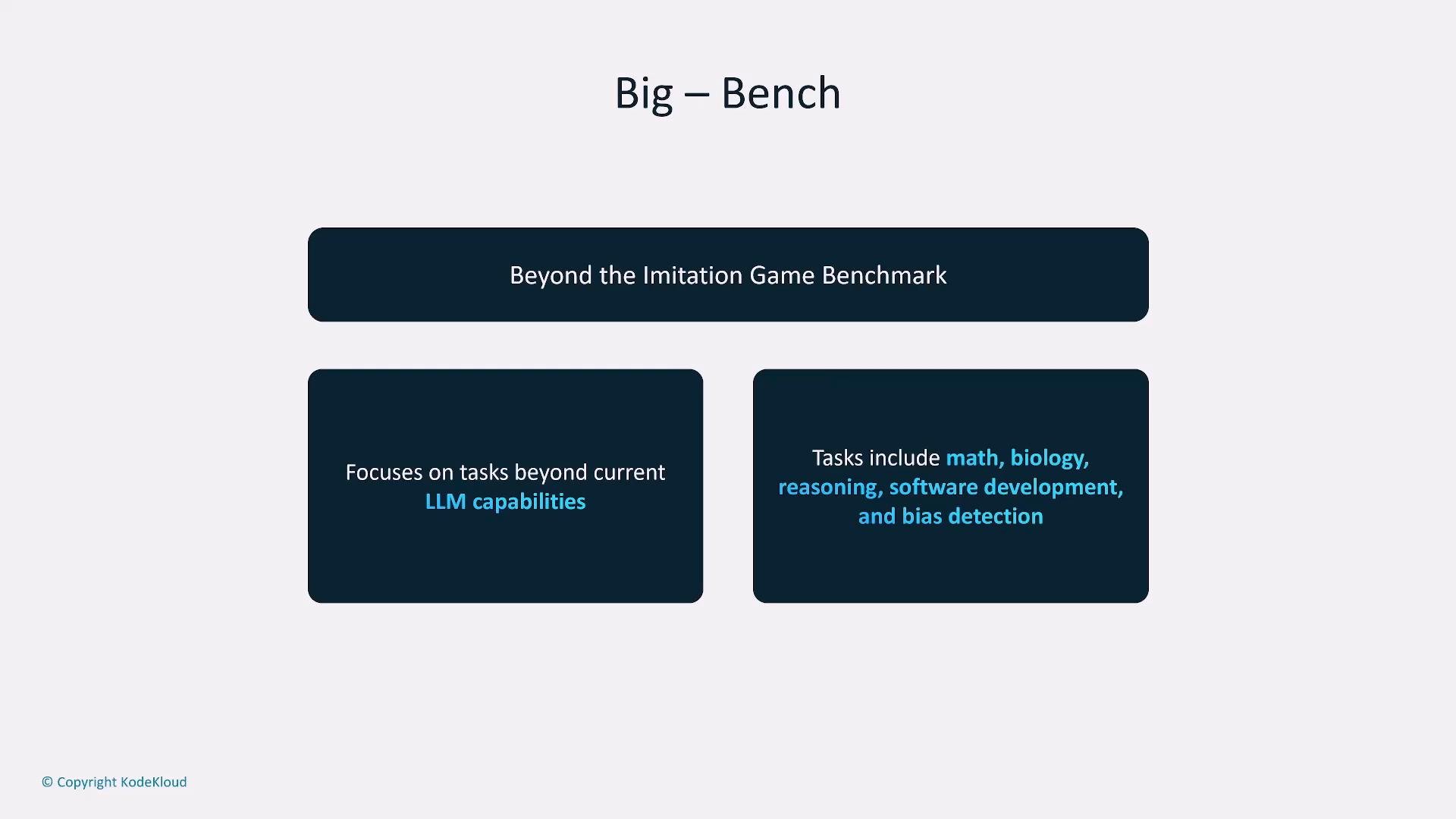
- BIG-bench (Beyond the Imitation Game) — a diverse suite of challenging tasks designed to probe higher-level reasoning, math, coding, and bias.
- HELM (Holistic Evaluation of Language Models) — aggregates many metrics (task performance, robustness, fairness, efficiency) to provide a more complete evaluation.
Human evaluation is often necessary to assess usability, factuality, and harmful or biased outputs that automated metrics miss.
Tools for evaluation (Amazon ecosystem examples)
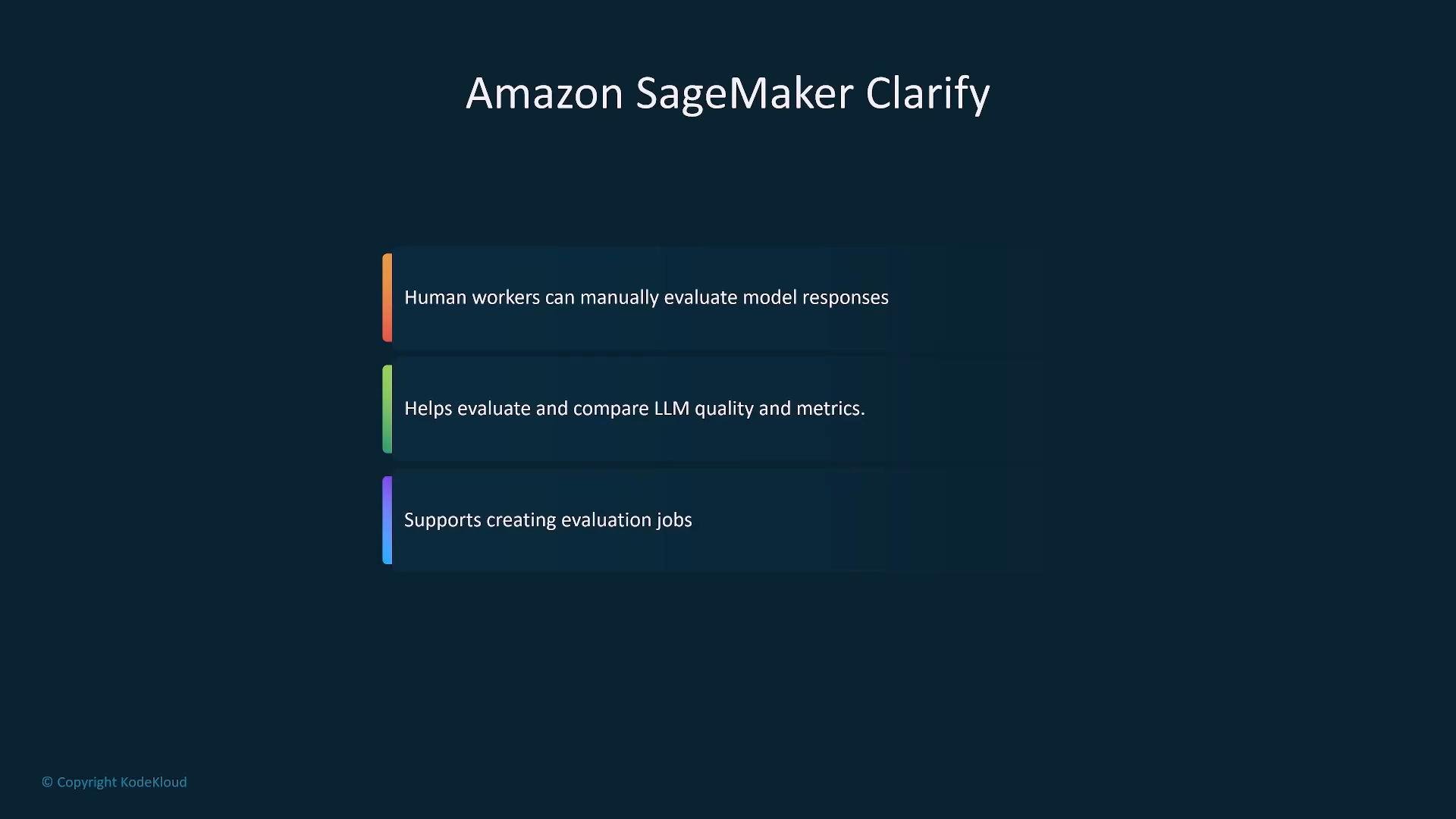
Amazon provides several services that help run automated and human-in-the-loop evaluations.- Amazon SageMaker Clarify — helps measure bias and explainability and can integrate human review workflows.
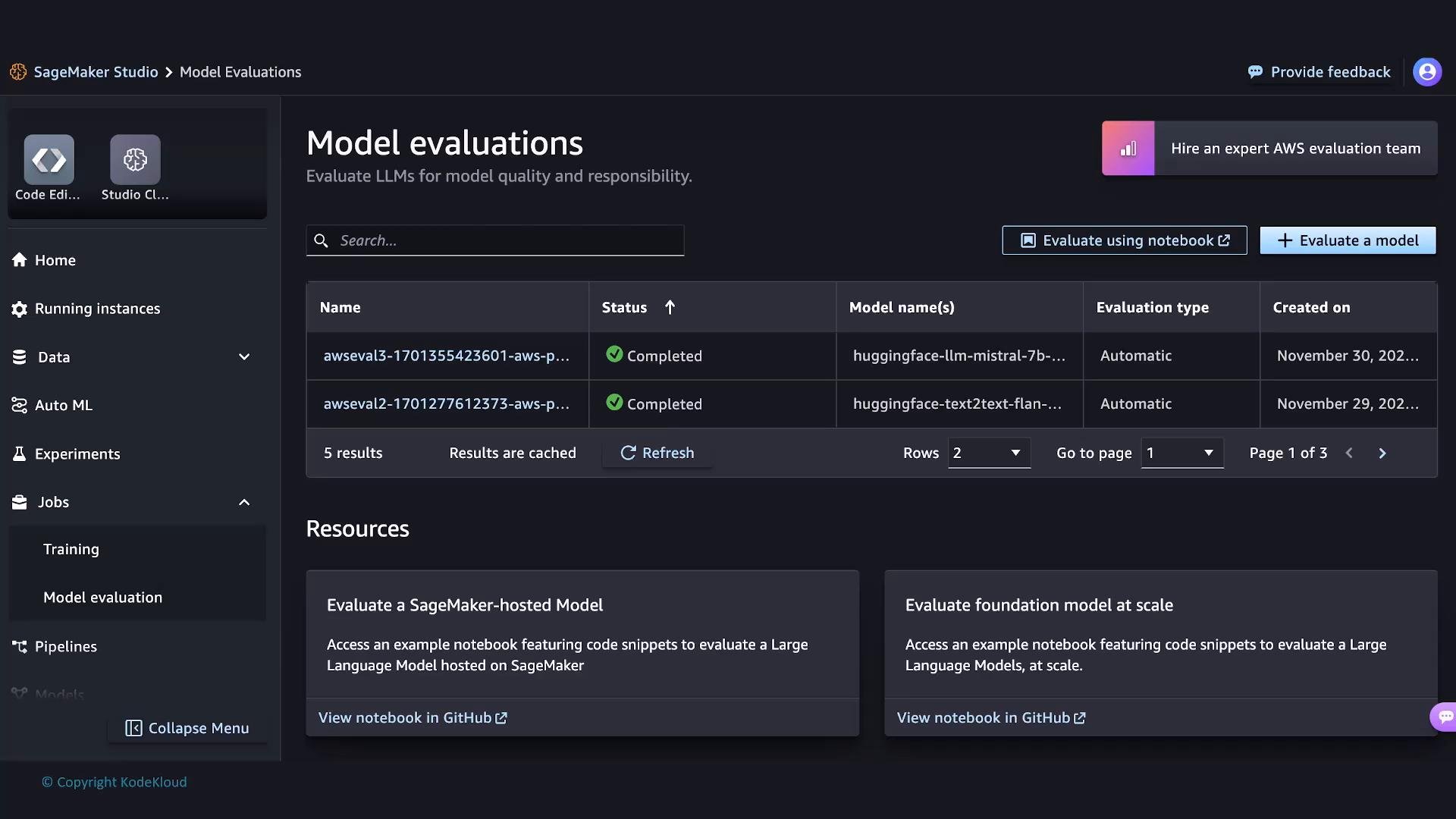
- SageMaker Studio — includes a Model Evaluations view to run, track, and compare evaluation jobs.
Amazon Bedrock and semantic scoring
- Amazon Bedrock provides evaluation primitives to compare generated responses against references and supports semantic metrics such as BERTScore.
- BERTScore computes contextual-token similarity (typically cosine similarity) and often aligns better with human judgments than simple n-gram overlap.
Evaluate against business outcomes, not just technical metrics
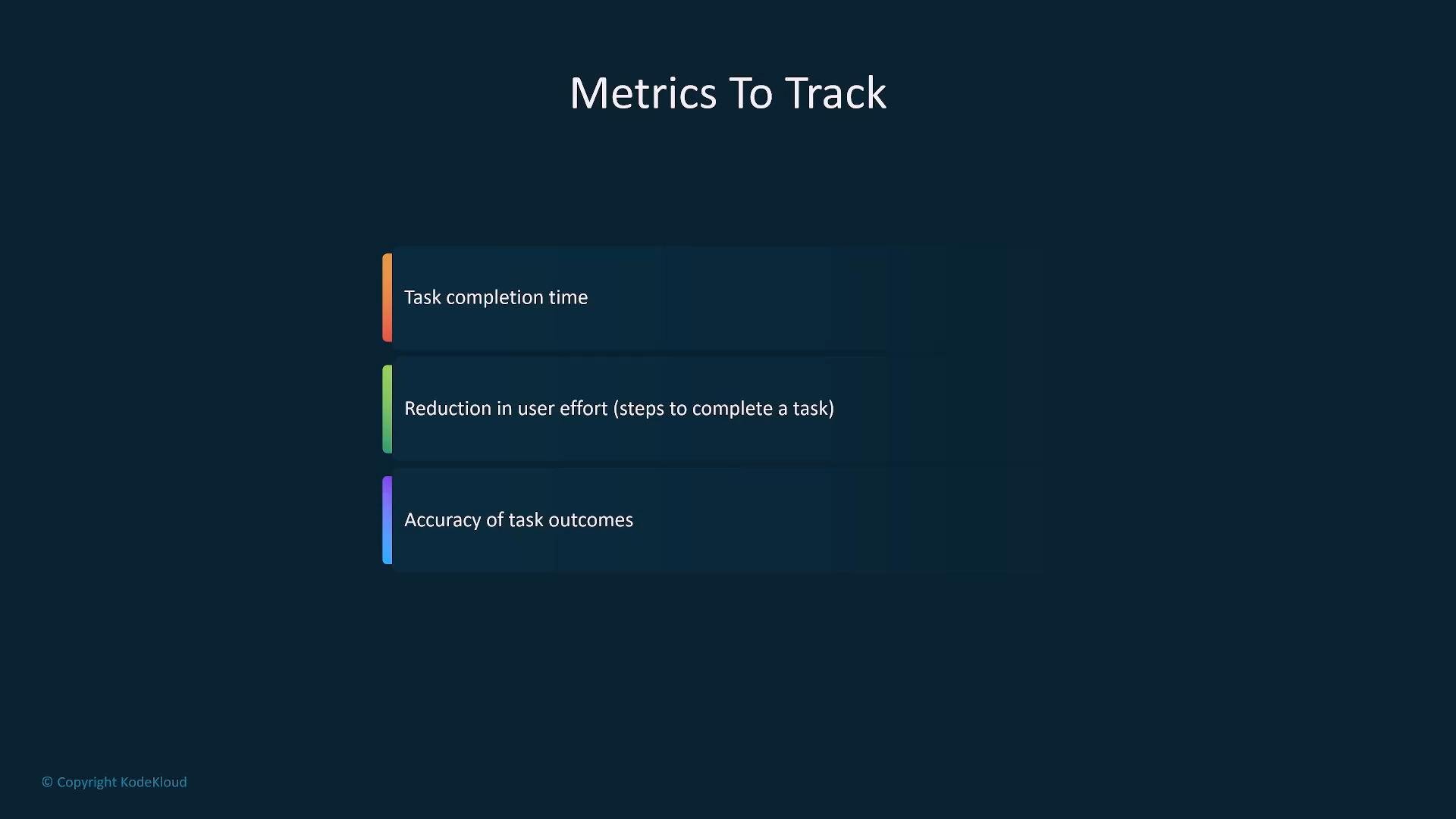
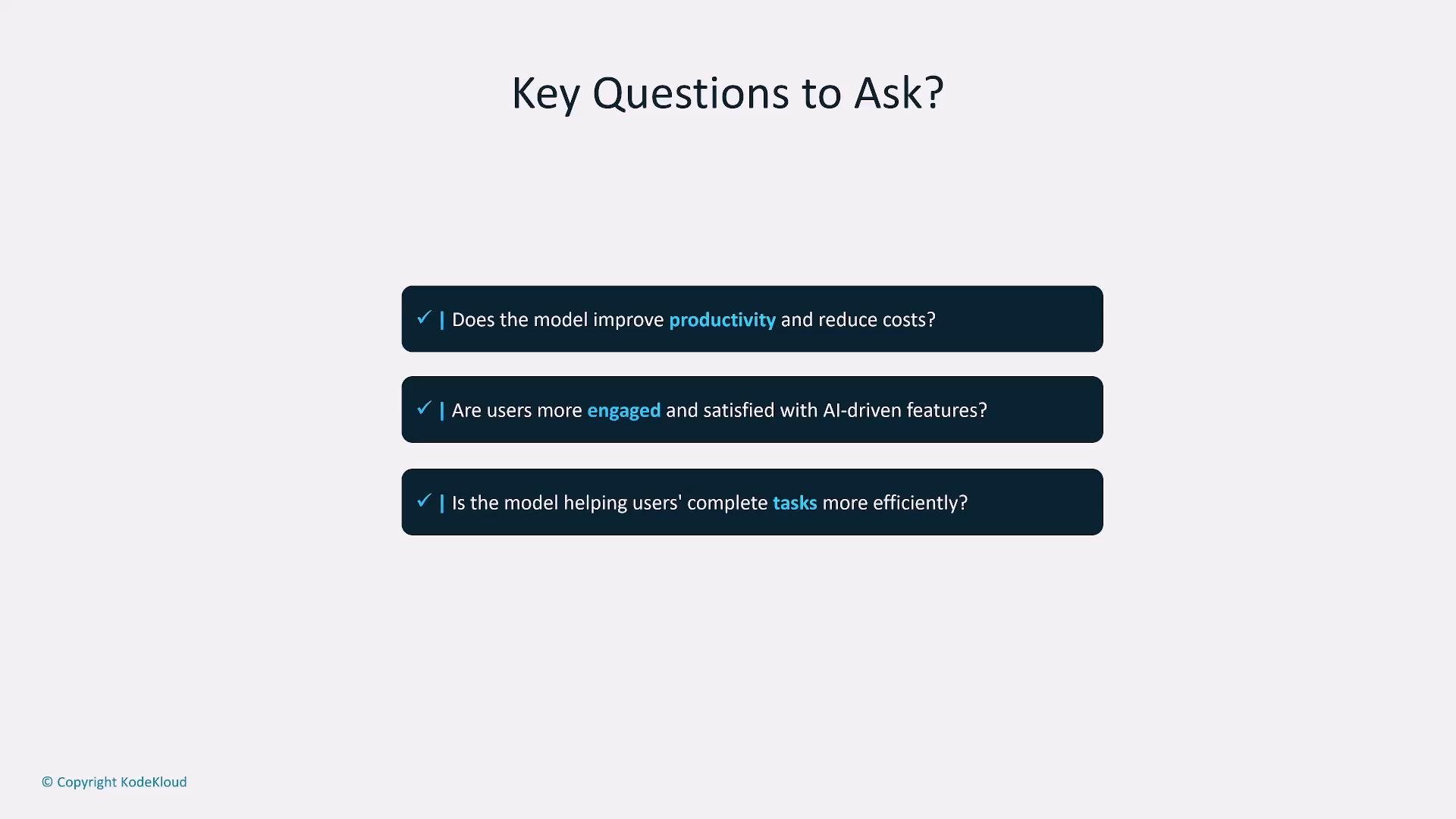
Foundation models should be judged by the value they deliver. Define business KPIs and measure the model against them.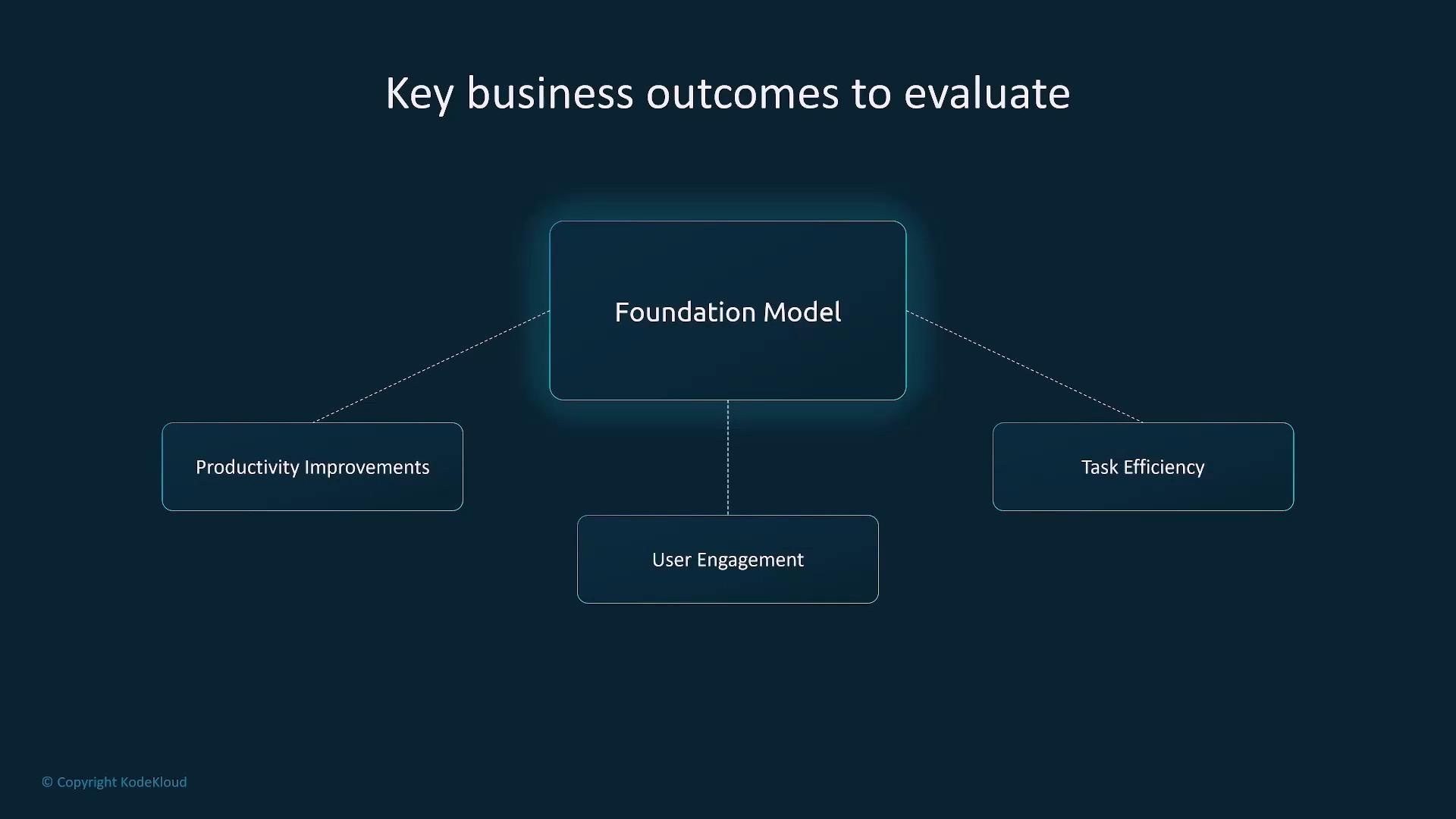
- Productivity gains: time saved on routine tasks, fewer manual steps, reduced error rates.
- User engagement: session length, retention, frequency, satisfaction/NPS.
- Task effectiveness: task completion rate, accuracy of outcomes, reduction in downstream corrections.
- Direct feedback: user ratings, surveys, and actionable error reports.
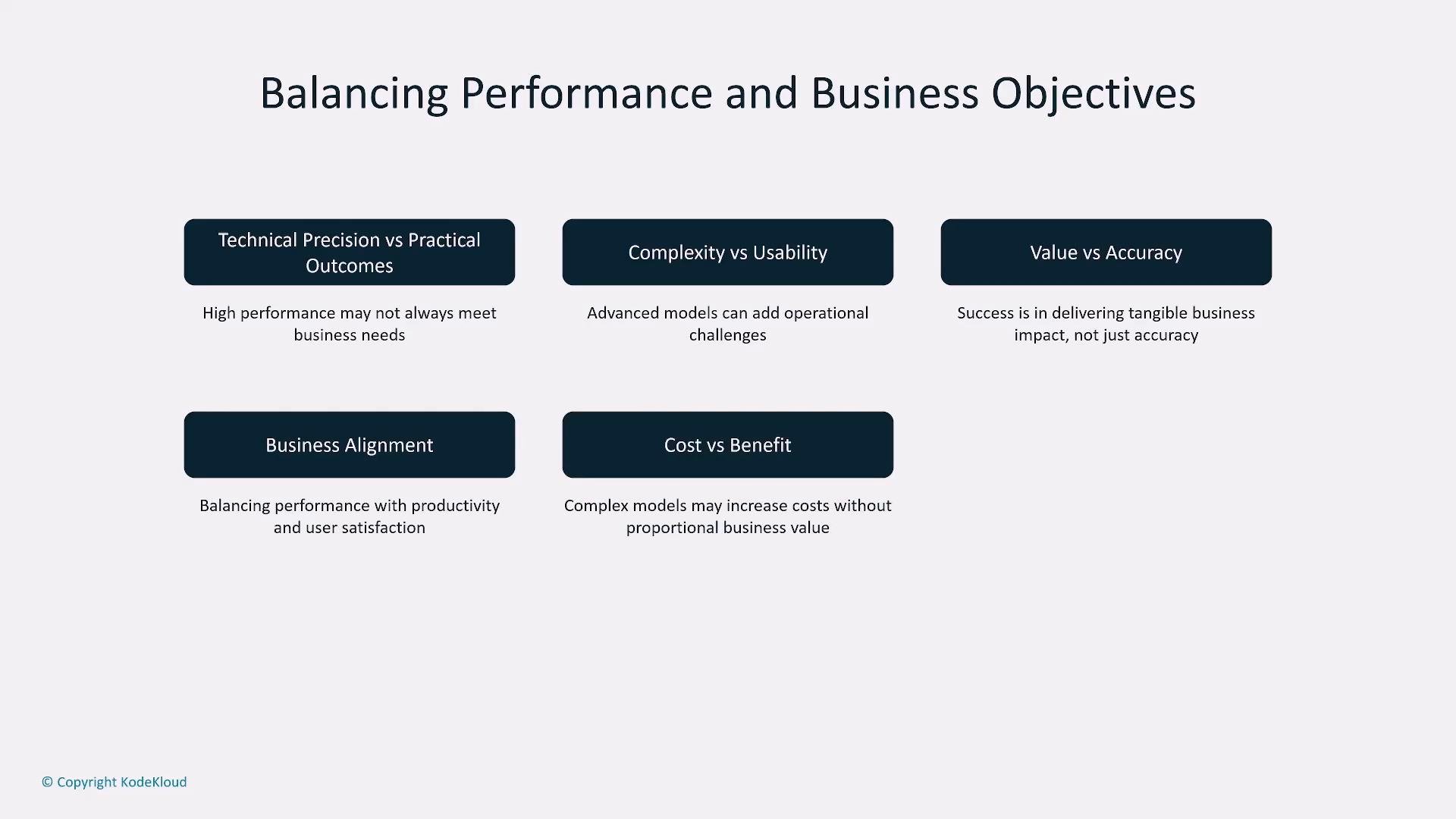
Balance performance and business objectives
- Decide the minimum precision required to meet product goals.
- Favor UX improvements: a slightly less accurate but much faster model can increase adoption and satisfaction.
- Evaluate cost vs. benefit: high-cost models must deliver measurable returns.
Putting it all together — measurement strategy
A robust evaluation strategy mixes methods:- Automated task-specific metrics (ROUGE, BLEU, accuracy, F1, BERTScore).
- Benchmark suites (GLUE, SuperGLUE, MMLU, BIG-bench, HELM) for broad comparisons.
- Human evaluations and domain expert reviews to assess quality, safety, and alignment.
- Business KPIs (productivity, engagement, cost) to quantify real-world impact.
Quick checklist for rolling a model into production
- Define technical and business KPIs up front.
- Benchmark multiple models across the same tasks and datasets.
- Use embedding-based and human evaluations for semantic quality.
- Monitor latency, throughput, and cost under realistic traffic patterns.
- Iterate on prompts, model size, and inference settings; track cost/performance trade-offs.
Summary
- Choose metrics that match the task: n-gram metrics for surface fidelity, embedding-based or human evaluation for semantics and factuality.
- Use benchmark suites for broad comparisons, and combine automated scores with human review.
- Measure real-world impact using business KPIs and iterate until cost/performance aligns with product goals.
- ROUGE (Wikipedia)
- BLEU (Wikipedia)
- BERTScore
- GLUE benchmark
- SuperGLUE
- MMLU (GitHub)
- BIG-bench (GitHub)
- HELM (Stanford)
- Amazon SageMaker Clarify
- SageMaker Studio
- Amazon Bedrock overview