

Interpretability vs Explainability
Interpretability and explainability are related but distinct:- Interpretability: The ability to inspect a model’s internal mechanics and understand exactly how it produces a decision. Interpretable models expose their logic directly (for example, linear regression coefficients or a small decision tree).
- Explainability: The ability to provide human‑understandable reasons for a model’s outputs when internal mechanics are not directly interpretable. Explainability uses input–output analysis, feature attribution, or surrogate models to describe why a complex model made a particular prediction.
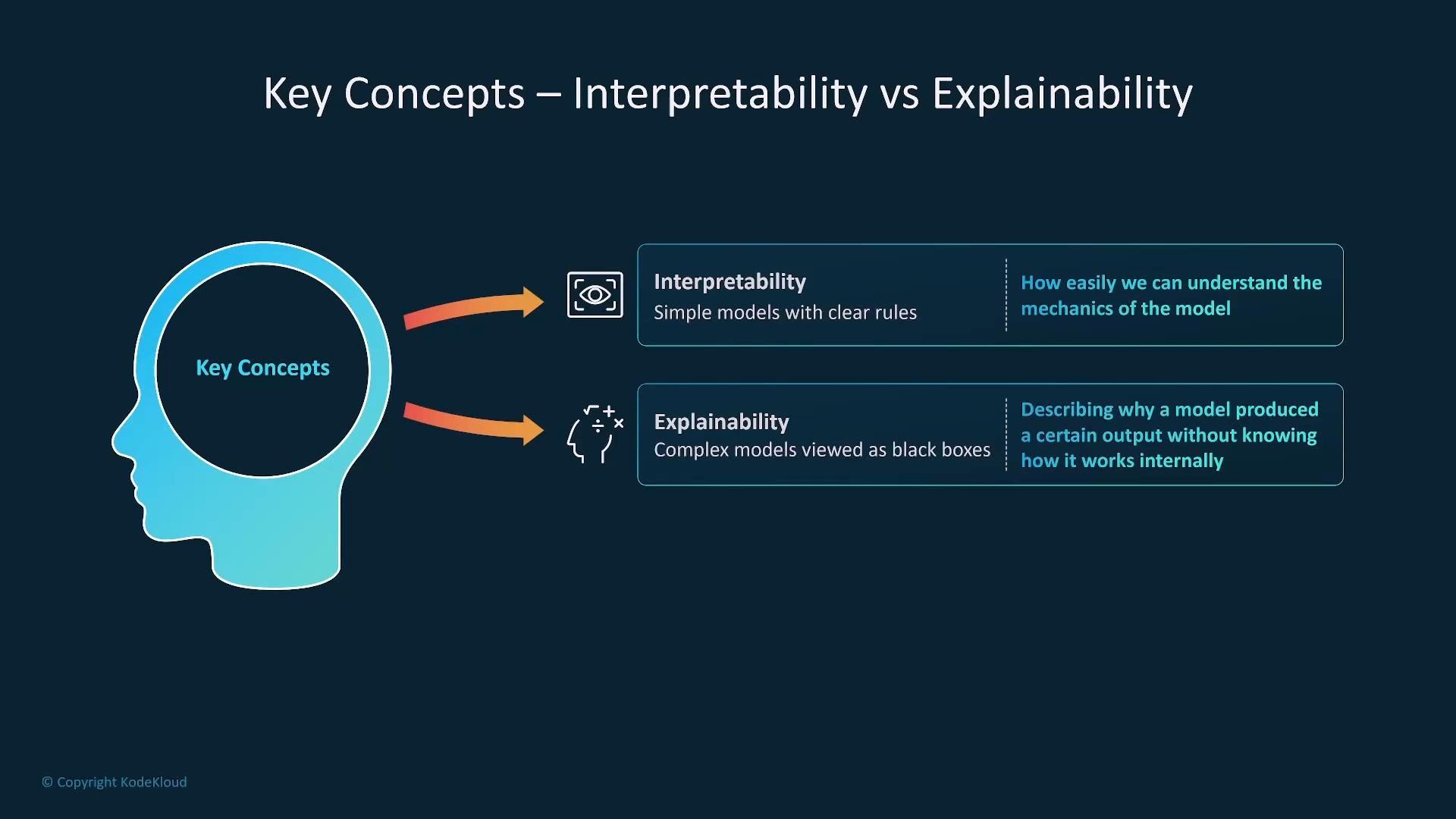
Quick comparison
Why the distinction matters
Different stakeholders and regulatory frameworks require different levels of insight:- Some industries (e.g., finance, medicine) or regulations may require interpretable models or precise explanations of decisions.
- Other settings accept post‑hoc explainability (describing input–output relationships) when high predictive accuracy from complex models is essential.
- Choosing interpretable vs. complex models is a trade‑off between transparency, performance, and compliance.
Explainability for complex models
Neural networks and many deep architectures are not easily interpretable. Explainability methods approximate or attribute a decision to input features to make model behavior understandable. Common explainability approaches:- Global explanations: feature importance across the dataset.
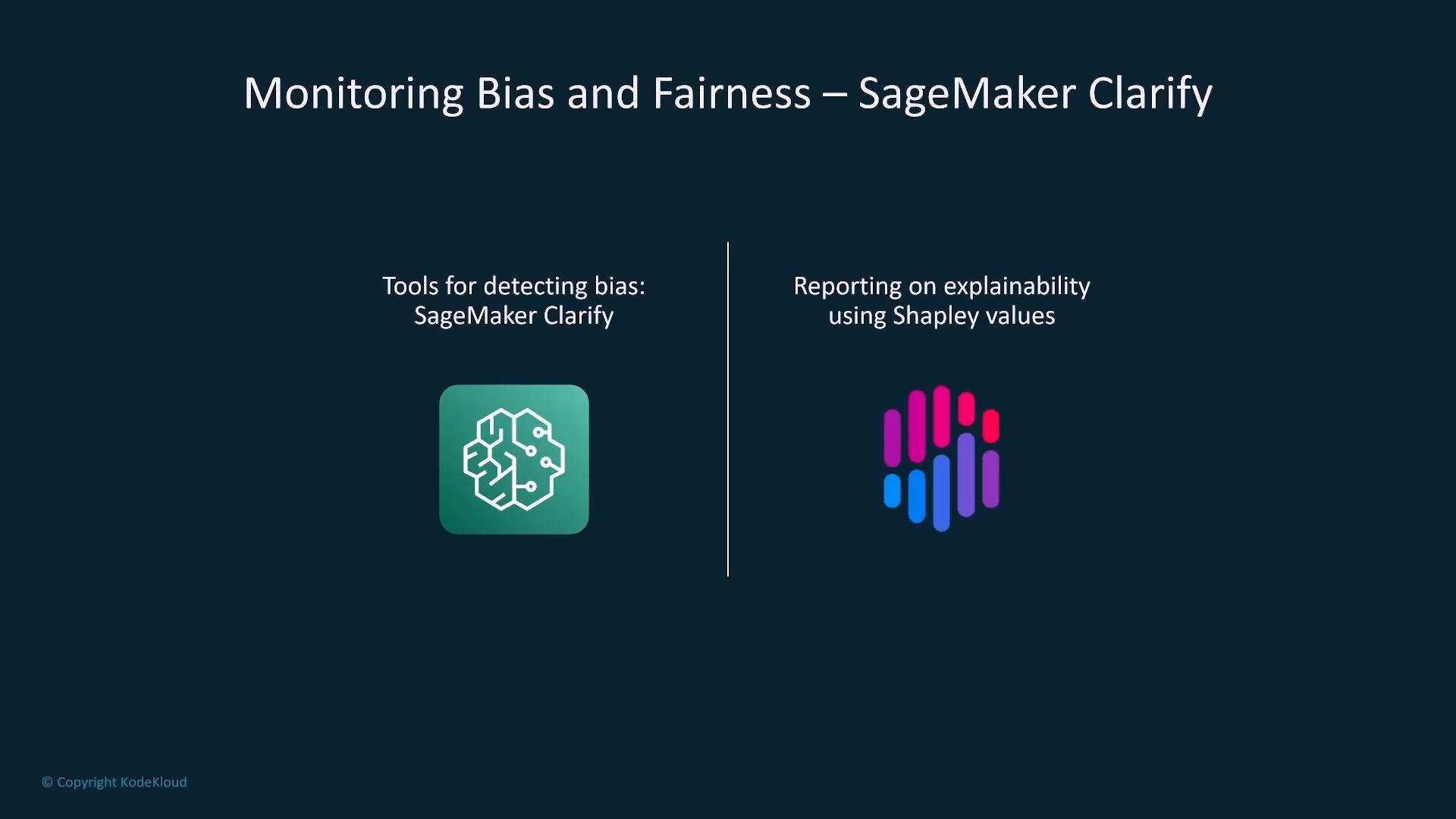
- Local explanations: why the model made a specific prediction (SHAP, LIME).
- Surrogate models: interpretable models trained to mimic complex model behavior in a local region.
- Visualization tools: saliency maps, PDPs (partial dependence plots), and accumulated local effects.
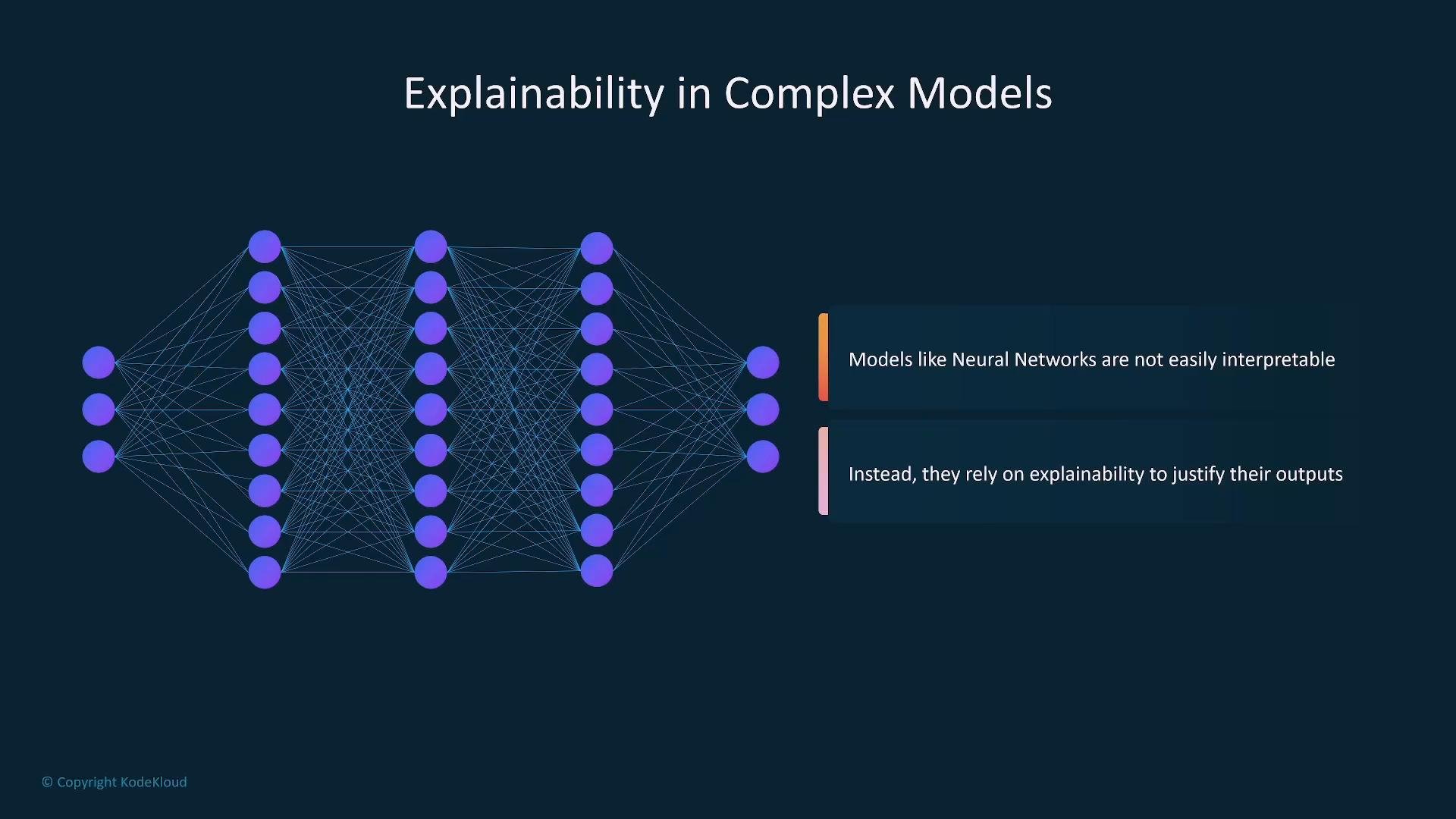
Trade‑offs: transparency, security, and privacy
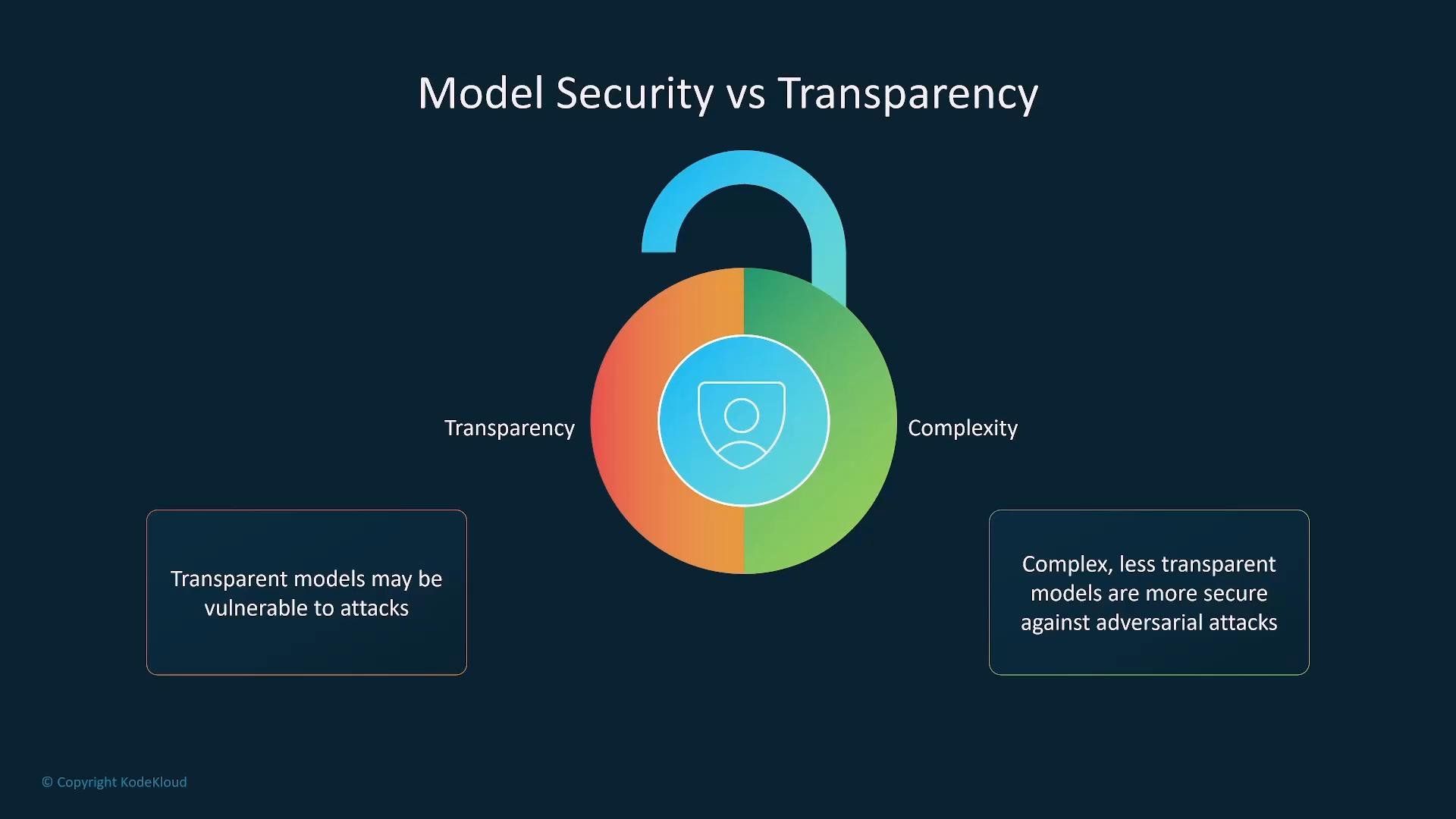
When selecting models and disclosure strategies, consider:- Simpler, interpretable models are easier to audit and explain but may underperform on complex tasks.
- Complex models can deliver superior performance but require explainability tools to provide human‑understandable reasons.
- Publicly revealing model internals or training data can create security or IP risks and may enable adversarial exploitation.
- Explanations that expose individual training examples can leak private or proprietary data.
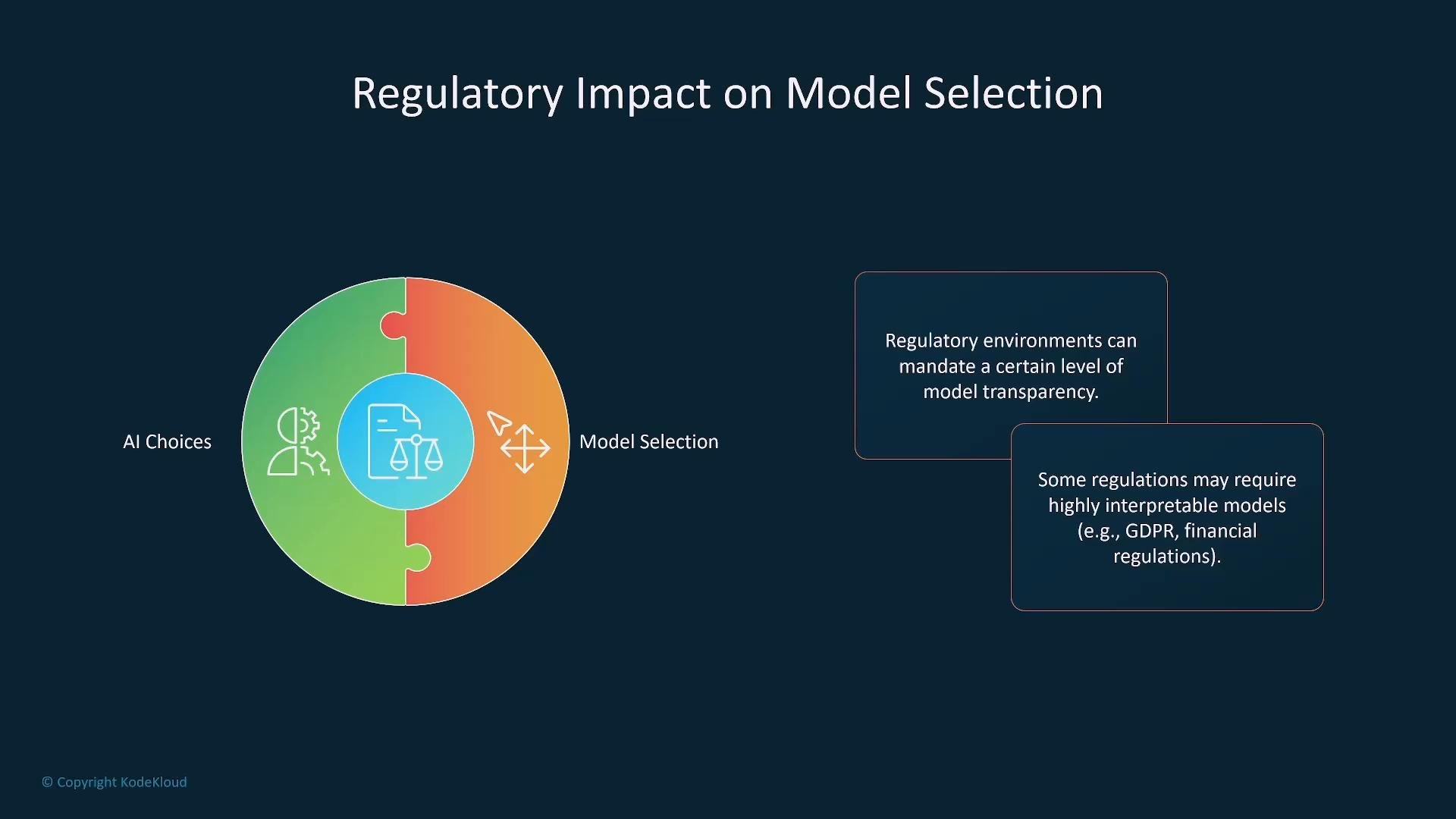
Regulatory influence on model selection
Regulatory frameworks (for example, GDPR in the EU) and sector‑specific compliance regimes influence model choices:- Regulations may require disclosures about automated decision‑making or explanation of individual outcomes.
- In high‑risk domains, regulators may prefer models that are inherently interpretable or that provide auditable justification.
- Where full interpretability is not feasible, documented explainability techniques, rigorous validation, and governance processes may be required.
Open‑source and collaborative development
Open‑source models and tooling increase transparency because the codebase and model definitions are available for inspection. Community review can reduce blind spots, identify biases, and improve robustness. However, open‑sourcing models can conflict with safety, security, or IP concerns. When using open models, validate provenance, training data, and governance.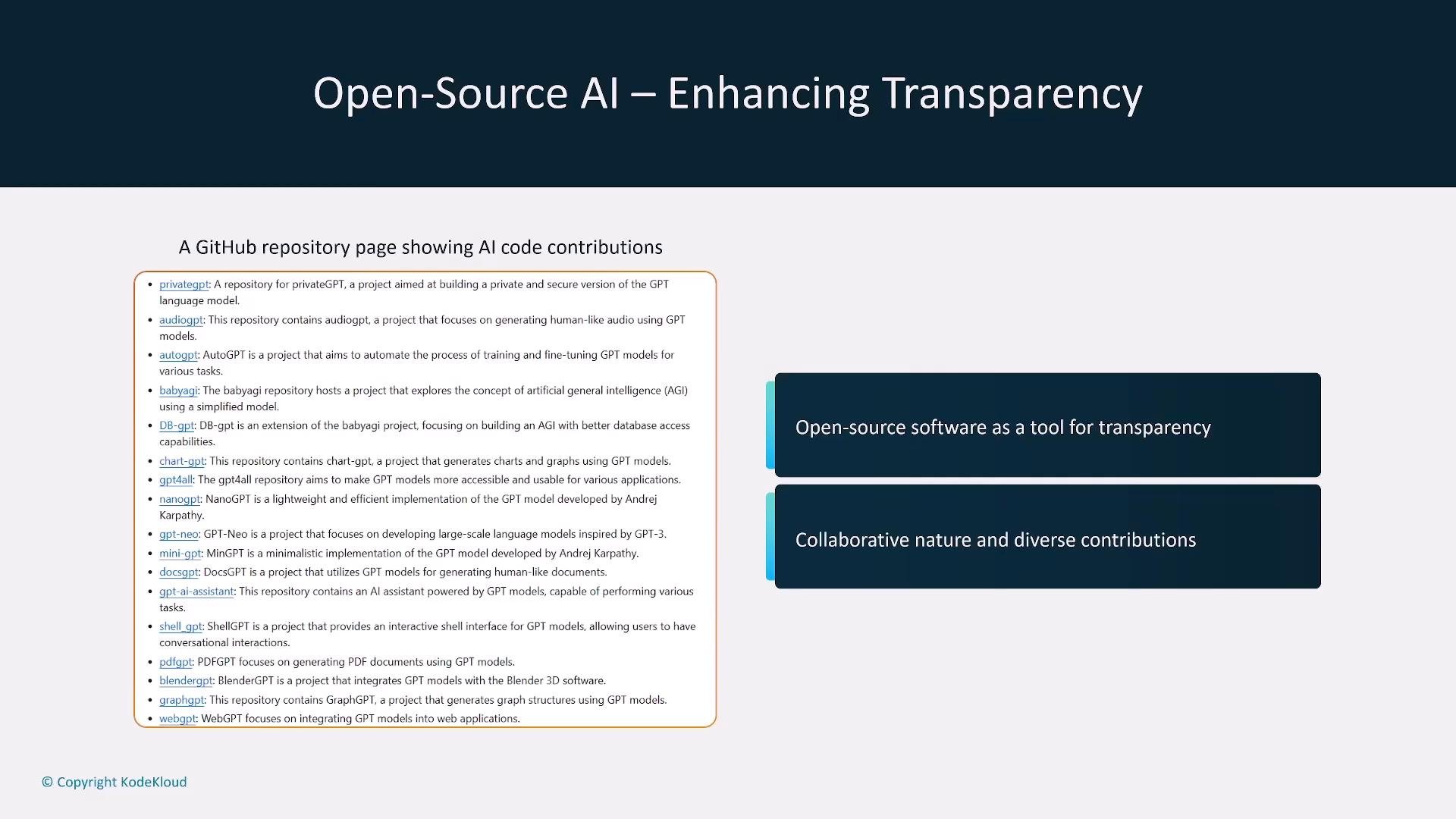
AWS tooling to support transparency and explainability
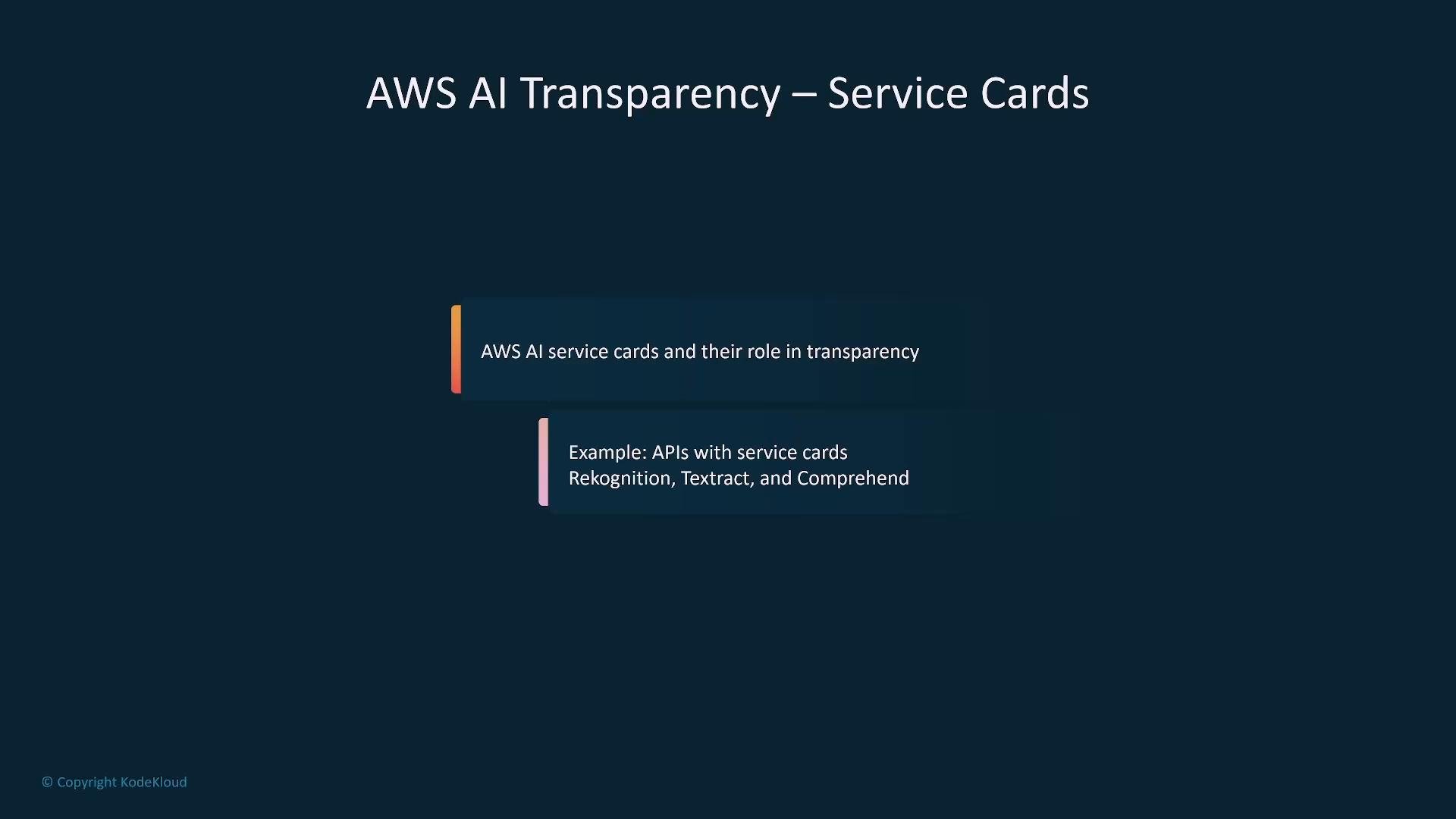
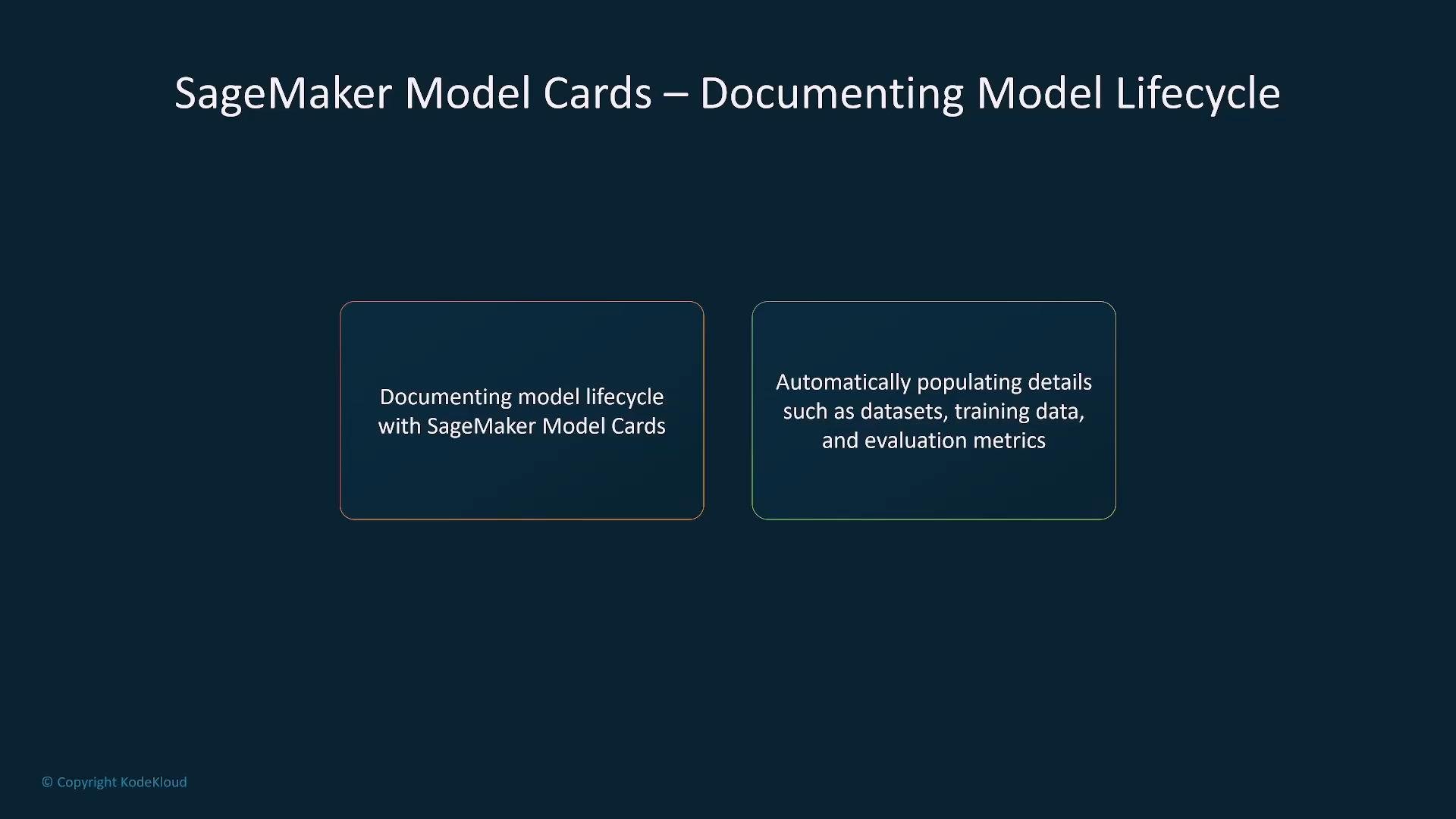
AWS provides several managed tools and best‑practice artifacts to document, audit, and monitor models. Below is a concise mapping of common AWS tools to their primary use cases.
Relevant resources:
Human‑centered AI and human-in-the‑loop approaches
Designing for human needs means involving domain experts, ethicists, and end users during model development. Human‑centered AI aims to augment human capabilities, ensure usability, and surface ethical concerns earlier in the lifecycle.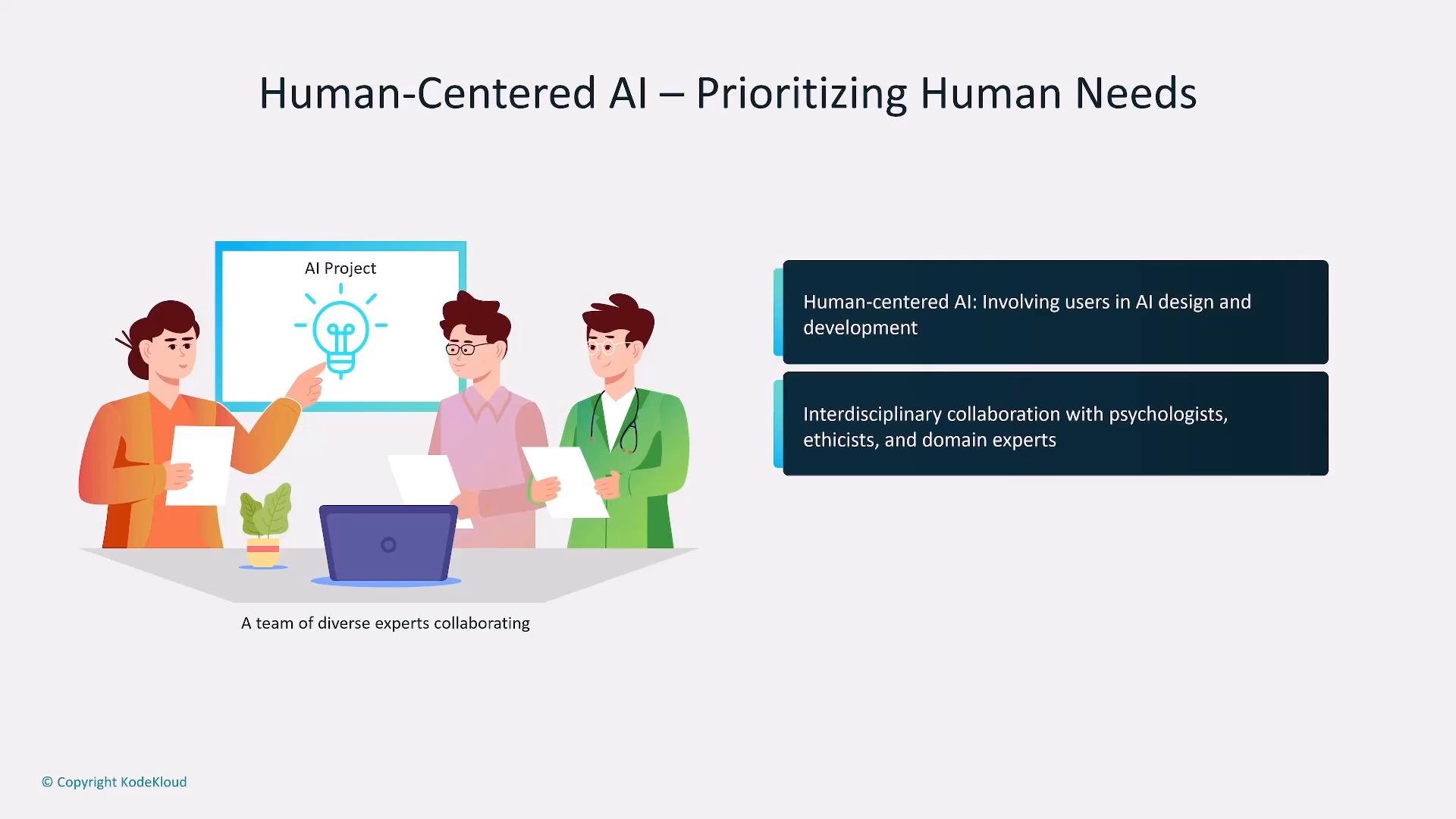
Amazon Augmented AI (A2I) for human review
A2I lets you route low‑confidence or high‑risk predictions to human reviewers for validation or correction. Use it as:- A quality gate for production predictions.
- A labeling pipeline for supervised learning or RLHF.
- A mechanism to collect human judgments needed for debugging or calibration.
Labeling and RLHF with SageMaker Ground Truth
SageMaker Ground Truth supports managed labeling workflows using public or private workforces. Labeled data powers supervised learning and RLHF pipelines where human feedback fine‑tunes model behavior and alignment.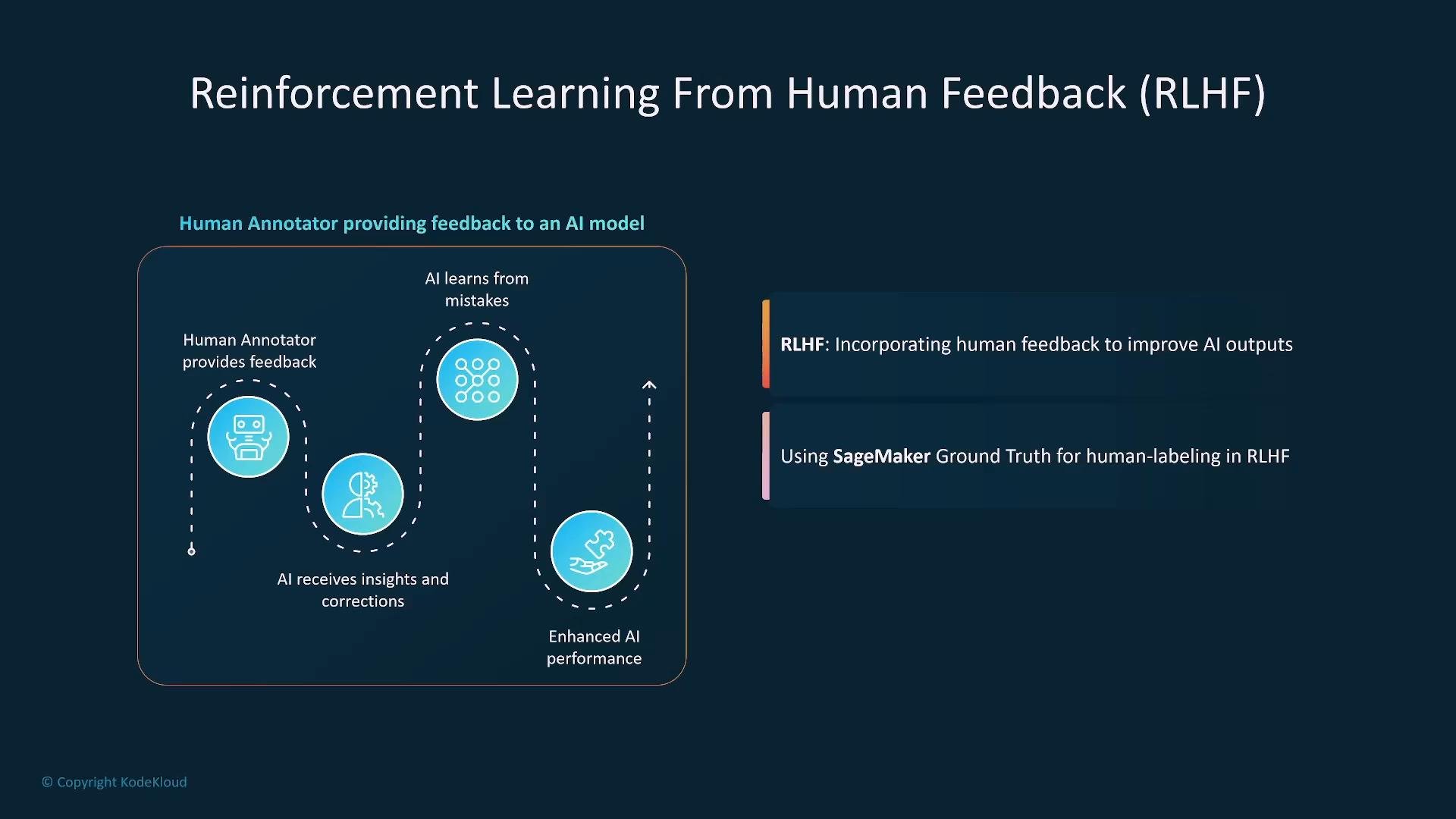
Model monitoring and drift detection
Continuous monitoring in production is essential to detect data drift, performance degradation, and fairness regressions. SageMaker Model Monitor tracks input distributions, prediction quality, and statistical deviations so you know when retraining or investigation is needed.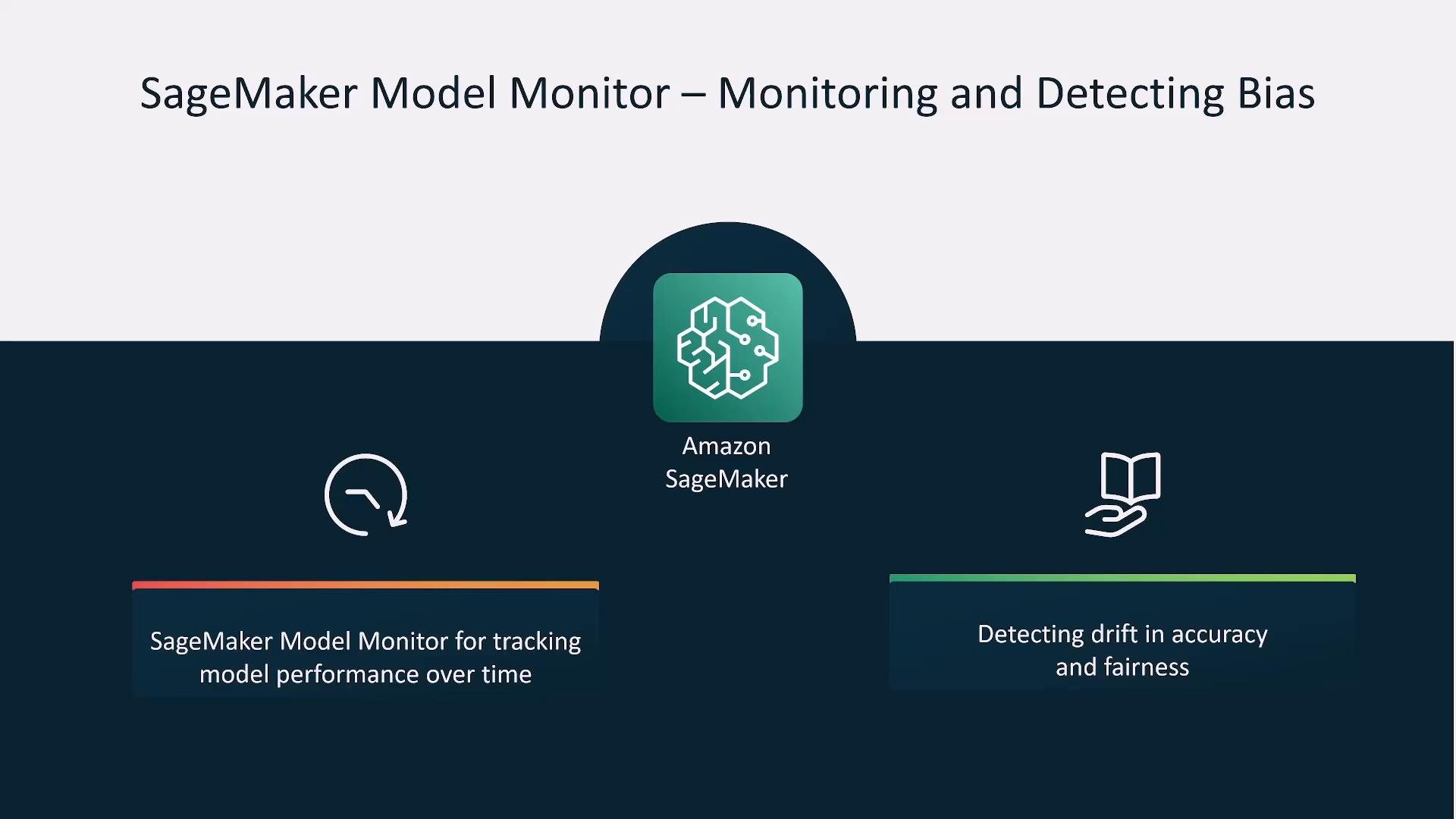
Supporting systems and data stores
Transparent model architectures include auditable data stores and search capabilities for dataset exploration:- Vector search and embeddings: OpenSearch Service and specialized vector stores help you search model outputs and debug retrieval components.
- Managed data stores: RDS, Aurora, DocumentDB, and graph DBs (Neptune) provide traceability, access control, and queryability for inputs and outputs.
Privacy and data protection
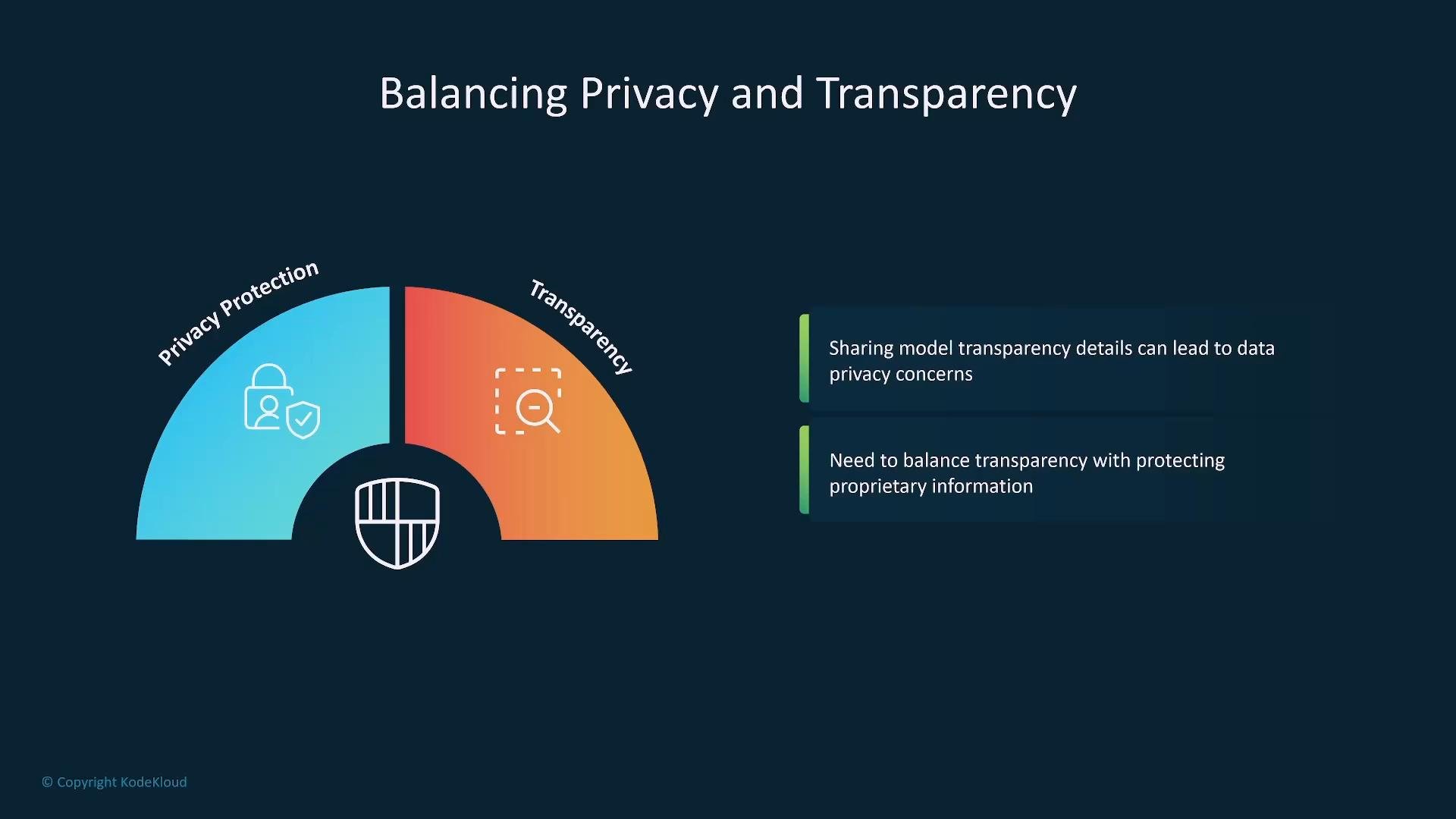
Transparency can conflict with privacy and IP protection. Exposing model internals or selected training examples can reveal sensitive customer data or proprietary methods. Use the following controls when publishing explanations or artifacts:- Anonymization and aggregation of data used in explanations.
- Differential privacy or other privacy‑preserving techniques.
- Governance controls, access limits, and secure artifact management.
When producing explanations, ensure they do not leak personal or proprietary information. Anonymize or aggregate data and apply governance controls before publishing model artifacts or explanations.
Practical checklist for transparent and explainable AI
- Determine regulatory and stakeholder requirements for interpretability.
- Choose the simplest model that meets performance and risk requirements.
- Use explainability tools (SHAP, LIME, PDPs) for black‑box models and document methods.
- Instrument model monitoring to detect drift and fairness regressions.
- Implement human‑in‑the‑loop reviews for high‑risk or low‑confidence cases.
- Protect privacy with anonymization, differential privacy, or access controls.
- Maintain model cards and service cards for auditability.
Summary
- Interpretability = fully understanding model internals (feasible for simple models).
- Explainability = producing human‑understandable reasons for outputs from complex models.
- Select model and explanation approaches based on regulatory needs, risk, performance, and privacy.
- Use AWS tools — service cards, SageMaker Model Cards, SageMaker Clarify, A2I, Ground Truth, and Model Monitor — to improve transparency, fairness, and governance.
Links and further reading
- AWS Machine Learning
- Amazon SageMaker Documentation
- SageMaker Clarify
- SageMaker Model Monitor
- GDPR – Automated individual decision‑making and profiling