

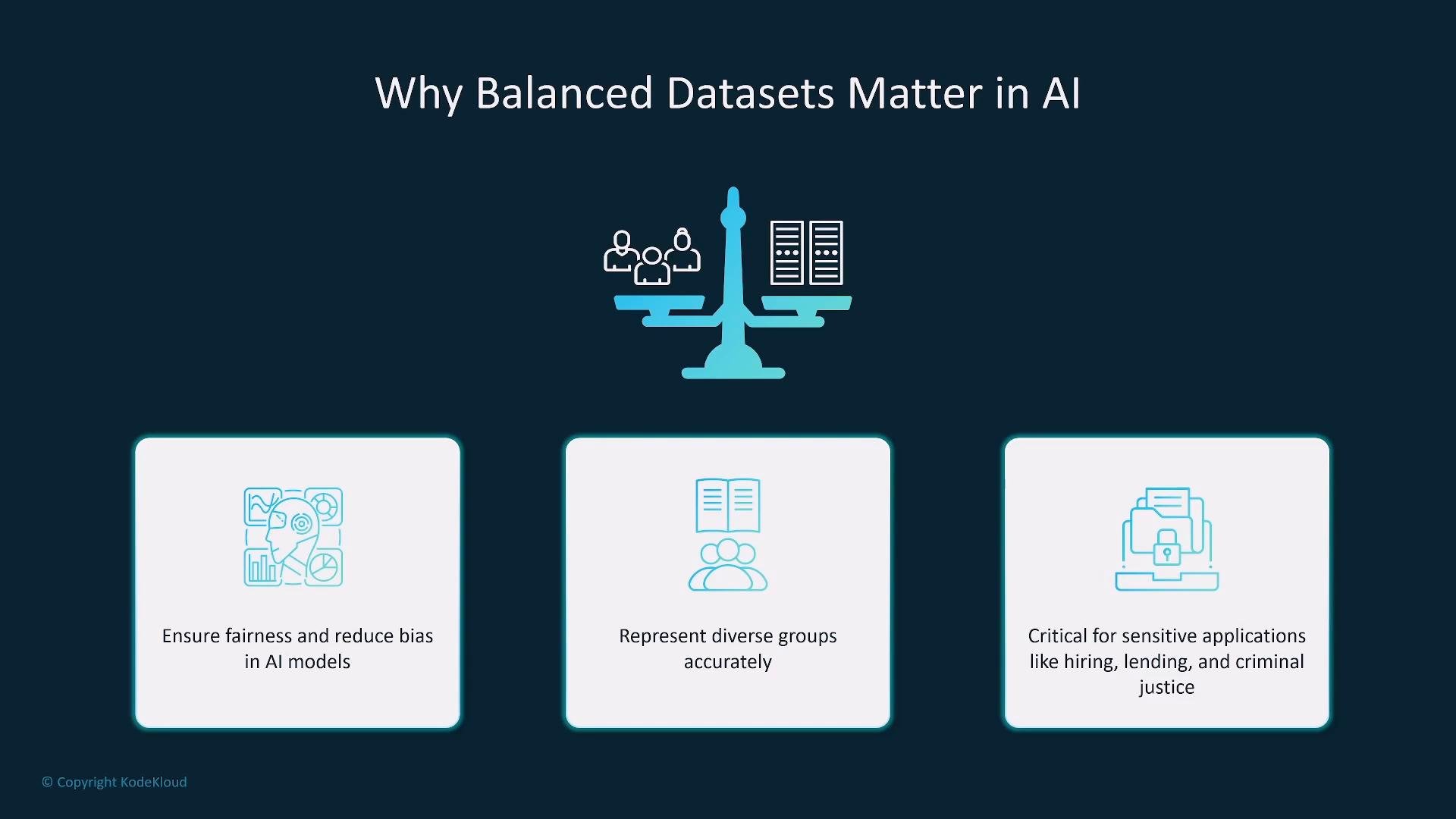
Tools for bias detection, explainability, and data preparation
Use tools that integrate into your ML lifecycle to catch bias early and to support reproducible remediation.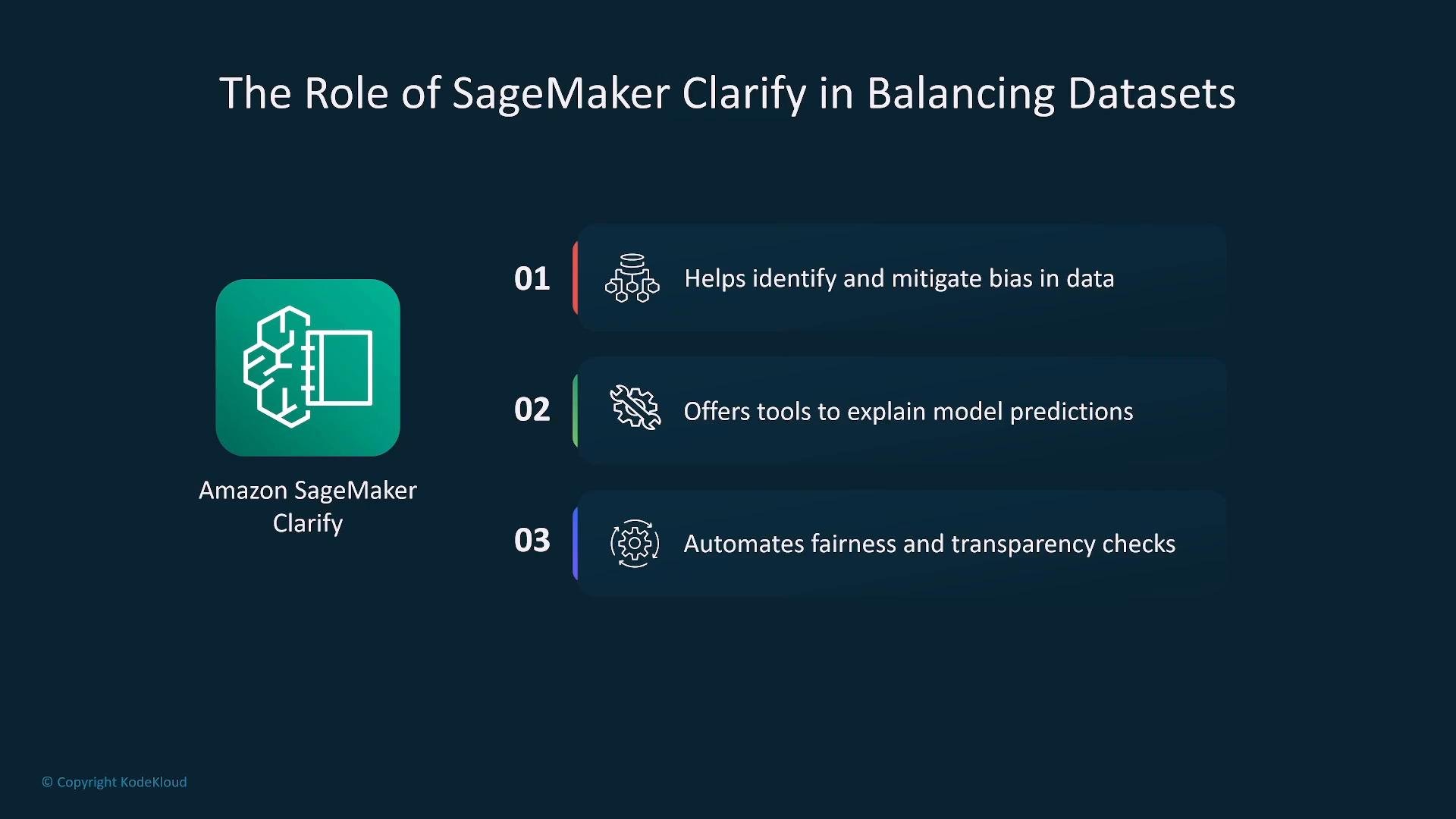
Run bias and explainability checks early—during data exploration and before training. Tools like SageMaker Clarify and Data Wrangler help detect problems sooner so remediation is cheaper and more reliable.
Why representativeness matters — a concrete example
If a model is trained primarily on middle-aged individuals, it may underperform for younger and older populations. In healthcare this can lead to misdiagnoses or inappropriate recommendations, and in hiring or lending it can create biased decisions that disproportionately harm certain groups. Ensuring demographic and contextual coverage in your dataset is critical to minimize such harms.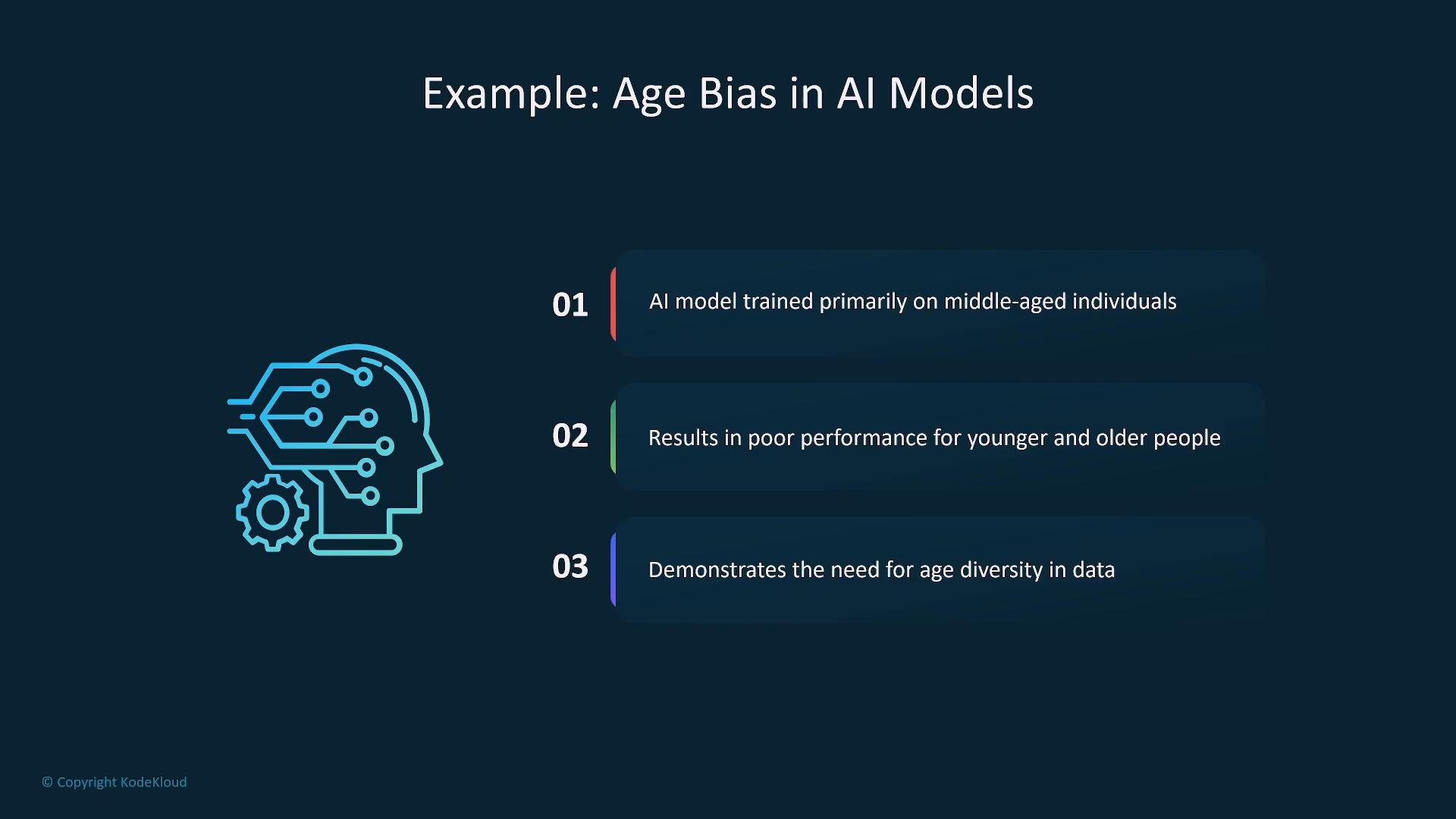
Key steps when curating balanced datasets
Use the following checklist as a practical guide for dataset curation and balancing. The goals are representativeness, label quality, and minimal introduction of synthetic artifacts.When handling sensitive attributes (race, gender, health status, etc.), ensure compliance with legal and privacy requirements. Only use such attributes for fairness evaluation or mitigation when justified, documented, and protected.
Data augmentation best practices
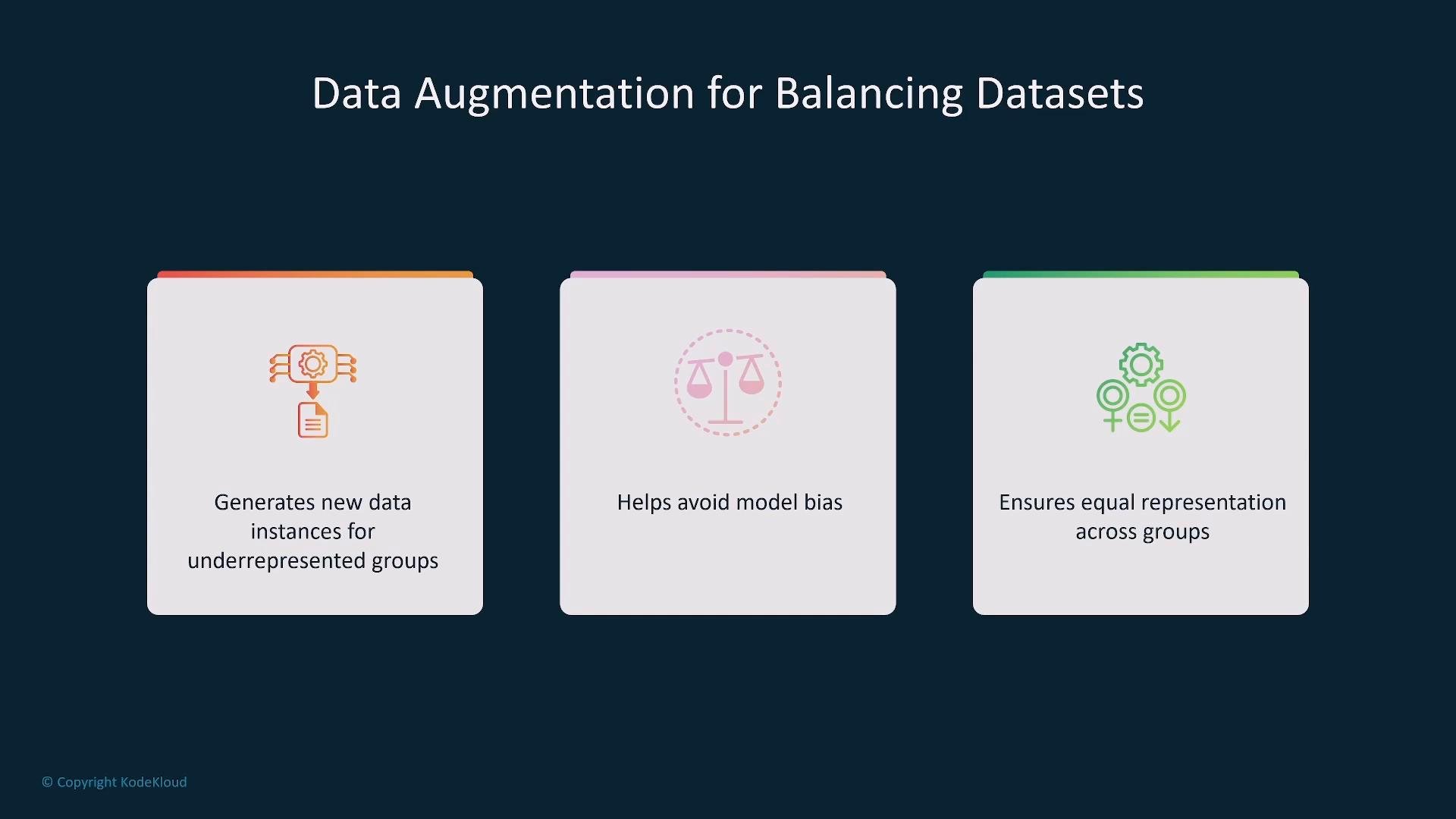
- Prefer domain-aware augmentation: transformations should preserve task-relevant semantics (e.g., clinical data must remain physiologically plausible).
- Validate synthetic data: compare feature distributions and downstream model performance against real data.
- Avoid overfitting to synthetic artifacts by blending synthetic and real examples and using robust cross-validation.
- Document augmentation parameters and provenance so datasets remain auditable and reproducible.
Auditing and ongoing monitoring
Fairness and dataset quality are continuous responsibilities. Put monitoring and governance in place to detect distributional changes and emergent biases.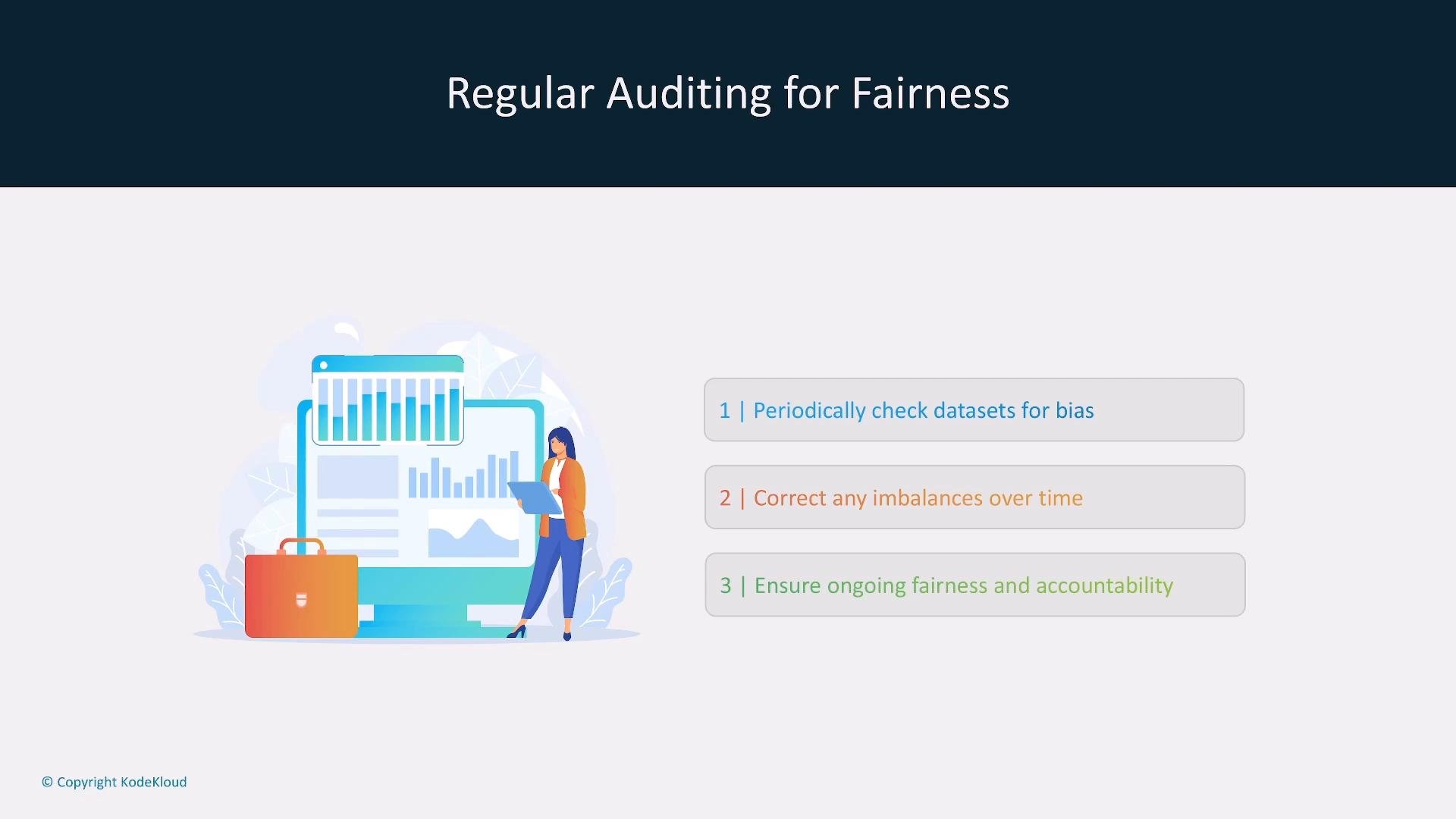
Summary and recommendations
- Balanced, diverse, and well-labeled data are foundational to fair ML and generative AI.
- Integrate bias detection and explainability early and continuously—tools such as SageMaker Clarify help automate checks.
- Use Data Wrangler and domain-aware augmentation to prepare datasets and generate validated synthetic samples.
- Apply rigorous preprocessing, thoughtful feature selection, and careful validation of augmented data.
- Maintain continuous auditing and monitoring to detect drift, measure fairness across groups, and take corrective actions when needed.
- SageMaker Clarify — Amazon SageMaker
- SageMaker Data Wrangler — Amazon SageMaker
- SMOTE: Synthetic Minority Over-sampling Technique — https://en.wikipedia.org/wiki/Synthetic_minority_over-sampling_technique