

Recommended prerequisites: basic AWS concepts (Regions, AZs, IAM), and familiarity with managed services such as S3, EC2, and RDS will help you follow the material faster.
- How do you access and provide data to AI services?
- How do you select, train, tune, and deploy models?
- How do you monitor and operate those applications at scale and securely?
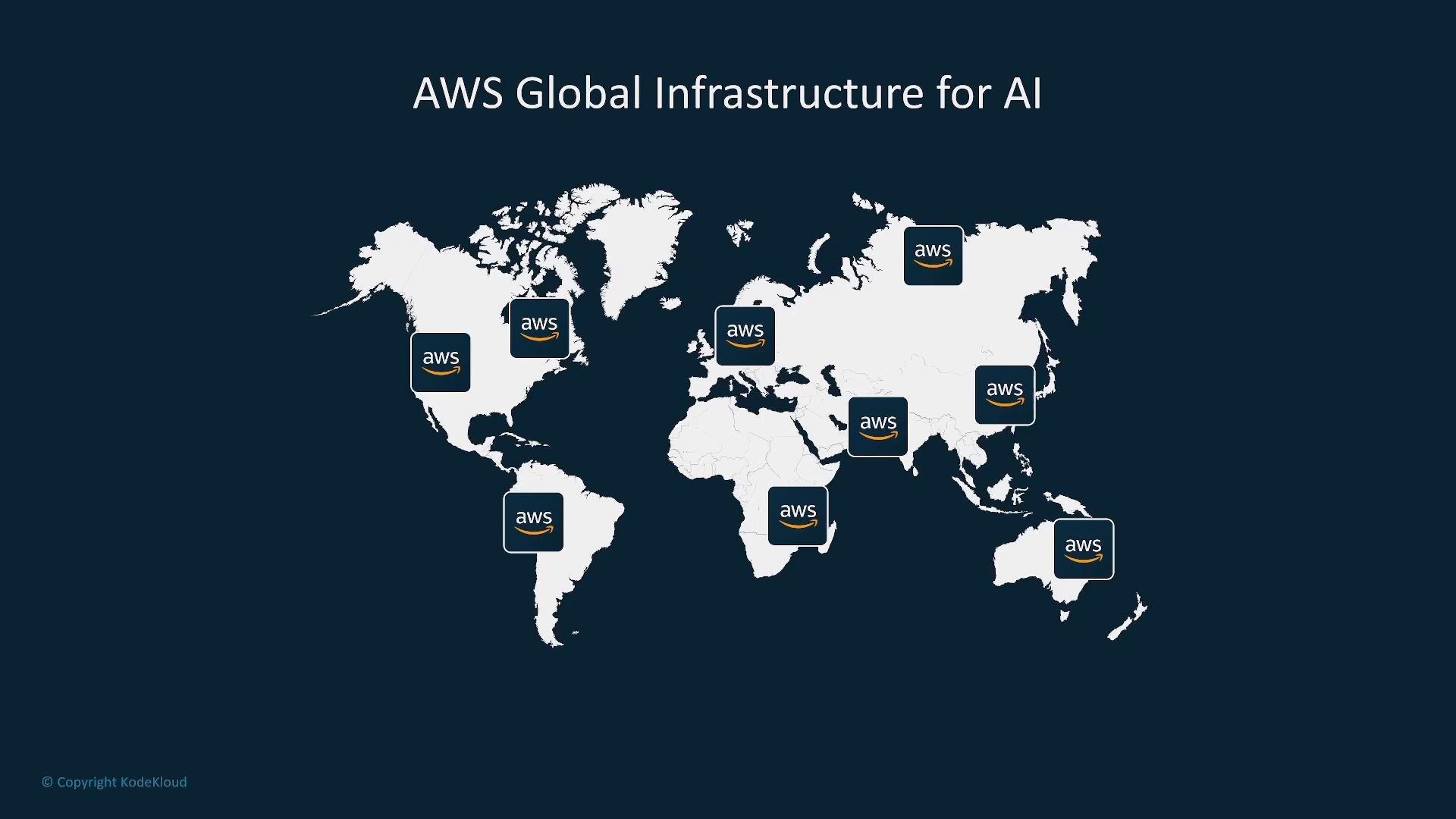
Global footprint and deployment choices
AWS operates a global network of Regions, Availability Zones, Local Zones, and an extensive edge network. Managed services are built to leverage this footprint so you can:- Deploy models and services in specific Regions for latency, data residency, or compliance.
- Improve fault tolerance and availability by distributing workloads across AZs or multiple Regions.
- Serve global users with edge caching and low-latency endpoints.
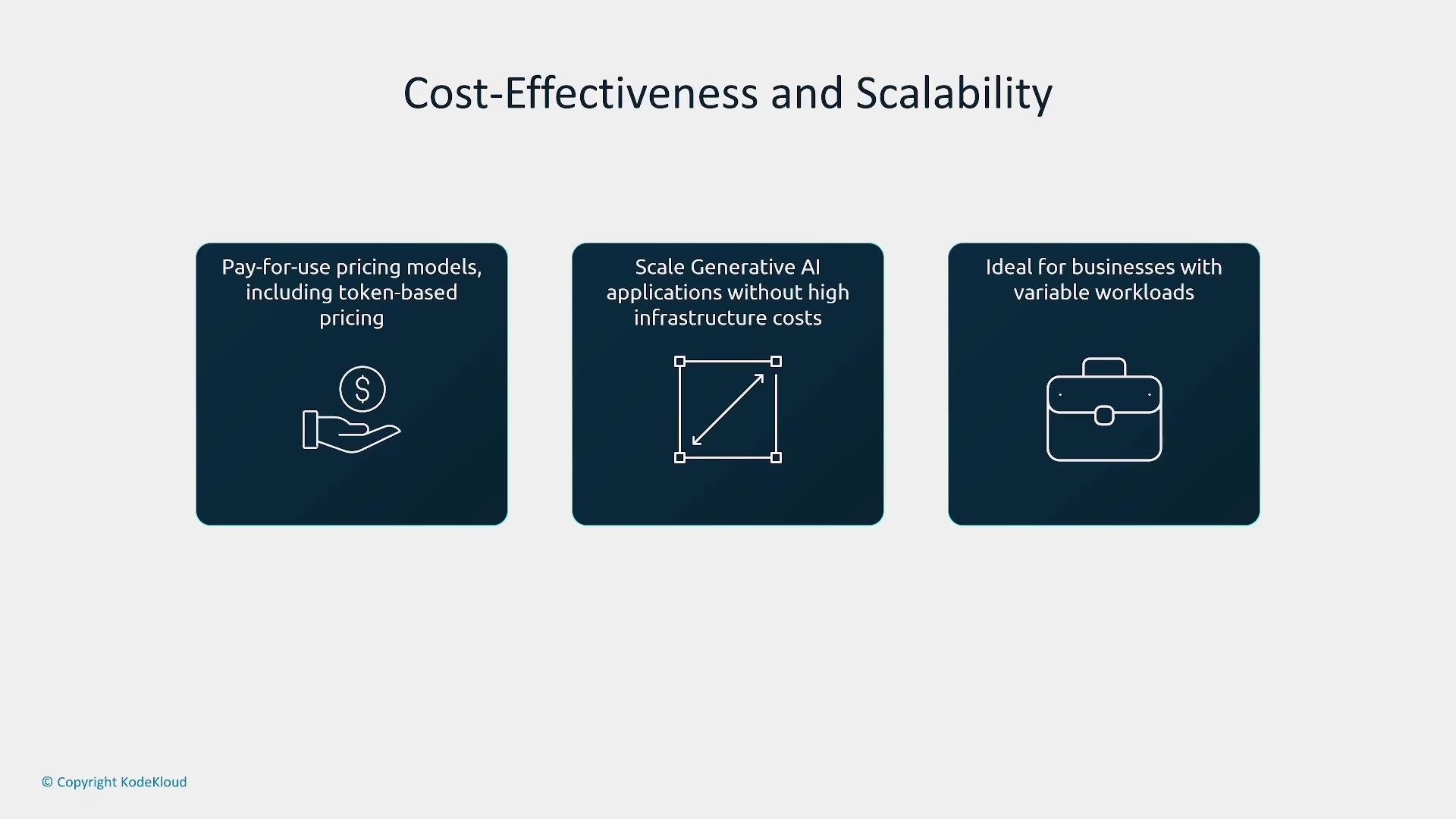
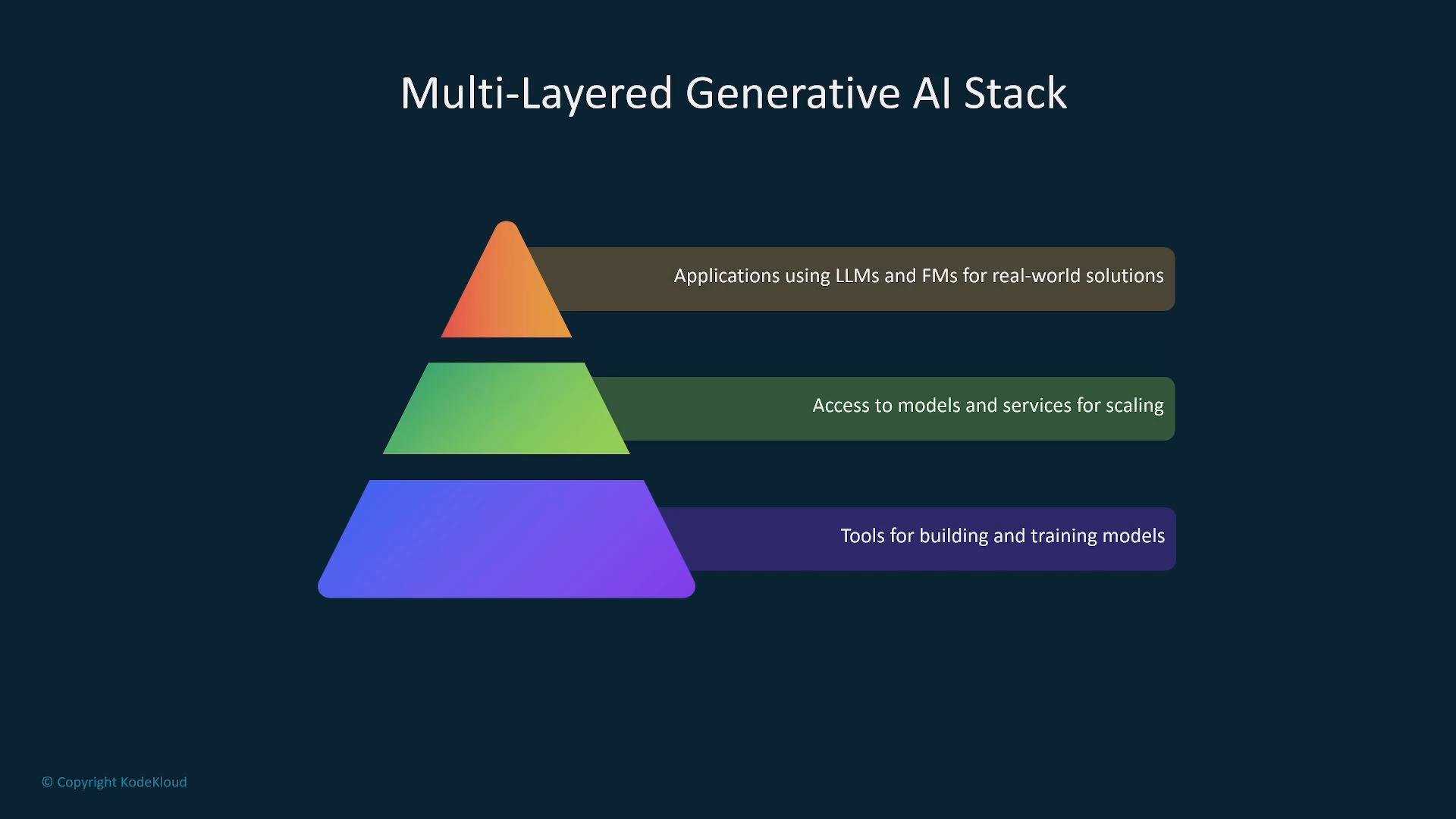
Multi-layered generative AI stack
Think of the generative AI stack as three layers:- Bottom: infrastructure and hardware (instances, accelerators, networking).
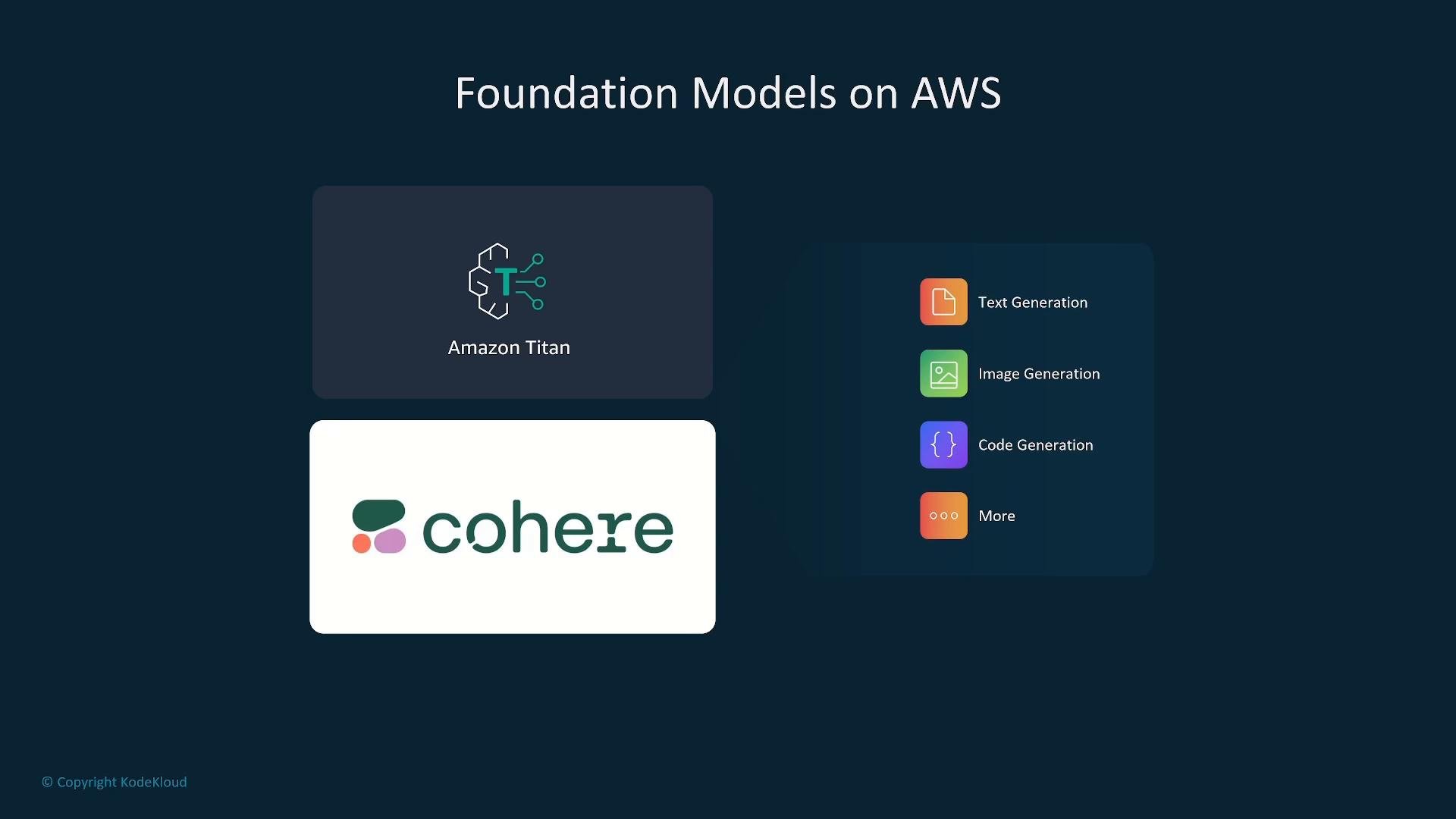
- Middle: model access and managed services (hosted foundation models, model management, MLOps).
- Top: applications (chatbots, analysis, content generation, code assistants).
Key managed services and developer tooling
SageMaker and related tooling cover the full ML lifecycle: development, fine-tuning, training, deployment, and MLOps. SageMaker JumpStart is a curated catalog of pre-trained models, notebooks, and templates to bootstrap projects and adopt best practices.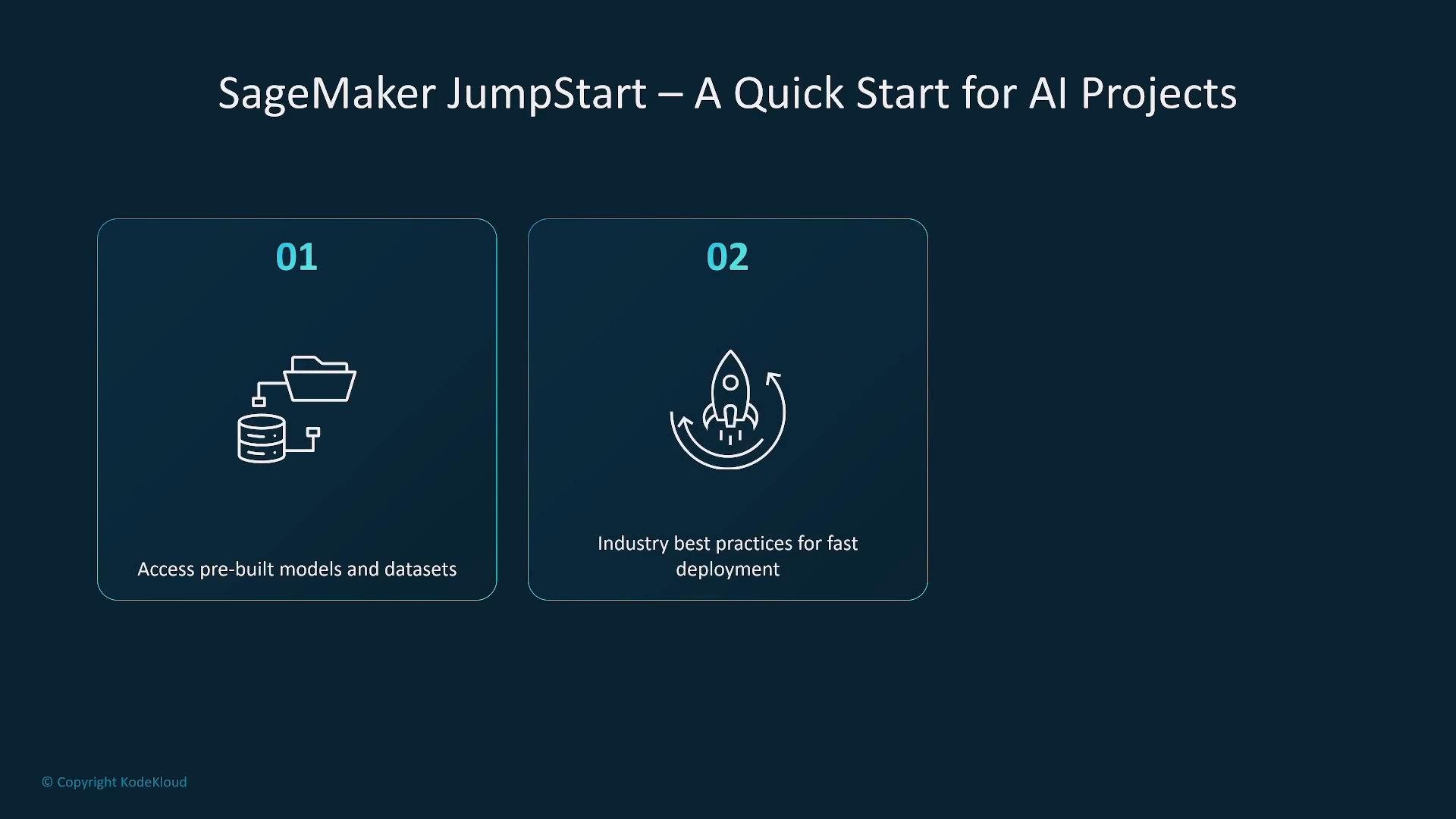
Quick reference: core services and typical uses
Data infrastructure and retrieval (vectors)
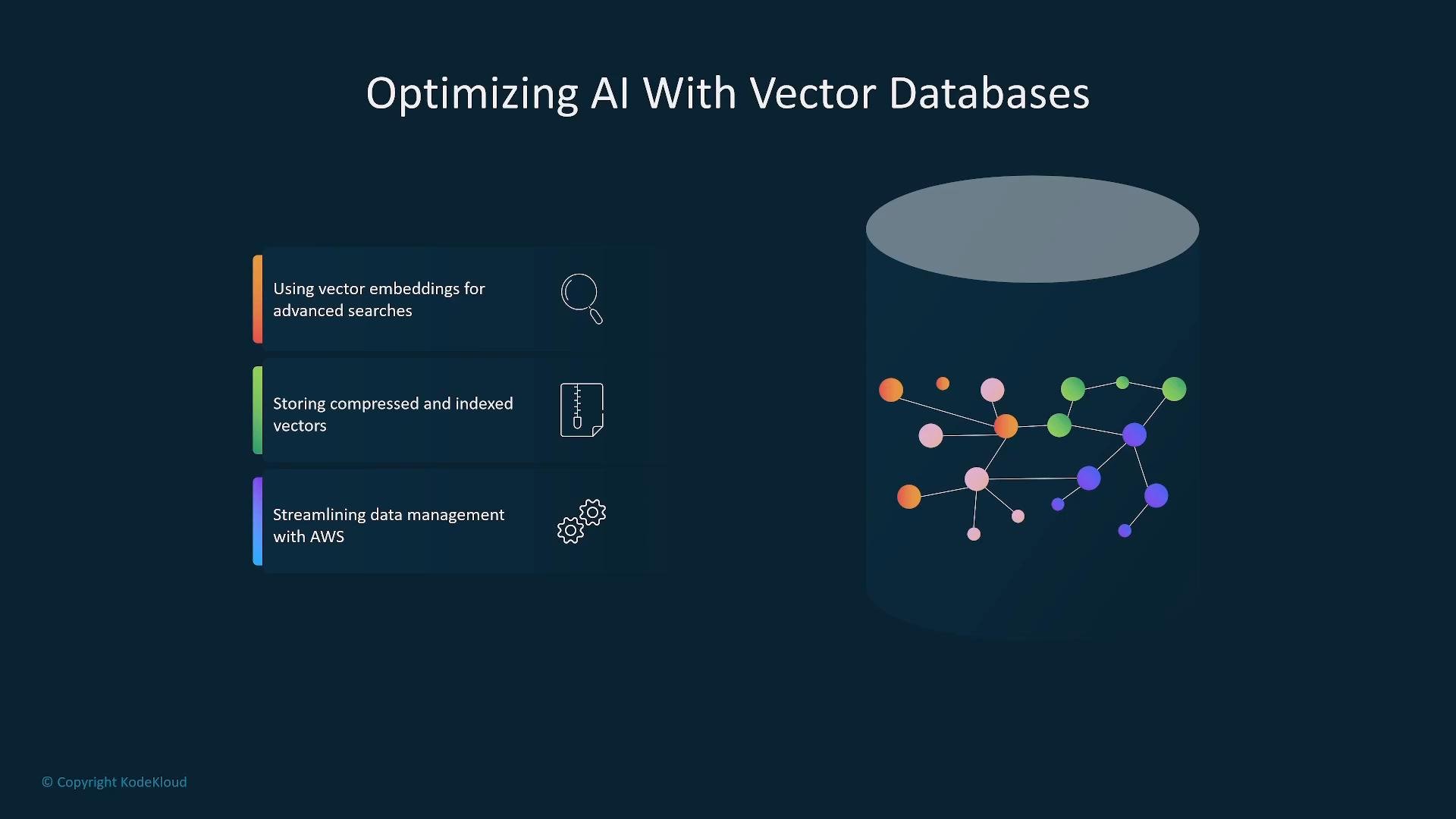
To support long context windows, semantic search, and retrieval-augmented generation (RAG), convert documents to vector embeddings and store/index them for efficient retrieval. Common AWS options:- Purpose-built search engines: Amazon OpenSearch with k-NN and vector search plugins.
- Graph databases and graph ML: Amazon Neptune / Neptune ML for relationship-aware retrieval.
- Standard data stores: RDS, Aurora, DocumentDB for metadata and pointers; specialized services or external vector DBs can store the actual embeddings and indexes.
Security, governance, and operational controls
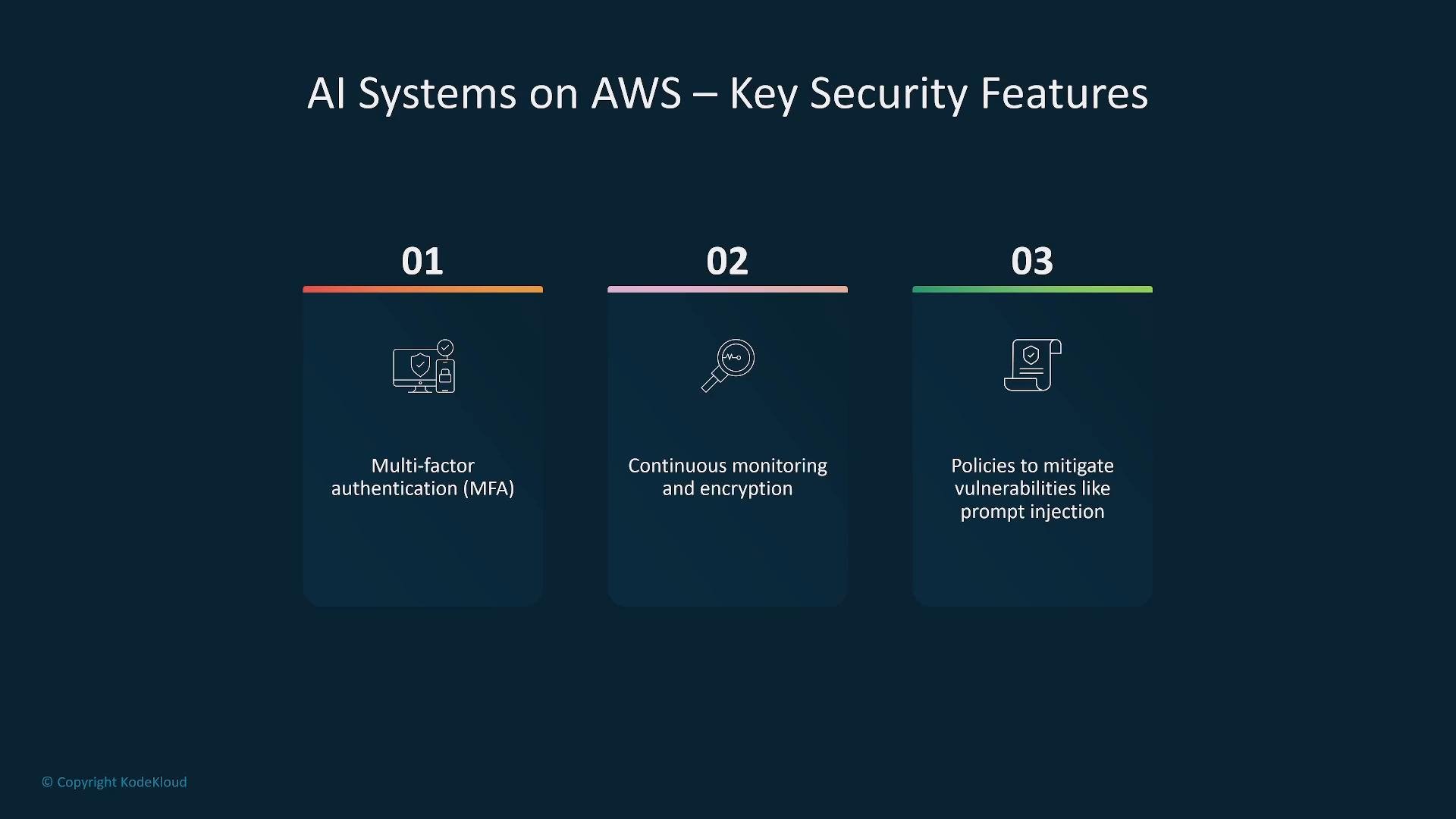
Security and confidentiality are integral to production AI workloads. AWS offers controls across identity, infrastructure, and runtime:- IAM policies and least-privilege roles.
- Hardware and hypervisor isolation via the AWS Nitro System.
- Dedicated ML accelerators (Inferentia, Trainium) and GPU families for isolated, performant instances.
- Monitoring and observability: CloudWatch, CloudTrail, Amazon Inspector.
- Encryption at rest and in transit, MFA, and model-specific monitoring for inputs/outputs.
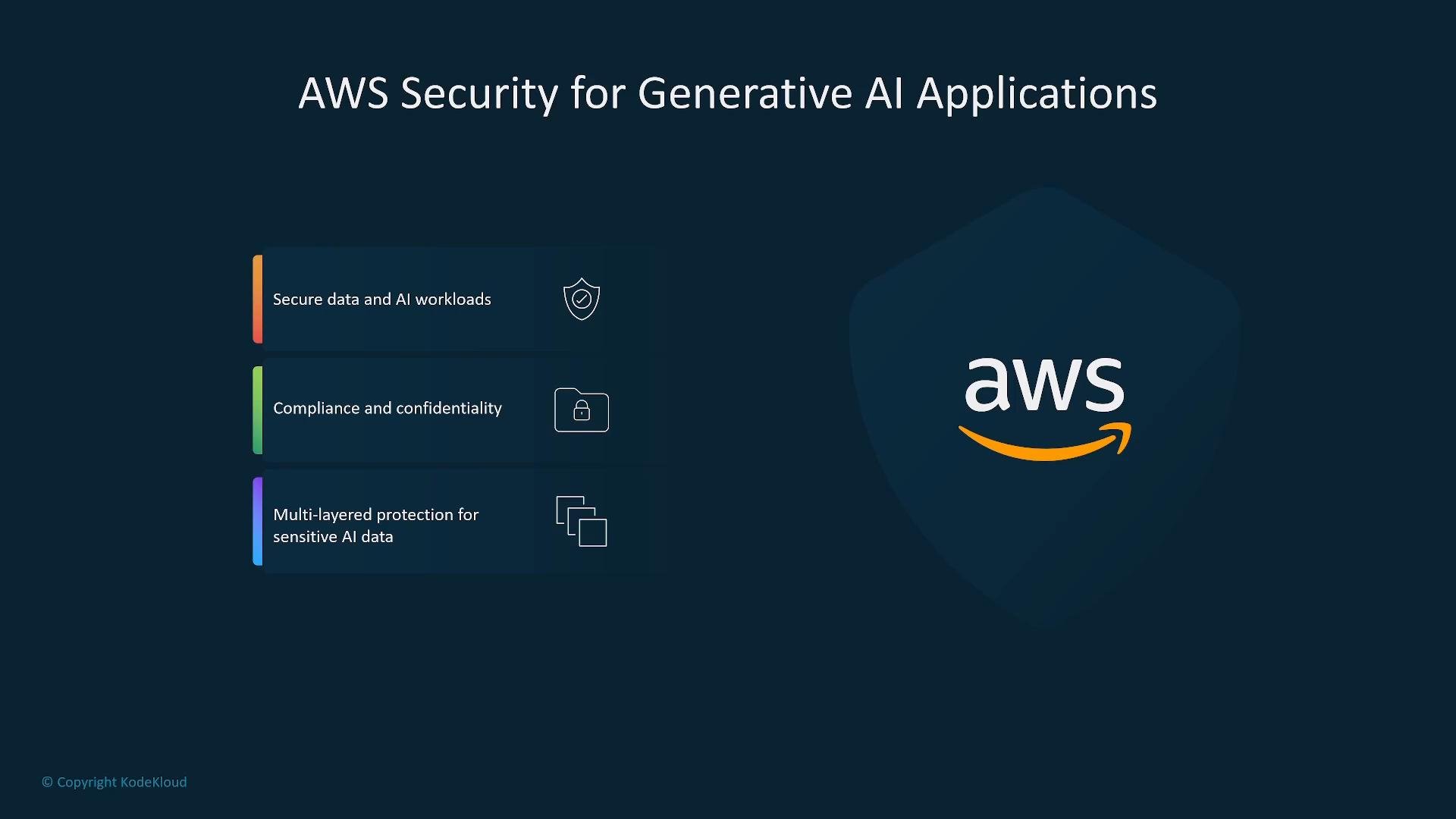
Operational security considerations: implement prompt-injection defenses, content filtering, and model guardrails. Treat model inputs and outputs as data requiring logging, access controls, and retention policies.
AWS Nitro System and ML accelerators
The AWS Nitro System is a foundational platform that isolates customer workloads from the host and other tenants and delivers the I/O and security features required for many ML instance types. Specific accelerators and instance families (Trainium, Inferentia, GPU instances) are available when you need dedicated training or inference performance.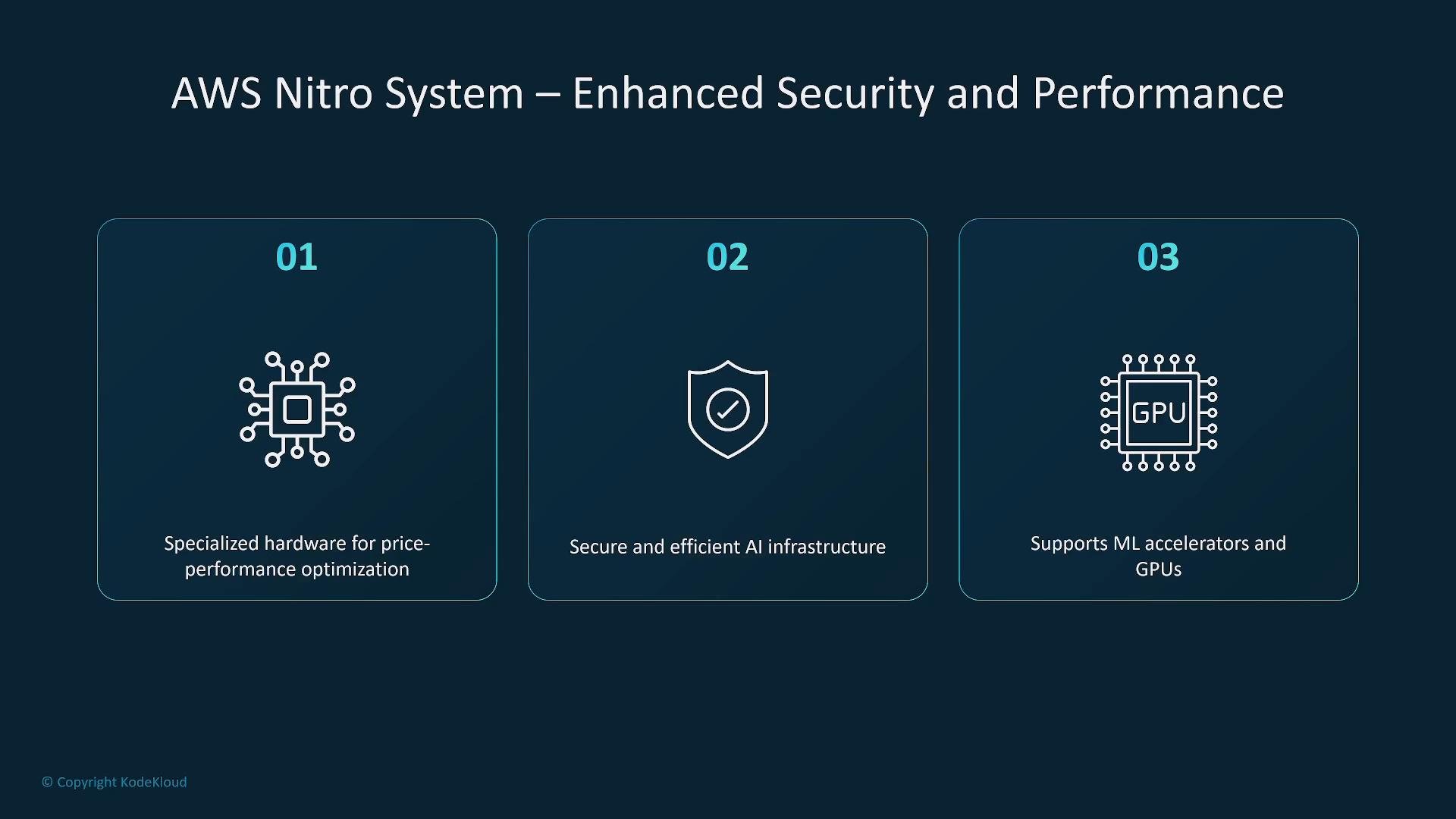
Summary
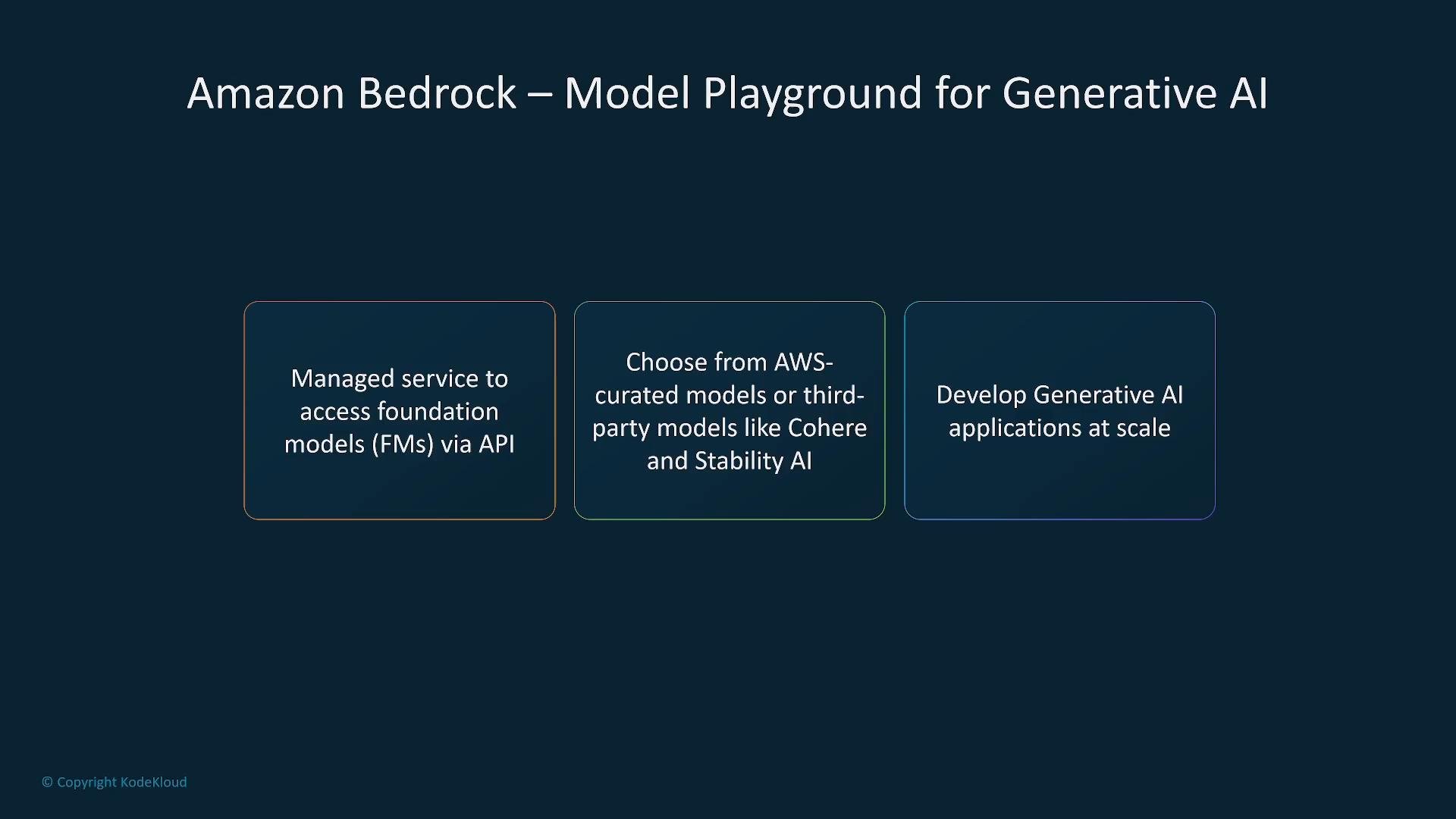
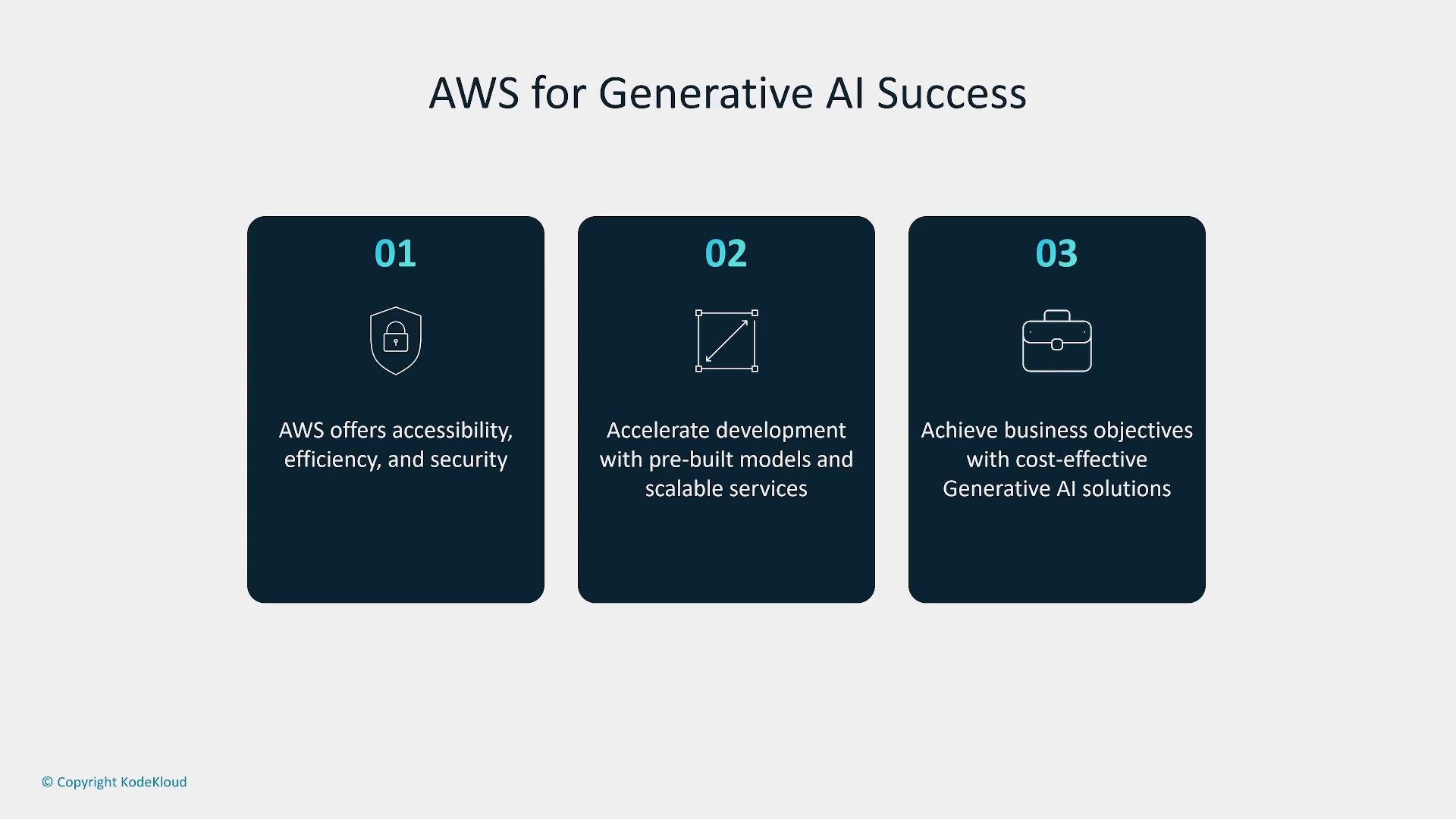
AWS supports generative AI development across three layers: infrastructure and accelerators, managed model APIs and ML platforms, and application frameworks. You can:- Use fully managed foundation models (Bedrock) for rapid prototyping and production.
- Use SageMaker for end-to-end model lifecycle, fine-tuning, and MLOps.
- Provision accelerator-backed instances for custom training or inference at high scale.
Links and references
- AWS Documentation
- Amazon SageMaker
- Amazon Bedrock
- Amazon OpenSearch Service
- Amazon Neptune
- AWS Nitro System overview