

Fairness
Fairness is the cornerstone of responsible AI. It guarantees that AI models do not discriminate based on attributes such as age, gender, or race. For example, a credit score model should evaluate individuals based solely on their financial history rather than extraneous attributes like gender or ethnicity. Without this emphasis, AI systems may reinforce societal biases and erode public trust.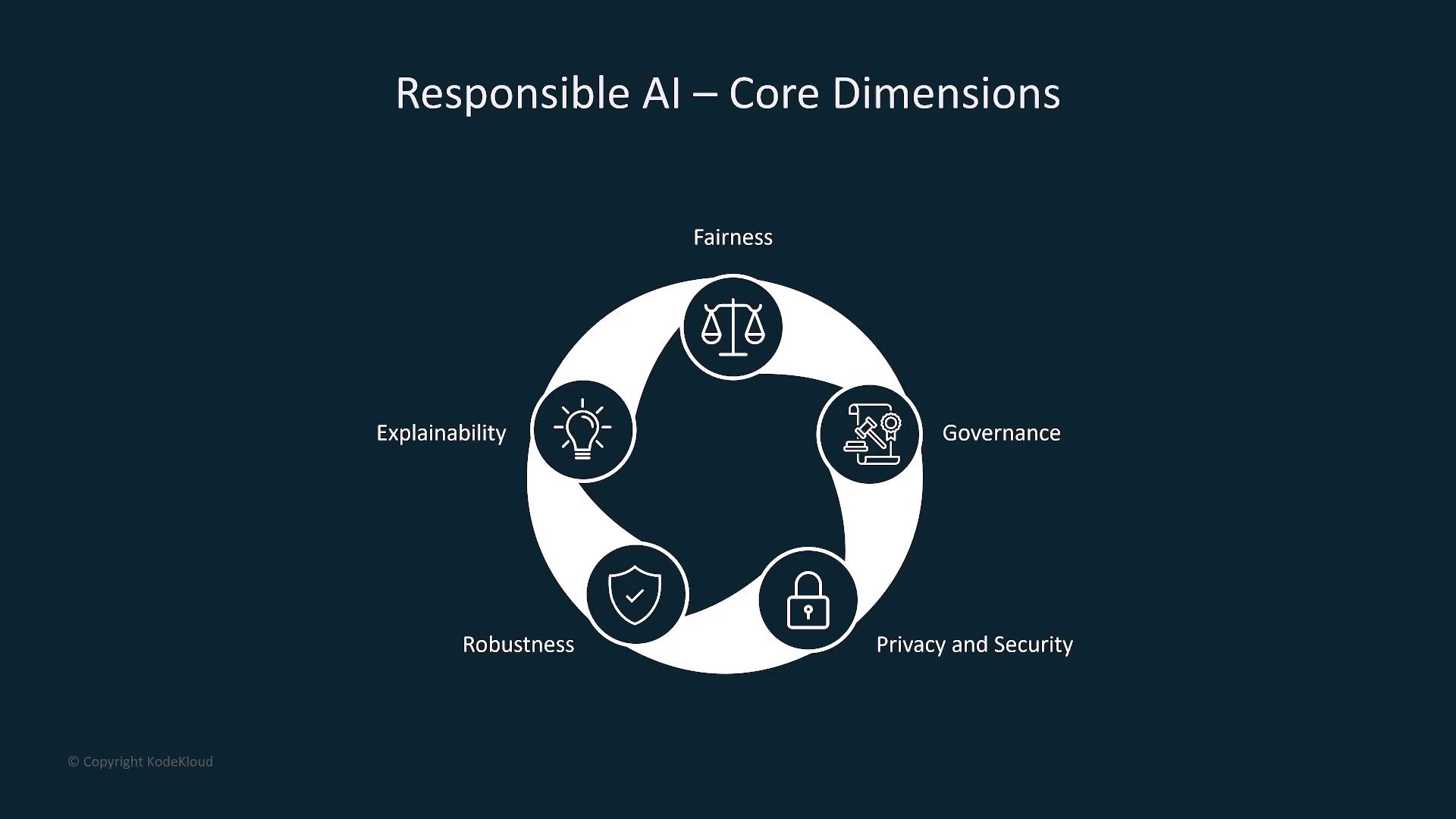
Explainability
Explainability helps foster accountability by making AI decision processes understandable for users. For example, if a loan application is rejected, the system should indicate whether the decision was influenced by factors such as inadequate credit history or low income. Transparent explanations reinforce user trust by ensuring that decisions are clear and justifiable.
Robustness
Robustness refers to the ability of an AI system to handle unexpected scenarios—such as missing data or unusual inputs—without crashing or producing inaccurate results. Whether it’s deployed in autonomous vehicles or healthcare robots, a robust AI system can minimize faults and prevent errors that could lead to adverse outcomes.
Privacy and Security
In fields that handle sensitive data, such as healthcare and finance, privacy and security are non-negotiable. Robust data protection mechanisms help prevent unauthorized access and ensure compliance with regulations like GDPR. This focus not only maintains user trust but also reduces legal risks for organizations.
Governance
Governance integrates all other dimensions by ensuring that AI systems adhere to legal standards and industry best practices. Effective governance includes risk assessment, incident reporting, and structured response protocols to manage and mitigate potential issues.
Transparency
Transparency is vital for clarifying both the capabilities and limitations of AI systems. Organizations must communicate the potential risks and benefits, such as occasional “hallucinatory” outputs or inaccuracies, so users understand that the tool should not be solely relied upon for critical decisions. This openness helps prevent misuse and strengthens overall trust in AI.
Understanding these key features is not only vital for designing ethical and reliable AI systems but is also a crucial part of our certification exam.