

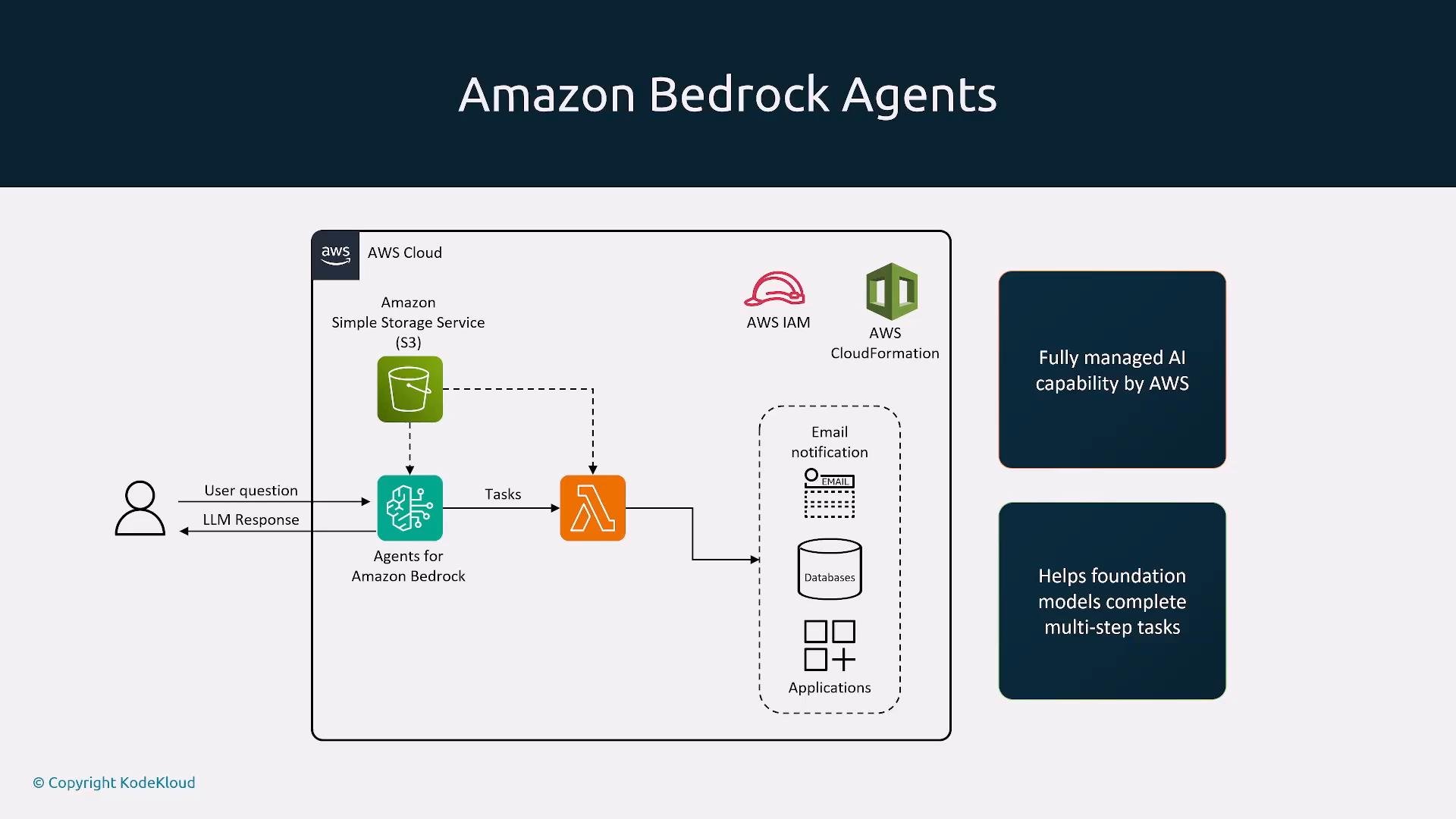
How agents operate in multi-step workflows
Agents decompose a user’s request into a sequence of subtasks, select which models or services to call, collect required contextual data, and then execute or delegate actions. Typical responsibilities include:- Parsing and decomposing the user intent into discrete steps.
- Selecting appropriate foundation models or domain-specific tools.
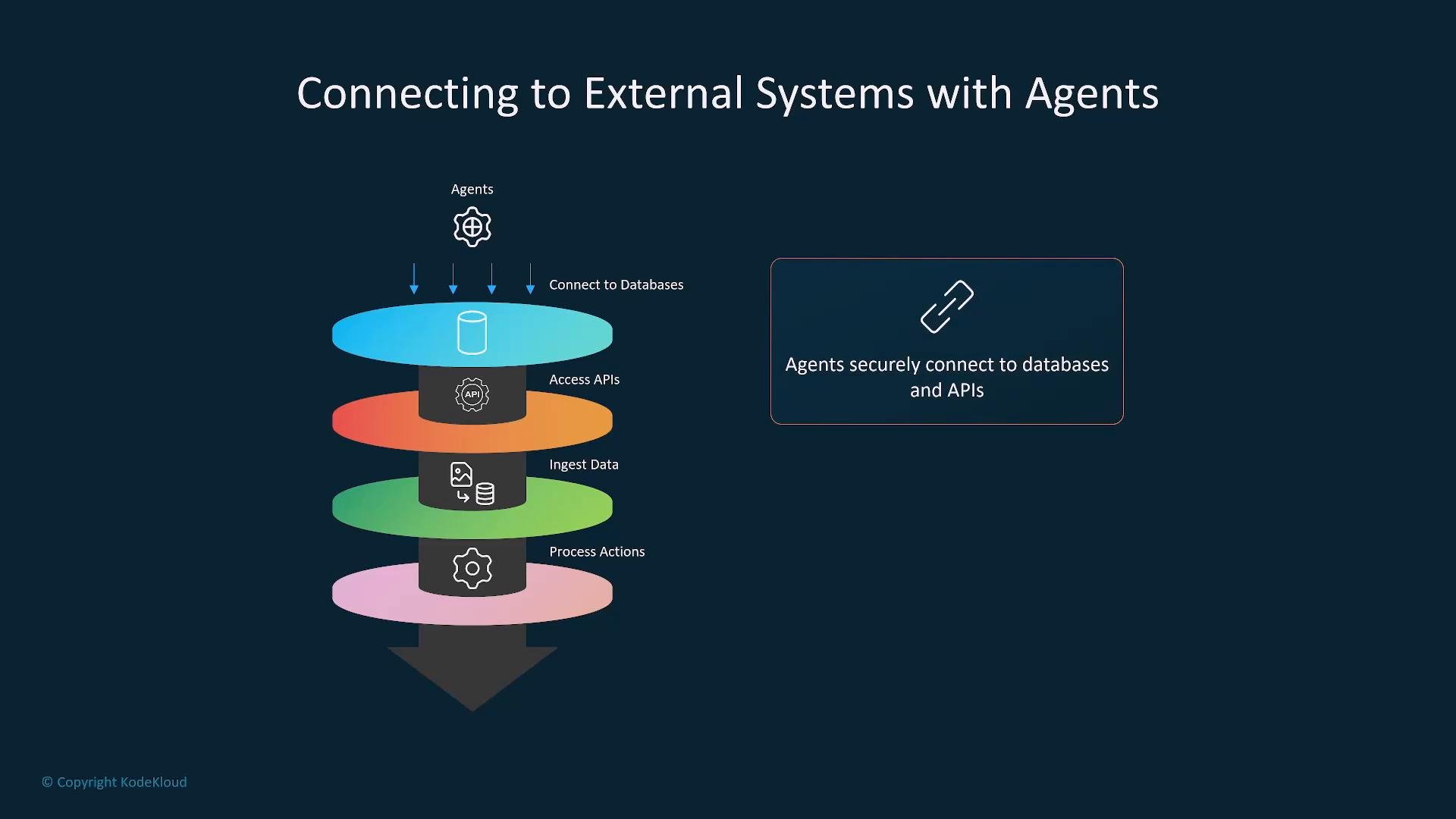
- Calling APIs, querying databases, or invoking external services.
- Prompting models for clarifications or confirmations when needed.
- Coordinating actions and returning consolidated results to users.
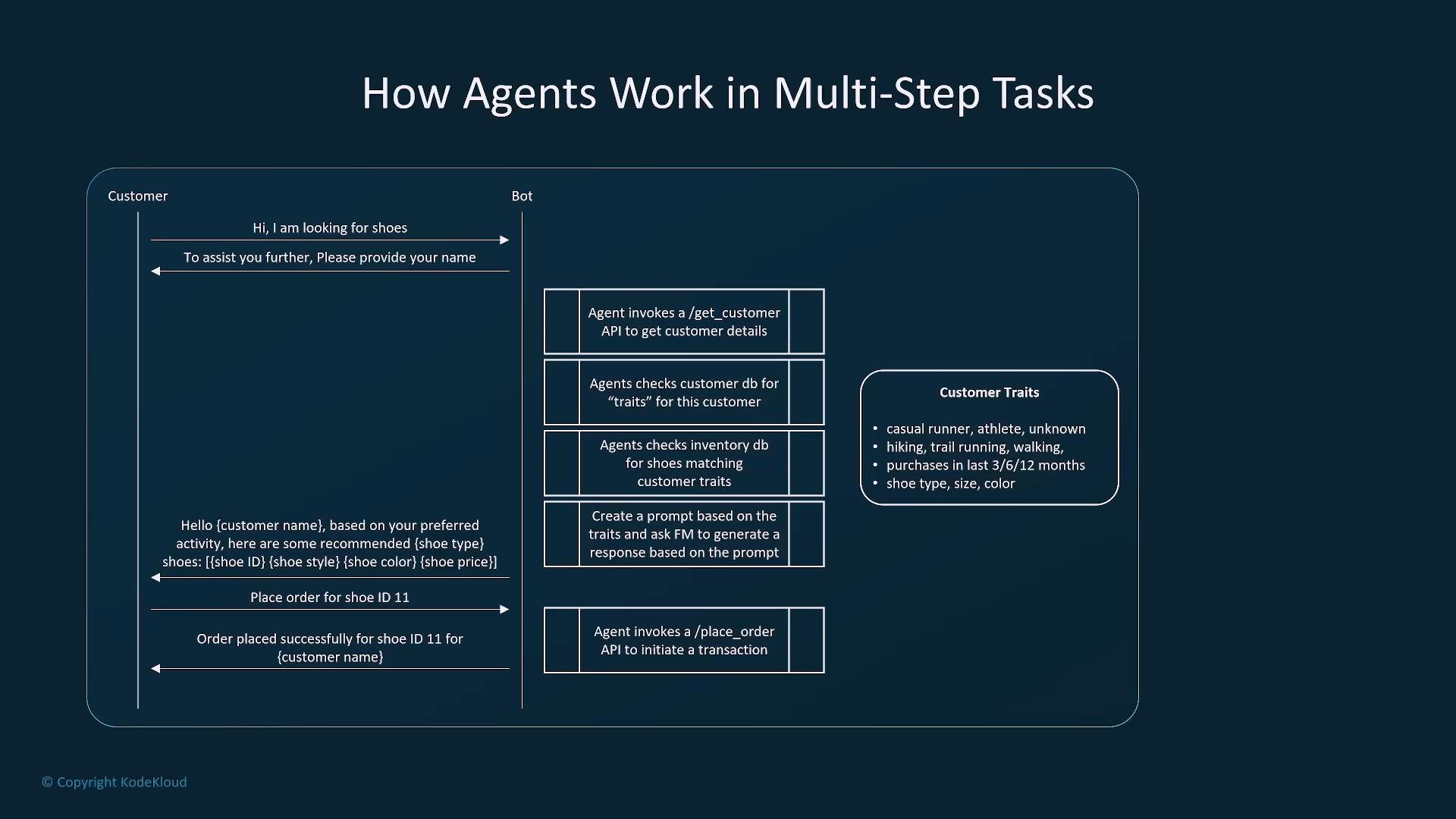
- Splitting complex tasks into manageable subtasks.
- Calling external APIs to ingest, validate, or update data.
- Coordinating interactions between models and backend systems.
- Securely accessing databases and other resources to fetch or persist state.
Validation and accuracy
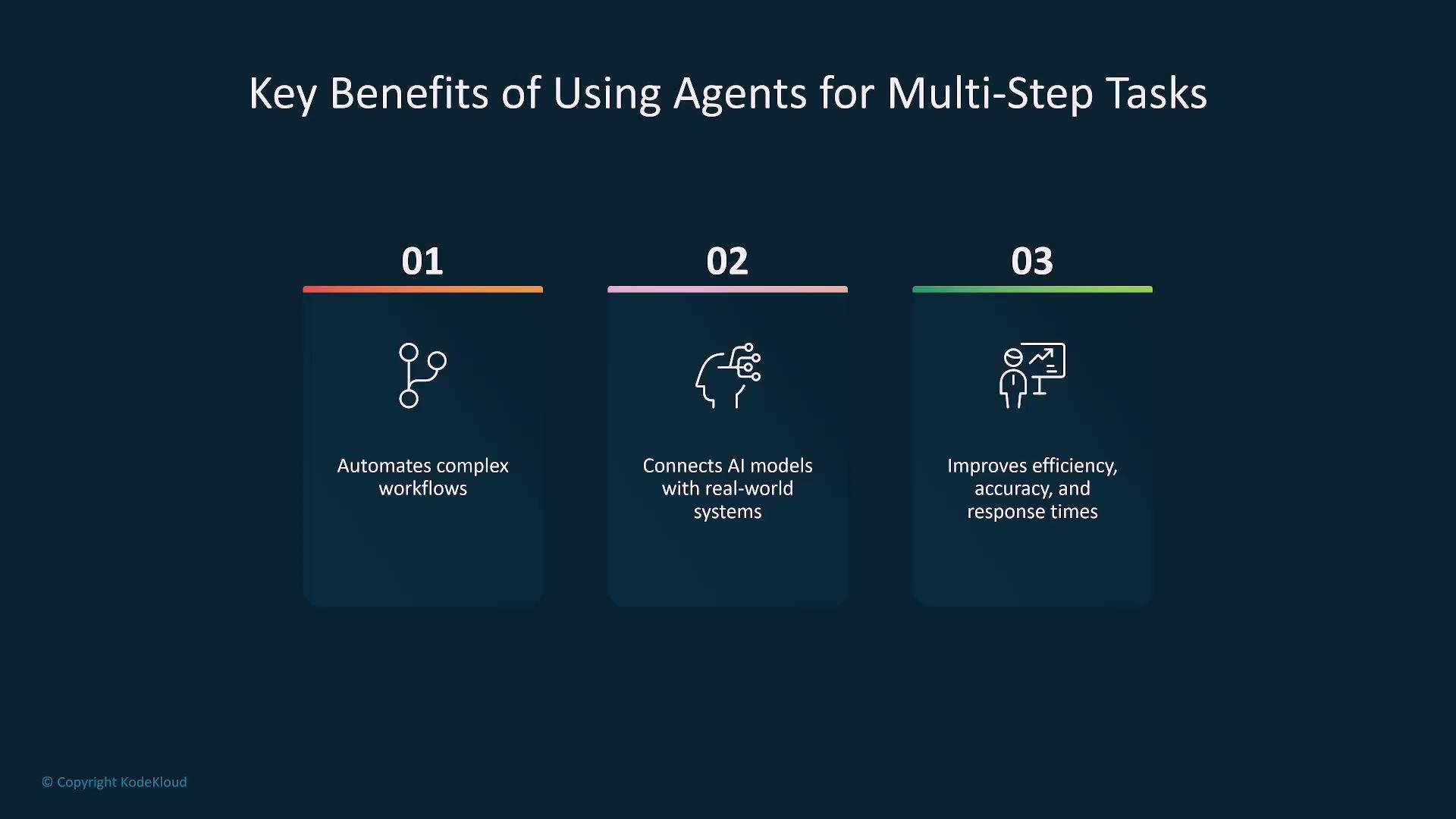
Agents improve reliability by validating model outputs against authoritative sources (APIs, databases, or additional models). For tasks that depend on real-time or domain-specific data—inventory levels, booking status, or system health—this verification step is essential before taking irreversible actions.Key benefits
Operational considerations
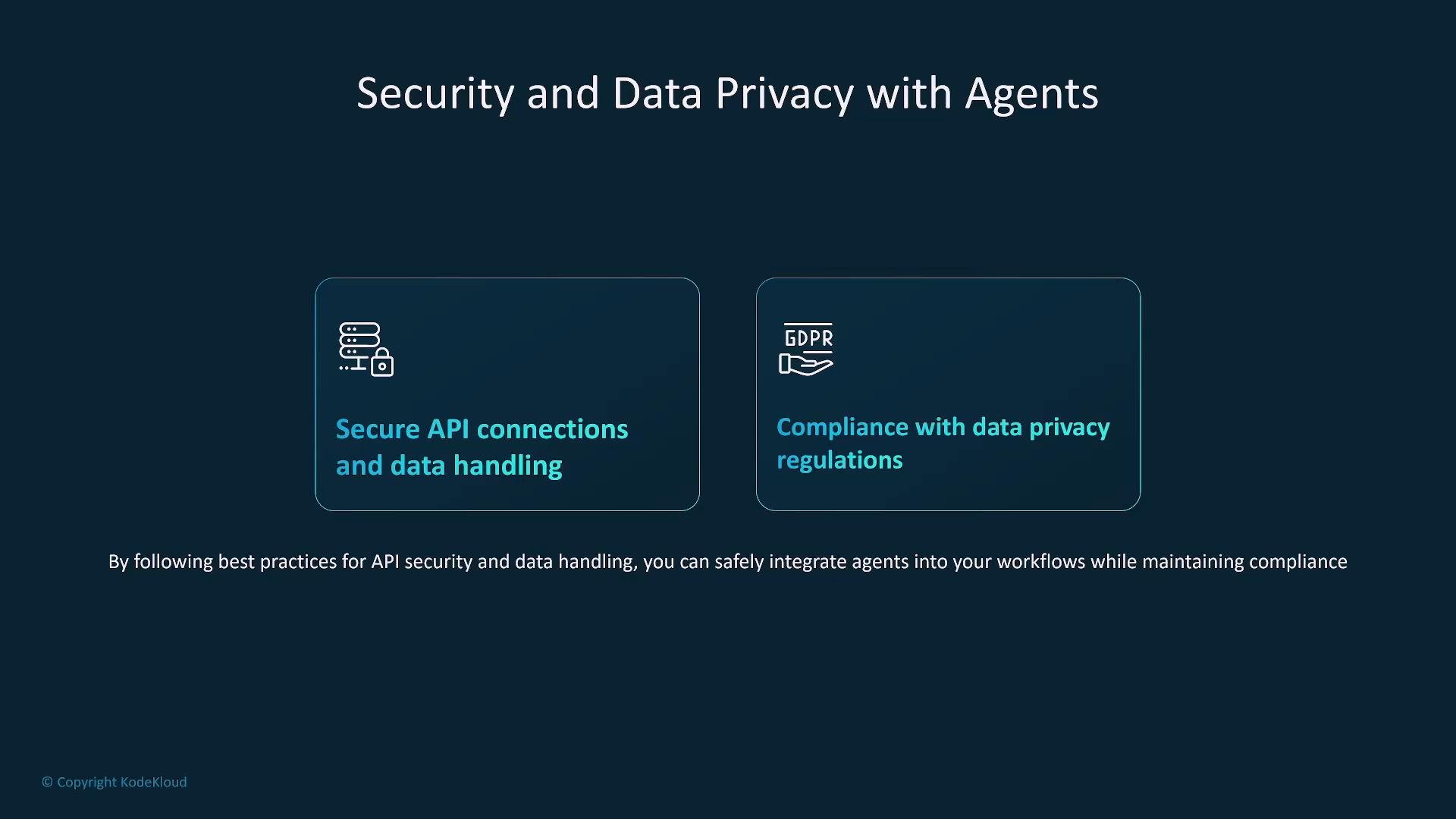
Introducing agents brings operational responsibilities beyond model accuracy. Plan for the following areas to ensure safe, compliant, and maintainable deployments.Ensure agents operate under strict governance: audit access, log actions, and implement rollbacks or human-in-the-loop approvals for critical operations.
Scalability and reliability
Agent orchestration can add complexity, but managed platforms (for example, AWS services backing Amazon Bedrock) abstract much of the infrastructure scaling. Design agent workflows for reliability by adopting patterns such as idempotency, durable queues, exponential backoff, and retries.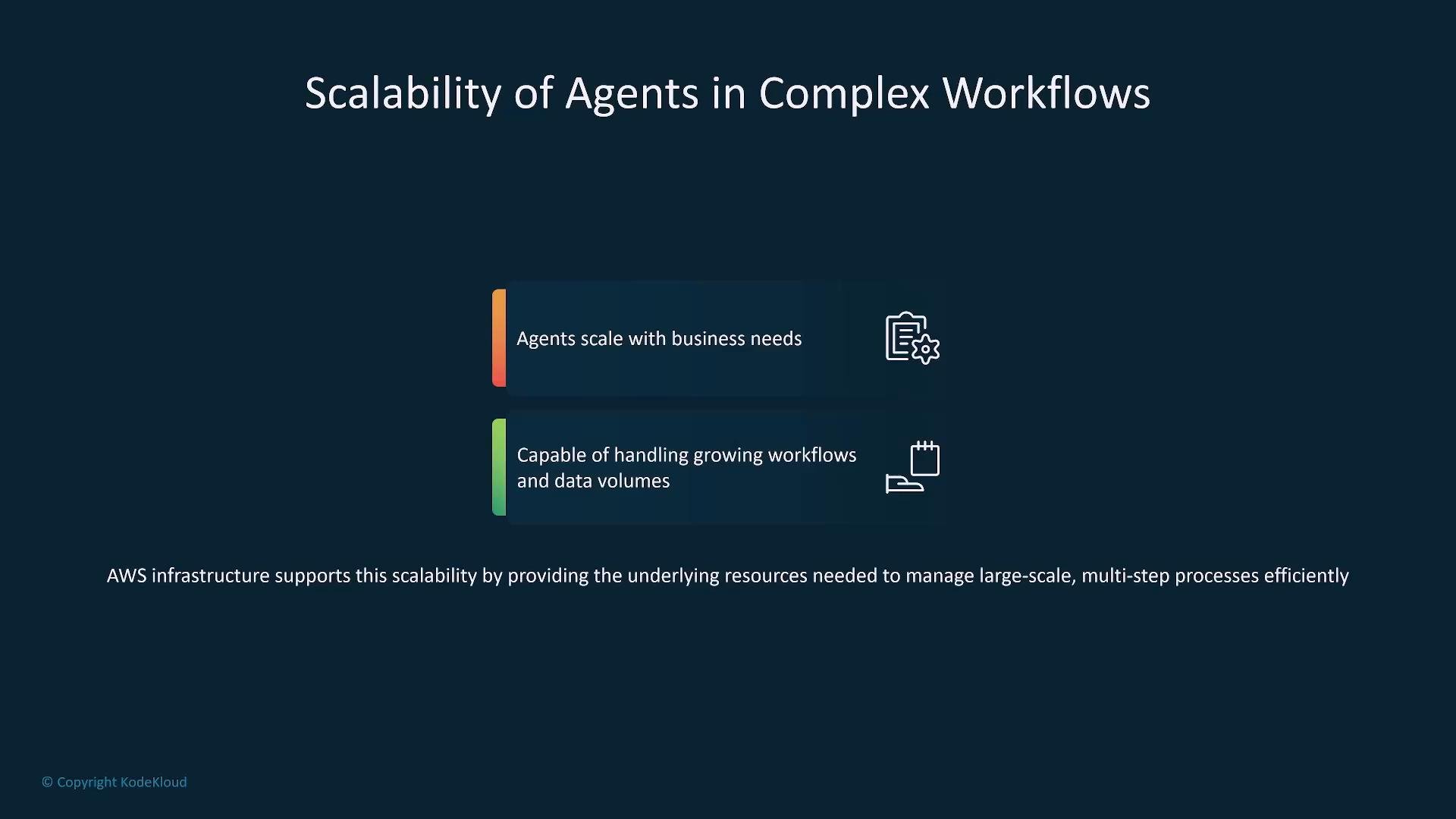
Future use cases and specialization
Agents apply to many industries and domains: e-commerce (order processing), healthcare (clinical workflows and scheduling), IoT (device orchestration), finance (transaction processing), security (automated incident response), and robotics. Agent teams can be specialized and coordinated—for example, one agent for infrastructure provisioning (Terraform), one for cloud operations (AWS services), and another for architecture validation—enabling complex multi-agent workflows.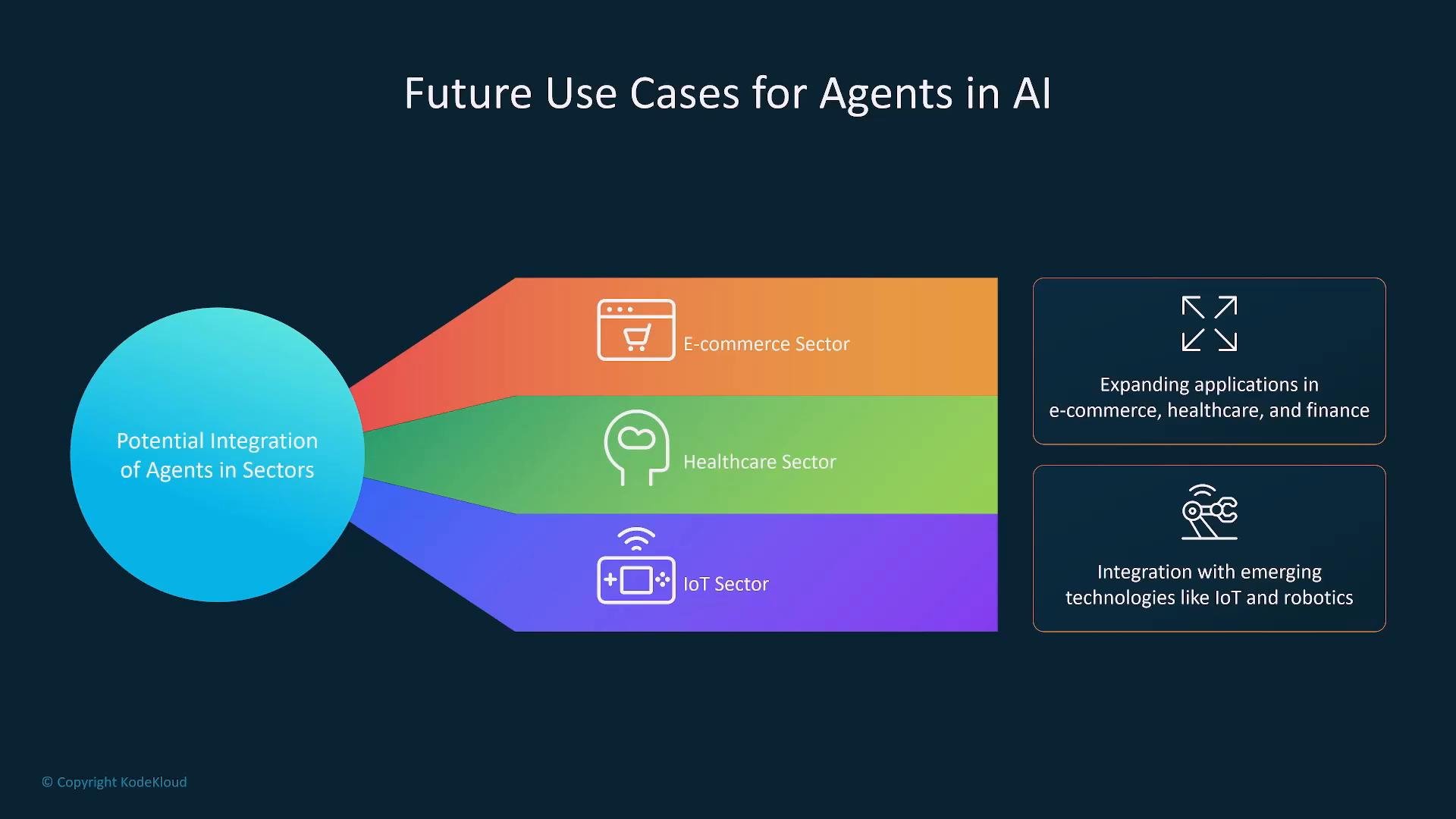
Summary
Agents provide the orchestration layer that empowers foundation models to complete multi-step, real-world tasks by coordinating models, APIs, and backend systems. Managed capabilities such as Amazon Bedrock Agents simplify secure integration with cloud services, help enforce governance, and scale operationally. As agentic AI matures, organizations should expect broader adoption across sectors and tighter integration with operational systems.Links and references
- Amazon Bedrock — Managed capability for foundation models and agent orchestration
- AWS Machine Learning overview: https://aws.amazon.com/machine-learning/
- Patterns for reliable orchestration: Idempotency, retries, and durable queues (searchable terms)