

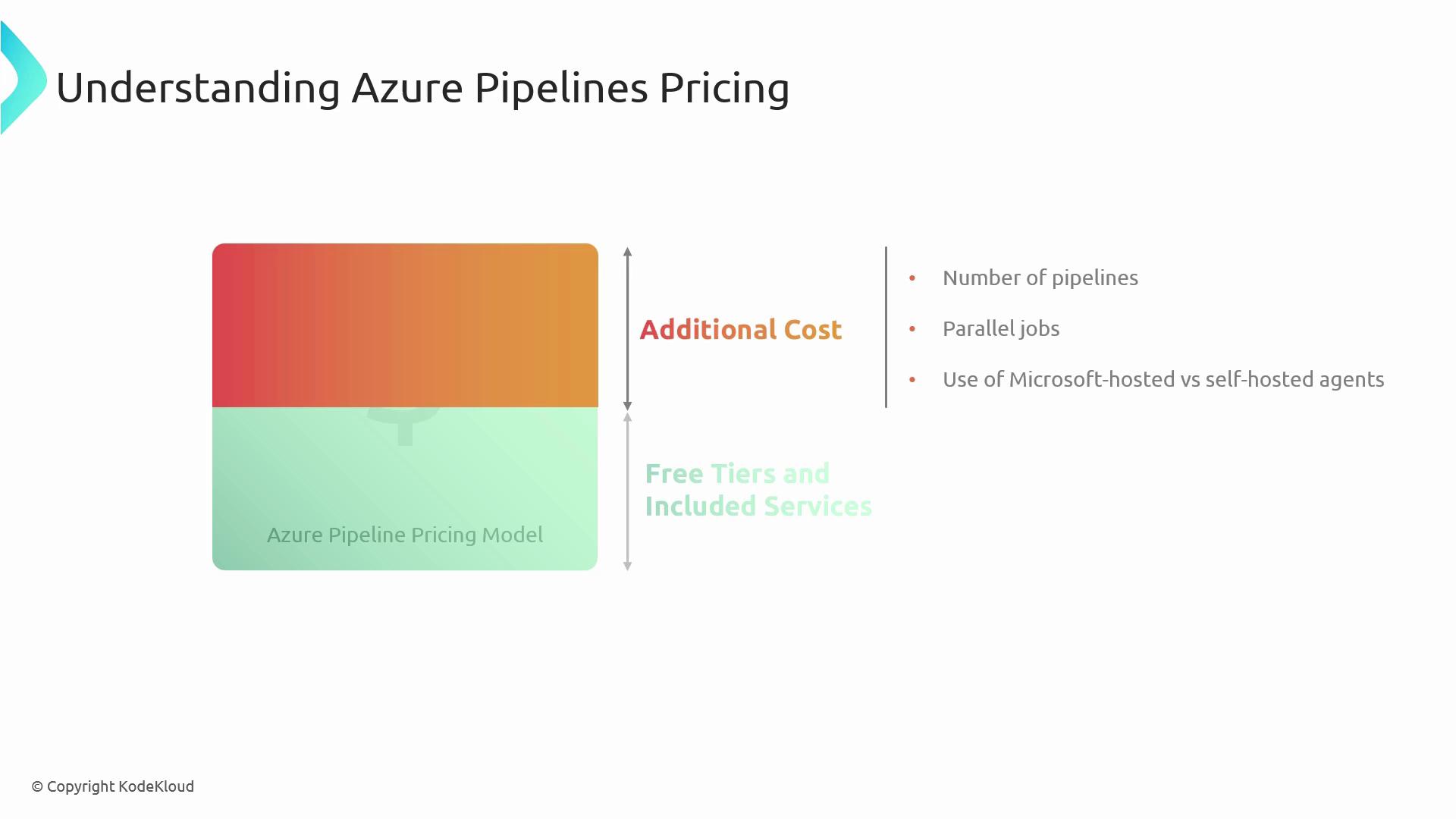
Azure Pipelines includes free build minutes and a free self-hosted agent for open-source projects. Leverage these allowances to experiment before moving to paid plans.
Cost Factors
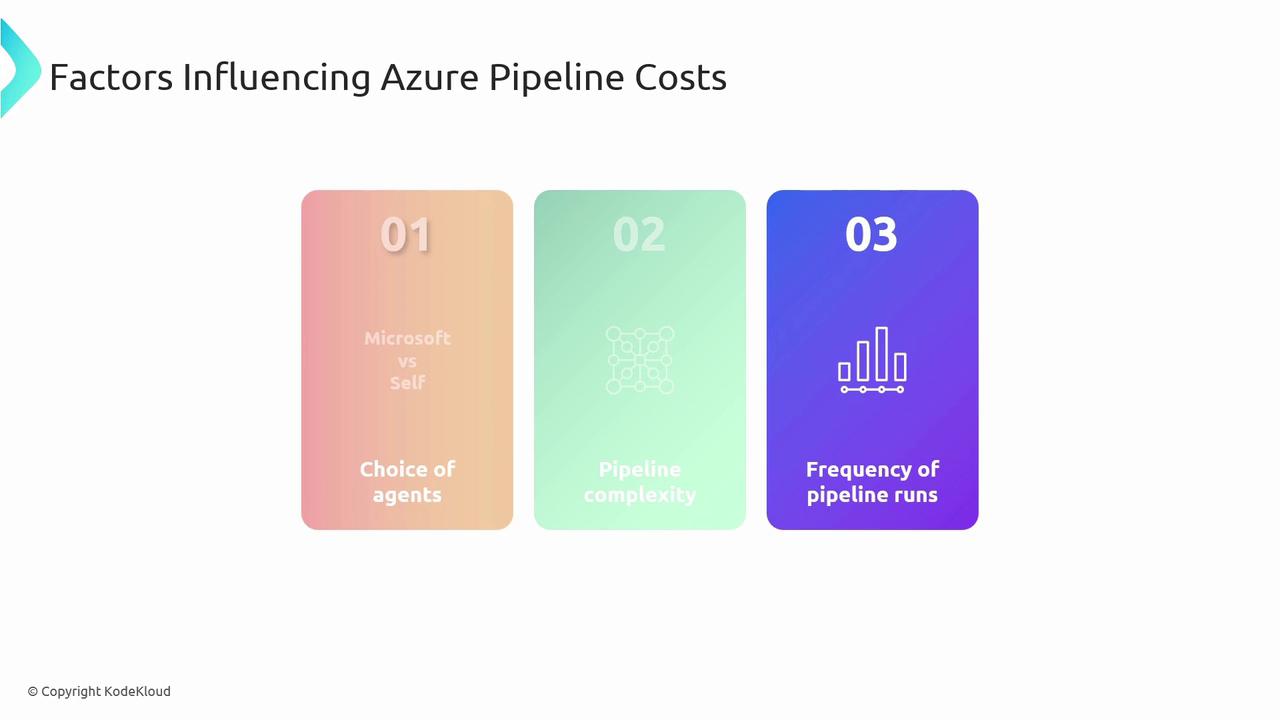
Azure Pipelines charges are driven by three primary factors. Knowing how each one affects your bill helps you plan capacity and cut unnecessary spend.Self-hosted agents require you to provision, secure, and maintain VMs or hardware. Underestimate this at your own risk.
Cost Management Strategies
Optimize your Azure Pipelines spending by adopting these proven strategies: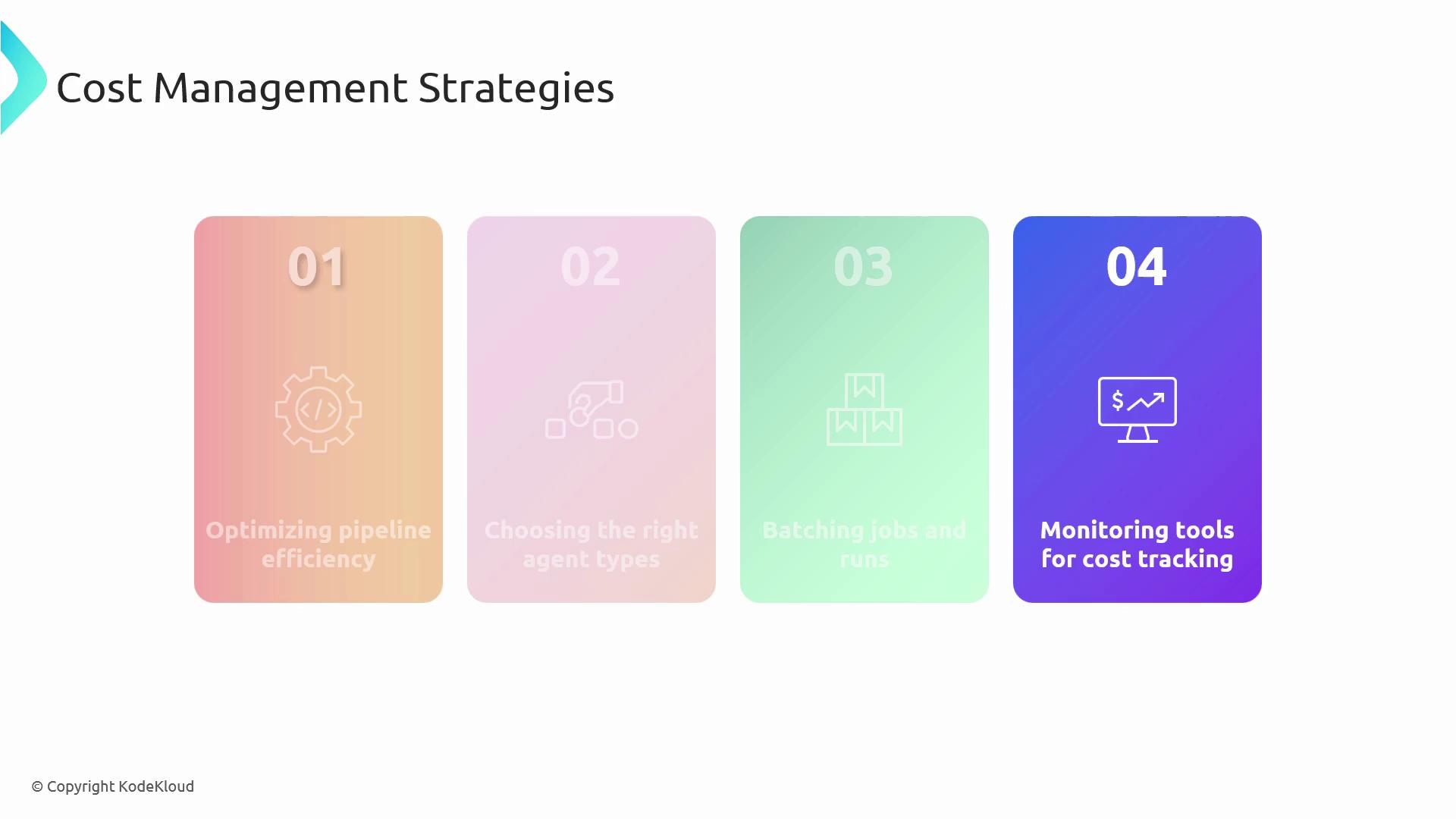
Best Practices for Cost Optimization
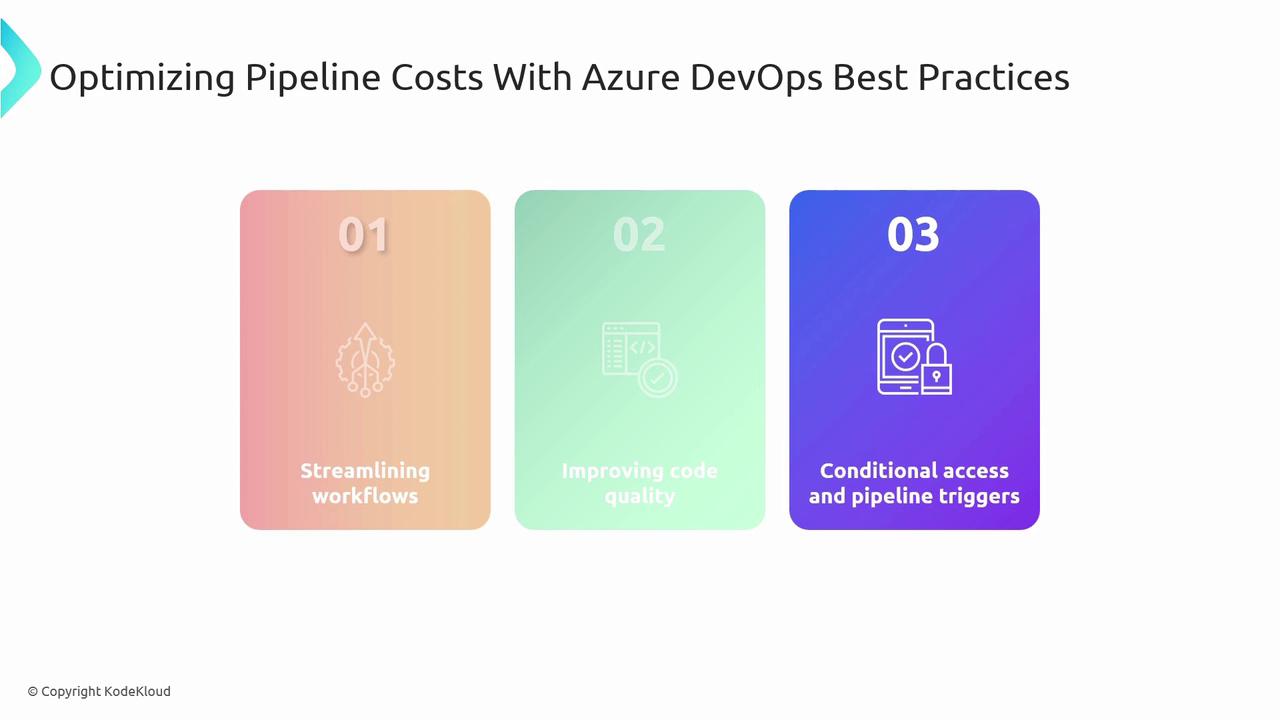
Embed cost-efficient practices directly into your DevOps workflows:- Streamline workflows by eliminating idle waits and parallelizing only critical steps.
- Improve code quality early with linting, static analysis, and unit tests to reduce build failures.
- Use conditional triggers (
paths,branches) and pipeline caching to run jobs only when necessary.
Tools and Resources
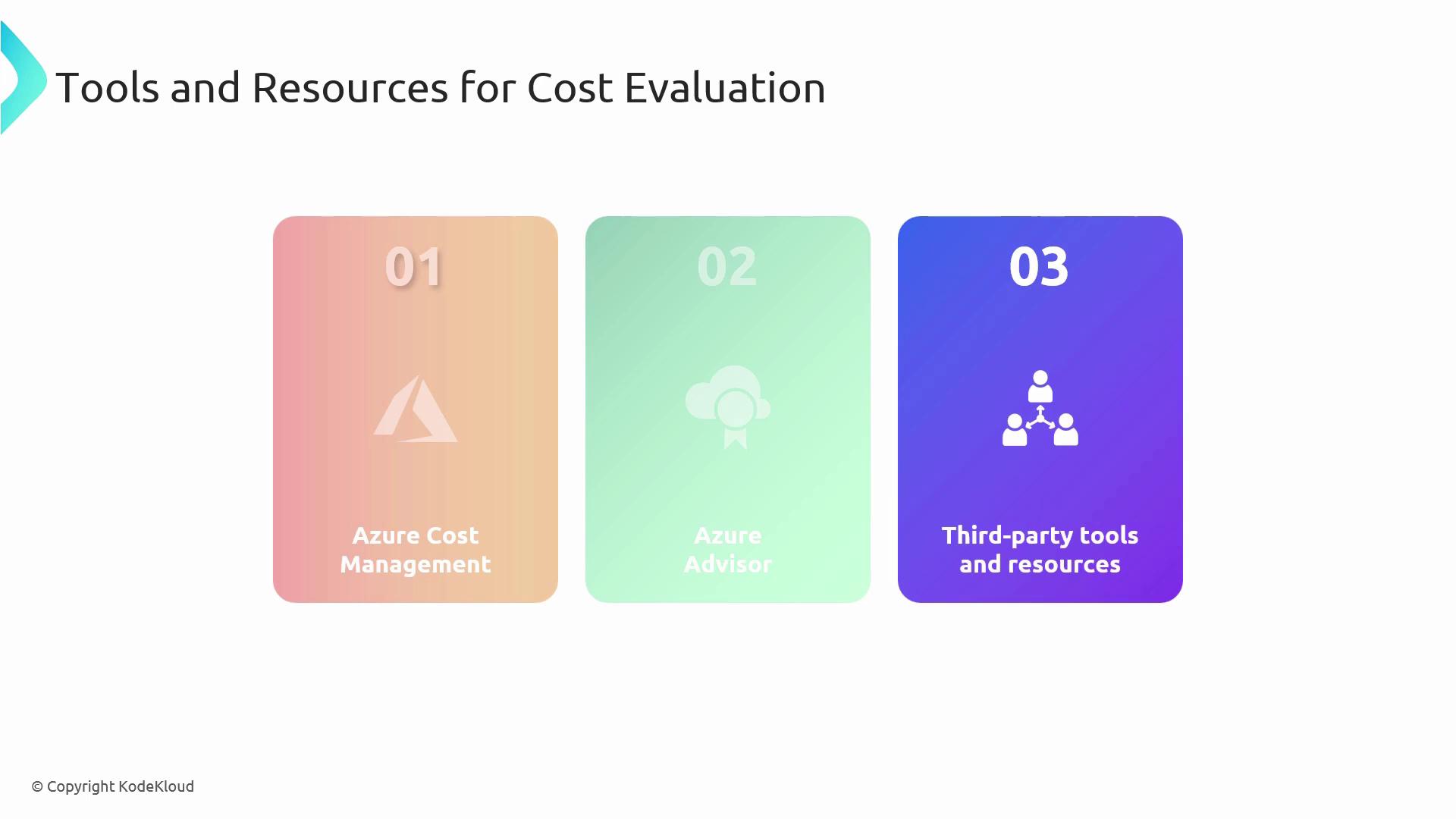
Leverage these native and third-party tools to track, analyze, and optimize your Azure Pipelines spend:- Azure Cost Management: Comprehensive dashboards, budgets, and alerts for all Azure services.
- Azure Advisor: Personalized recommendations to improve performance and efficiency.
- Third-party analytics platforms (e.g., CloudHealth, Harness) for deeper pipeline-specific insights.
Summary
In this article, you learned how to:- Interpret the Azure Pipelines pricing model and free-tier grants.
- Identify key cost drivers: agent types, pipeline complexity, and run frequency.
- Apply strategies to streamline, batch, and monitor pipeline runs.
- Implement best practices for efficient, failure-resilient workflows.
- Use tools and resources for continuous cost analysis and optimization.
Links and References
- Azure Pipelines Pricing
- Kubernetes on Azure DevOps
- Terraform Best Practices
- Azure DevOps Documentation