Why Use Git Hooks?
Integrating Git Hooks into your workflow offers several advantages: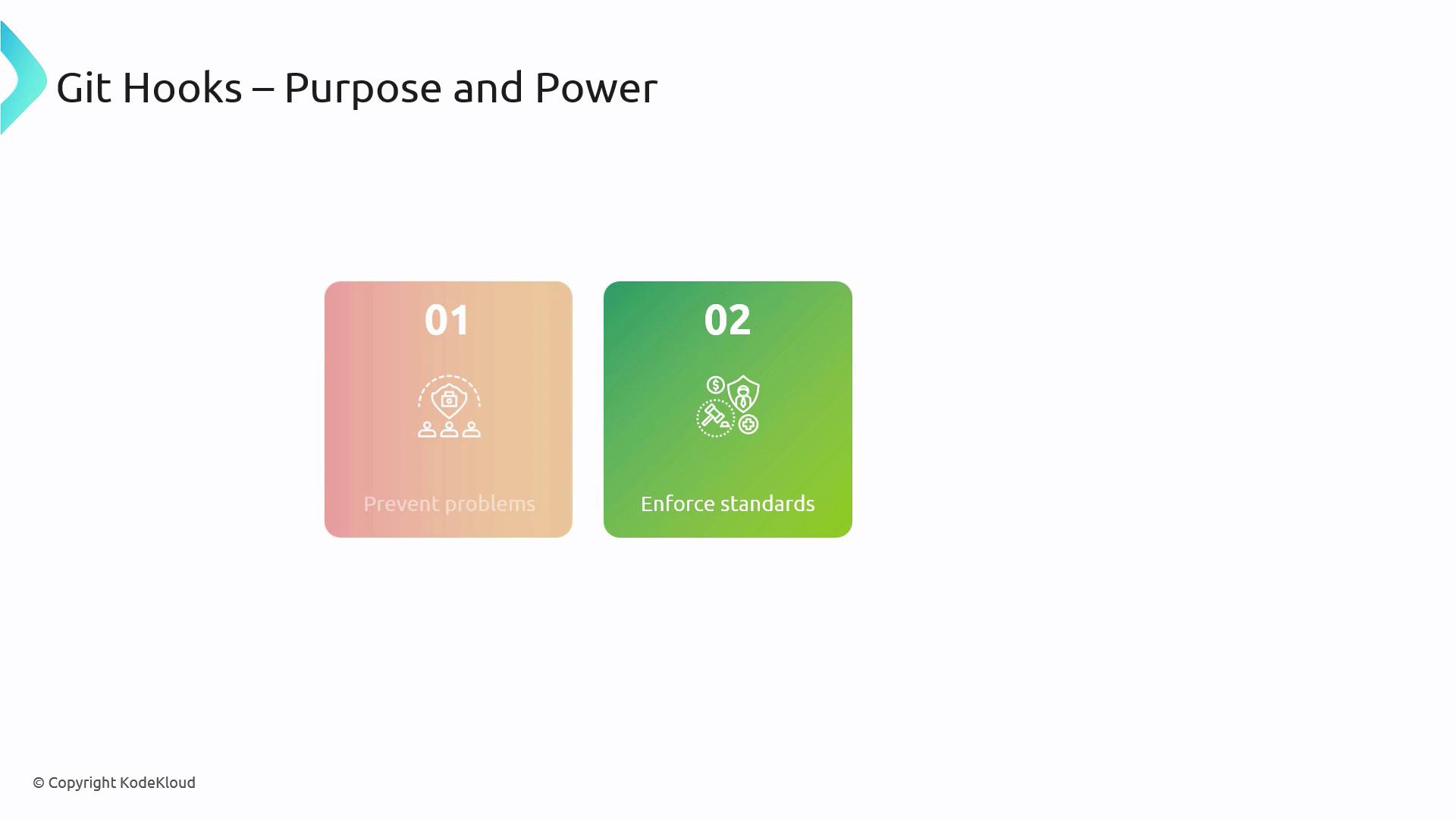
- Prevent regressions by running linters or unit tests before committing code.
- Enforce commit message conventions to maintain a readable history.
- Automate builds, deployments, or notifications post-merge to accelerate delivery.
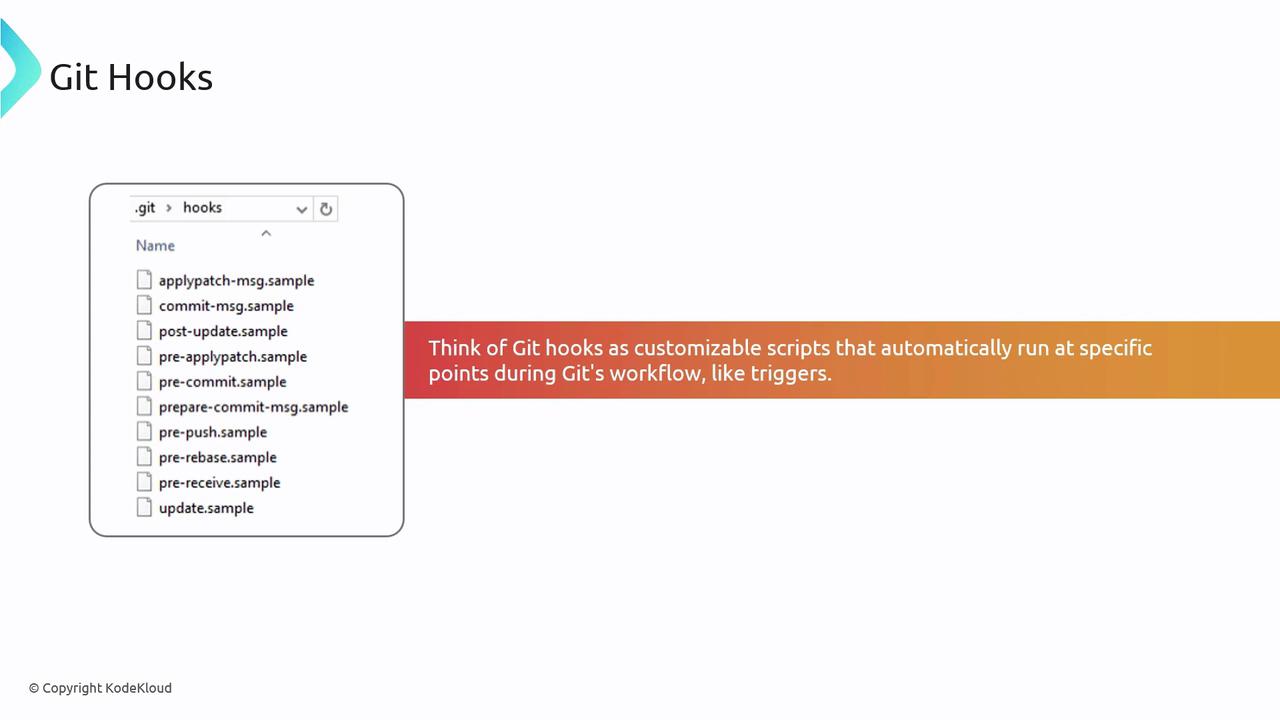
Hooks reside in the
.git/hooks/ directory. Rename or link your custom scripts (e.g., pre-commit) to enable them.Client-Side vs. Server-Side Hooks
Client-side hooks run on a developer’s machine, catching issues early. Server-side hooks execute on the remote repository to enforce organization-wide policies.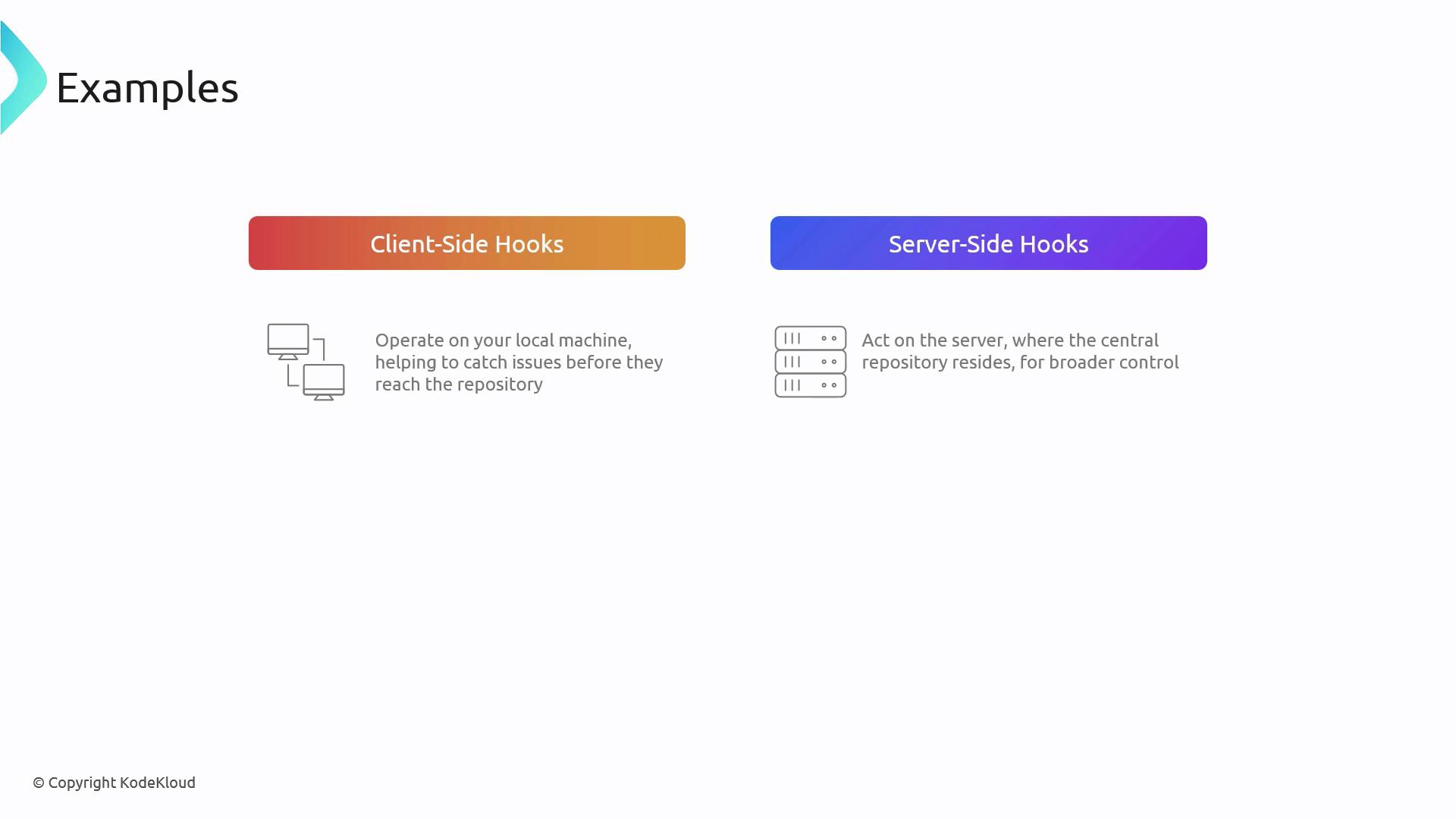
Common Client-Side Hooks
Common Server-Side Hooks
Server-side hooks require administrative access to the bare repository. Ensure you understand the impact before enabling these hooks.
Hook Examples in Action
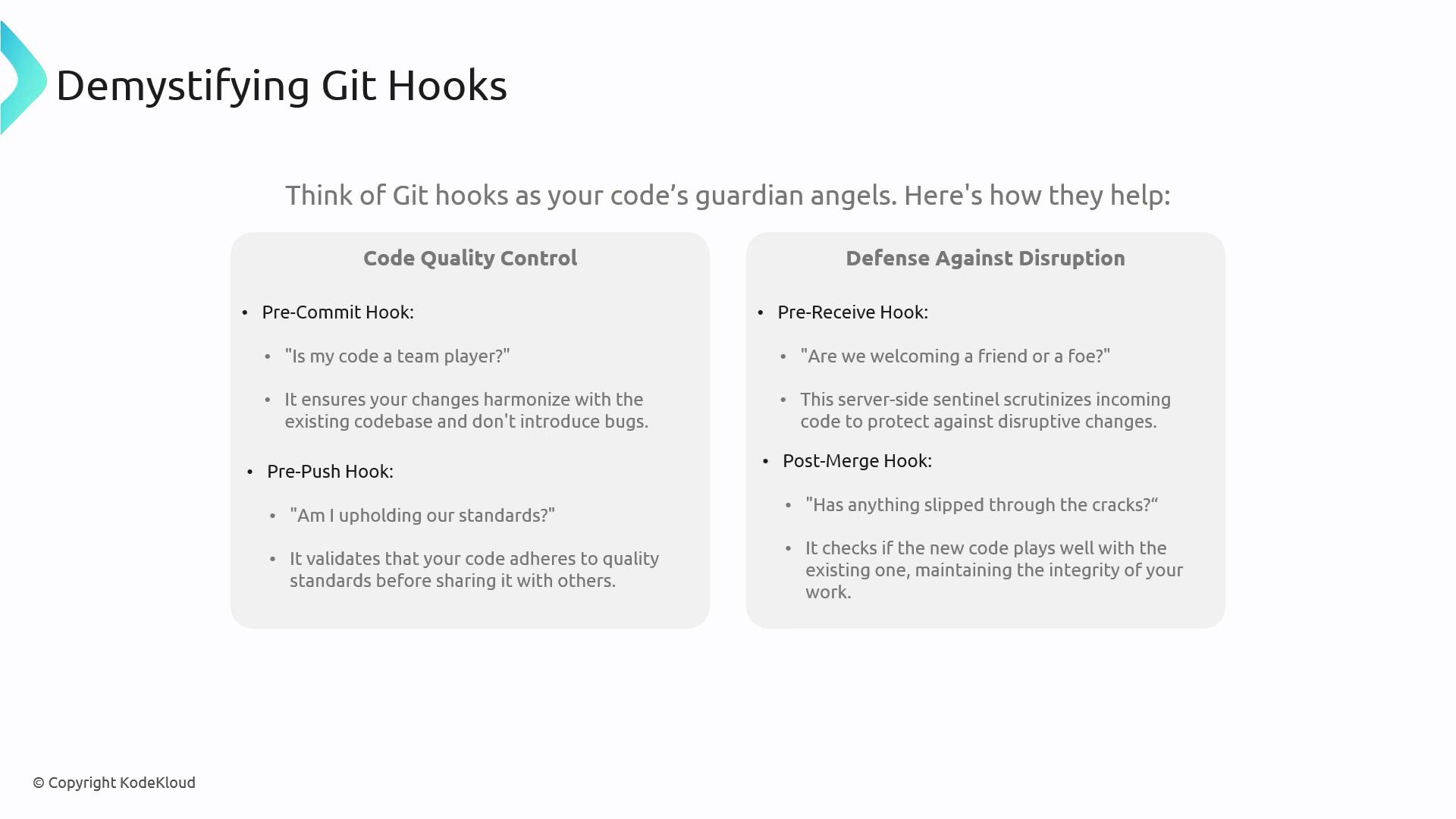
Think of hooks as quality gates and automation triggers:- pre-commit: Blocks commits if linters fail
- pre-push: Runs full test suites to verify stability before sharing
- pre-receive: Stops forbidden changes from entering the central repo
- post-merge: Refreshes dependencies or runs smoke tests after merging
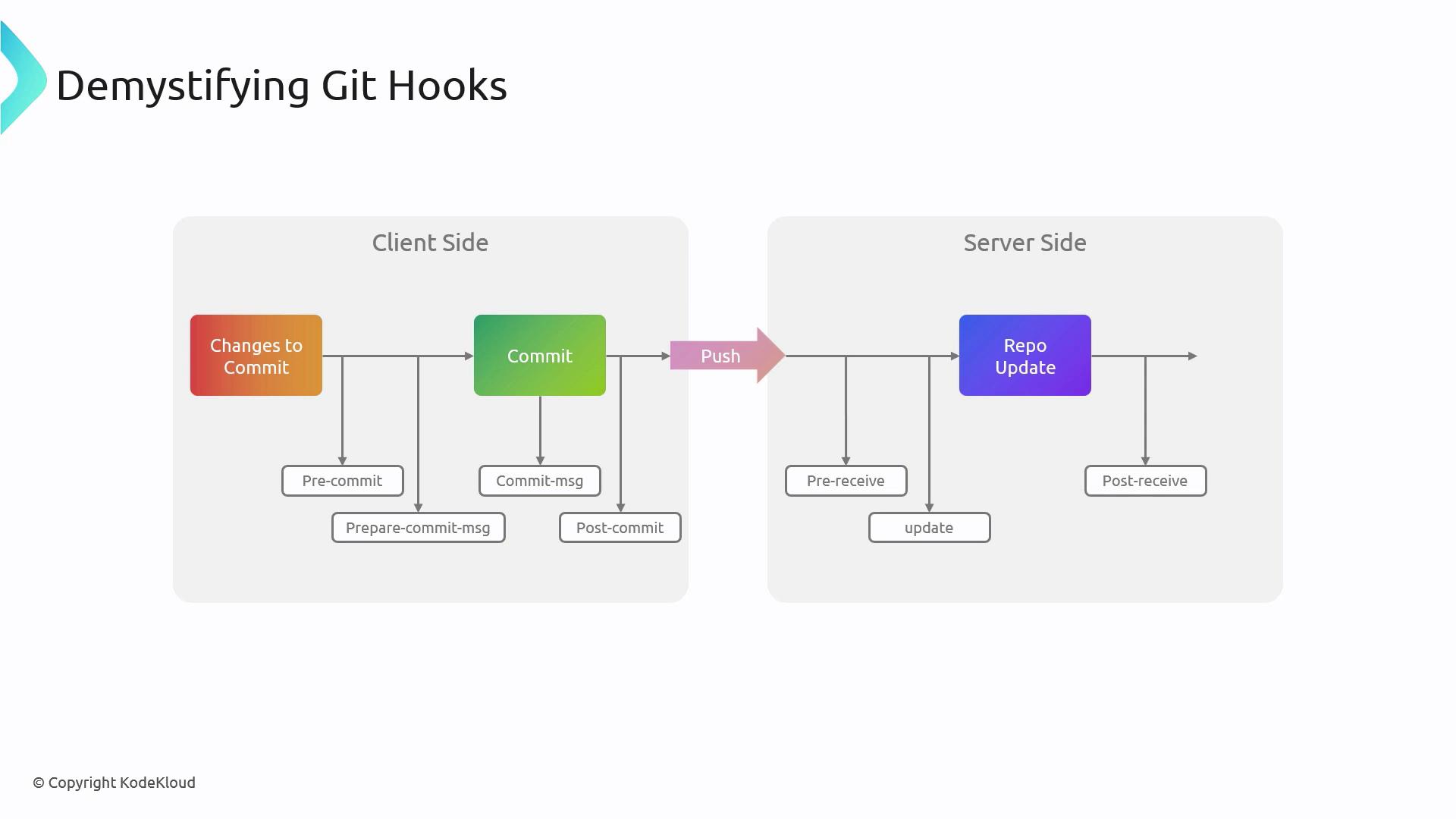
Git Hook Execution Sequence
Understanding the order of hooks during commit and push helps you design effective scripts:- Client Side:
- pre-commit
- commit-msg
- post-commit
- pre-push
- Server Side:
- pre-receive
- update
- post-receive