

Why Maintainability Matters
- Speeds up onboarding for new team members
- Simplifies troubleshooting and updates
- Enables consistent compliance with internal standards
- Supports scalable, repeatable deployments
Investing in maintainability reduces downtime and accelerates feature delivery.
Core Pillars of Maintainable Pipelines

Defining your pipeline in YAML unlocks version control, peer reviews, and automated validation—key enablers for these pillars.
Best Practices for Pipeline Maintainability
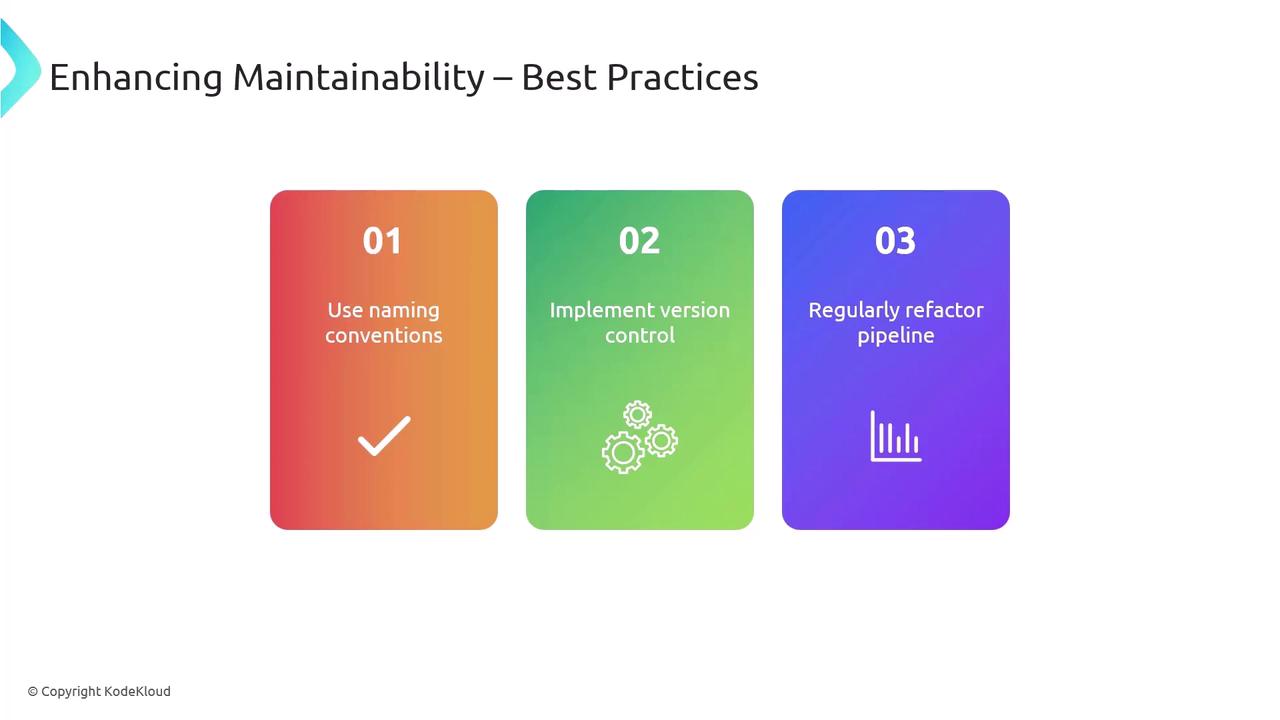
- Consistent Naming Conventions
Use clear, descriptive names for pipelines, stages, jobs, tasks, and variables. - Version Control Everything
Store YAML definitions and templates in Git to track changes and enable rollbacks. - Regular Refactoring
Periodically review pipelines to remove redundancy and simplify complex logic.
Key Azure Pipelines Features
Refactoring for a Scalable Pipeline
A monolithic YAML file can quickly become unwieldy. Let’s transform a single-file pipeline into a modular, stage-driven configuration.
Original Monolithic Pipeline
Monolithic pipelines are hard to debug and scale. Breaking them into stages and templates greatly improves clarity.
Refactored Pipeline
Build Template (templates/build.yml)
Deploy Template (templates/deploy.yml)
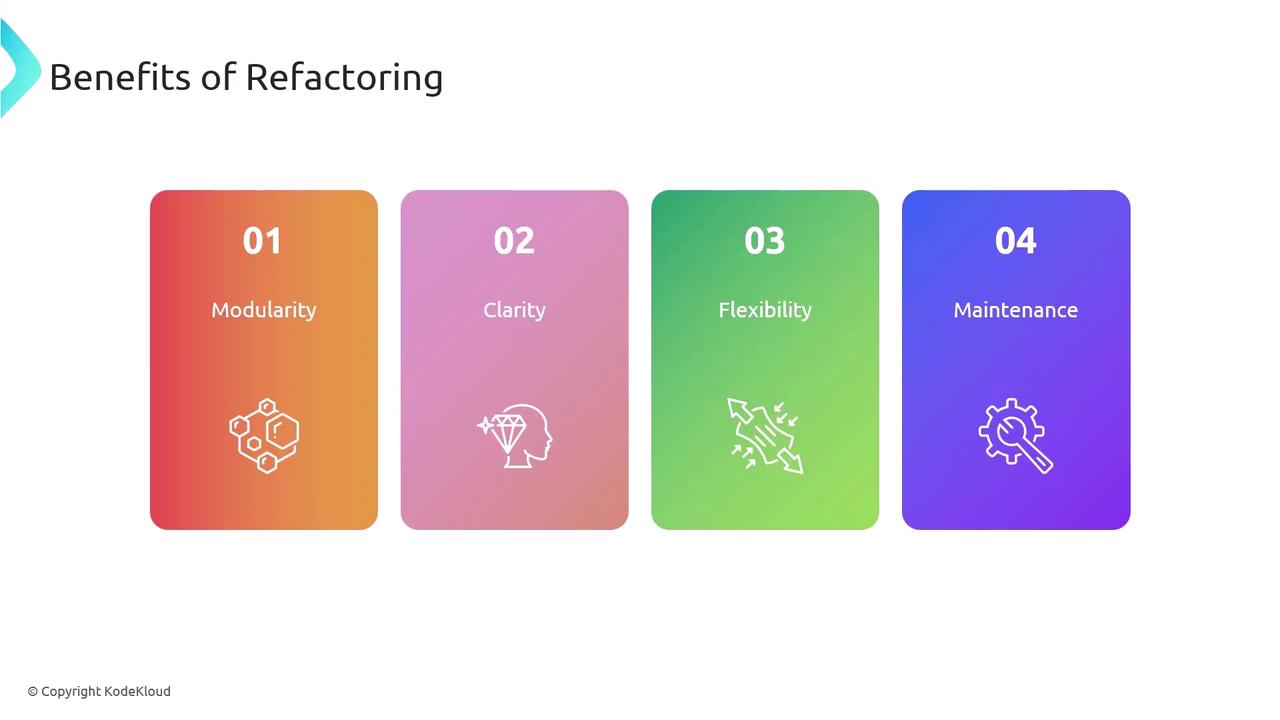
Refactoring Benefits
- Modularity: Independent templates for build and deploy phases.
- Clarity: Stages and parameters make pipeline flow explicit.
- Flexibility: Reuse templates across different projects and environments.
- Maintainability: Smaller, focused files are easier to update and debug.