

Why You Need DevOps
DevOps isn’t just about merging two teams—it’s a cultural shift powered by automation, continuous feedback, and shared responsibility. Organizations that embrace DevOps can:DevOps success relies on aligning people, processes, and tools around shared goals—speed, quality, and continuous improvement.
The DevOps Infinity Loop
At the core of DevOps is the Infinity Loop, illustrating an unbroken lifecycle of software delivery: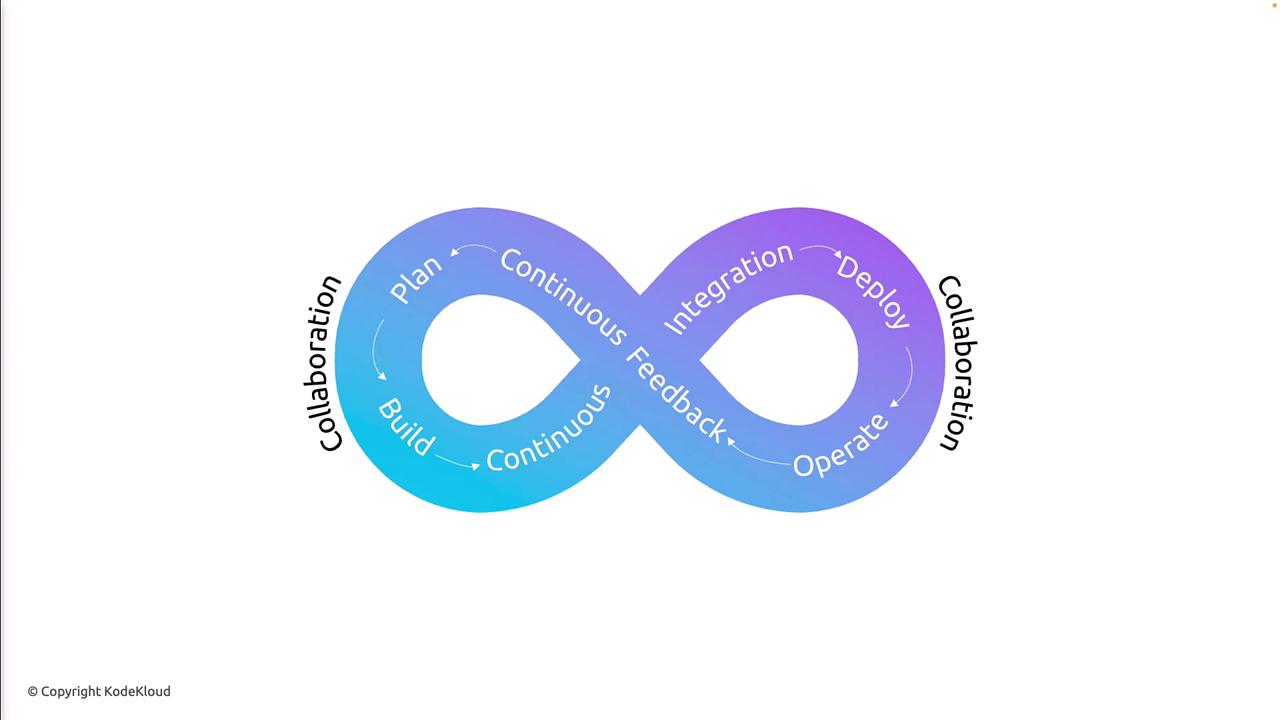
Phases of the Infinity Loop
-
Plan
Define objectives, identify value streams, and gather requirements. -
Build
Write code, use version control, and automate unit tests to produce a deployable artifact. -
Continuous Integration
Merge changes frequently into a shared repository; automated builds detect issues immediately. -
Deploy
Automate deployments to staging or production for consistent, repeatable releases. -
Operate
Monitor system health, performance metrics, and uptime in production. -
Continuous Feedback
Collect telemetry and user feedback to inform the next planning cycle.
The OODA Loop in DevOps
The OODA Loop—Observe, Orient, Decide, Act—is a decision-making framework that complements the Infinity Loop by emphasizing rapid, data-driven cycles:
This loop repeats continuously, driving responsiveness and adaptability in every sprint.
Validated Learning and Cycle Time
Validated learning relies on real-world data to guide product decisions rather than intuition. Typical outcomes include:- One-third of initiatives may underperform
- One-third may exceed expectations
- One-third often deliver moderate impact
Strategies to Reduce Cycle Time
Neglecting security and compliance in fast-moving pipelines can introduce vulnerabilities. Integrate automated security scans and audits into every stage.
Implementing DevOps Practices
Adopting DevOps involves more than tools—it’s about culture, collaboration, and continuous improvement. Focus on:- Cross-functional Teams: Encourage shared ownership of code and infrastructure.
- CI/CD Pipelines: Automate integration, delivery, and deployment workflows.
- Infrastructure as Code: Manage environments with version-controlled configurations.
- Continuous Monitoring: Use logging and analytics to drive real-time decisions.
- Feedback Loops: Incorporate user and stakeholder feedback into every sprint.
Links and References
- What Is DevOps? (Wikipedia)
- Continuous Integration (CI) Documentation
- Continuous Delivery (CD) Guide
- Azure DevOps Solutions
- Terraform Registry