

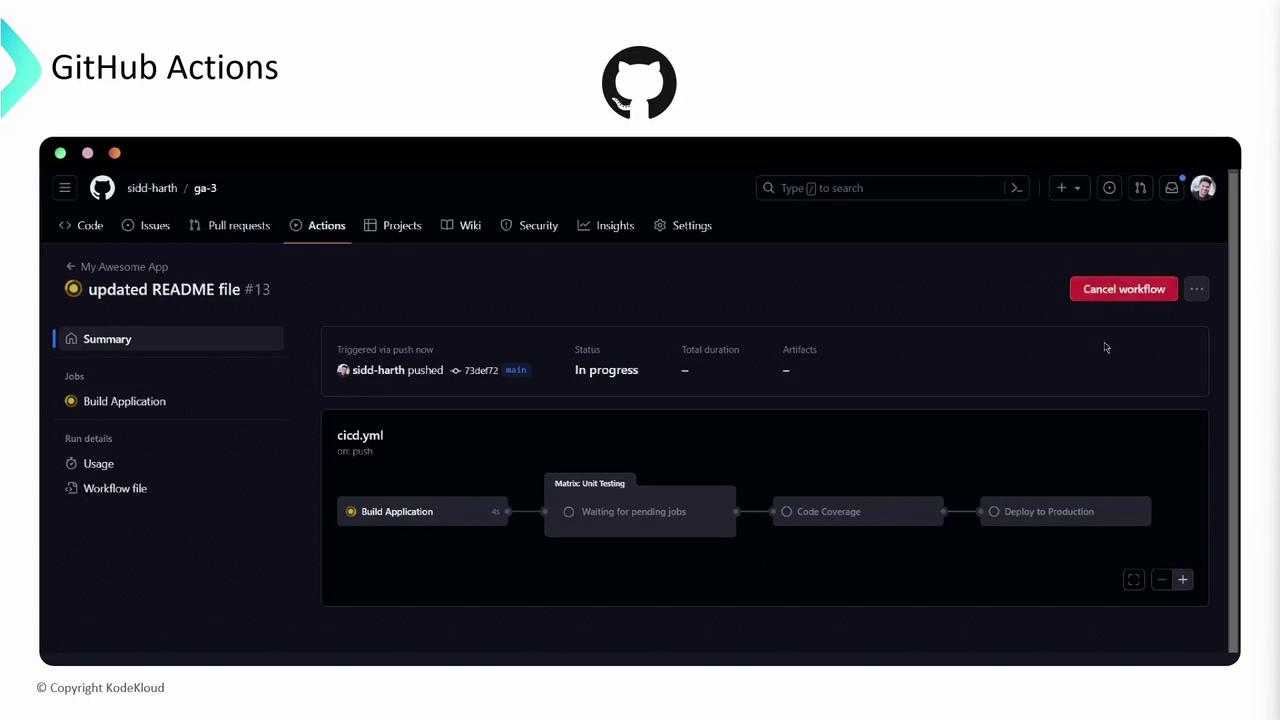
Built-In Runners: Ubuntu, Windows, and macOS
GitHub Actions provides hosted runners for all major platforms: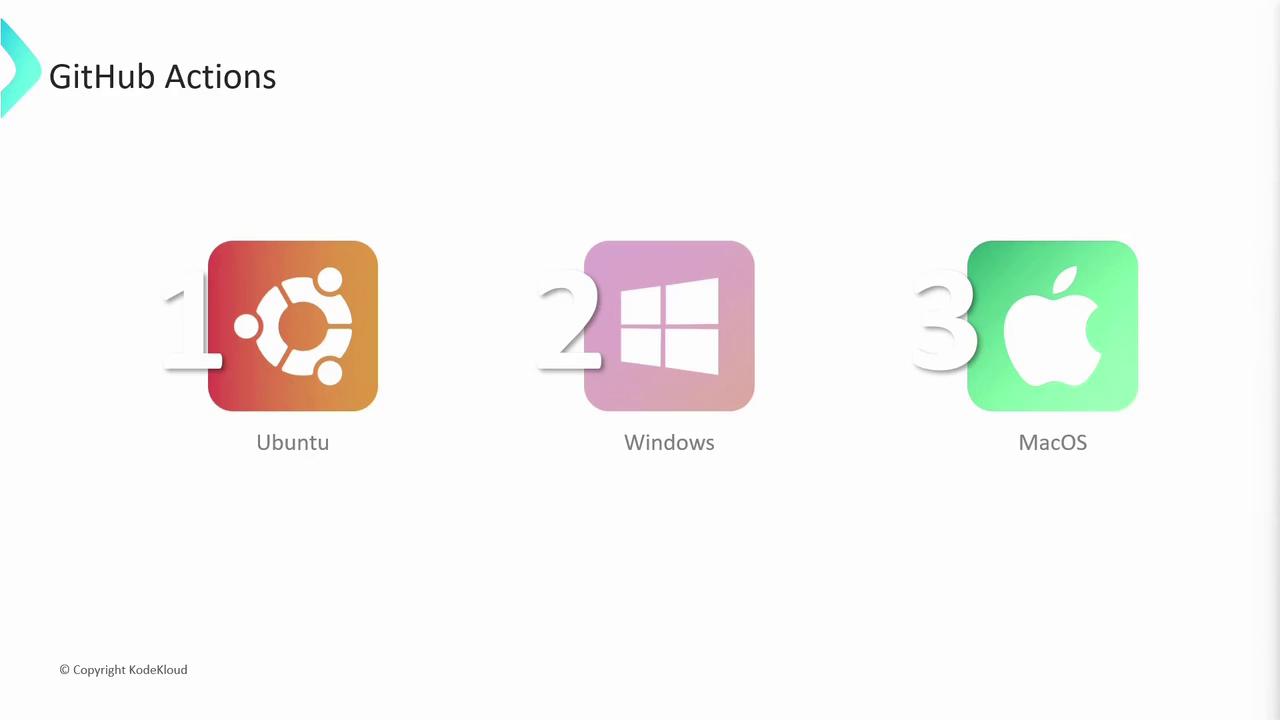
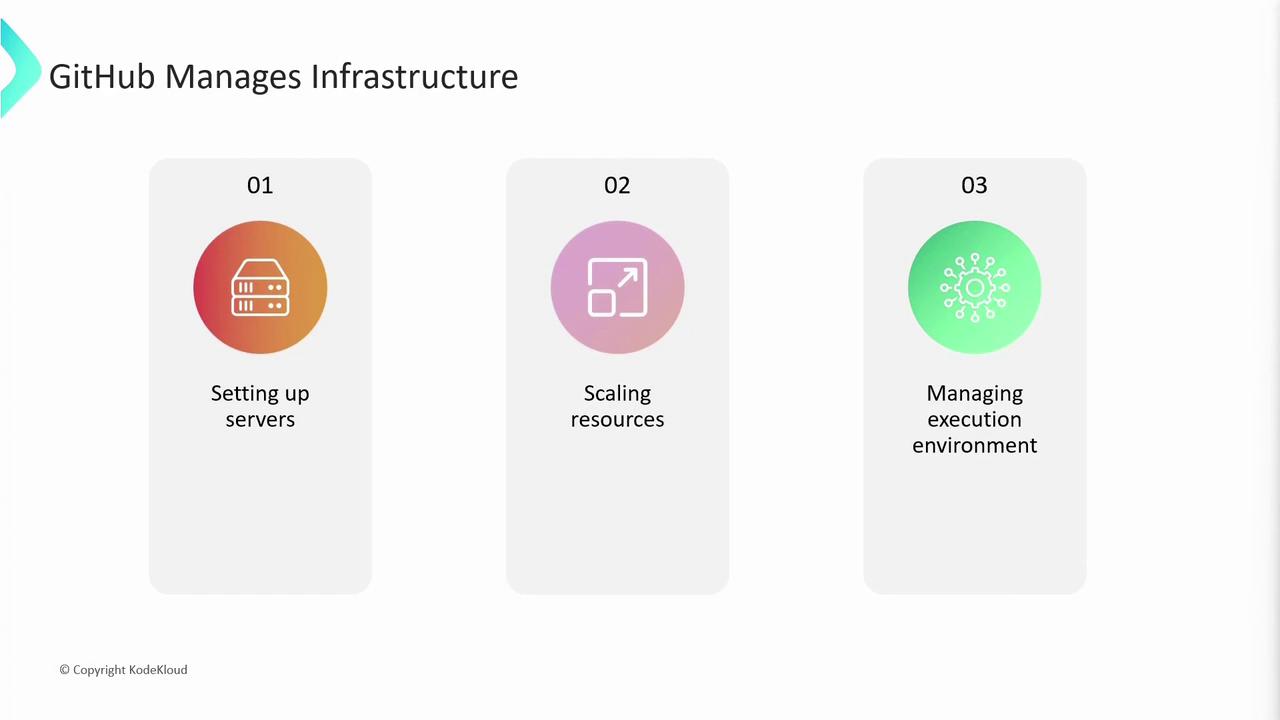
GitHub-hosted runners are preconfigured VMs managed by GitHub. You don’t need to worry about provisioning hardware, installing dependencies, or scaling resources.
Defining Workflows with YAML
Workflows are defined in.github/workflows/*.yml files using simple YAML syntax. They run automatically on events like push, pull_request, or package publishing.
Common Trigger Events
pushpull_requestissuesreleaseregistry_package
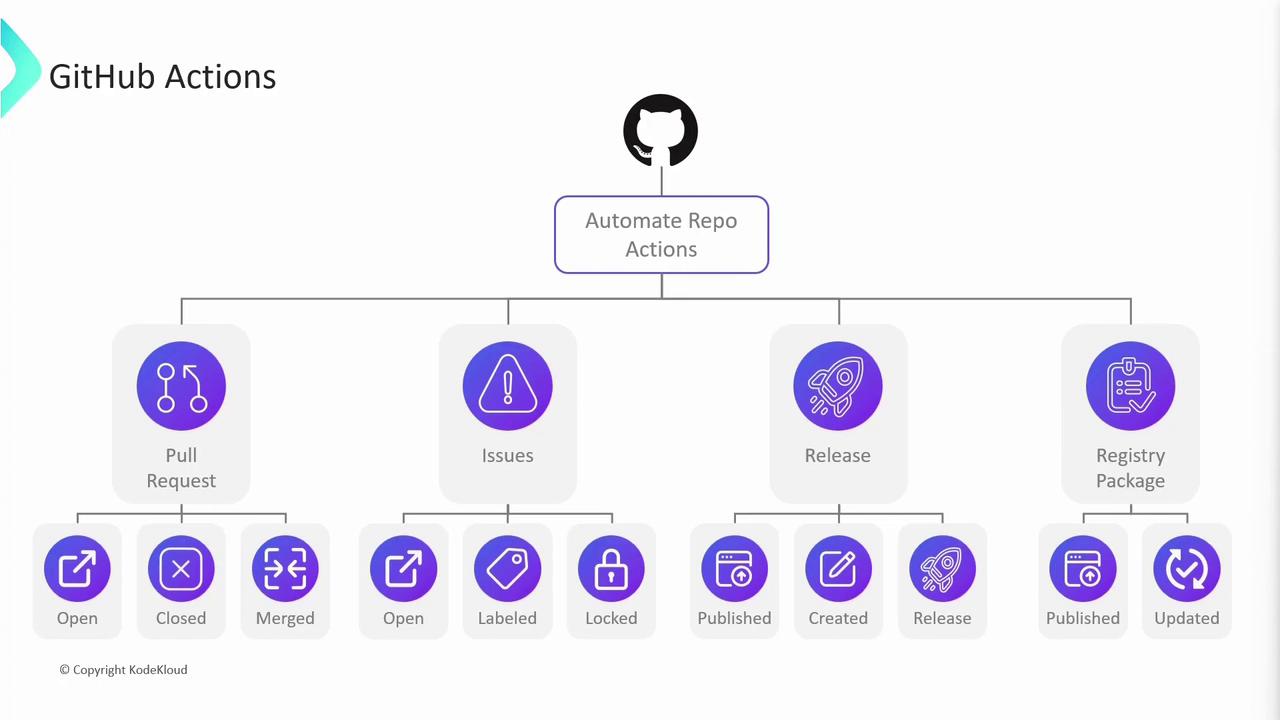
Automate Pull Request Workflows
Use Actions to comment on PRs, assign reviewers, enforce labels, and ensure policy compliance: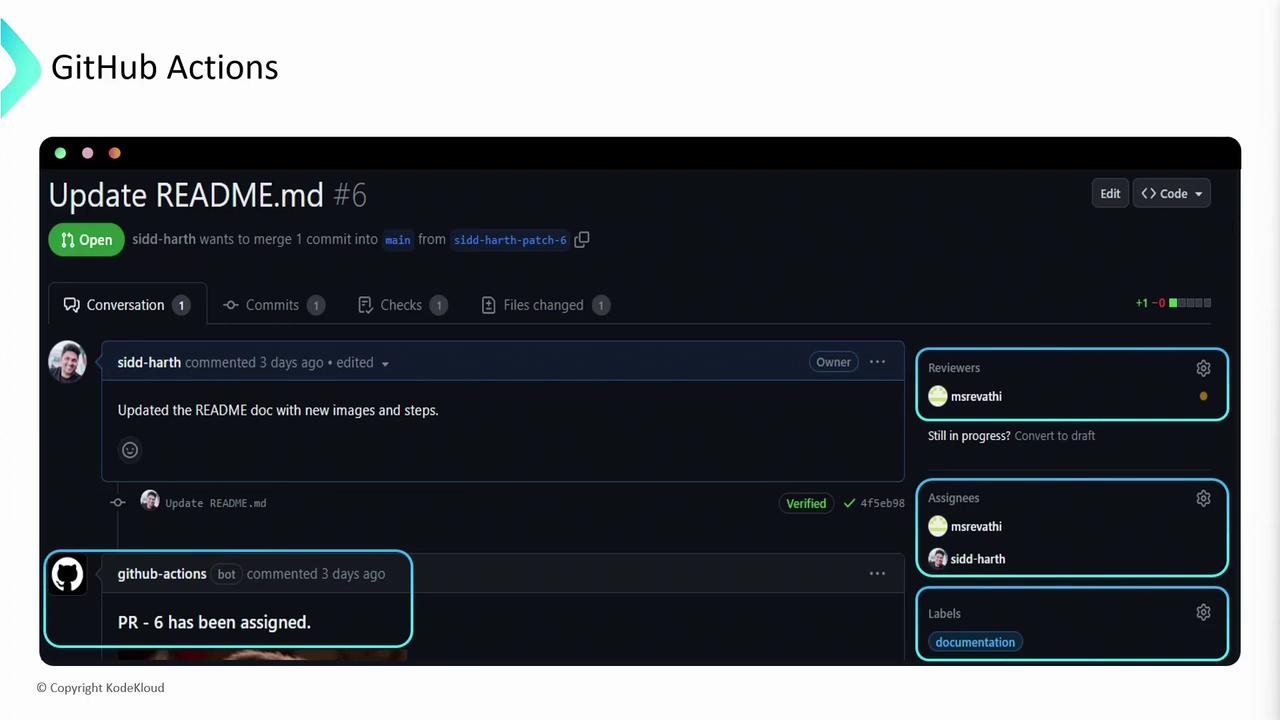
Workflows, Jobs, and Steps
A workflow runs in response to specified events. It consists of one or more jobs, each containing ordered steps that execute on a runner.runs-on: Specifies the runner OS.strategy.matrix: Launches multiple jobs in parallel.- Steps execute sequentially: checkout → setup → install → test.
Inspecting Logs and Artifacts
View real-time logs, download test reports, or debug failures in the Actions tab: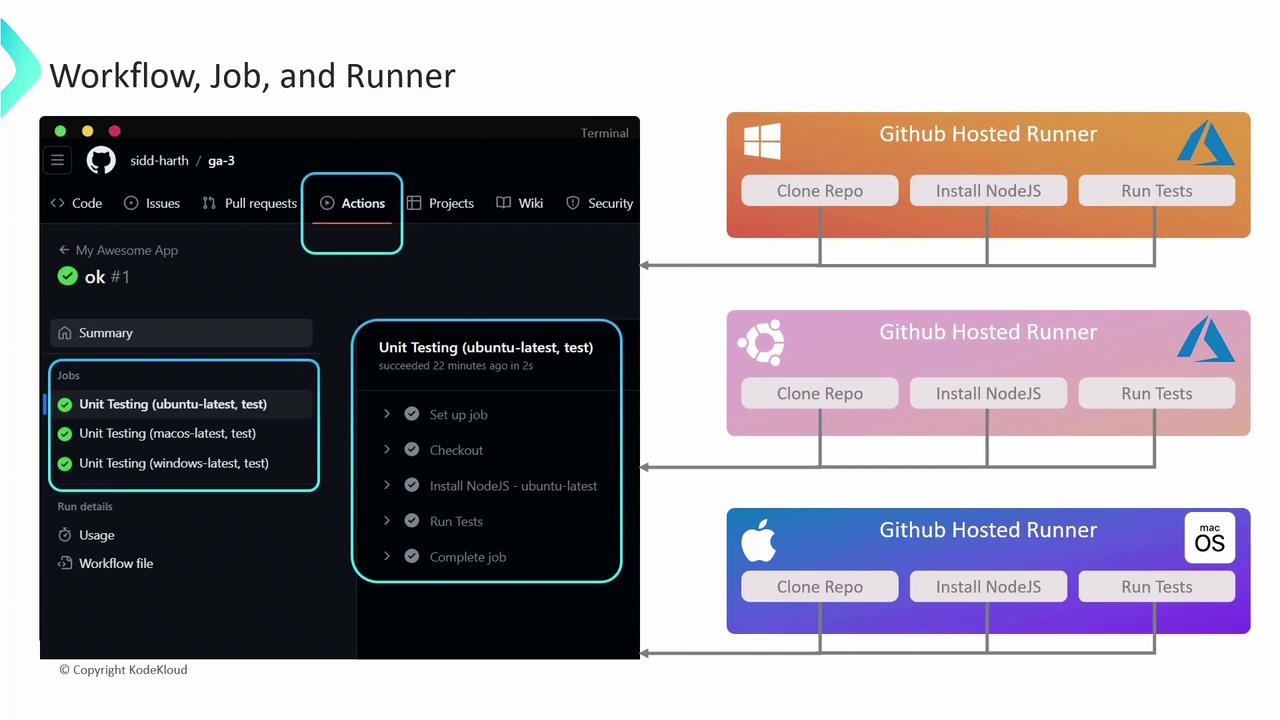
Comparing Runner Types
Choose between GitHub-hosted and self-hosted runners based on your requirements: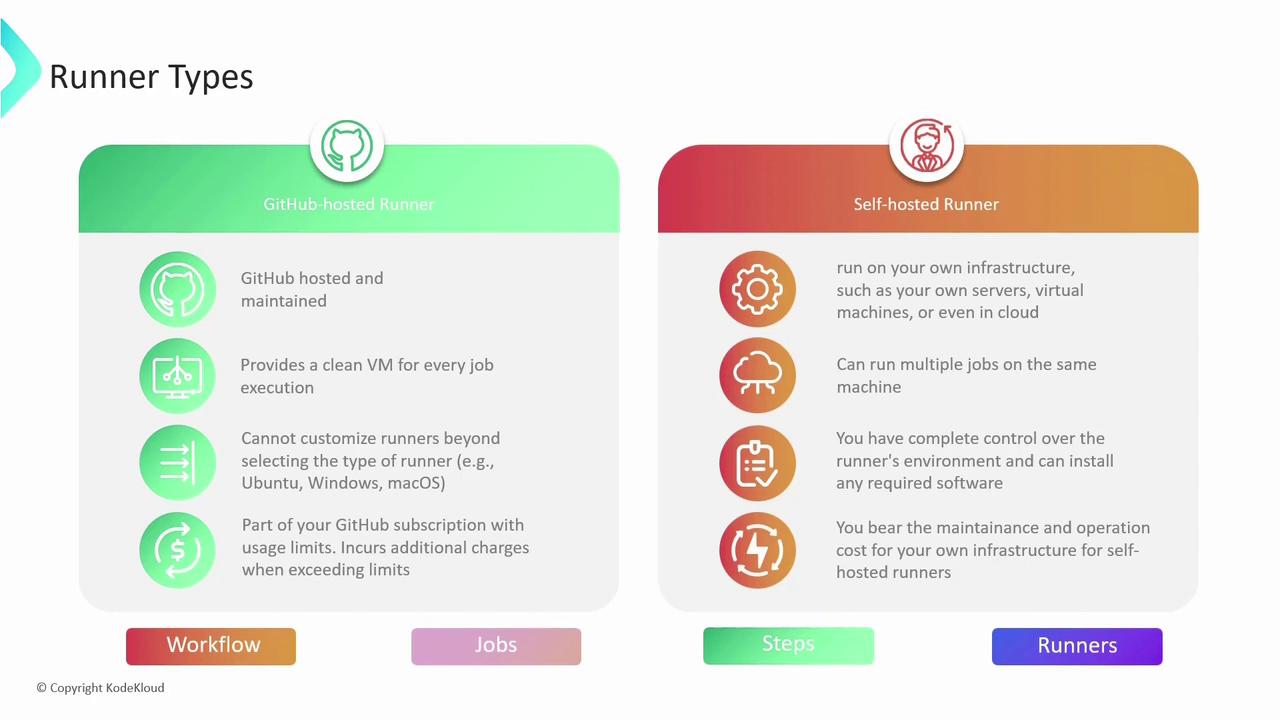
Self-hosted runners require you to handle updates, scaling, and security.
Next Steps
You now understand the core concepts: workflows, jobs, steps, triggers, and runner options. Stay tuned for deep dives into:- Secrets management & environment variables
- Reusable workflows & composite actions
- Custom actions with Docker and JavaScript