

Key Concepts
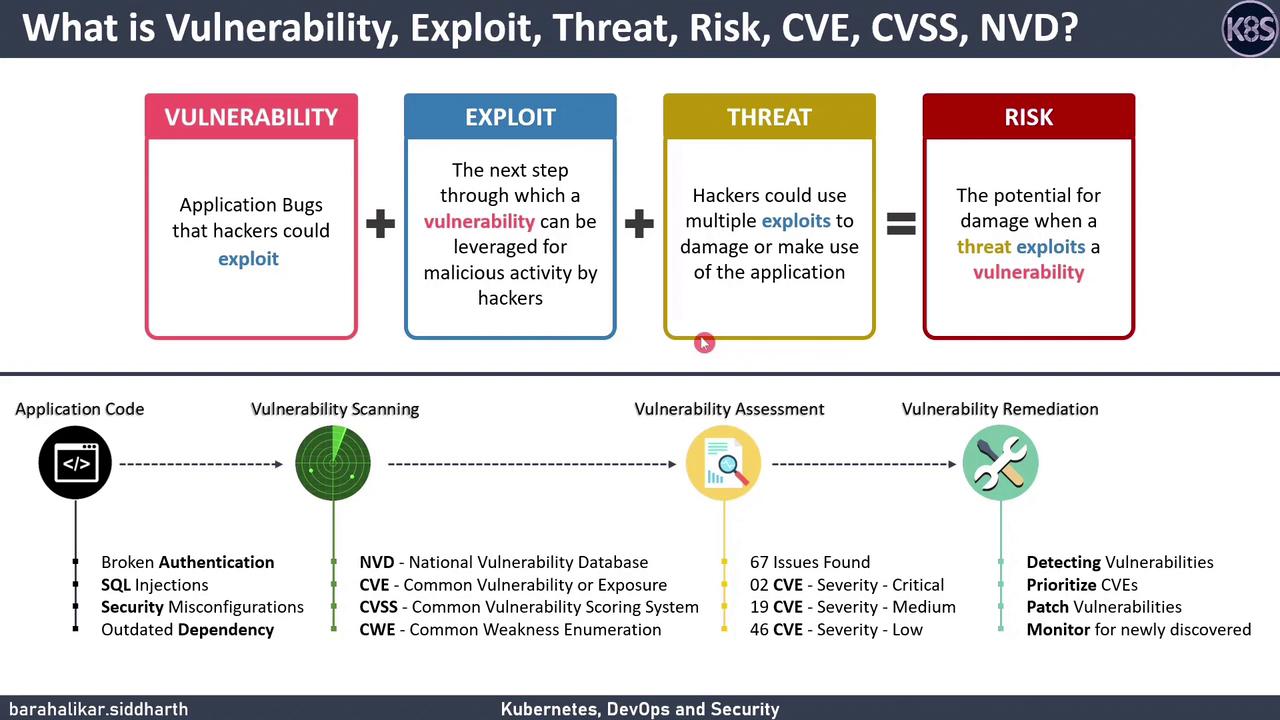
A robust vulnerability management program reduces the window of exposure and lowers the overall security risk to your applications and infrastructure.
Vulnerability Scanning & Databases
Vulnerability scanners inspect code, container images, and configuration files, then compare findings against public vulnerability repositories. Once confirmed, issues are catalogued with unique identifiers.Vulnerability Assessment
Once scanning completes, generate an assessment report that includes:- Severity: CVSS score or custom risk rating
- Vulnerability Age: Time since public disclosure
- Exploit Availability: Whether proof-of-concept code exists
- Remediation Guidance: Patching instructions or workarounds
Always address high-severity vulnerabilities with known exploits before lower-risk items. Automate prioritization using your CI/CD pipeline.
Remediation Workflow
- Prioritize
- Rank CVEs by CVSS score, exploitability, and business impact.
- Remediate
- Update or patch affected dependencies and configurations.
- Apply security fixes in code and container images.
- Verify & Monitor
- Re-scan to confirm fixes.
- Implement continuous monitoring and alerting for new vulnerabilities.
Next Steps
In the following lessons, you’ll perform real-world vulnerability scans and enforce security policies using:- Dependency Check for open-source libraries
- Trivy for container and filesystem scanning
- OPA Conftest to test your Kubernetes manifests
- Kubesec for policy checks in Kubernetes