Table of Contents
- 1. The Risk of Plaintext Pod-to-Pod Traffic
- 2. Challenges of Embedding TLS in Applications
- 3. Service Mesh Solution: Istio and mTLS
- 4. Comparing Approaches
- 5. Next Steps and References
1. The Risk of Plaintext Pod-to-Pod Traffic
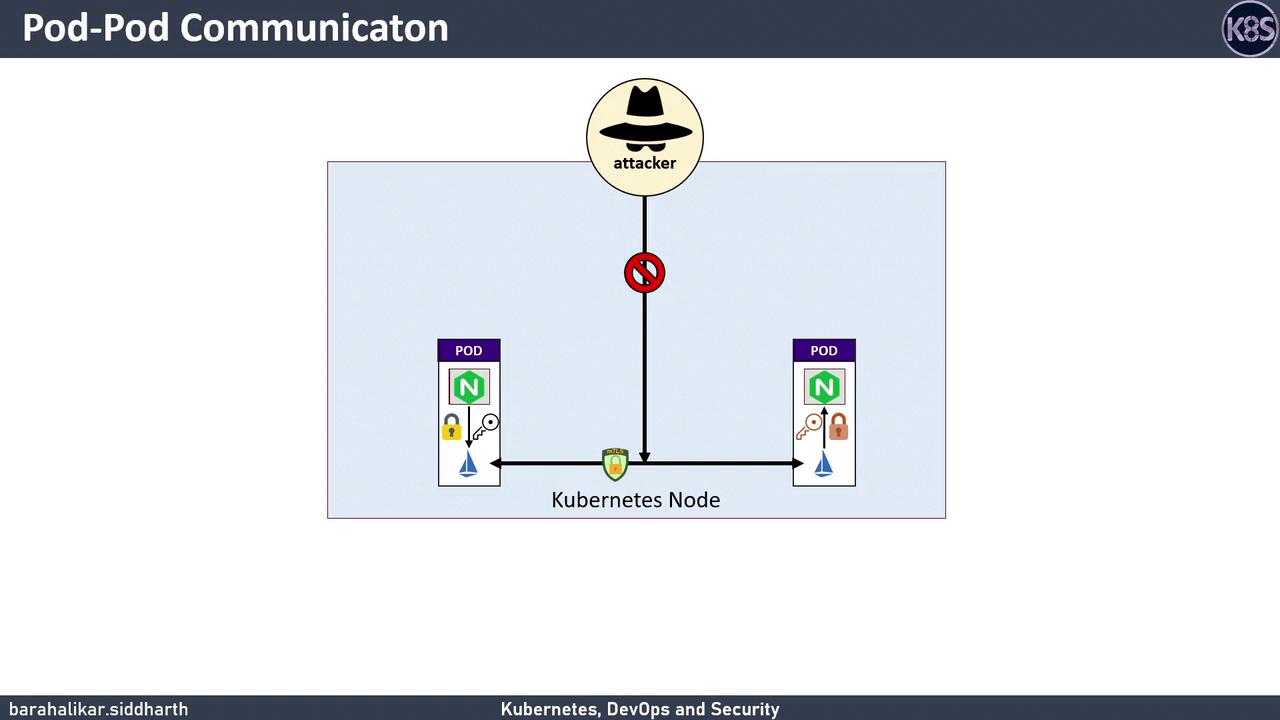
By default, Pod A sends HTTP requests directly to Pod B over the cluster network. An attacker on the same node—or any compromised network segment—can intercept and read this traffic.Plaintext HTTP between pods exposes API keys, tokens, and PII to packet sniffers. Always encrypt inter-service traffic in production.
2. Challenges of Embedding TLS in Applications
To secure traffic with TLS (HTTPS), every microservice must handle:- Generating and rotating key pairs
- Securely storing private keys
- Performing TLS handshakes
- Updating certificates upon expiry
3. Service Mesh Solution: Istio and mTLS
A service mesh like Istio offloads TLS responsibilities to sidecar proxies, automating certificate issuance and mTLS handshakes.Prerequisites
Ensure you have:
- A running Kubernetes cluster (v1.20+)
kubectlconfigured for your cluster- Helm (optional) or
istioctlCLI installed
Step-by-Step Guide
-
Install Istio
-
Enable Automatic Sidecar Injection
-
Deploy Your Applications
Any pod in thedefaultnamespace now includes an Istio sidecar. -
Verify mTLS is Enforced
- Pod A’s app → plaintext to Envoy sidecar
- Envoy (Pod A) → performs mTLS handshake → Envoy (Pod B)
- Envoy (Pod B) → decrypts → plaintext to Pod B’s app