In this section, we’ll build on our existing CI/CD workflow by integrating security, observability, and notification features. You will learn how to:
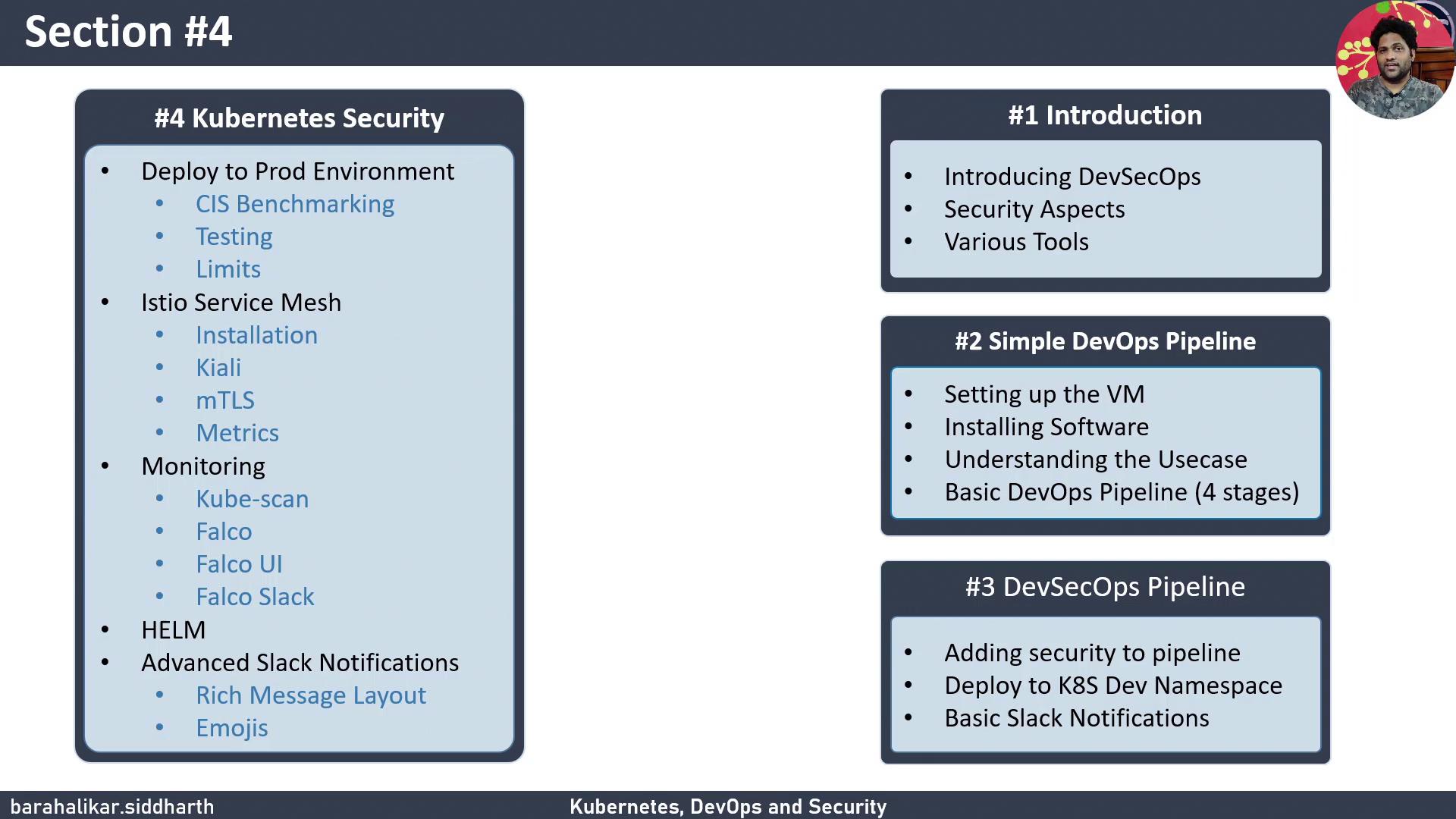
  • Integrate a CIS benchmark scan into your Jenkins pipeline
  • Deploy the application into a dedicated Kubernetes production namespace
  • Enforce mutual TLS and policy-driven traffic using Istio
  • Monitor runtime security and compliance with Falco and KubeScan
  • Publish detailed, content-rich notifications to Slack
Ensure you have the following already set up before proceeding:
  • A Jenkins server with pipeline-as-code enabled
  • Access to a Kubernetes cluster (production namespace created)
  • kubectl, helm, and Istio CLI (istioctl) installed and configured
  • Slack App credentials with incoming-webhook permissions
StepTool(s)Purpose
1. CIS Benchmarkingcis-scannerValidate cluster configuration against CIS guidelines
2. Kubernetes Deploymentkubectl, HelmDeploy your app to the production namespace
3. Istio Traffic SecurityIstioEnable mTLS and policy enforcement
4. Cluster MonitoringFalco, KubeScanReal-time security alerts and compliance checks
5. Slack NotificationsSlack APISend structured pipeline updates and alerts
The image is a slide titled "Section #4" from a presentation on Kubernetes, DevOps, and Security. It outlines topics such as Kubernetes Security, DevSecOps introduction, a simple DevOps pipeline, and a DevSecOps pipeline.
That’s it for this overview. Let’s dive into Task 1: adding a CIS benchmarking stage to our Jenkins pipeline.