

- What a layered platform architecture looks like.
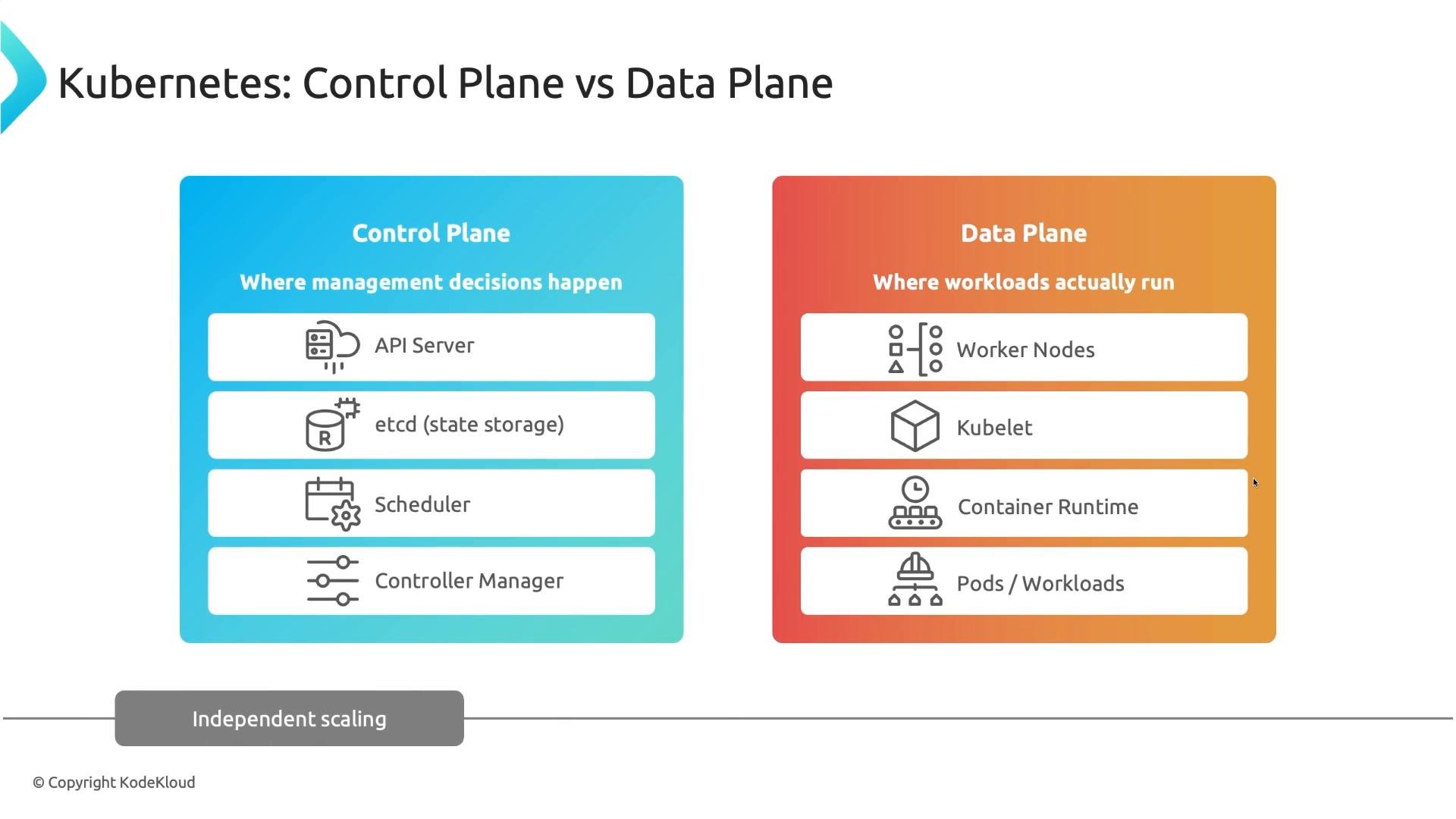
- The difference between control plane and data plane components.
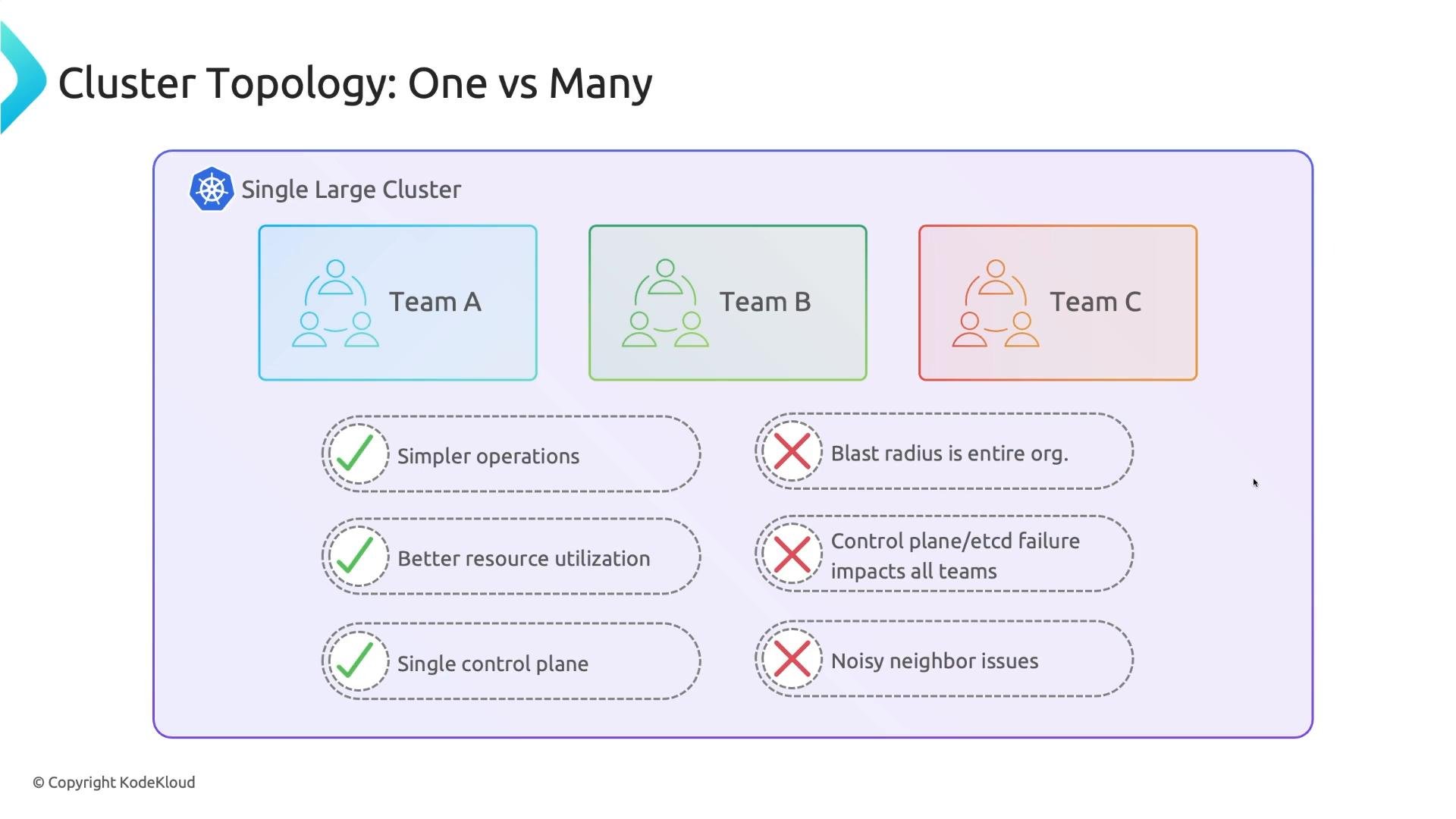
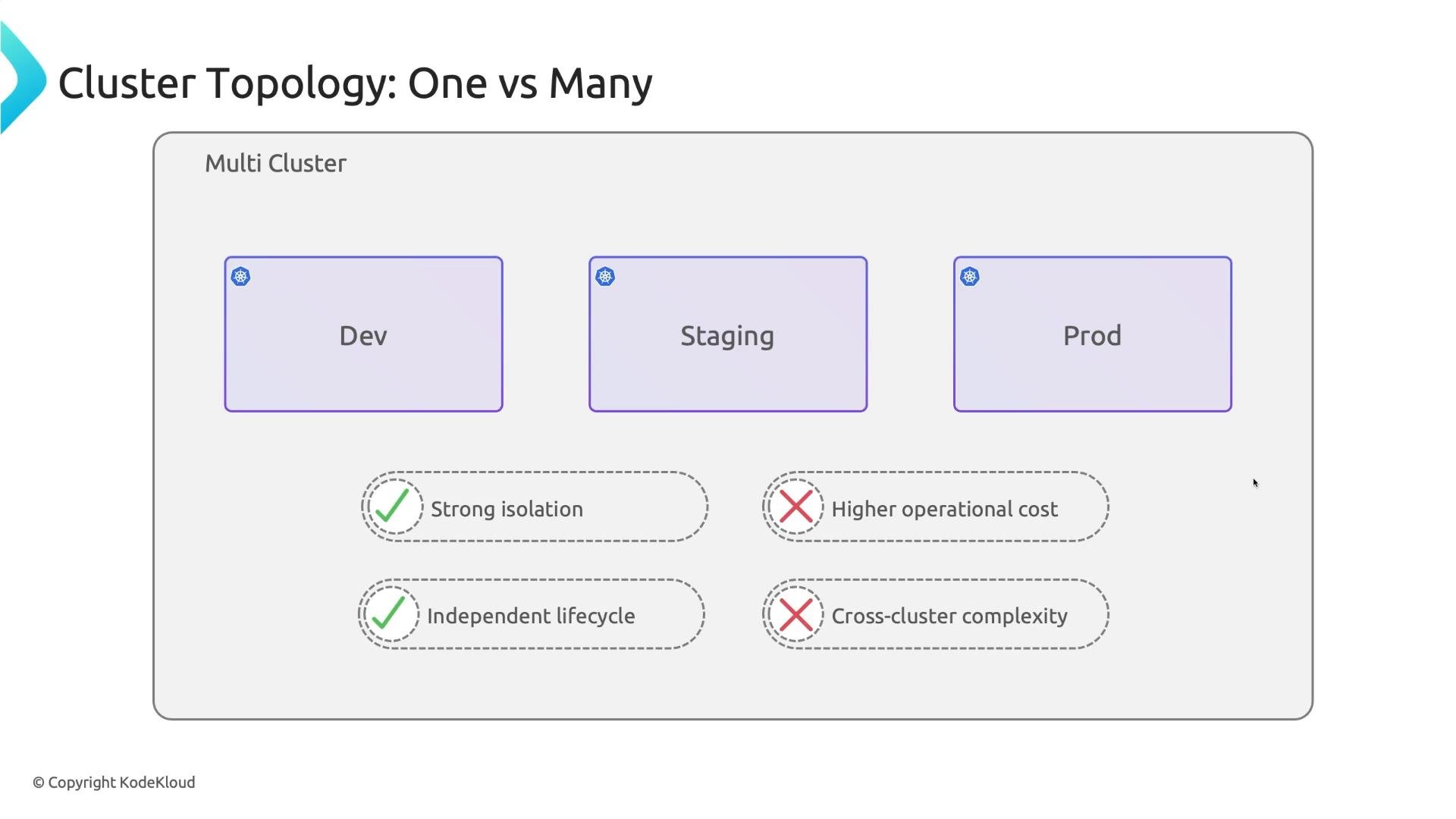
- Trade-offs between single-cluster and multi-cluster topologies.
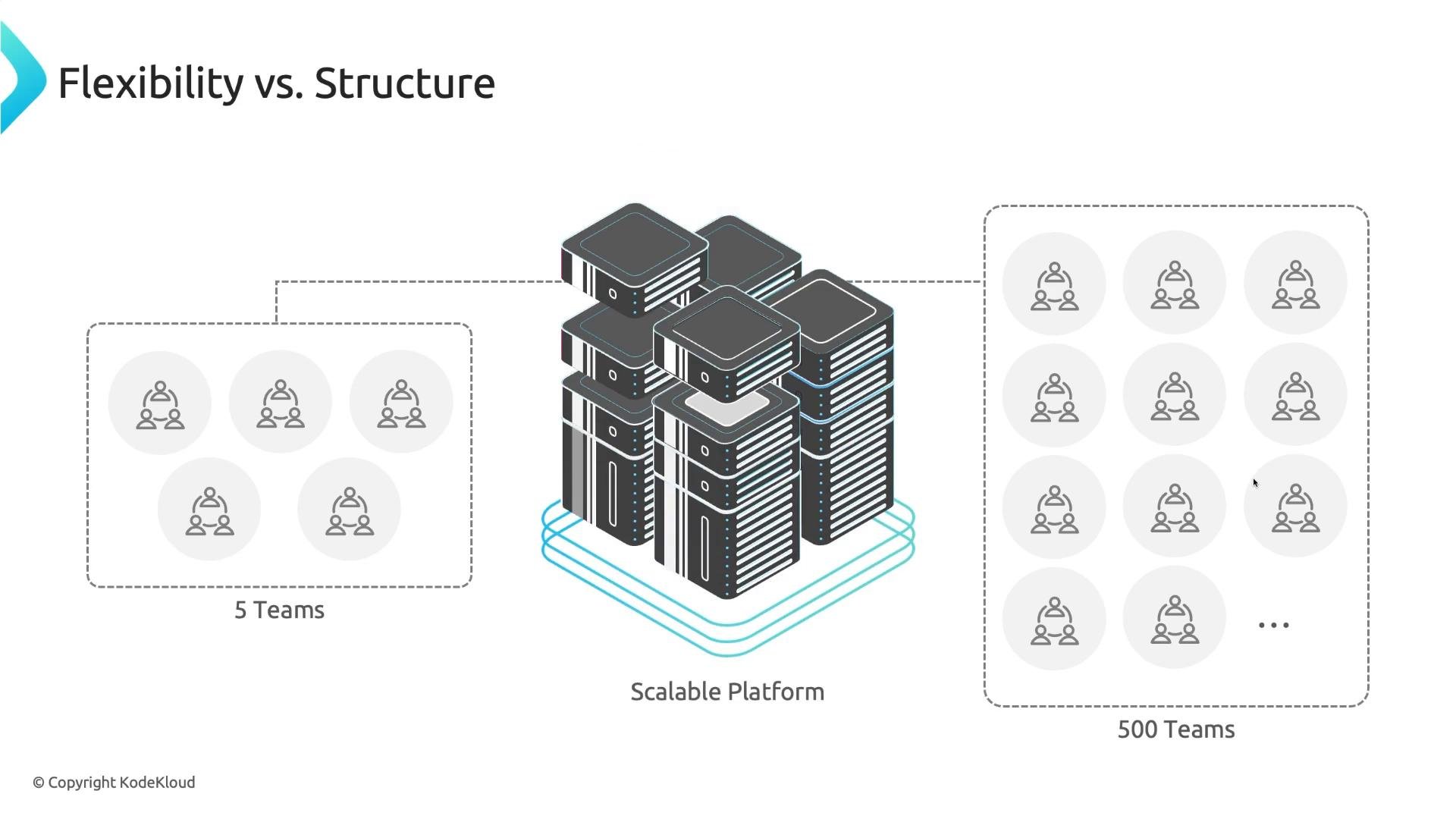
- Inconsistent configuration — teams create different solutions because there is no shared blueprint.
- Lack of boundaries — one team’s workload can negatively impact another.
- Security gaps — ad hoc permissions let people affect systems they shouldn’t.
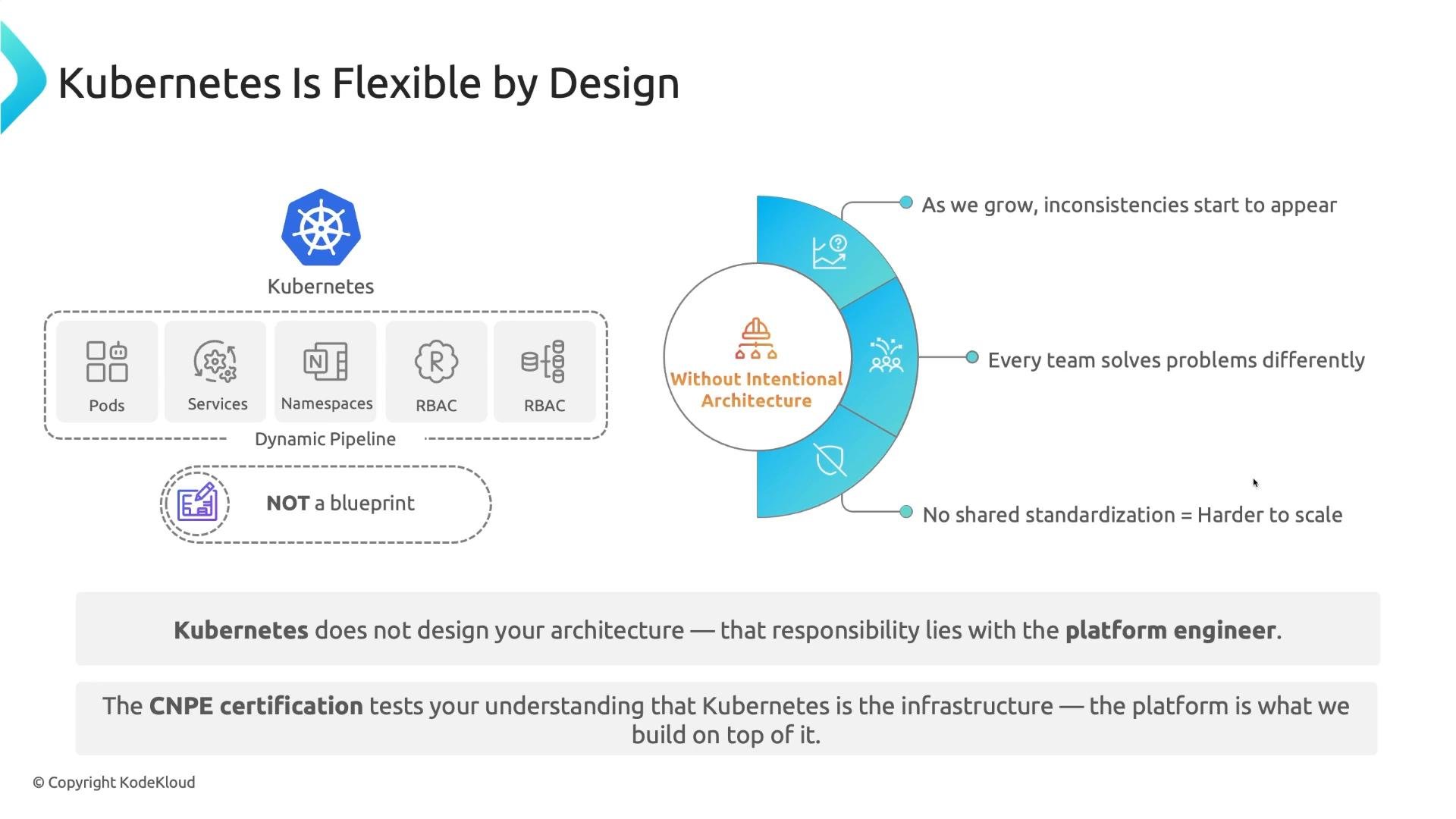
Design a Golden Path: provide teams with opinionated workflows, templates, and defaults for security, observability, and deployments. Good Golden Paths reduce accidental complexity and accelerate team delivery.
- Clear ownership boundaries reduce coordination friction.
- Reusable patterns accelerate new team onboarding.
- Better scaling and reliability because teams consume platform services instead of rebuilding them.
- API Server: the front door for kubectl, controllers, and users.
- etcd: the source of truth (requires high availability and backups).
- Scheduler: assigns pods to nodes considering resources, affinity, taints/tolerations.
- Controller Manager: runs reconciliation loops to converge actual state with desired state.
- Worker nodes with kubelet agents that execute control plane instructions.
- Container runtimes (containerd, CRI-O) pull images and run containers.
- Pods and containers: the runtime for application workloads.
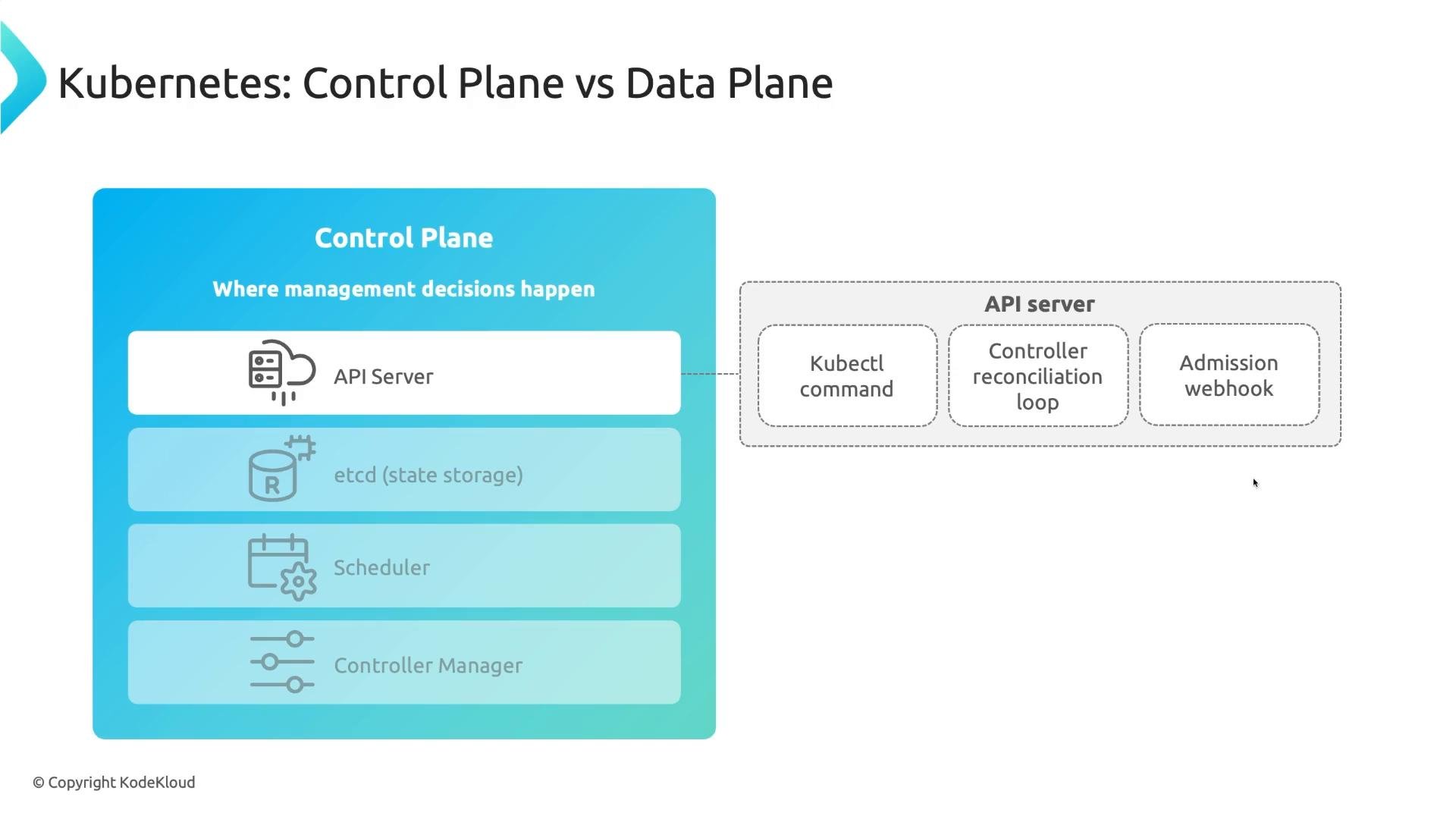
- Independent failures: API server outages block control operations (create/modify) but running pods continue; node failures trigger rescheduling if the control plane/etcd are healthy.
- Independent scaling: you can scale control plane resources separately from worker node count.
- Security boundaries: restrict who can access the control plane and define tighter RBAC for systems interacting with etcd/API Server.
- Pros: simpler operations, fewer control planes to maintain, better aggregate resource utilization.
- Cons: bigger blast radius for control plane/etcd failures and noisy neighbor problems.
- Pros: stronger isolation, independent lifecycles (upgrade dev/staging without risking prod), easier compliance or region-specific control.
- Cons: higher operational cost and complexity: multiple control planes, cluster provisioning, and cross-cluster concerns.
Common partitioning patterns
- By environment: dev, staging, prod (separation of risk).
- By region: US, EU, APAC for latency or regulatory needs.
- By team/business unit: per-team clusters for strict ownership.
- Hybrid: shared non-production clusters and isolated production clusters.
- Design intentionally: Kubernetes provides primitives, not an architecture.
- Use layered platform architecture with clear owners and responsibilities.
- Understand control plane vs data plane — separation enables better isolation and scaling.
- Choose cluster topology (single vs multi) based on trade-offs for your organization.