

This section explains how to design a secure-by-default Kubernetes platform. It covers the common threat model, a defense-in-depth strategy, and the specific platform controls that reduce risk for multi-team clusters.
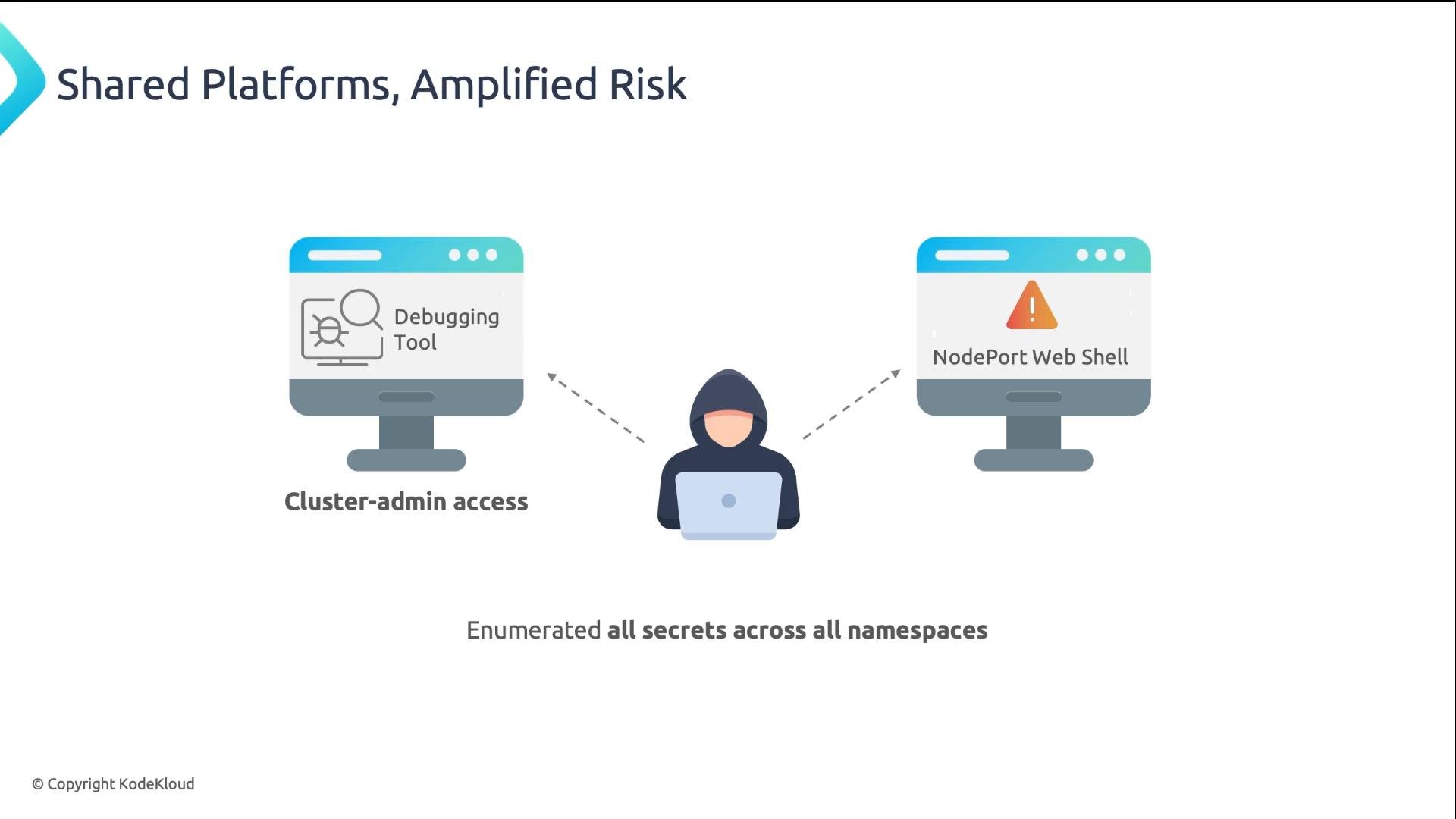
The breach cost millions in incident response and regulatory fines. Shared clusters amplify risk: a single over-permissioned or misconfigured workload can impact every tenant.
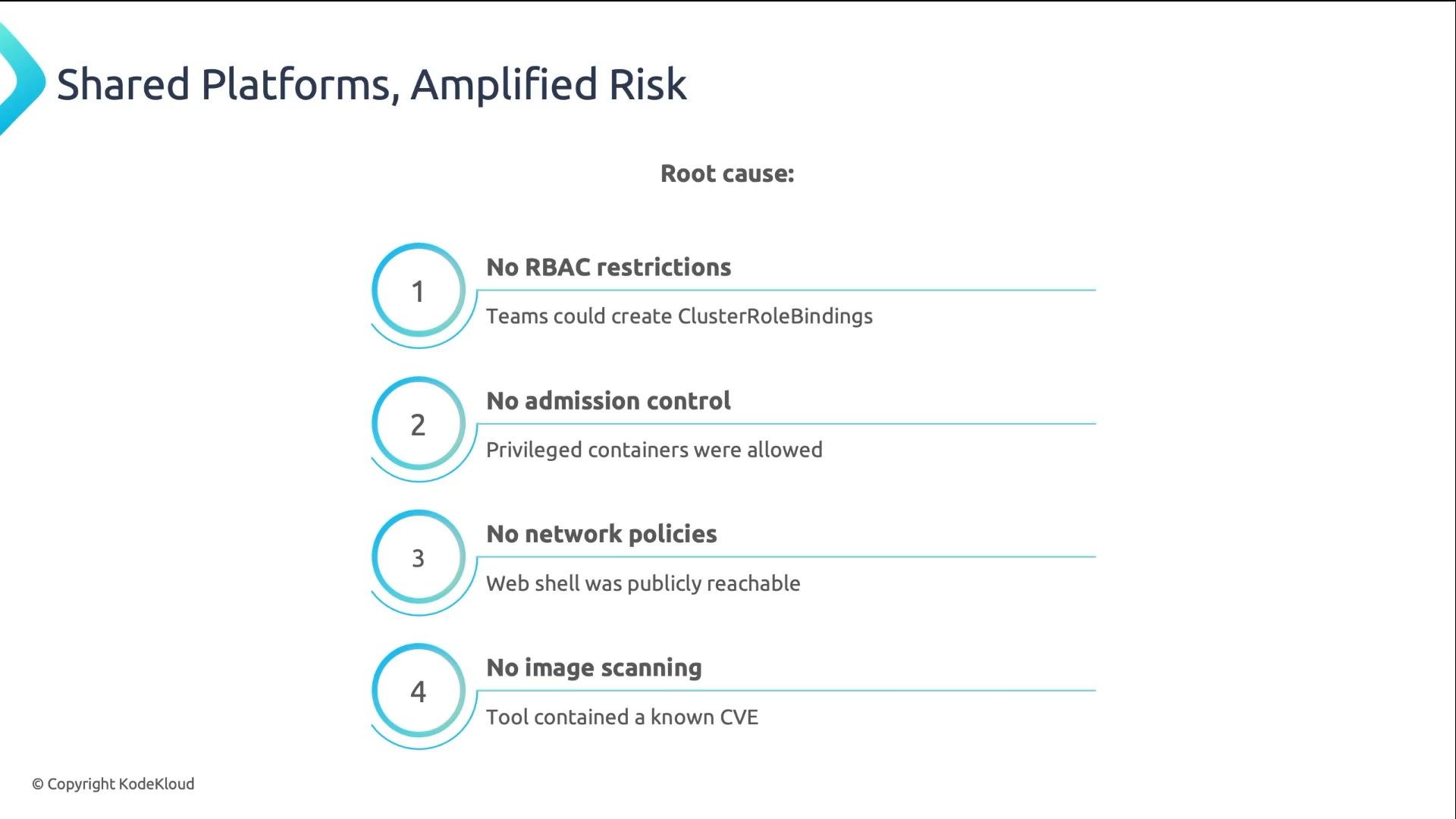
- No RBAC restrictions, so teams could create
ClusterRoleBindings. - No admission control, so privileged containers were allowed.
- No network policies, so the web shell was publicly reachable.
- No image scanning, so a known CVE went undetected.
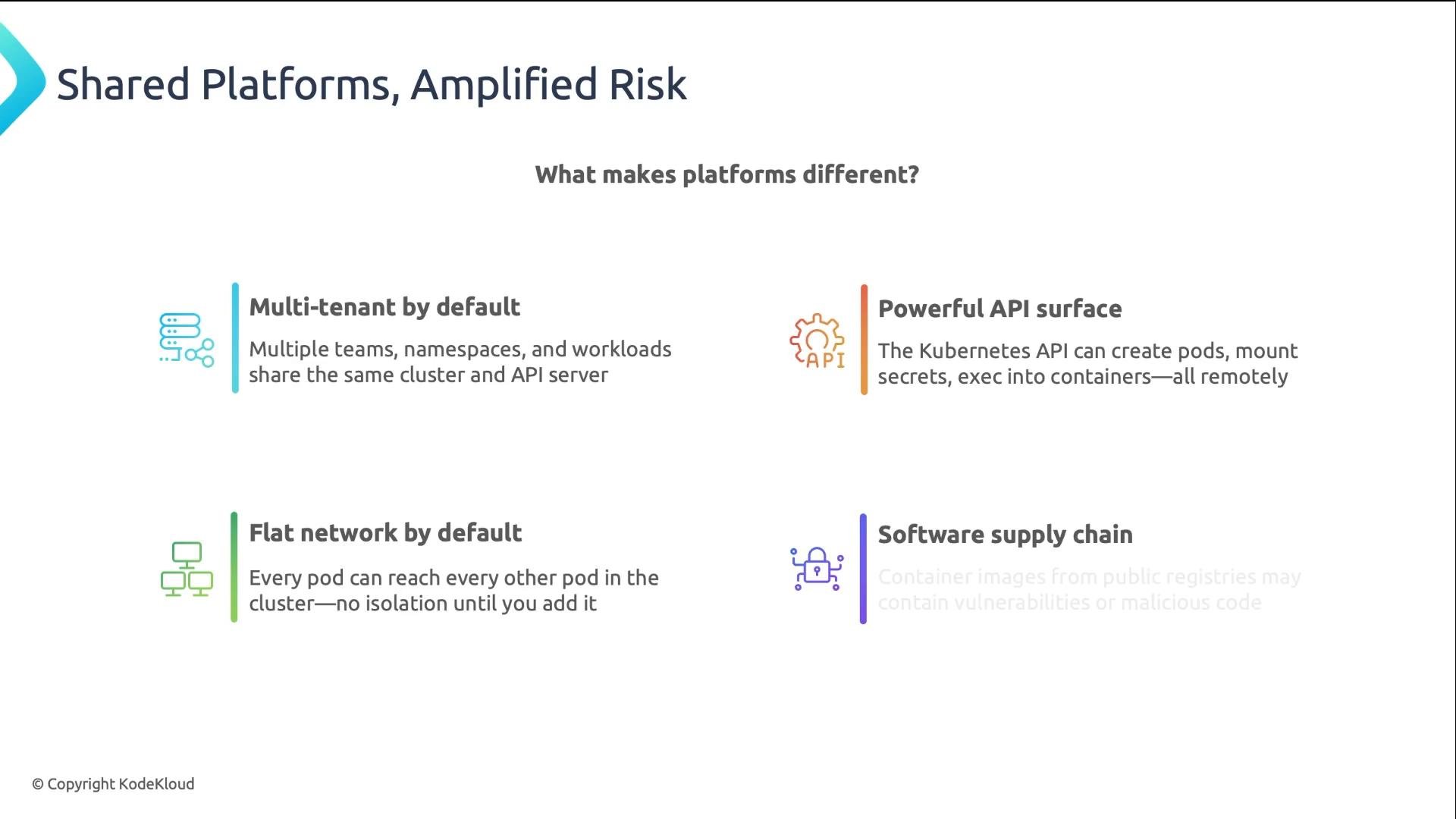
- Multi-tenancy is not strongly enforced by default — misconfigurations in one namespace can affect others.
- The Kubernetes API server provides a powerful control plane: any authorized principal can create pods or access mounted secrets.
- Networks are flat by default — pods can reach each other until you add enforcement (NetworkPolicies require CNI support).
- Public container registries and third-party images increase supply-chain risk if images are not scanned and verified.
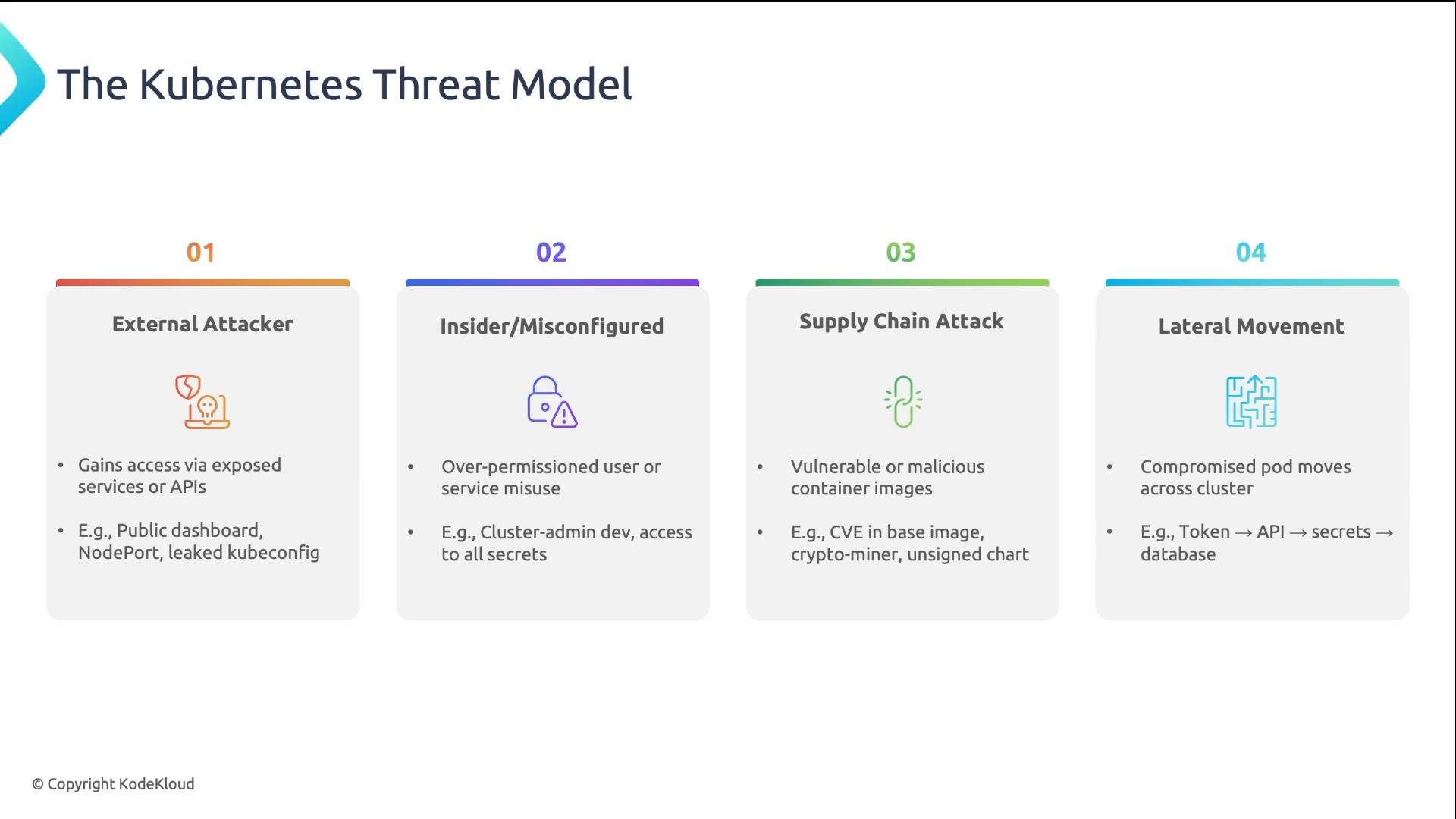
- External attackers: scanning for exposed services, leaked kubeconfigs, or unauthenticated dashboards.
- Insider or misconfiguration risks: users or workloads with excessive privileges or accidental destructive actions.
- Supply chain attacks: vulnerable base images, malicious Helm charts, or compromised CI artifacts.
- Lateral movement: a compromised pod using its service account or mounted tokens to call the API server, enumerate secrets, and pivot across the cluster.
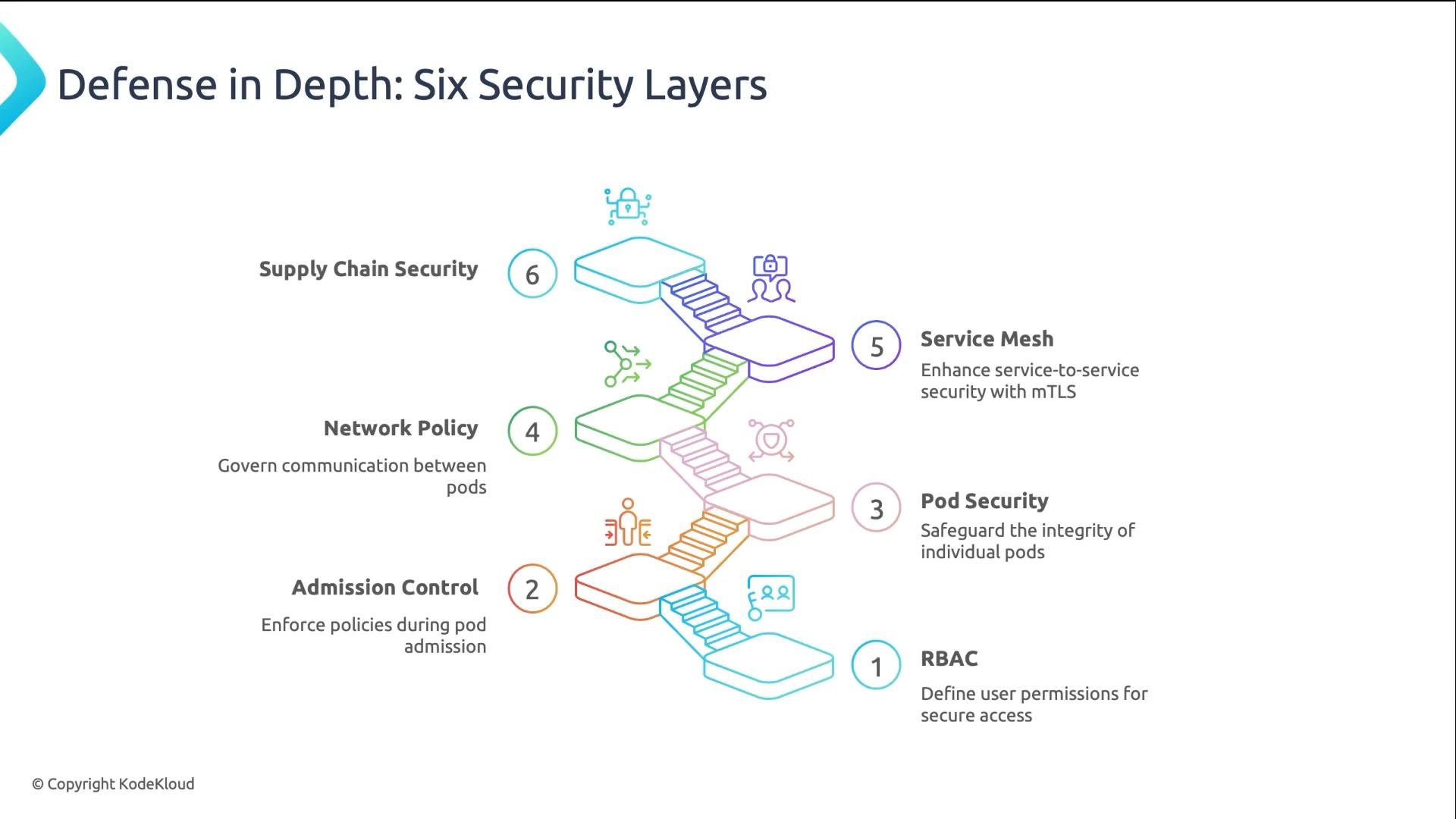
- RBAC — enforce least privilege for users, groups, and service accounts.
- Admission control — validate and mutate manifests (webhooks) before they persist.
- Pod Security Standards — restrict runtime capabilities and disallowed behaviors.
- Network Policies — control pod-to-pod and pod-to-service traffic.
- Service mesh — provide mTLS, identity, and observability for service-to-service traffic.
- Supply chain security — image scanning, signing, and provenance verification before deployment.
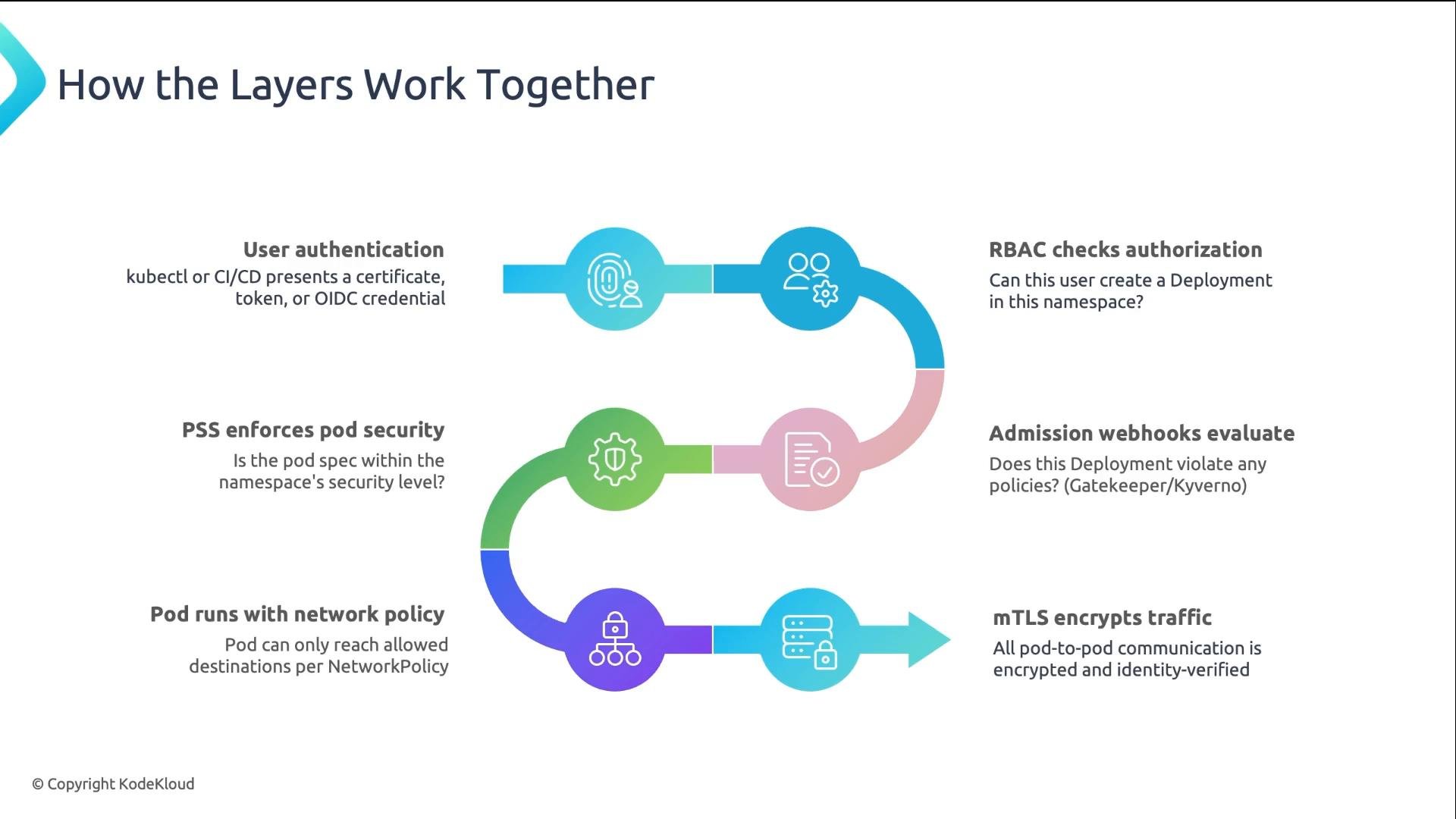
- A user authenticates to the API server.
- RBAC authorization checks whether the user can create or modify resources in a namespace.
- Admission controllers and validating/mutating webhooks inspect and enforce pod specs and policy before objects are persisted.
- When pods run, NetworkPolicies (enforced by the CNI) restrict the endpoints they can reach.
- A service mesh can then enforce mTLS and identity-based access between services.
- Supply chain controls (image scanning, signing, or build provenance) ensure the artifact complied with policy before deployment.
The philosophy that ties this together is zero trust: never trust, always verify. Authenticate every request, authorize with least privilege, and apply contextual validation. Contain blast radius by isolating workloads and reducing trust between tenants. Verify artifacts and configurations before a pod ever starts (admission policies, image scanning, Pod Security Standards).
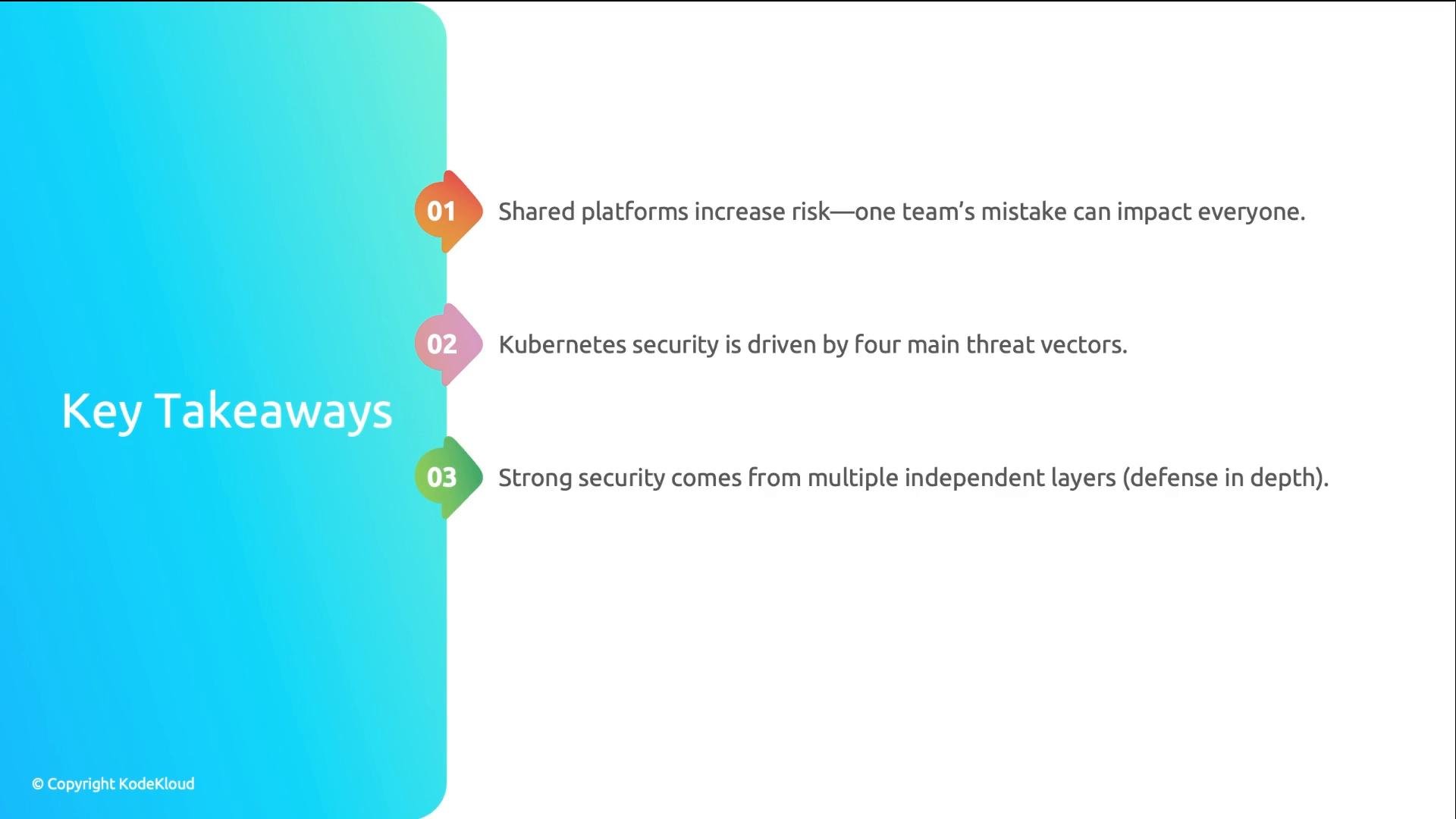
Key takeaways:
- Shared platforms amplify risk — one team’s mistake can impact everyone.
- Kubernetes security is driven by four main threat vectors; each requires specific controls.
- Defense in depth — multiple independent layers — prevents single points of failure and reduces blast radius.
- Kubernetes Concepts — Authentication and Authorization
- CNCF — Software Supply Chain Best Practices
- CIS Kubernetes Benchmark
- Sigstore — Software Signing and Attestation