

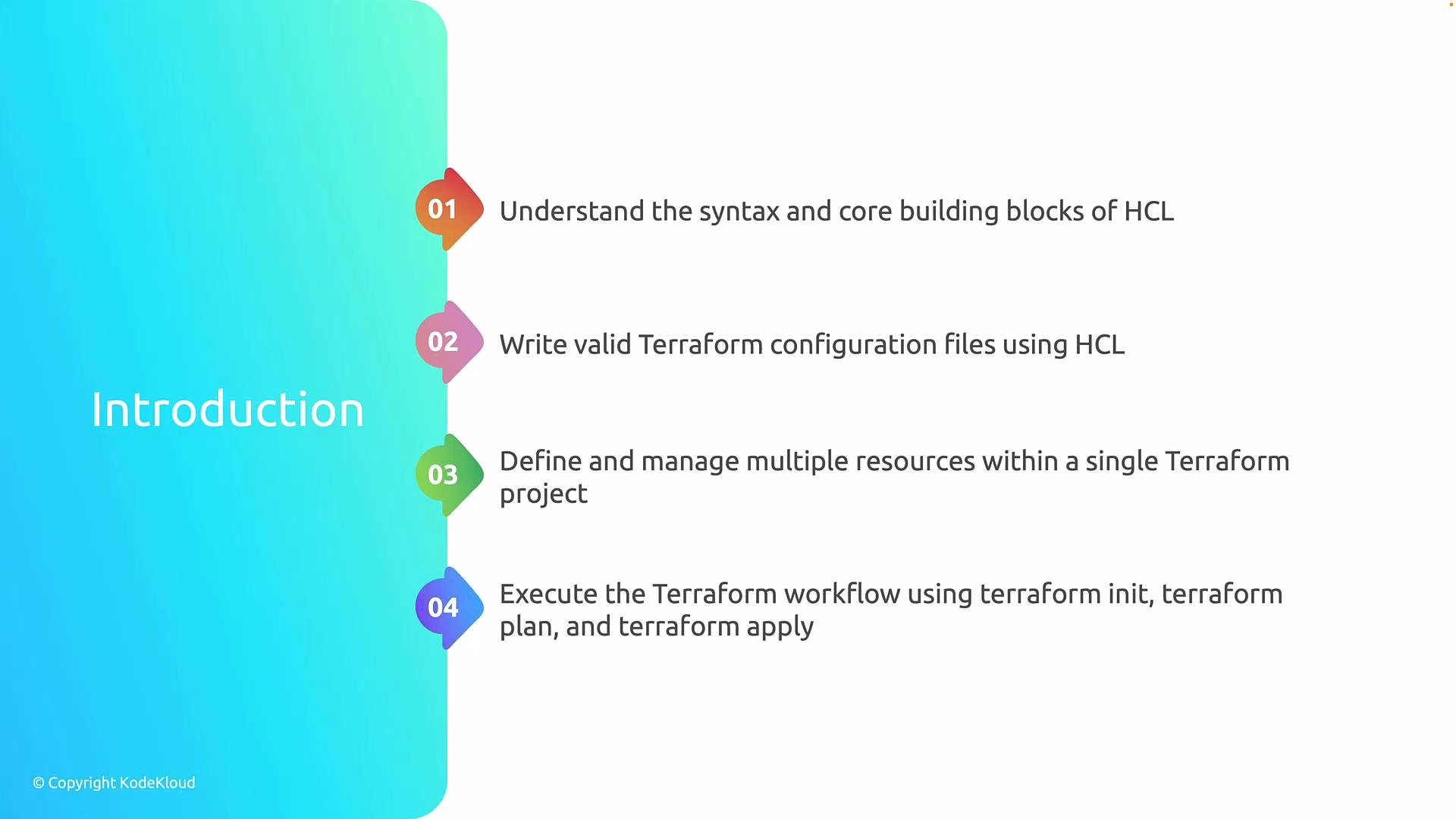
- How HCL is structured: blocks, arguments, and expressions, and how Terraform interprets them.
- Best practices for organizing Terraform across files and directories so configurations remain syntactically correct and logically consistent.
- How to declare providers and resources, and manage multiple resources in a single project.
- How Terraform builds a dependency graph, orders operations, and interacts with state and provider APIs.
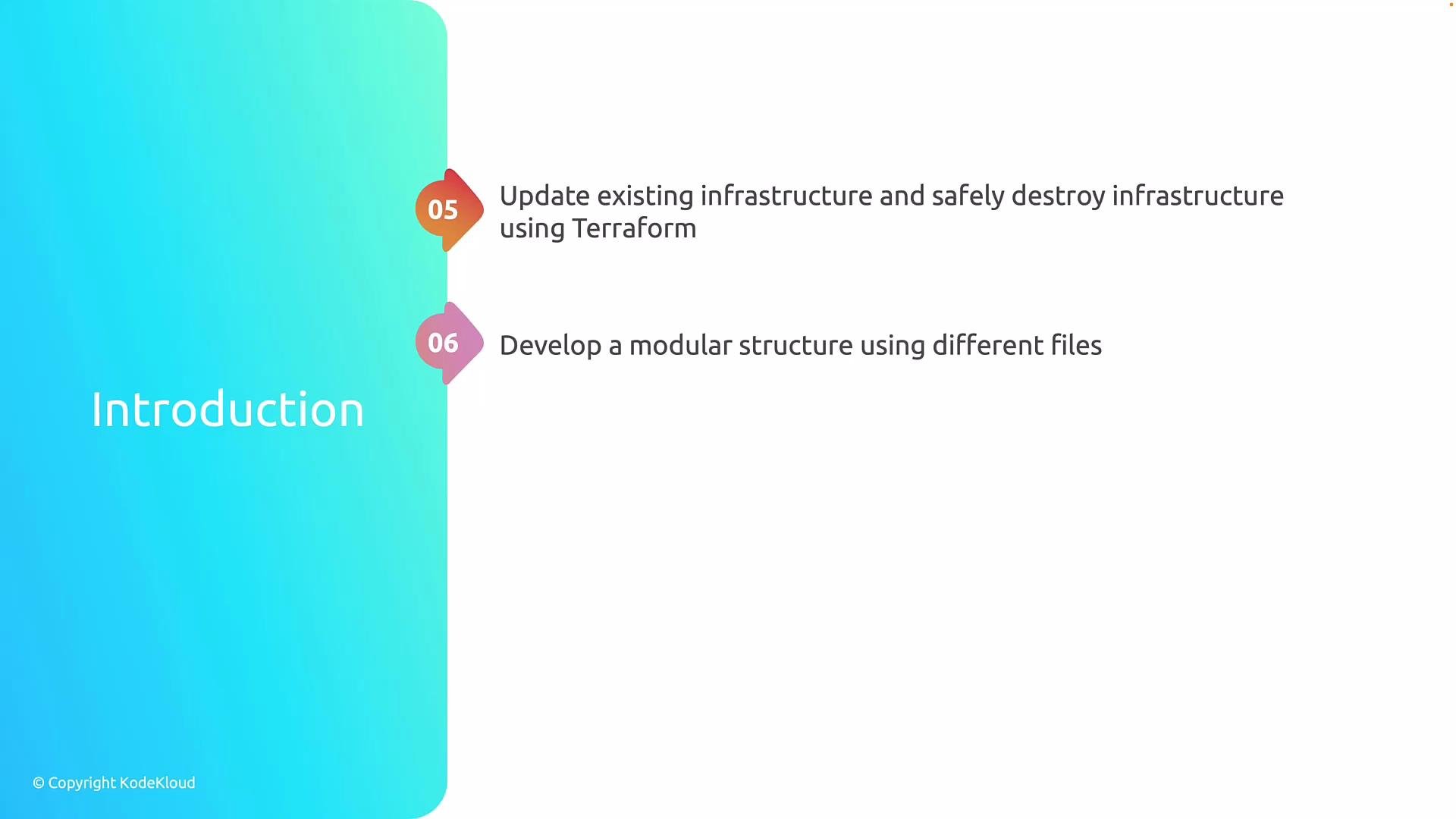
- How to detect and safely manage changes with
terraform plan,terraform apply, andterraform destroy. - How to structure projects for maintainability and scale—separating responsibilities and using modules for real-world Azure environments.
- The difference between HCL blocks (for resources, providers, modules) and arguments (individual settings).
- How expressions and interpolations are evaluated.
- How Terraform resolves references between resources to form a dependency graph.
terraform plan to preview modifications, terraform apply to enact them, and terraform destroy when you need to remove resources in a controlled way. These commands, together with proper state management and provider configuration, form the operational workflow for infrastructure as code.
As projects grow, clear structure becomes essential. This article covers how Terraform loads multiple files, why separating responsibilities (e.g., networking vs. compute vs. identity) improves maintainability, and why modules are the recommended pattern for scalable Azure deployments.
HCL is declarative: you describe the desired end state, and Terraform determines the actions required to reach that state. Precise syntax and a clear file structure prevent surprises when Terraform evaluates and applies changes.
Links and references
- Terraform Documentation
- HCL (HashiCorp Configuration Language) Overview
- Azure Provider for Terraform
- Terraform Best Practices